

One of the biggest challenges we face with certain plants is keeping them alive and healthy – something that’s often far easier said than done. Let’s be honest, not all of us are naturally talented when it comes to gardening.
Between February and April, many plants start to enter their active growth phase, so what you do during this window can make all the difference.
The truth is, if you don’t take the time to prepare your garden in late winter and early spring, chances are some of your crops won’t reach their full potential by the time summer arrives.
This is especially true for roses, which can require care throughout the year. Whether that’s through proper pruning, regularly checking for pests and diseases, thoroughly watering in dry weather, or general tidying.
But there is one thing that garden expert, Paul Constantine from David Austin-Roses, says is the key to perfect roses. And it needs to be done now.
He explains that feeding roses a granular slow or controlled-release feed is what will deliver “abundant flowering” later in the year. This should be done at the same time as mulching.

Regular care for your roses ensures they stay healthy and vibrant throughout the season.
(SWNJroses – by Lauren Beavis)
This type of feed consists of small granules that release nutrients gradually rather than all at once. Applied between February and early April, it provides a steady supply of nourishment just as the plant begins its strongest stage of growth.
“Feeding encourages strong, healthy growth and abundant flowering, while mulching adds a protective layer around the base of the rose, helping to reduce moisture loss, suppress weeds and provide valuable nutrients,” Constantine says.
“When properly fed, they’ll develop strong, deep roots, lush, healthy leaves, and, of course, those beautiful blooms we all adore. But feeding your roses isn’t just about making them look good – it’s about giving them the care they need to feel strong and resilient throughout the season.”
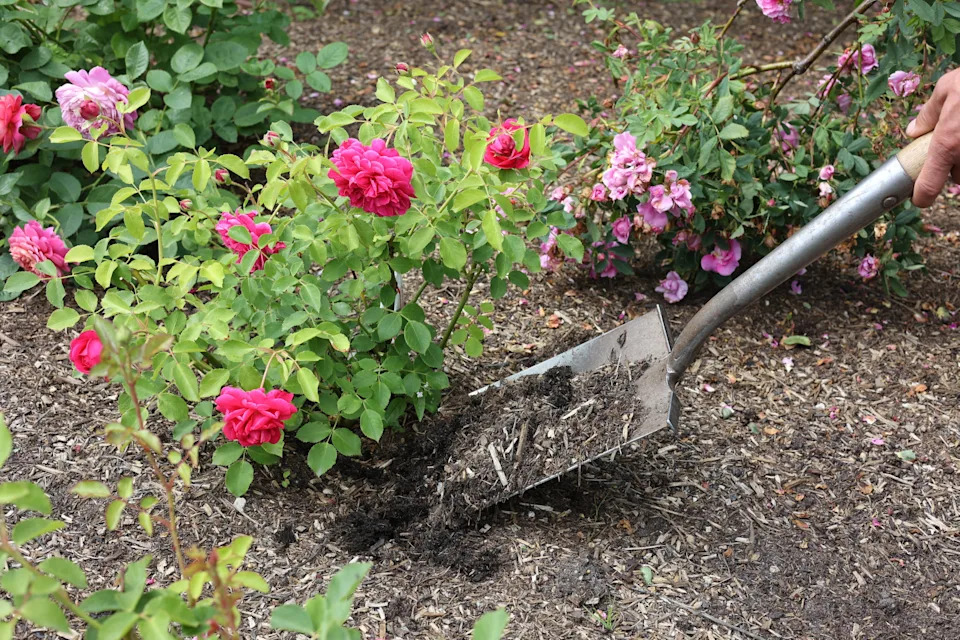
Adding a layer of mulch helps retain moisture, suppress weeds and provide nutrients.
(SWNJroses – by Lauren Beavis)How to properly feed roses
Constantine explains that you need to start by clearing any old leaves or weeds from around the roses before feeding and watering.
Once you’ve fed and watered your roses, you should then apply one-to-two inches of your chosen mulch – a layer of material that’s placed over soil to help protect and nourish it. Constantine recommends good-quality garden compost, composted straw or bark, or well-rotted manure from a local farm. Manure should be at least two years old to prevent burning the roots.
You apply this around the base of the rose, spreading it to the width of the rose canopy.
What does adding mulch around the base of your rose do? It helps retain moisture, suppress weeds and provide nutrients. Three things that are crucial to good growth.
By taking the proper steps to care for your roses and provide them with the right nutrients at the right time, you’re giving them the best chance to grow and flourish, stay healthy, and remain vibrant throughout the season.
When to plant roses
Constantine says that root roses – roses that are dormant and soil-free – can be planted into April for blooms in their first year.
Whereas potted roses, which come in containers with soil and are often more expensive, can be planted year-round.
Additional reporting by SWNS.
Comments are closed.