
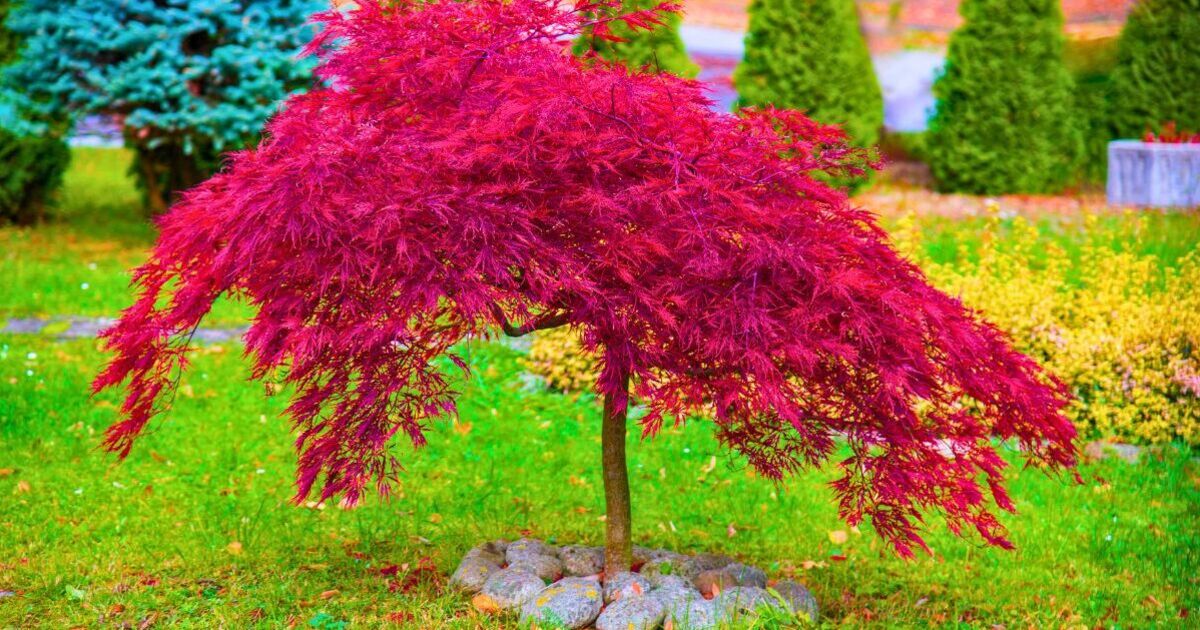
It has rained every single day in the UK since the beginning of 2026, and while the wet weather will be good for some garden plants, it can severely harm Japanese maples. They naturally grow in woodlands in Asia, where the soil is very nutrient-rich, leading them to develop very delicate roots that stay close to the surface. This can be a major problem in British gardens, as Japanese maples are prone to waterlogging, and excessive moisture can encourage fungal spores that can lead to root rot.
Fungal diseases will slowly weaken a tree and distort leaf growth until it cannot store any energy, which means a Japanese maple cannot fight off the infection, and the roots will begin rotting away. However, the gardening experts at Millcreek Gardens has shared you can easily protect Japanese maples roots from damp, as you need to add some sulphur to the soil.
They said: “Japanese Maples are relatively trouble-free. The biggest disease problem is from the root rot diseases; pythium, verticillium or fusarium. Keeping your tree healthy is the best way to prevent root rot.
“Adding sulfur to the soil each spring also helps prevent many root diseases from becoming a problem. Keep your soil consistently moist and not constantly wet.”
Sulfur helps make the soil around Japanese maples more acidic, which allows the tree to absorb essential nutrients like iron and magnesium.
Healthier roots and leaves make the tree stronger, and make it more likely the tree will be able to withstand harsh British weather throughout the whole of spring.
When applied to leaves as a spray or dust, sulfur also has a fungicidal effect that can help prevent some fungal infections.
It is a natural way to protect Japanese maple roots from excess moisture and disease while also helping the tree have the best chance of growing once the weather gets warmer.
How to use protect Japanese maples during rainy weather
To begin, you need to buy elemental sulfur from a local garden centre, but you can also look for items like peat moss and pine bark as they will also help improve the soil.
All you need to do is create a drip line around the tree, work it gently into the top of the soil without harming the tree roots and then lightly water the ground.
If you notice any black spots or white powder on the Japanese maples leaves then they are likely infected, and you can buy a sulphur spray to treat them.
Make sure to also prune the tree if needed, pick up any fallen leaves and add mulch to your garden, and the Japanese maple will stay healthy throughout spring.
Comments are closed.