
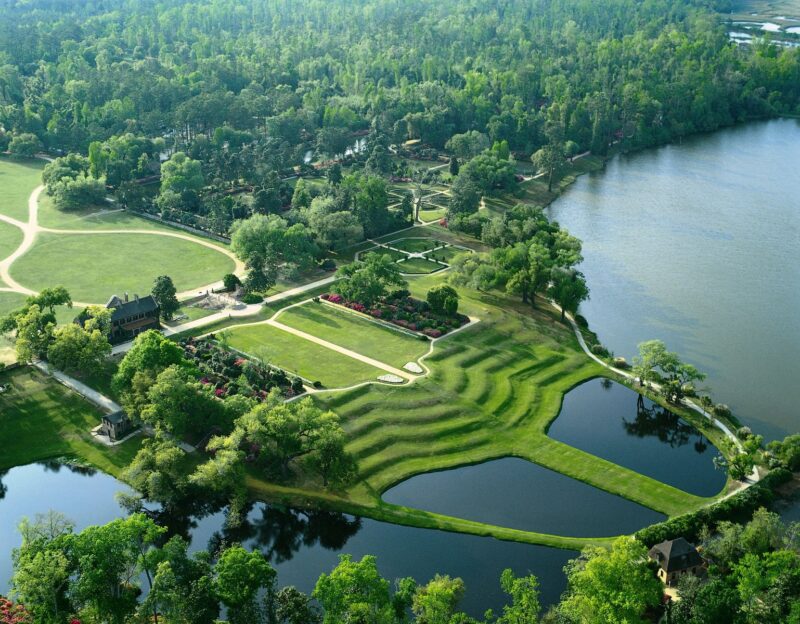
MIDDLETON PLACE: Among the properties featured in the upcoming Grand Homes & Gardens series starting March 5 at Morven is this sprawling plantation outside Charleston, S.C. The series focuses as much on the enslaved people who worked on the estates as the owners themselves.
By Anne Levin
In this year of the country’s 250th anniversary, it makes sense that Morven Museum and Gardens’ upcoming “Grand Homes and Gardens” series, which begins March 5, would be focused on properties that — like Morven — were home to signers of the Declaration of Independence. But “Freedom at Home: Telling the Full Story of America’s Founding Homes and Gardens” is about more than the men who put their signatures on that historic document.
“We talk about their lives — and the architecture, landscape, and gardens of their homes,” said Greer Luce, Morven’s curator of education and public programs. “But they had slaves who were intricately involved in creating and living in these spaces. We wanted to look at how that negotiates with these ideas of independence.”
The series opens March 5 with Wiliam Paca’s Annapolis House in Annapolis, Md. Historian Glenn Campbell will talk about Paca, the third governor of Maryland and one of four from that state who signed the Declaration. The five-part Georgian mansion was built in the 1760s.
“When you visit today, the staff tells the story about the family and the signer, but also about the slaves who lived and worked there,” said Luce. “That’s important, because we’re doing that ourselves at Morven.”
Next, on March 12, is Stratford Hall, home to signers Richard Henry Lee and Francis Lightfoot Lee in Stratford, Va. The estate was also the birthplace of Confederate General Robert E. Lee.
“This beautiful brick home was a plantation, where four generations of the family and hundreds of enslaved African Americans lived,” said Luce. “The speaker, Gordon Blaine Steffey, worked very closely with descendants of the slaves, and that is a huge part of the story.”
Monticello, specifically signer Thomas Jefferson’s revolutionary garden, is the subject on March 26. Historian and gardener Peter Hatch, who is emeritus director of gardens and grounds for the Thomas Jefferson Foundation, will speak about the property near Charlottesville, Va.
“Here, we’re talking solely about the gardens, which I’m hoping will have horticulture people happy,” said Luce. “Peter Hatch will speak about how the garden was revolutionary in the advancements it made in horticulture. And, of course, he’ll tell the story of the people who worked there — enslaved people who were really integral to the garden. He’ll also talk about enslaved people’s own gardens.”
The series travels further south for the final talk, the expansive Middleton Place outside Charleston, S.C. Brandon Stone, the plantation’s director of research and preservation, is the speaker. While the house of signer Arthur Middleton was razed during the Civil War, the property is maintained as a National Historic Landmark District that is home to the oldest landscaped gardens in the United States. “This was a huge plantation,” said Luce. “The landscape is preserved, and its history spans into the 20th century.”
This is the eighth year for the popular Grand Homes and Gardens series. For the first time, all four speakers will deliver their talks at Morven, in person (Each program is also offered on Zoom). “In the past, we have had one or two in person, and the others virtually,” said Luce. “This year we’ve been really fortunate.”
Luce and colleagues put a lot of effort into researching the homes of the country’s founders. “We wanted to choose four that were open to the public, that people can actually visit,” she said. “We also wanted homes that fit the Grand Homes and Gardens theme. These are speakers who know their sites, and are grappling with the ideas of not just who owned these homes, but who worked and kept them going.”
All programs take place at Morven, 45 Stockton Street, and begin at 6:30 p.m. Visit morven.org to register.
Comments are closed.