
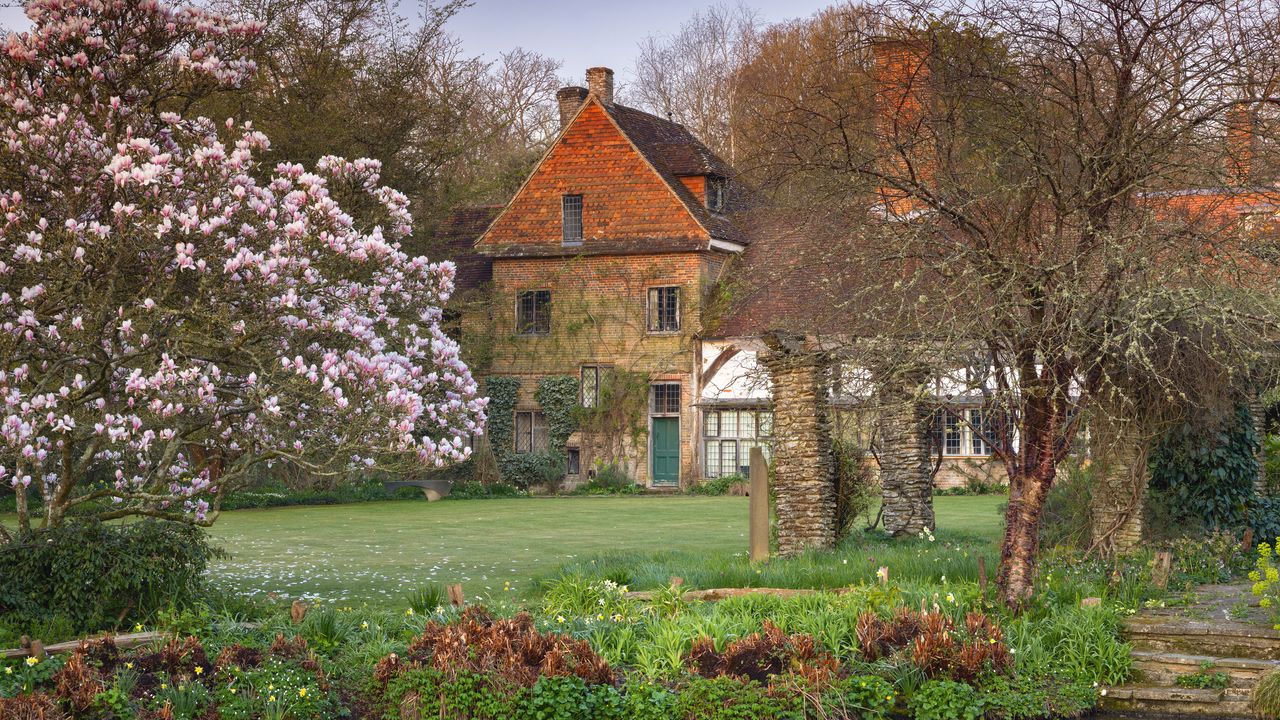
‘When my father, Martin, inherited Vann, the house hadn’t been lived in full time for years,’ explains Oliver. ‘Parts of the garden had reverted to wilderness. He was the visionary in remaking the garden and my mother, Mary, made it happen by sometimes working up to 15 hours a day, alongside raising five children and working as a doctor. They were the first generation of Caroes to make this a family home. As children, we had to create our own entertainment and the only rule was that we never walked on the flowerbeds.’ Martin died aged 66, after which Mary tended the garden for 20 years ‘head down, bottom up, weeding obsessively’, according to Oliver, until
her death from Covid, aged 81, in April 2020.
Neither Oliver nor Emily are involved in the practical day-to-day running of Vann’s garden, but with visionary and energetic guidance from current head gardener Gordon Keddie, and the help of his small team and volunteers, they are taking decisions that will preserve the original framework, while allowing it to be managed in a modern and more sustainable way. Perfection is neither sought nor desired, as they allot a fixed number of hours to each area. It is now gardened organically; grass is allowed to grow long in the orchards and wildflowers that attract beneficial insects are welcomed.
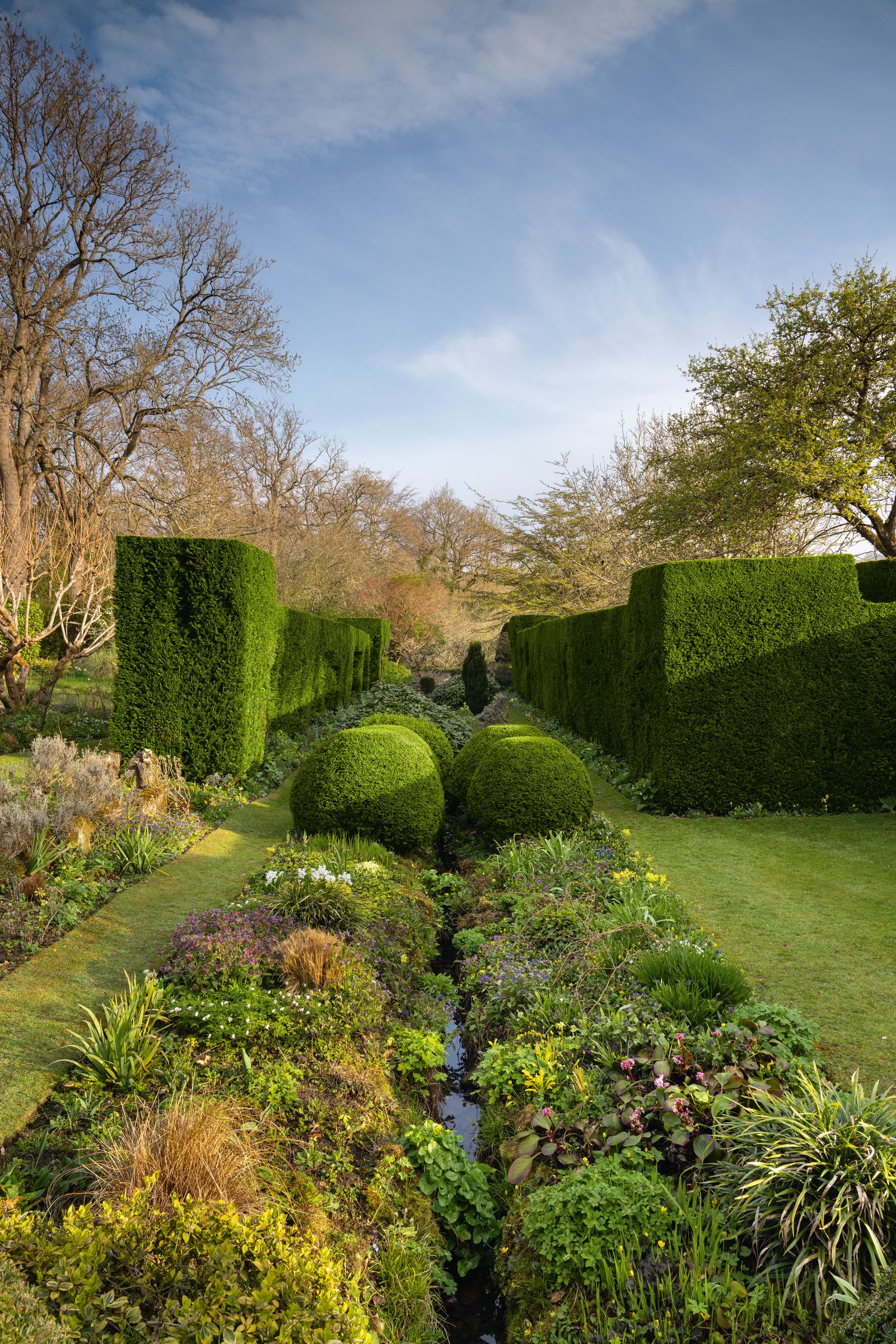
In the yew walk, tall evergreen hedges frame long beds anchored by balls of clipped yew on either side of a rill running from the old orchard, across the water garden and through the woodland. Hellebores, marsh marigolds, pulmonaria, comfrey, forget-me-nots and celandines fill the beds.
Richard Bloom
The family have found Gordon’s guidance subtle and clear-sighted, and now have a real sense of how the garden has evolved over time. For example, when pruning old shrubs, the gardeners can look in and see where a previous gardener pruned it 50 or even 100 years ago. ‘These are lovely clues to its history,’ Oliver says. He admits they now need a more stringent garden management plan to take it into the future. ‘I rather eschewed such a plan because, as soon as you systemise, something is lost,’ he notes. Nevertheless, there are things they must consider. ‘The weather is changing and ash dieback may kill our magnificent ash. We have box moth and old box bushes that are key structural elements may not survive. Alternatives will have to be found. There’s no rigid way forward.’ But it is not all doom and gloom. With the garden now entirely managed to encourage biodiversity, they have recently been told that the pond is a habitat for rare dragonflies and damselflies.
‘We’re at a stage of transition,’ Oliver adds. ‘We don’t want to change the main structures – the pond, the water gardens, the vistas – and we can’t, because it’s a registered park and garden. We are loosening up while retaining the bones.’ In a similar way to their great-grandfather who created his ‘new old house’, they are making a new old garden from their treasured inheritance. It is their hope and intention that in 10 or even 50 years’ time, Vann will still be a beautiful and tranquil place.
Vann is open in spring and early summer: vanngarden.co.uk
Comments are closed.