
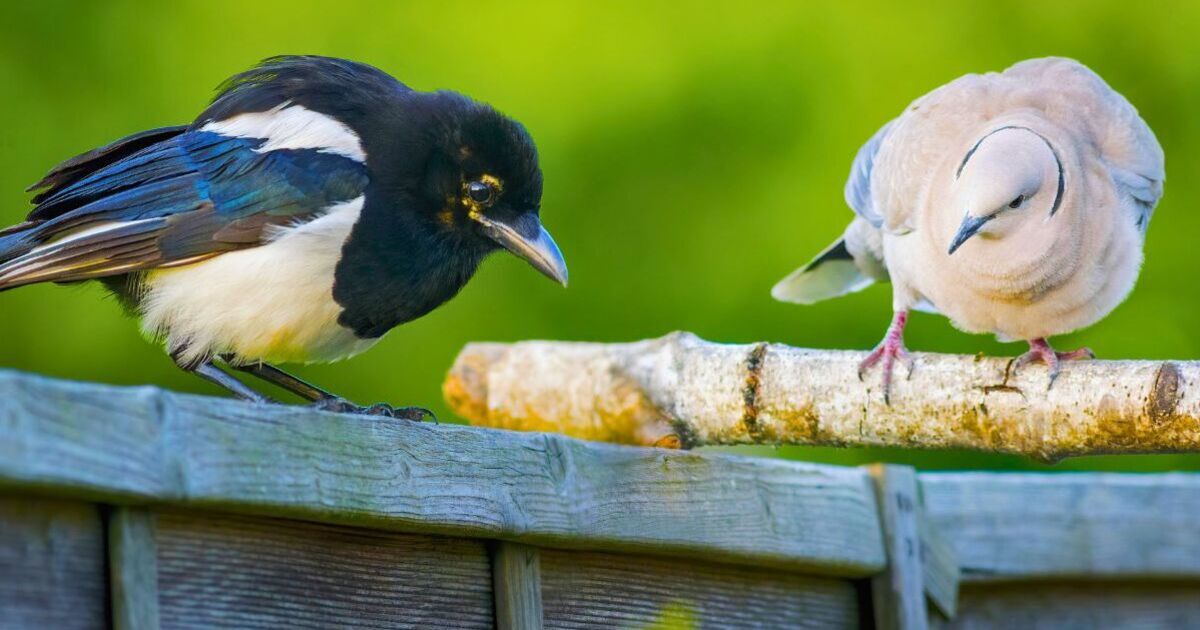
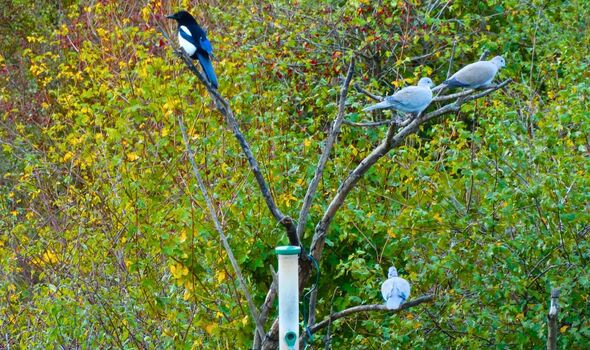
Magpies and pigeons tend to guard bird feeders from other smaller birds (Image: Getty)
Anyone who loves feeding birds should be aware that magpies and pigeons often like to guard birdfeeders and drive out smaller critters from gardens. Magpies and pigeons tend to be much bigger than most other British birds, which means they can easily intimidate smaller species like robins and sparrows.
These larger birds tend to forage in groups, and during winter, they can become especially territorial around feeders as natural food sources such as berries and insects grow scarce. Small birds require high levels of energy to stay warm in cold conditions, and without a reliable food source, they may be forced into riskier areas in search of food or become so weakened that they are unlikely to survive into spring. However, Rachel the Gardener, a gardening book author, says it is easy to keep pigeons and magpies away from birdfeeders, and you simply have to fill them up first thing in the morning.
READ MORE: Households told to spread chilli powder in garden in February
READ MORE: UK households urged to put specific item in their garden before spring
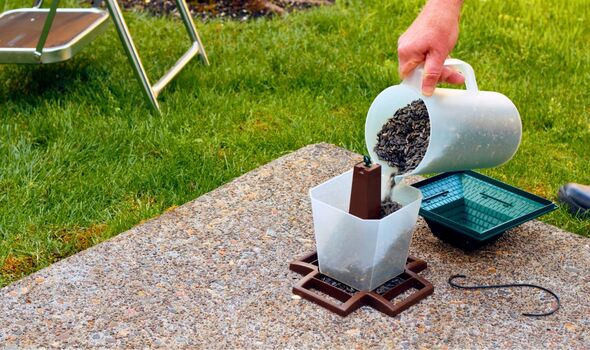
Fill your bird feeder in the morning is the simplest way to deter pigeons and magpies (Image: Getty)
Rachel said: “I always fill my feeders first thing in the morning. Every year, a few weeks into the cold weather, I come downstairs to find a row of blackbirds sitting on the fence, waiting for me. They fly away as soon as I open the door, and they take quite a few minutes to return, so they’re not exactly tame: but they certainly know when to expect the food.”
How to stop magpies and pigeons from eating your garden bird feeders
It might sound strange, but simply filling a bird feeder early in the morning is one of the most effective ways to deter larger birds from your garden.
Small birds such as robins have very high metabolisms and need to feed quickly after a cold night, so they instinctively search for food as soon as it is light.
Larger species such as magpies and pigeons are often more active later in the day, as they tend to forage in groups and take longer to gather
Mornings are also quieter, which means smaller birds are less likely to feel intimidated or crowded at the feeder. If you are an early riser, try putting out food at first light, as it will greatly increase the chance of smaller birds coming into your garden and getting enough food to keep them full.
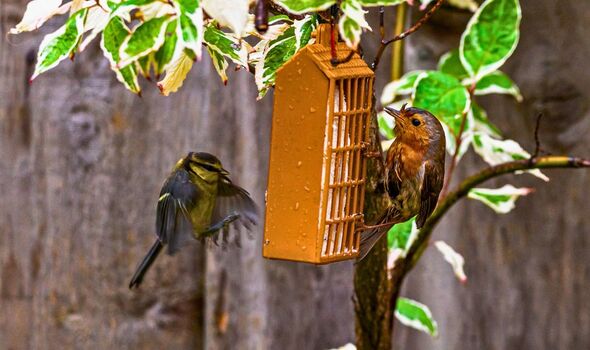
Robins and other smaller birds will go into gardens if you are whistle while filling up your feeder (Image: Getty)
It also helps to whistle softly while filling a birdfeeder, as the sound can mimic the way small birds like robins naturally communicate.
Robins sing to defend their feeding territory and will respond quickly if they hear another robin, but they are also curious and often approach humans, associating them with food.
Rachel said: “This is even more useful if you are lucky enough to have a regular robin or two in your garden: if you whistle a simple phrase every time you go out with the food, they will learn to expect you, and will appear when you whistle – which is just lovely!”
Make sure the whistle is high-pitched, short and clear rather than loud, then do it consistently every morning when you refill the feeder.
Encouraging smaller birds to visit your garden is easy if you refill your birdfeeder consistently at the right time, and it can help prevent magpies and pigeons from taking over your feeders without having to spend money on a new feeder.
Comments are closed.