
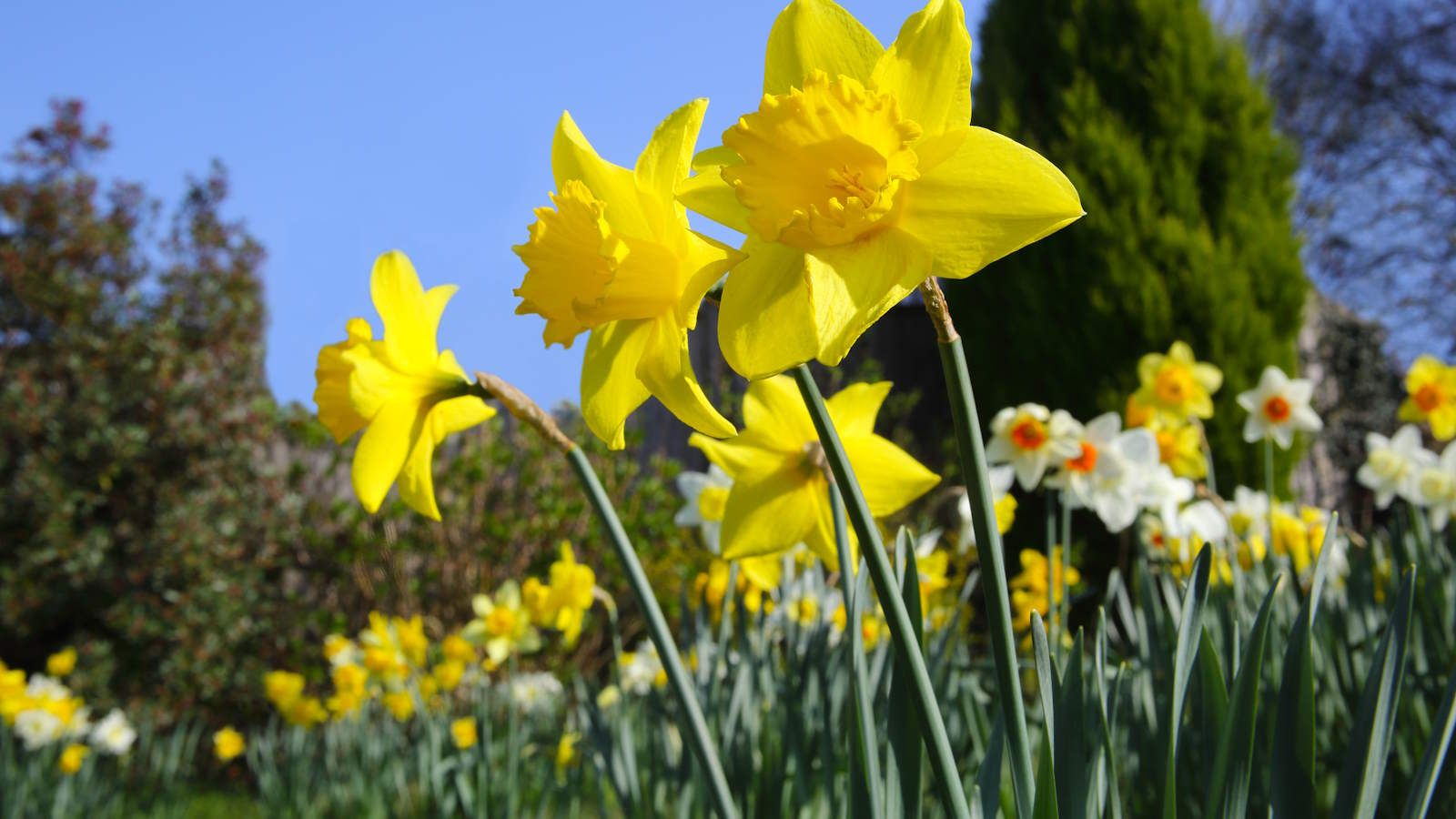
Seeing the number or size of flowers from your bulbs diminishing is disappointing. But a simple way to solve this problem and rejuvenate your blooms is to divide bulbs once their foliage has died down.
The sight of the earliest spring bulbs popping through the ground is a welcome relief after a cold winter. Bright pops of yellow, white, or purple, courtesy of crocuses, daffodils, and hyacinths, are followed by swathes of color from tulips and alliums. However, the performance dips if bulbs get overcrowded.
You may like
The Easiest Two Bulbs to Divide
(Image credit: Manfred Ruckszio / Alamy Stock Photo)
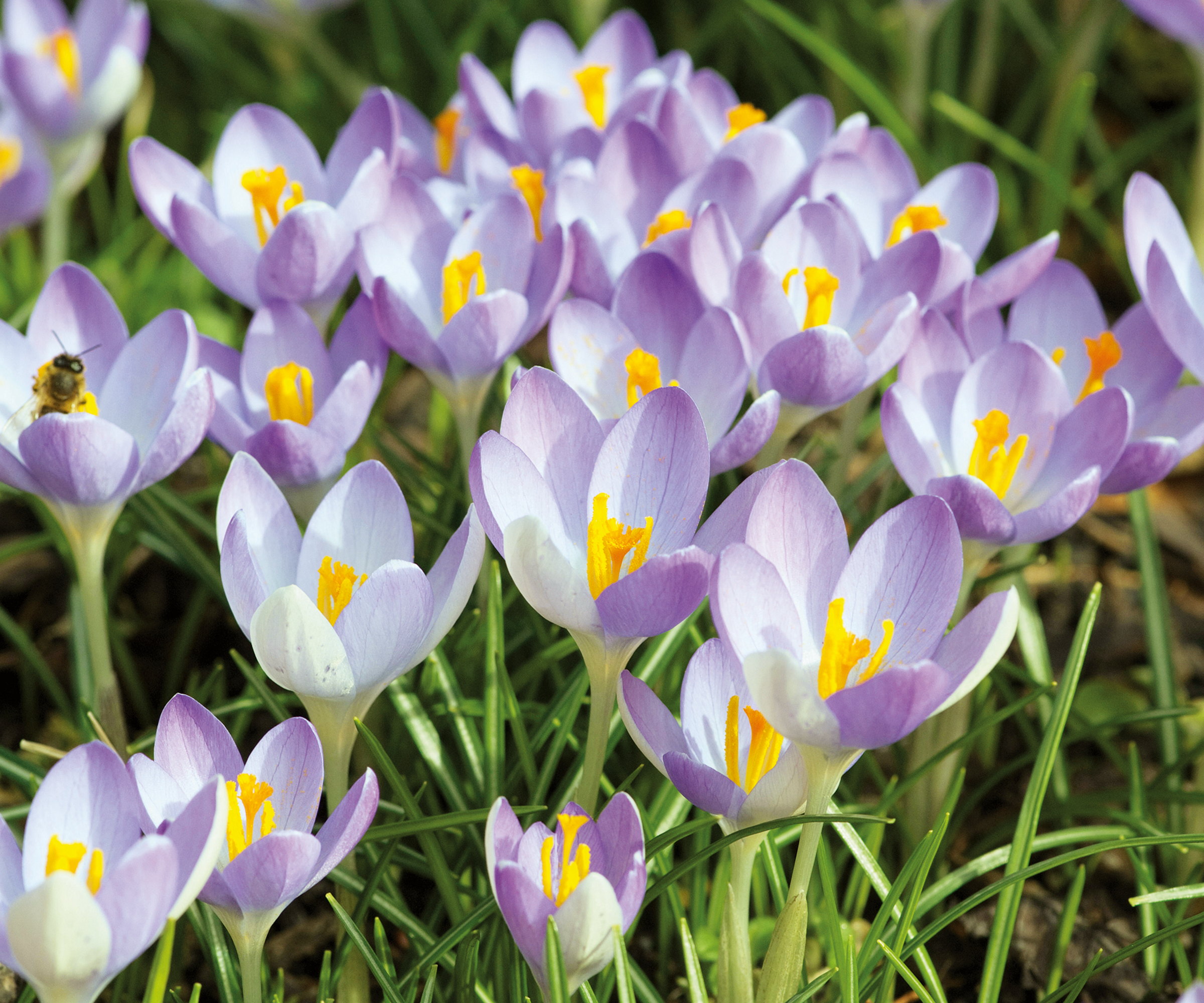
Many spring bulbs naturalize and multiply by producing offsets next to the parent bulbs. These baby bulbs can be easily separated and planted to transform a spring garden.
There is a wide range of easy-to-divide bulbs, and Kathy Jentz, gardening expert, author, and editor of the Washington Gardener Magazine, highlights two popular perennial bulbs that are perfect for division. She says: ‘Daffodils and crocuses are the top candidates as they multiply naturally and prolifically.’
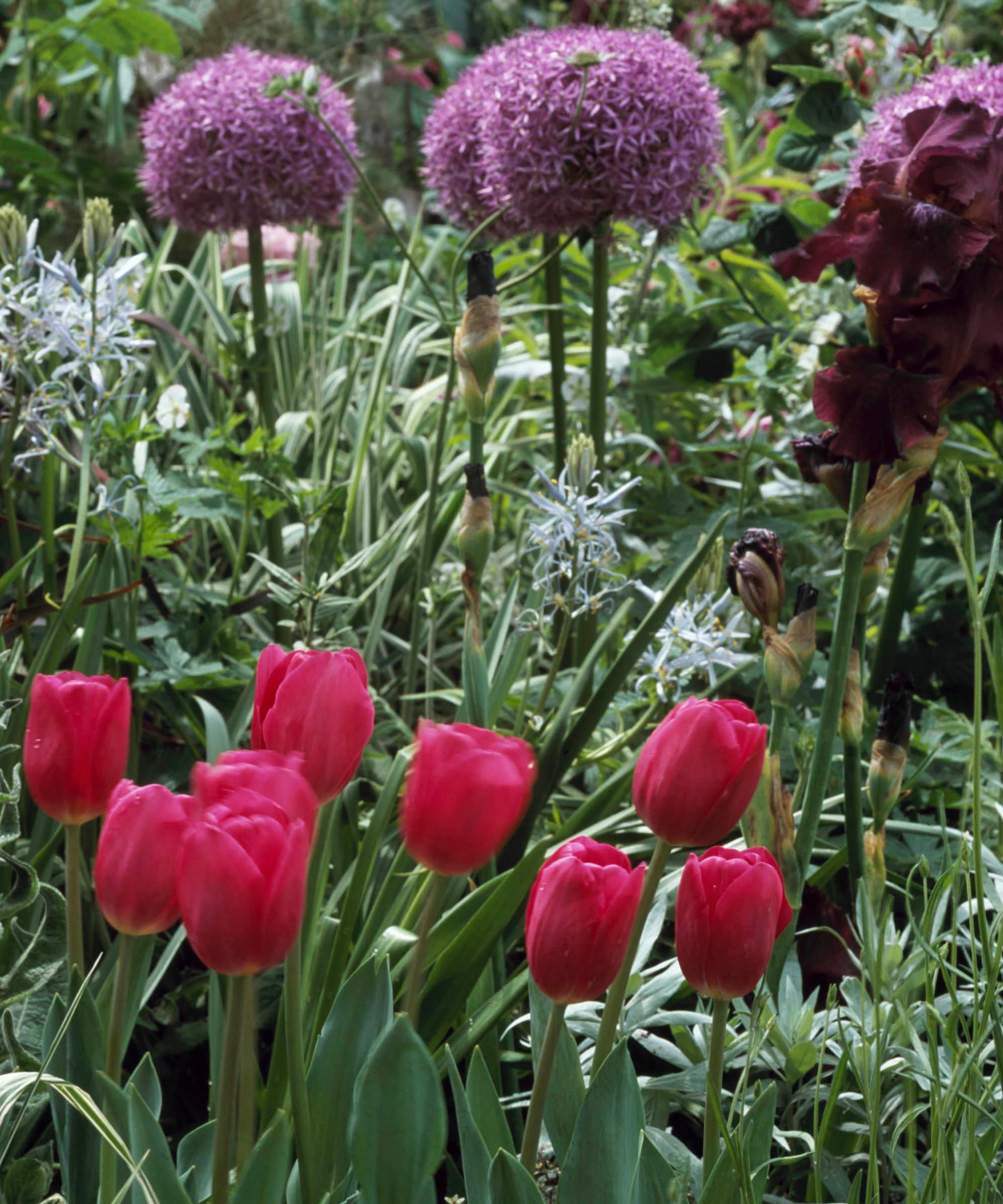
As well as those easy bulbs, other suitable candidates include alliums, grape hyacinths, winter aconites, and fritillaria.
However, not all bulbs are appropriate. For example, you can divide some species of tulips, but not modern hybrid tulip types. Plus, lilies and gladiolus don’t multiply, and you can’t get new plants by dividing the bulbs.
 Kathy Jentz
Social Links Navigation
Gardening Expert and Author
Kathy Jentz is editor and publisher of the award-winning Washington Gardener Magazine, based in Washington, DC. She is also the editor of three plant society journals: the Water Garden Journal (IWGS), The Azalean (ASA), and Fanfare (Daylily Society Region 3). Kathy has written a couple of books, including Groundcover Revolution.
When to Divide Bulbs for Guaranteed Success
(Image credit: PJ Photography / Shutterstock)
For the best, most reliable blooming year after year, it is advisable to divide bulbs every three to five years.
The performance of bulbs can drop after several years due to overcrowding, and dividing bulbs is a great way to revitalize them and get new bulbs to plant in the garden or spring planters.
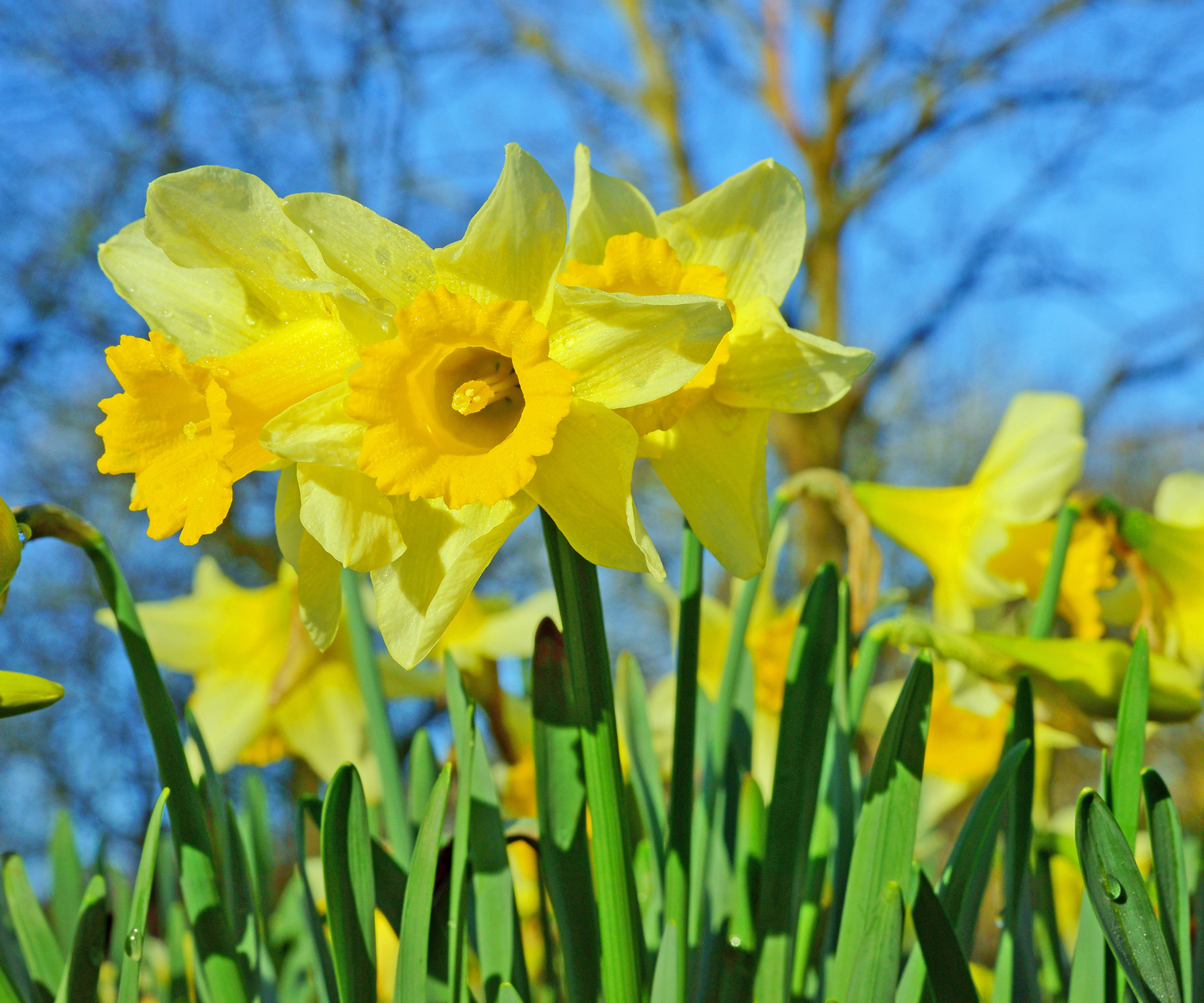
Greg Freeman, president of the Georgia Daffodil Society and past editor of The Daffodil Journal, claims there are ‘tell-tale signs’ that bulbs need dividing, and gardeners should learn to spot these signals.
What to read next
‘If a gardener observes a large clump and diminishing quantity or size of flowers, that’s often a sign the clump of bulbs needs to be divided,’ explains Greg.
‘A single daffodil bulb, for instance, might be planted, and in a few years the gardener might notice a circle of foliage around a bulbless center. In other words, the offsets from the original bulb have grown around it and crowded it out, essentially strangling the mother bulb.’
Dividing bulbs prevents the slowdown in growth caused by overcrowding. However, how long it takes for bulbs to reach this point does vary. As Greg says: ‘Some bulbs take nearly a decade or more to reach the point where division is helpful, while others only a few years.’
The moral of the story is to keep a close eye on your bulbs for any signs that their performance is slowing down due to being too crowded. Also, if you spot your blooms looking incredibly tightly packed in flower beds, this is also a sign that it may be time to lift and divide bulbs.
The ideal time of year to lift and divide bulbs is after the foliage has completely died down in summer. Once flowering is over and the foliage has fully browned and withered, the bulbs are going dormant and ready for dividing.
However, it is different when planting snowdrops. Rather than dividing the bulbs after they have died back, it is better to lift and divide snowdrops ‘in the green’. This means that you lift them just after flowering, while the foliage is still green.
 Greg Freeman
Social Links Navigation
Daffodil Expert
Greg Freeman is currently president of the Georgia Daffodil Society and a past editor of The Daffodil Journal, the official publication of the American Daffodil Society (ADS). He is a daffodil hybridist, an award-winning exhibitor, and an accredited ADS Judge. The owner of Greg Freeman Media, his digital publications include GregFreeman.garden, which chronicles his gardening experiences to an international audience.
How to Divide Bulbs Properly
(Image credit: Photos Hort/McKelvey Wise Garden Design)
You don’t need lots of garden tools to divide bulbs; a garden fork or spade, and a knife tend to be all you require. The other bit of good news is that there are only a few steps you need to follow to divide bulbs properly.
Start by using a garden spade or fork to dig around the clump and lift it from the soil. This must be done in a super-careful way to avoid damaging or cutting through the bulbs.
‘In spring, photograph bulbs and their locations so that they can easily be found when foliage and blooms are long gone,’ recommends Greg Freeman. ‘Dig straight down with a shovel in a perimeter around the clump of bulbs, not too close but far enough away that you’re not digging directly into the bulbs. Digging too close at an angle still puts one at risk of damaging bulbs.
Kathy Jentz advises then ‘knock off most of the soil’ and inspect them carefully. ‘Make sure they are healthy – not soft, rotting, or blemished,’ she says. Any bulbs that are damaged or rotted should be discarded.
Once lifted, the bulbs can usually be divided by removing the small offshoots using your hands or with a sharp knife, like this garden knife at Walmart with a serrated edge.
‘When bulbs are dug properly, mother bulbs and bulblets often separate naturally with minimum effort, particularly where daffodils, snowdrops, crocuses and tulips are concerned,’ adds Greg.
When it comes to large clumps that feature many mother bulbs and offshoots, Greg recommends a slightly different approach.
‘Focus less on separating bulb offsets from large bulbs and more on reducing the size of the clump,’ he says. ‘One large clump of bulbs dug during dormancy can result in many more plants.’
Replant the bulbs at the same depth you should always plant bulbs, usually two to three times their height. Alternatively, you can pot up smaller offsets to grow on and transplant outdoors in the future. Water well after replanting, but the bulbs may take a year or two to start flowering.
If you don’t want to plant them straight away, you can store bulbs in a cool, dry, well-ventilated space and plant bulbs in the fall. Keep them somewhere dark at a temperature range of 50-60°F in a paper bag, hessian sack (like these burlap bags at Amazon), or mesh bag.
When you think about planting daffodil bulbs, look further than the classic bright yellow blooms, as there is a wide variety of narcissi bulbs you can plant for a varied display.
You can get daffodils in a range of sizes and trumpet colors, in shades of yellow, white, cream, apricot, orange, and more. Mixing and matching different types of narcissus creates a unique and long-lasting display of blooms to enjoy.
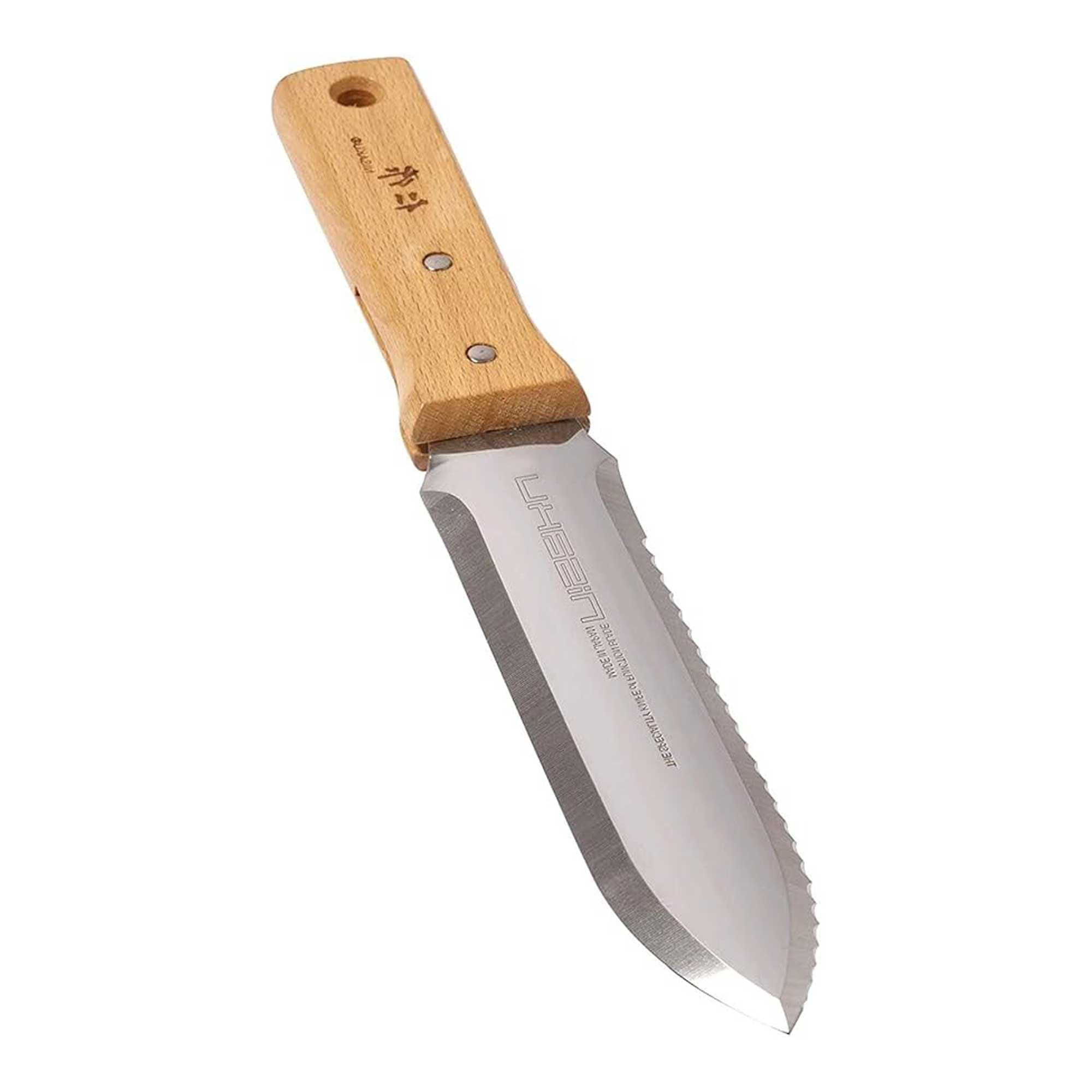
A hori-hori knife has a Japanese stainless steel blade with both a serrated and a straight edge. It can be used to divide bulbs and plants, as well as plant bulbs.
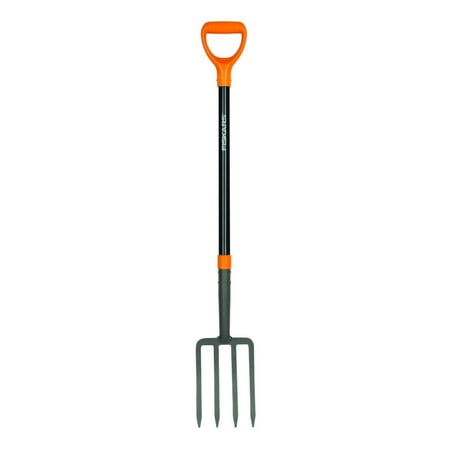
This garden fork has a fiberglass handle and forged steel head. It is ideal for lifting bulbs and plants to divide, as well as many other gardening tasks.
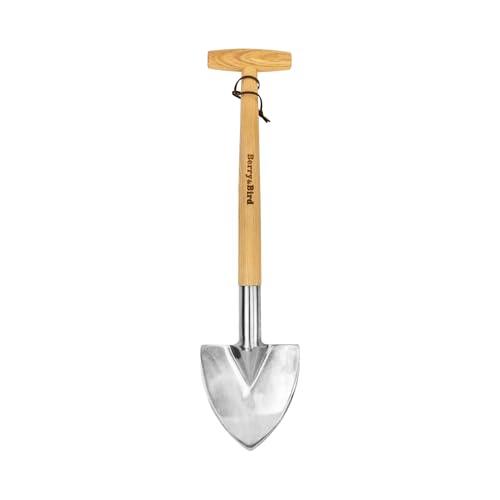
A perennial spade is longer than a trowel and shorter than a traditional spade. It makes an ideal tool for lifting, dividing, and planting bulbs and perennials.
Comments are closed.