
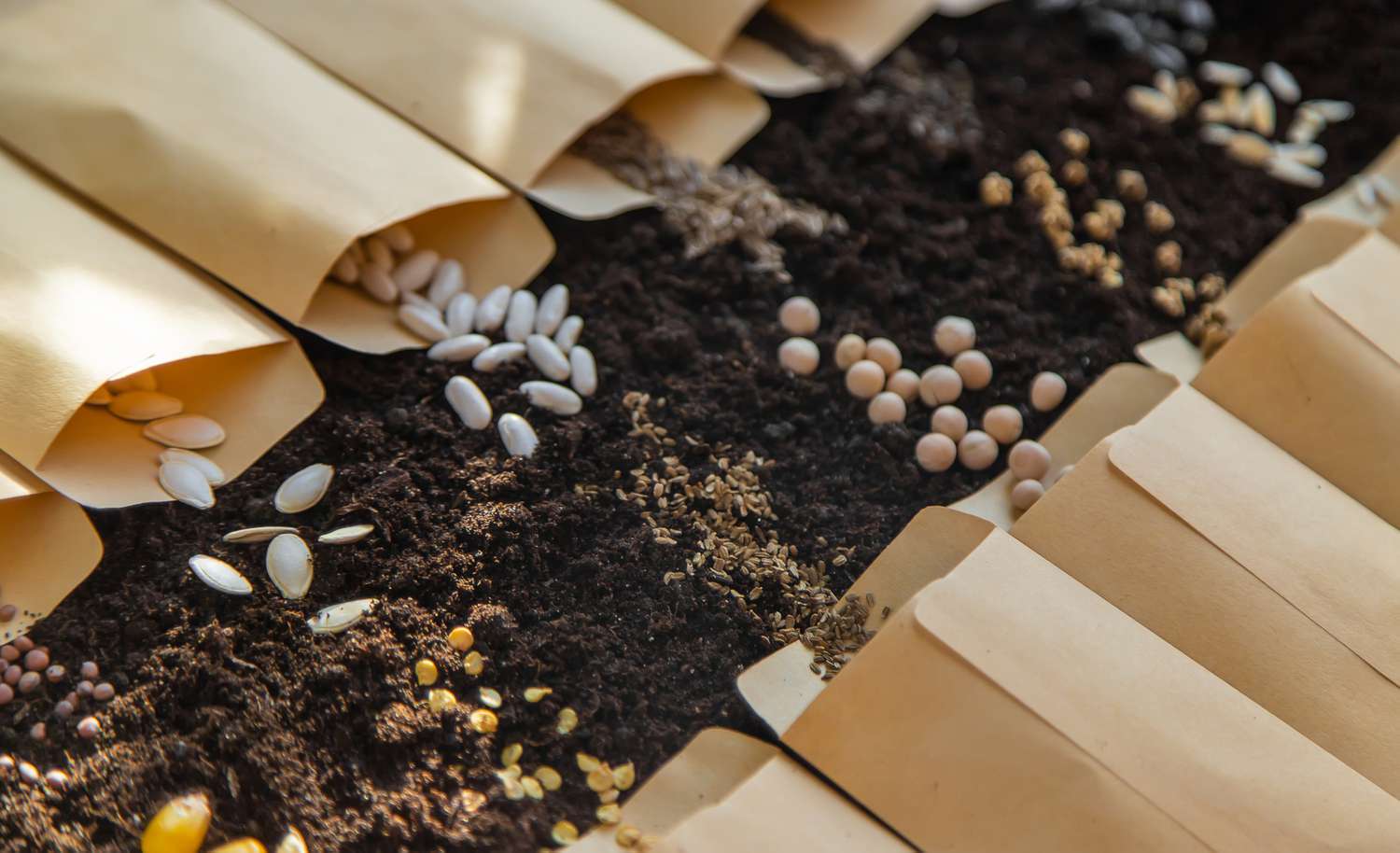
Growing plants from seeds is a fun way to participate in the life cycle. However, sowing seeds isn’t always simple or straight forward. Some plants are easier to grow from seeds than others so it’s a good idea to research in advance when to sow seeds or buy seedlings.
Some seeds require cold stratification–being exposed to cold and moist conditions to promote germination, while others take a long time before they emerge. “Whenever germination takes a long time, or the seedlings grow very slowly, it is often difficult for a home gardener to maintain the optimal growing conditions necessary for success,” explains Stephanie Turner, Clemson Extension Horticulture Agent and Master Gardener Coordinator for Greenwood County.
We spoke to three garden experts on what plants aren’t worth growing from seed and why.
Credit:
Getty Images
Anise
Anise is a woody herb and a type of shrub that is often used to flavor desserts or drinks. Growing anise from seeds requires plenty of patience. “It takes a long time to grow these herbs from seed— 3- 5 years into a viable cutting plant,” says National Garden Bureau member, Teresa Watkins, landscape designer, host of “Better Lawns and Gardens”, WFLA-Orlando, iHeart and Sustainable Horticultural Environments. She recommends purchasing anise as a young plant in 1-3 gallon pots.
Asparagus Fern
Growing asparagus ferns from seed can be finicky and take time before they germinate. “Like many tropical plant seeds, asparagus fern has erratic germination,” says Turner. Sometimes seeds can take over six weeks to emerge, she adds. If you already have one in your garden, Turner recommends, “Make divisions of an existing plant by using a sharp trowel to cut the root ball into multiple new plants.”
Coneflowers
Coneflowers are perennial flowers with petals facing downwards. Starting coneflowers from seed takes time, space, and effort since they need to go through cold stratification. “Coneflowers need to have cool temperatures (40º to 60º) and slightly damp for 60 to 90 days to germinate, called cold stratification,” says Watkins. She says the best way to do this is “by placing seeds between moist paper towels and inserting them in plastic bags to germinate in a refrigerator.
Clivia
If you have an expanding houseplant collection, you might be tempted to grow one from seed. But Clivia isn’t the best choice. According to Turner, Clivia is considered one of the most expensive houseplant seeds, and each seed can cost $12. Not only are the seeds expensive, they can take several months before they emerge. “It can take up to 3 months to germinate, and 3 years or more to bloom.” She recommends purchasing a sizable plant that may cost around $50-$80 and then propagate by division for additional plants.
Fruit trees
Biting into an apple and saving the seeds or a peach and saving the pit to plant later won’t produce the same fruit. “Many plants are genetically complex and do not grow true-to-type from seed,” explains Greg Welbaum, Professor of Plant Biology at Virginia Tech. “That means in practical terms when you grow a plant a seed it will not look like either of its parents.” Apple seeds and peach pits are an example of a seed that is not true-to-type. Fruit trees are slow to grow and slower to produce fruit. “Tree fruits take a long time to mature and produce fruits when you are starting from seeds,” says Turner.
Onions
Onions can be grown via sets, which are small bulbous onions or by seeds. Though, growing onions from seeds can be tricky with placement and spacing in the soil. “Onion seeds can be difficult to germinate by being planted too deep and not getting enough light,” says Watkins. “So it may be easier to grow onions from sets or transplants.” She adds there isn’t a best way to grow onions, it’s a matter of preferences.
Ramps
Ramps, a type of wild allium, are typically foraged rather than cultivated. That said, you can grow ramps in your garden with the right sunlight, soil, and watering conditions. “Some plants have complex seed dormancies that prevent them from being easily propagated from seeds,” says Welbaum. “Ramps, Allium triccocum, is a classic example [because] it has seed dormancy, but it also has epicotyl dormancy that must be broken after germination,” he says. Ramps aren’t usually grown from seed because it takes longer. He says it’s easier to grow ramps from divisions.
Credit:
Southern Living/Adrienne Legault
Rosemary
Rosemary is a hardy herb that needs a lot of sun. Once it starts growing, it can take up a lot of space, but this isn’t worth growing from seed. “Rosemary seeds are notorious for poor germination,” says Turner. “The seedlings that do develop also tend to be irregular with some growing very slowly or branching poorly.”
Purchase young rosemary plants in 1-3 gallon pots, says Watkins. Another option is to take a root cutting if you already have rosemary growing. “Rosemary is easy to root from cuttings in the spring or by layering the stems in the garden to encourage new roots,” says Turner.
Sedum
Sedum, a genus from the succulent family, are not usually grown from seeds. They’re easier and a lot faster to grow from cuttings of established plants. According to Welbaum, “Plants like sedum are very easy to root from cuttings,” says Welbaum. “It just makes sense to grow them from rooted cutting rather than from seed, which is slower and takes longer.”
Snapdragons
Snapdragons produce multiple flowers on one stem that resemble a dragon’s mouth. Snapdragon seeds need to go through cold stratification or seed satisfaction to help with the germination process. Depending on your geographical location, you may need to sow seeds indoors or place them in the fridge. “The annual flowers need to be started indoors in the spring up north and in the refrigerator in the fall in the south,” says Watkins. “It’s just easier to buy transplants in the fall in the south to enjoy all winter long.” That said, it depends on if you want a few snapdragons interspersed in your garden or a big bounty. “If you would like a large bed of snapdragons, using seeds will be more cost-effective,” she says.
Tuberous Begonias
Tuberous begonias grow from a tuber and have large, multi-petaled flowers. “They can take up to a month to germinate and another month to reach transplant size,” says Turner. “Overall crop time can be as much as 6 months from sowing to flowering.”
Although they can also be grown from seed, it requires more effort and time. If you’re an experienced gardener and like a bit of a challenge, then you may want to give it a go to start these flowers from seed. “Only very attentive home gardeners with expert seed-starting skills will enjoy the process of starting tuberous begonias from seed,” she adds. The easier way to grow these is by dividing the tubers or stem cuttings, says Turner.
Tulips
Tulips are typically associated with planting bulbs to have a bounty of beautiful tulips. “Tulips produce seeds but also propagate vegetatively from bulbs very efficiently,” says Welbaum. Growing tulips from bulbs is simpler but also produces the flowers you anticipate. “Propagation by bulbs is easier and faster than true seeds and is a clonal propagation method, explains Welbaum, “The tulip grown from a bulb will be a genetic duplicate of the plant that produced the bulb.”
Comments are closed.