
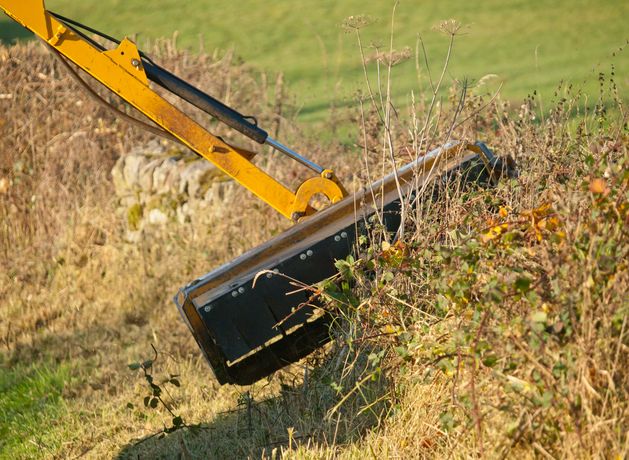
Alan Moore, secretary of the group, said they were increasingly concerned about contractors offering heavy‑duty mulching heads on track machines, which are capable of reducing tall hedges “to near ground level” and milling the cuttings down to small fragments.
He said the trend is “partially driven by the burning ban for all green vegetation”, which came into force in November 2023 and has left some farmers searching for alternatives to deal with unmanaged growth.
“The problems with this approach are twofold,” Moore said. “Firstly, the visual appearance is rough and unsightly, but much more importantly the effect on the future of the hedge can be very serious, with sometimes permanent damage to the integrity of the bushes.”
He said mulching heads cause “shattering and splitting of stems allowing disease and rot to enter”, with “significant risk of plant death and a resulting poor gappy hedge”. This, he added, has knock‑on effects both on farms and across the wider landscape.
Moore said healthy, productive hedgerow corridors remain a major asset to landowners, particularly with changing weather patterns. Well‑managed hedges, he said, provide “significant protection against flooding” along with other services including shelter, shade, water‑quality benefits, disease control and “major carbon storage”.
Hedgerows Ireland, alongside the IFA and ICMSA, is lobbying for improved incentives in the next CAP to support “more sustainable and less intensive hedge management practices”.
While Moore acknowledges that “every hedge is different and one size doesn’t fit all”, the group argues that some basic principles can protect hedge health. These include trimming selected hedges annually into an A‑shape with a wide base, increasing cutting height by around 10cm each year, allowing some bushes to develop into trees, and leaving certain hedges uncut or side‑cut only for up to three years to encourage flowers, berries and nuts.
The group also advises leaving old or ancient hedges uncut, rejuvenating gappy hedges by coppicing or hedge‑laying on a very limited rotation, leaving margins of uncultivated land beside hedges, and avoiding fertiliser and pesticide drift.
Above all, the group warns farmers to “avoid mulching heads for hedge maintenance”, describing them as “very destructive” and likely to reduce mature, productive hedges “to pulp” with resulting losses in wildlife habitat and carbon storage.
Comments are closed.