
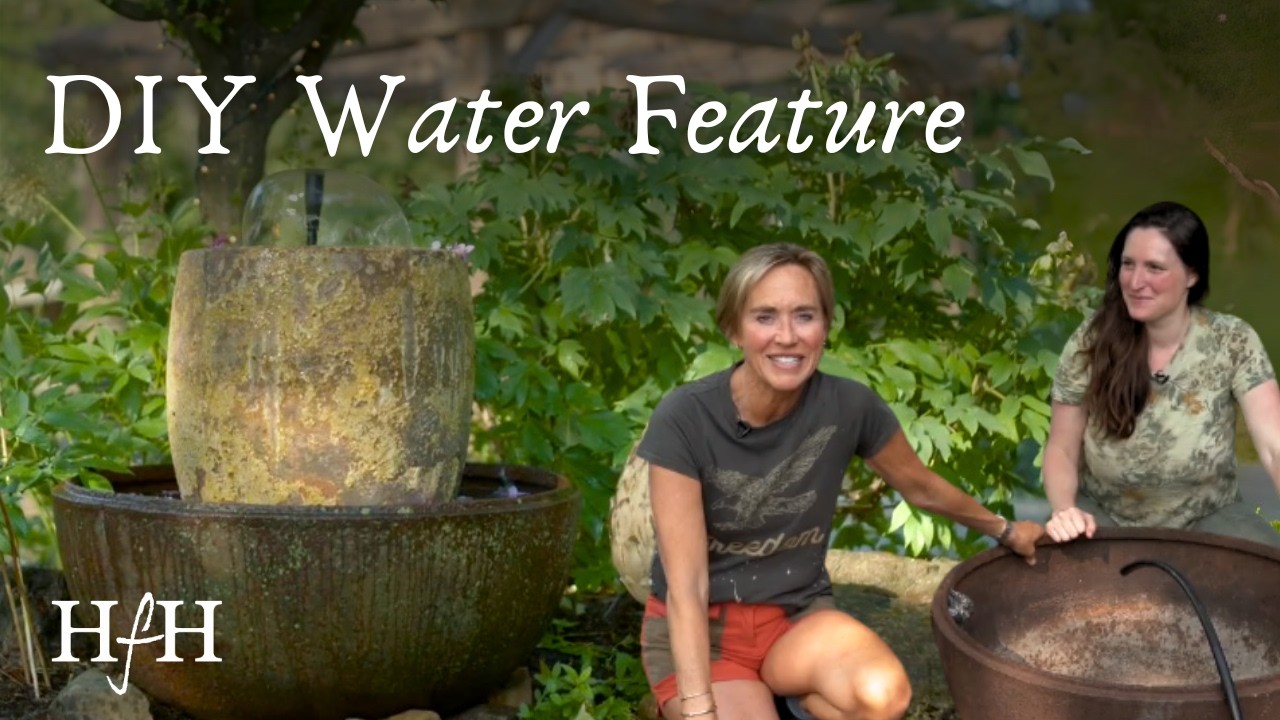
I’ve always wanted a water feature on our back porch but thought it would be too complicated or expensive. In this episode of my Summer Series, Leslie shows me just how simple it can be. Using two old pots (even one with cracks) we created a peaceful, beautiful water feature that completely transformed the space.
If you’ve been dreaming of adding a water fountain to your backyard, patio, or porch, this DIY project is affordable, simple, and so worth it. The sound of water adds so much calm and life to any outdoor area.
In this video, we cover:
– How to make a DIY water feature with just two pots
– Budget-friendly backyard ideas
– How to reuse old or broken containers creatively
– Backyard design ideas that are low effort and high impact
Head to my channel Hungry For Home for more simple projects, recipes, and meaningful moments at home.
Watch my last episode!
Stay Connected With Ruth McKeaney:
Follow Hungry for Home on Instagram: https://www.instagram.com/hungryforhome/
Follow Hungry for Home on TikTok: https://www.tiktok.com/@hungryforhome?lang=en
Visit Hungry for Home’s website: https://www.hungry4home.com/
Shop the book: https://www.hungry4home.com/shop/p/hungry-for-home-a-year-together-at-hillside-farm
#DIYWaterFeature #PorchDecor #BackyardIdeas #SummerProjects #RuthMcKeaney #HungryForHome #GardenDIY #OutdoorFountain #SimpleLiving #EasyDIY #SummerSeries
24 Comments
Love your channel!! What was the name of the water filtering additive?
Oohhh I've been wanting to do this. Thanks for sharing!
That fountain seems like a challenge to maintain. I want the water cleaned for wildlife. Any thoughts?
The power was only mentioned at the very end. The plug and how the electricity got to the pump was never shown. Does the cord just go up the back of the larger pot and then down into the water to the pump?
Disappointed in this aspect because that should have been part of the set up to ensure you’re putting it somewhere that you can run power to it.
Its so beautiful…Would it last in a cold weather?
That's gorgeous, a few small plants just in front of the bottom pot would make the colours pop. That's such a statement piece 💗
What is the piece called that u attached to the hose at the end ? I cut part of the hose and then added a piece of.. what's that called please
Should have shown us what it sounded like
How to loosen rusty screws
Wow ladies a great job I wanna try to do ❤❤❤
Hi! I really enjoyed watching this video & want to try this! I was a little confused on the pump you used & if you only used one? In the listed materials you have two pumps listed, I only thought you used one pump tho. Also you mention a part called a bell tower. I don’t see a link for that. Is it sold separately? Thanks so much!
HI, love this idea – any chance of putting up the link for the water pump please?
Great idea but so many missed easy opportunities to stabilize and thereby make the entire feature safer. YOU HAD pea stones, you could have placed sand or pea stones and sat the large pot on that to level and stabilize, then you could have further stabilized it by placing more stone on interior of outer pot and simultaneously stabilized the taller pot, 😮. The way it’s demonstrated the entire feature keeps getting more unstable… As someone that has built several DIY fountains ( and failed SEVERAL times, learning along the way) test your seals , she should have filled the large pot and let it sit overnight to check for leaks, rinse your stones by letting the water run inside the pot and overflow, the silt will clear. But great idea and I will probably try it… with adjustments
I wish you had not started the music when you did. I wanted to hear the waterfall.
Love it! Thank you!
That is one terrible concept and it doesn't even look good
Wonder if adding water plants to the base would affect the pumping? Plants are a great way of filtering the pond naturally. I love the look of this and filing the video for garden ideas in my landscape project. My critique though, is that to make a feature within an hour, there were a lot of corners cut that impact the integrity of the finished project and it would have been great to have called this out as well as discussed keeping in mind any local regulations regarding water depth. May be good for a quick feature to use for an event but not necessarily something that is going to last and be safe in your yard. To explain better: While I love the look of the rocks at the bottom that were used to stabilise the pots, taking the time to create a stable surface to put the feature on would be better for longevity. And on the topic of longevity, before moving the pots into place you should take the time to properly waterproof the insides with a pond sealer to create a waterproof membrane and using a proper seal around the hole where the cord is going such as a polymer repair kit to seal up the hole rather than tape on the hole would be more useful to stop leakage. Then after moving the base pot into position take the time to check if it is level otherwise you will be constantly looking at a feature where the water never sits evenly. I would also take the time to wash the stones properly as these are always dusty no matter what size is used. I live in a country where we have strict rules on depth of water so anything that is deeper than 300mm would require me to meet special fencing and gate rules as it is considered a drowning hazard to small people who may wander on the property. For this reason some large stones in the bottom pot would be needed to reduce the depth. Personally I would also join the three pots so that the top one couldn’t be knocked over if someone tripped near it. Like I said though that is the difference between a rushed 60min project and something that will be safe and last.
Why didn't she use a level to get it all straight and even?
❤
Well, I loved the process but would u please share Which bell fountain u used? Thank you so much
I used an old farmhouse kitchen sink. Its made from enamel and rectangle. Its not deep maybe four inches or so but its so cute in the garden
How do you keep the water clean?
The goal was a fountain sounding like a nearby stream, yet you overplayed music drowning out the sound, and didn’t show different settings showing how flow changes. The fountain was beautiful but left me with questions.
Very nice