
Whether you’re a new or experienced gardener, sometimes you’re just looking for easy flowers to grow. Colorful flowers all season long not only delight humans, the also attract pollinators such as butterflies and bees.
If you crave color, long bloom times, and flowers you’re not going to have to coddle, there are many annuals and perennials to choose from. The standard advice is that flowers planted in pots, window boxes, and hanging baskets tend to dry out fast at the height of summer, so check them daily during hot, dry spells. Not every gardener wants to face those tasks every day, so we’ve included a few drought-tolerant options that will do just fine without daily watering.
One way to keep the color coming is to use an all-purpose fertilizer regularly and mix and match annuals and perennials throughout your beds and containers. Just be sure that any perennials you choose are suited to survive winters in your USDA Plant Hardiness Zone.
Marigolds
Credit:
Marcia Straub/Getty Images
Botanical Name: Tagetes spp.Sun Exposure: Full sunSoil Type: Well-drainedSoil pH: Acidic to neutral (6.0-7.0)
Marigolds are at the top of the list for a reason: These sun-loving annuals are super-tough, bloom from planting until a freeze, and have almost no pests. They come in heights ranging from 6 inches to 4 feet tall. Their bright, cheery colors include pure gold, lemon yellow, and pumpkin orange. Marigolds are fairly drought-tolerant once established and will grow in almost any well-draining soil. Pick up a six-pack of marigolds at the nursery or easily grow them from seed.
Sweet Alyssum
Credit:
liveslow/Getty Images
Botanical Name: Lobularia maritimaSun Exposure: Full sun to partial shadeSoil Type: Moist but well-drainedSoil pH: Acidic to neutral (6.0-7.0)
This low-growing annual looks amazing as an edging plant or when tumbling out of containers and window boxes. Sweet alyssum has clusters of flowers with a honey fragrance, and pollinators adore it. It prefers the cooler weather of fall and winter in the Lower South, though it may bloom all summer in the Upper South. It likes full sun but appreciates afternoon shade in warmer climates. The plants require little pampering other than well-draining soil and watering during dry spells. Sweet alyssum often self-seeds, so you don’t have to replant it the next spring.
Portulaca
Credit:
Ali Majdfar/Getty Images
Botanical Name: Portulaca grandiflora spp.Sun Exposure: Full sunSoil Type: Sandy, well-drainedSoil pH: Acidic to neutral (5.5-7.0)
Portulaca, also known as moss rose, is a low-growing annual that thrives in poor, rocky, or sandy soils in full sun. It has brilliant bloom colors from hot pink to pure orange. This succulent retains water in its fleshy leaves so it’s a good choice for hot, dry areas. It only grows 3 to 8 inches tall and works equally well as a ground cover or in hanging baskets. Many types self-seed and will pop up in your garden again next year.
Daffodils
Credit:
Philippe Gerber/Getty Images
Botanical Name: Narcissus spp.Sun Exposure: Full sun to partial shadeSoil Type: Moist, rich, well-drainedSoil pH: Acidic to neutral (6.0-7.0)
If you only plant one spring-flowering bulb in your yard, this is the obvious choice for the Upper, Middle, and Lower South. Daffodils come in an array of heights from 4 to 5 inches tall to 2 feet. Their bobbing golden heads are a sure sign that spring has arrived, and you won’t have to replant them next year. In addition, digging rodents that tend to chow down on other spring bulbs, such as tulips, tend to leave daffodils alone. Wait for the foliage to die before you trim it back to allow the bulbs to restore energy for next year’s bloom.
Lantana
Credit:
barbaraaaa/Getty Images
Botanical Name: Lantana camaraSun Exposure: Full sunSoil Type: Well-drainedSoil pH: Acidic (5.5-6.5)
This shrubby, sun-loving plant has multi-colored flowers in shades of bright pink, peach, white, and yellow. Newer compact varieties only grow 12 inches tall. Lantana is treated as an annual, though it can be perennial in the Lower, Coastal, and Tropical South. Once established, the plants are heat- and drought-tolerant though they need occasional watering when grown in containers. Butterflies and hummingbirds will flock to this plant.
Sedum
Credit:
Catherine McQueen/Getty Images
Botanical Name: Sedum spp., Hylotelephium spp.Sun Exposure: Full sunSoil Type: Well-drainedSoil pH: Acidic to neutral (6.0-7.0)
There are hundreds of sedum varieties, ranging from low-growing ground covers that bloom early to mid-summer to tall, upright types that bloom in late summer. Many sedums need full sun, and most have colorful foliage that is pretty even when not in bloom. Like all succulents, sedums are drought-tolerant once established. Most will spread quickly if they’re happy with the conditions. Sedum grows in a range of climates, from USDA Zones 3 to 9.
Catmint
Credit:
bgwalker/Getty Images
Botanical Name: Nepeta x faasseniiSun Exposure: Full sun to partial shadeSoil Type: Well-drainedSoil pH: Acidic to alkaline (6.0-8.0)
Catmint is a drought-tolerant perennial for USDA Zones 3 to 9. It has silvery-blue, spicy-scented foliage and purple spikes of flowers that bloom for months in full sun, though the plant tolerates some shade. Pollinators love it, but deer and rabbits typically don’t—a big draw for most gardeners. Look for newer varieties that stay more compact and upright and won’t overtake your garden, such as ‘Walker’s Low’ and ‘Cat’s Meow.’
Coral Bells
Credit:
peplow/Getty Images
Botanical Name: Heuchera spp.Sun Exposure: Partial shadeSoil Type: Moist but well-drainedSoil pH: Acidic to neutral (6.0-7.0)
Coral bells, also called heuchera, are grown mostly for their vibrantly-colored foliage. There are numerous cultivars in shades ranging from chartreuse to peach to nearly black. The dainty spikes of flowers, which hummingbirds love, appear over the mounded foliage in mid-summer, but their foliage alone makes them worth adding to your garden. These perennials are suitable for USDA Zones 3 to 9. Some varieties tolerate sun, though most appreciate afternoon shade in hot climates.
Coleus
Credit:
Sinan Kocaslan/Getty Images
Botanical Name: Coleus scutellarioidesSun Exposure: Full sun to full shadeSoil Type: Moist, rich, well-drainedSoil pH: Acidic to alkaline (6.0-8.0)
Coleus is another plant that’s grown primarily for its bold foliage, which ranges from cherry red to lime green to brilliantly-colored variegated types. This annual makes a striking container plant that lasts until frost. You may want to pinch back the small flowers as they appear to keep the foliage looking its best, though newer varieties don’t require as much maintenance. Coleus tolerates sun or shade, depending on the type, so read the label to know what you’re buying. Most do well in partial shade.
Calibrachoa
Credit:
Ali Majdfar/Getty Images
Botanical Name: Calibrachoa x hybridaSun Exposure: Full sun to partial shadeSoil Type: Rich, loamy, well-drainedSoil pH: Acidic (5.5-6.5)
These full-sun annuals look like mini petunias, but they’re actually a different genus. Biggest selling point: You never have to deadhead, or remove spent blooms, to keep the flowers coming. They also stand up to heat and occasional dryness. Calibrachoa come in an astonishing array of stunning colors from pale lemon yellow to hot pink and orange. Mix and match them in hanging pots or window boxes, which display their draping forms to best advantage.
Mandevilla
Credit:
Neal McNeil/Getty Images
Botanical Name: Mandevilla sanderiSun Exposure: Full sun to partial shadeSoil Type: Moist but well-drainedSoil pH: Acidic to neutral (6.5-7.0)
Add an exotic flair to your patio with pots of mandevilla. This sun-loving, fast-growing tropical vine is annual in the Upper and Mid-South but perennial in warmer zones. It’s available in pink, red, and white and is a favorite of hummingbirds and bees. Mandevilla appreciates afternoon shade in hot climates. Unless you live in southern Florida, enjoy it as a patio plant during summer, then bring it indoors for winter or just replace it like any annual.
Impatiens
Credit:
eurobanks/Getty Images
Botanical Name: Impatiens spp.Sun Exposure: Full or dappled sun to partial shade, depending on varietySoil Type: Rich, moist, well-drainedSoil pH: Acidic (6.0-6.5)
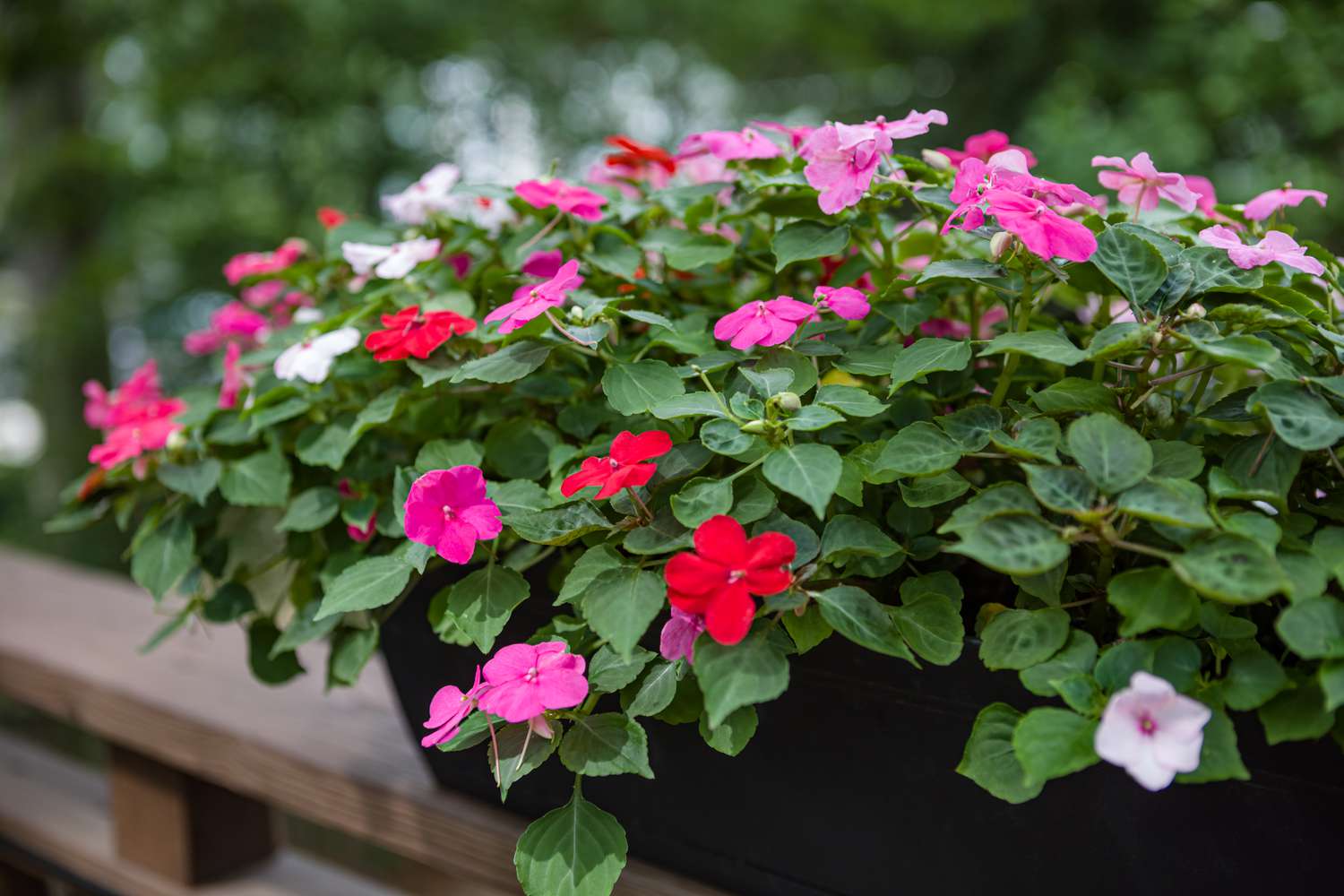
If you’re looking for a reliable annual shade bloomer available in many brilliant colors, plant impatiens, which keep the show going until a frost. New Guinea impatiens and its hybrids, such as the ‘Bounce’ series, are a good choice if you’ve had past battles with downy mildew, a fungal disease that is a serious threat to impatiens. Plus, they tolerate more sun and aren’t as quick to wilt. SunPatiens are the most sun-tolerant and wilt-resistant of all. All impatiens tolerate summer heat and humidity but must be watered regularly.
Asters
Credit:
Aji Ilham Pratama/Getty Images
Botanical Name: Symphyotrichum spp., Eurybia spp.Sun Exposure: Full sun to partial shadeSoil Type: Rich, loamy, claySoil pH: Acidic to alkaline (5.0-8.0), varies by species
Asters are late summer or fall bloomers with small, daisy-like flowers. Their color palette includes white, purple, pink, and blue. Some prefer full sun and others partial, but all are butterfly and bee magnets at a time of year when other plants may be starting to shut down. If that’s not enough reason to plant one, many varieties also become drought-tolerant and gradually spread in the garden. Most asters are hardy in USDA Plant Hardiness Zones 4 to 8.
Zinnias
Credit:
glennimage/Getty Images
Botanical Name: Zinnia elegansSun Exposure: Full sunSoil Type: Well-drainedSoil pH: Acidic to neutral (5.5-7.5)
Cheerful zinnias are hard to resist, especially once you know how tough they are in the garden. Zinnias like average, well-draining garden soil and become drought-tolerant once established. They need sun and warm weather to survive and will bloom until first frost (deadhead the flowers to encourage more blooms). Deer and rabbits generally leave them alone, but pollinators are attracted by the flowers. Zinnias do well in a meadow, cutting garden, or summer containers. They are easy to grow from seed.
Daylilies
Credit:
onepony/Getty Images
Botanical Name: Hemerocallis spp.Sun Exposure: Full sunSoil Type: Rich, well-drainedSoil pH: Acidic to neutral (6.5-7.0)
This summer bloomer opens each flower for one day only. A big patch (and daylilies do spread) creates a profusion of flowers. Daylilies like rich, loamy, moist soil, but we’ve seen them tough it out in clay that’s been amended with some organic matter. These perennial plants for USDA Zones 4 to 9 bloom best with at least six hours of sun but appreciate some afternoon shade during the South’s hotter hours. Unfortunately, deer enjoy munching on daylilies.
Columbine
Credit:
Photos from Japan, Asia and othe of the world/Getty Images
Botanical Name: Aquilegia spp.Sun Exposure: Full or dappled sun to partial shadeSoil Type: Loamy, well-drainedSoil pH: Acidic to neutral (6.0-7.0)
Columbine is a vigorous springtime bloomer for shadier areas of the garden. The flowers also grow in full sun with adequate moisture. In the Southeast, wild columbine (A. canadensis) grows in open forest and has small, spurred red flowers. It will freely seed around your garden. Many of the types found at garden centers boast big blooms in pinks, whites, and purples. Columbines grow in USDA Zones 3 to 9.
Dianthus
Credit:
Chris Burrows/Getty Images
Botanical Name: Dianthus spp.Sun Exposure: Full sunSoil Type: Rich, well-drainedSoil pH: Acidic to neutral (6.5-7.5)
Dianthus is in the same genus as carnations and sweet Williams. Plant it in rich, well-draining soil, and dianthus won’t require a lot of fuss once it’s established. Deadheading encourages more flowering. The blooms come in pink, red, and white and may grow a foot or taller or hug the ground. Dianthus looks beautiful tucked into containers or at the base of taller perennials. Depending on the species, dianthus are annuals, biennials, or perennials.
Pansies
Credit:
Westend61/Getty Images
Botanical Name: Viola x wittrockianaSun Exposure: Full sun to partial shadeSoil Type: Rich, loamy, moist but well-drainedSoil pH: Acidic (5.4-6.0)
Pansies keep the Southern garden going in winter and early spring when little else is blooming. They thrive in containers filled with rich, loamy, moist soil in full or partial sun. Plant them in the fall, and enjoy them for months. Water during dry spells (in winter, this may rarely occur). Replace pansies with summer annuals once the temperature rises.
Cranesbill Geraniums
Credit:
TonyBaggett/Getty Images
Botanical Name: Geranium spp.Sun Exposure: Full sun to partial shadeSoil Type: Average fertility, well-drainedSoil pH: Acidic to neutral (6.0-7.5)
This under-used perennial has become more popular for good reason. Hardy geraniums grow in USDA Zones 4 to 8 in average soil with little supplemental watering except during drought. Colors range from purple to pink, and the low-growing foliage makes an attractive ground cover. Shear the plants to shape and neaten them, or just let them sprawl.
Black-Eyed Susan
Credit:
Jennifer Shields/Getty Images
Botanical Name: Rudbeckia hirta, R. fulgidaSun Exposure: Full sun to partial shadeSoil Type: Average fertility, well-drainedSoil pH: Acidic (5.5-6.5)
This easy biennial or short-lived perennial (USDA Zones 3 to 8 or 9 depending on the species) is a beacon for butterflies in the summer garden. Black-eyed Susan blooms at the end of hot, humid summers when other plants are wilting. Finches and other seed-feeding songbirds are drawn to the seed heads in fall. Black-eyed Susan also self-seeds in the garden to keep your fence line looking fabulous. Avoid planting it in overly rich soil.
Comments are closed.