
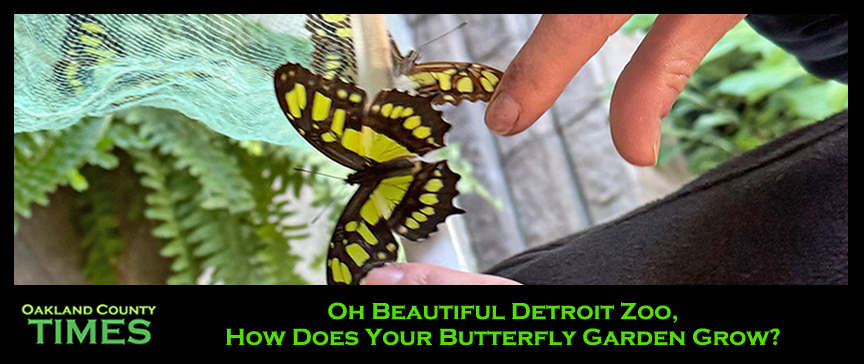

Oh Beautiful Detroit Zoo, How Does Your Butterfly Garden Grow?
(Crystal A. Proxmire, Feb. 16, 2026)
Royal Oak, MI – Before there were butterflies, a pair of Andean condors called The Ron Kagan Wildlife Interpretive Gallery at the Detroit Zoo home. But in 1995 a new use for the space emerged. Under the sunshine of the beautiful dome has since been a magical place where butterflies flutter about to the delight of visitors of all ages.
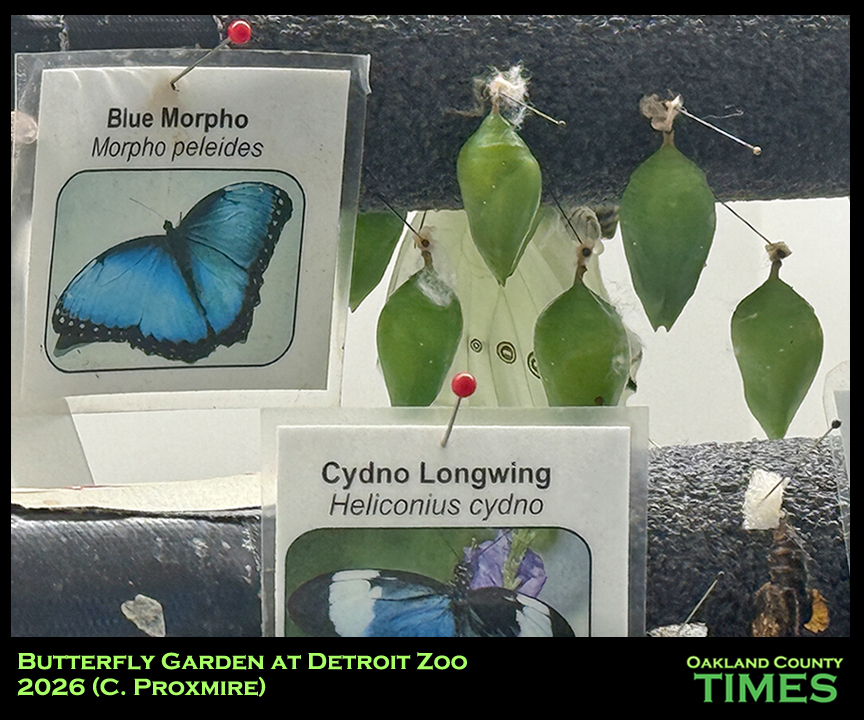
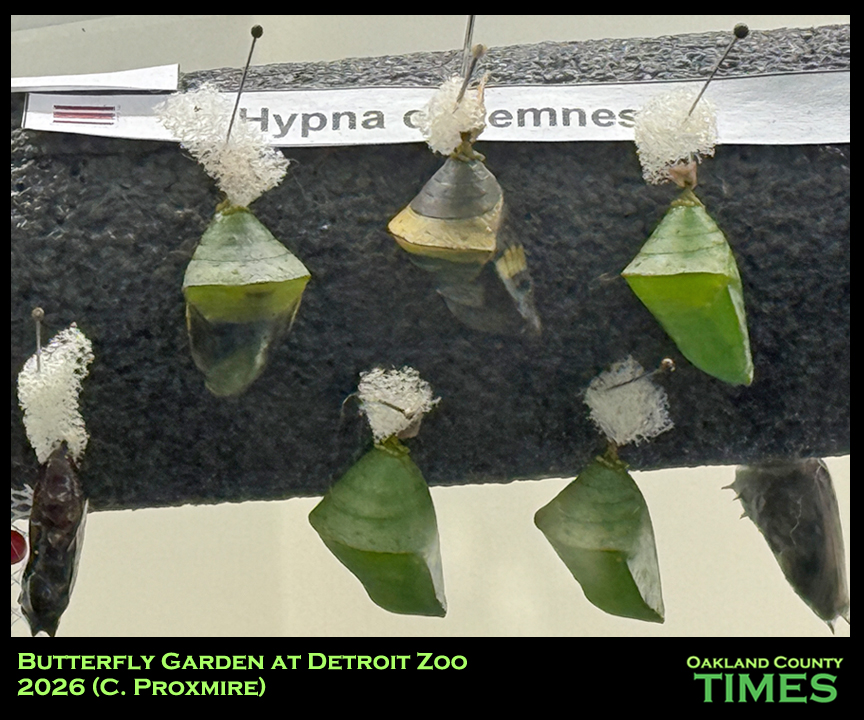
Jessica Jozwiak, Bird Department Supervisor, Detroit Zoo also oversees the Butterfly Garden operations. She shared that the zoo receives about 235 butterfly pupae each week from Costa Rica, plus one shipment from El Salvador each month. They’re purchased from breeders who use a private stock, so none are taken from the wild. The purchases help to fund conservation and population efforts in those countries.
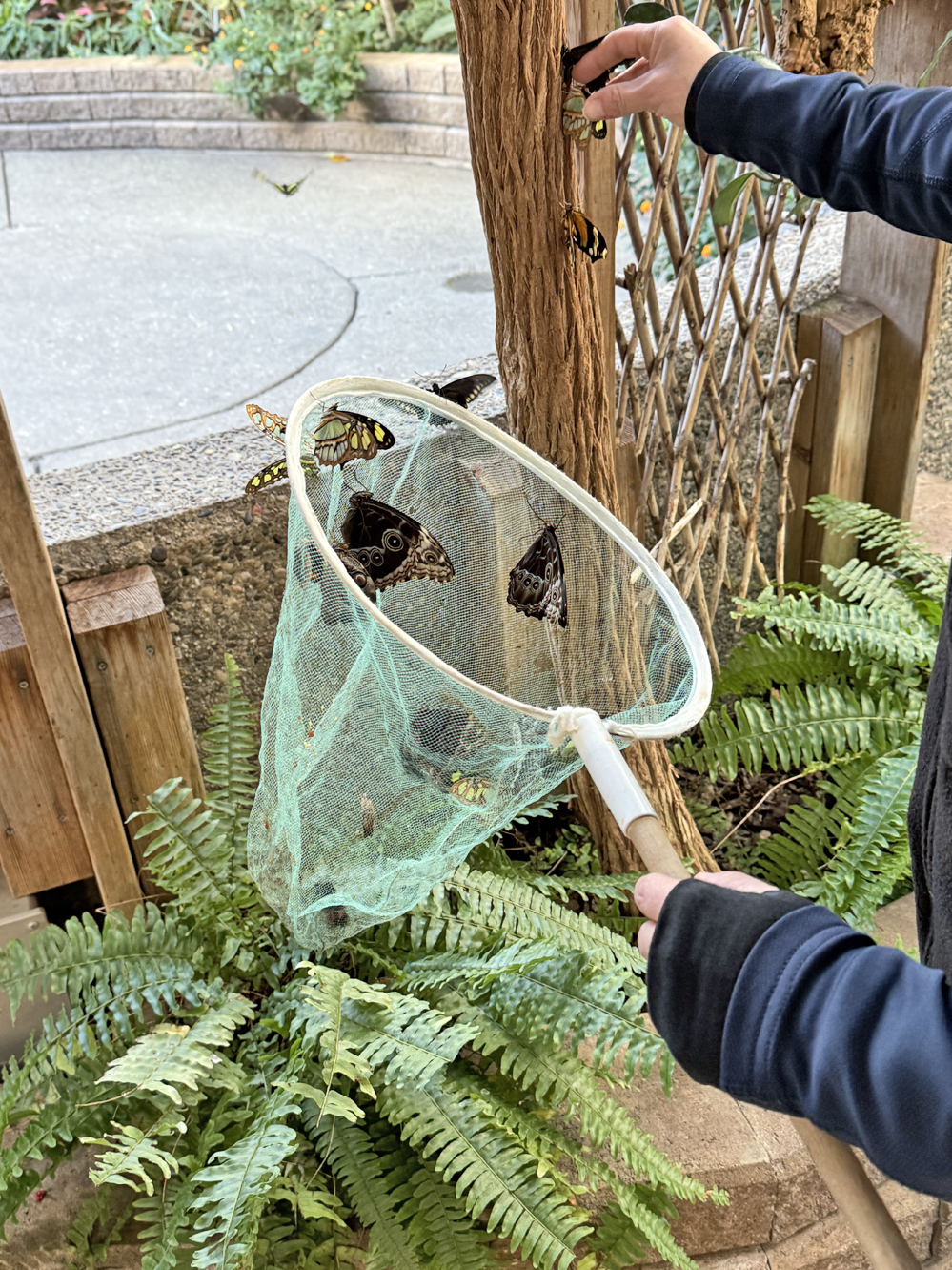
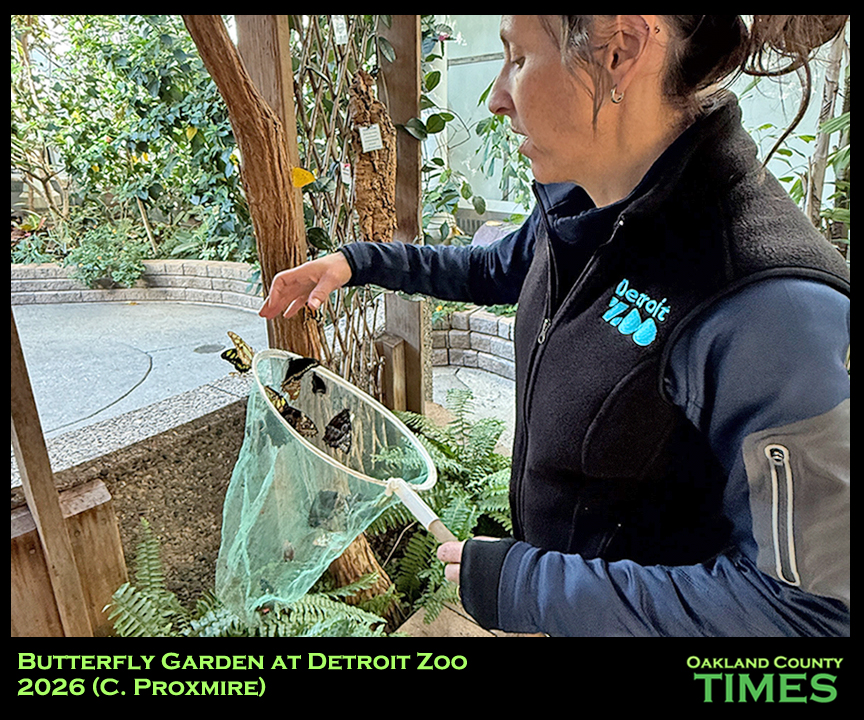
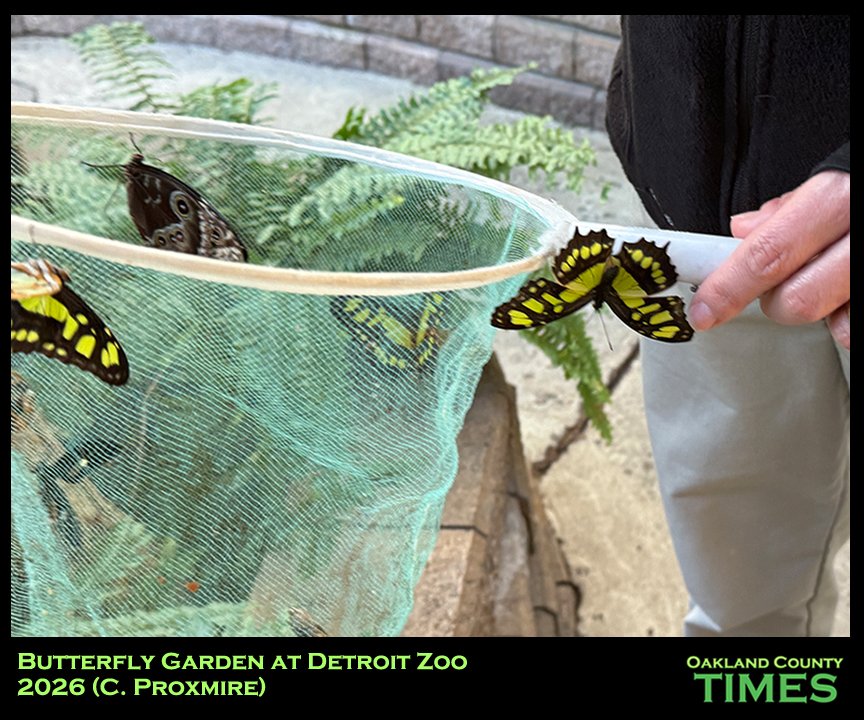
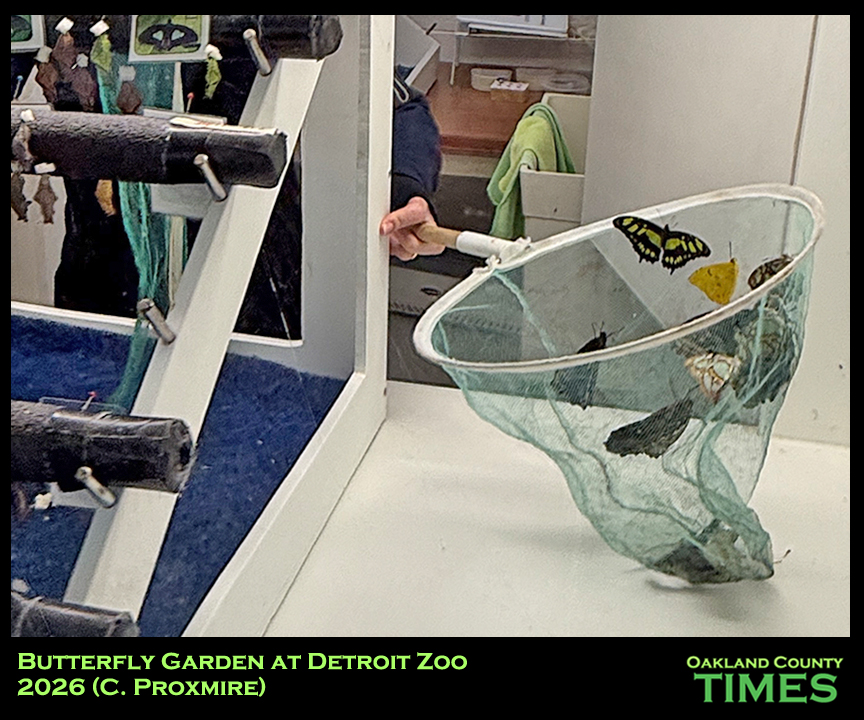
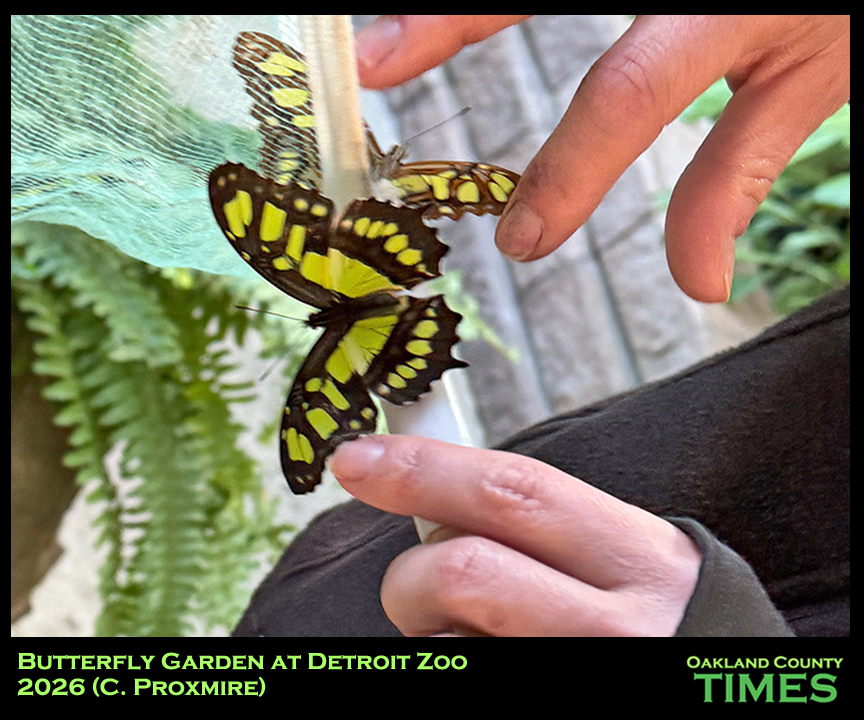
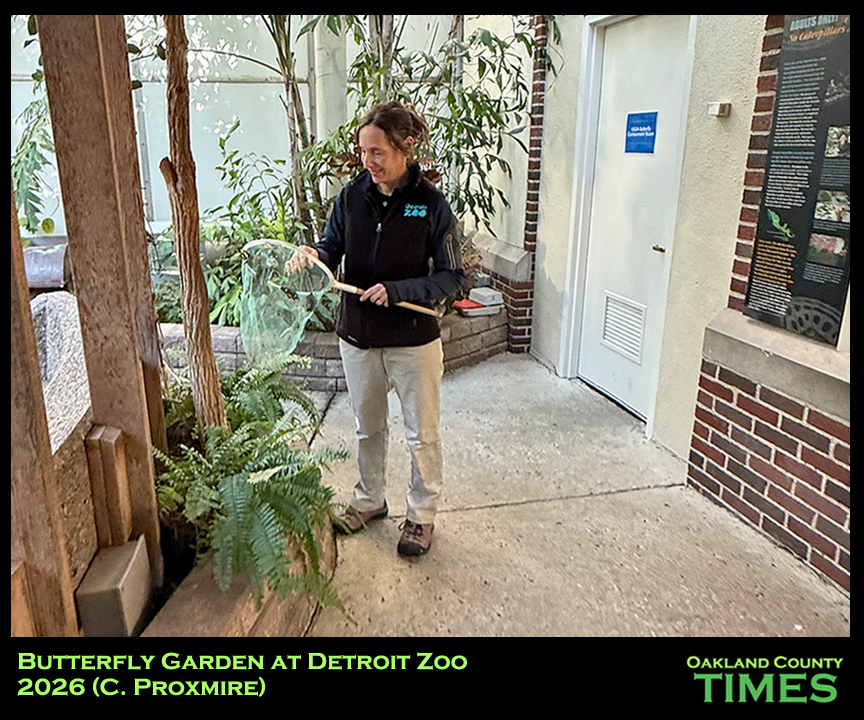
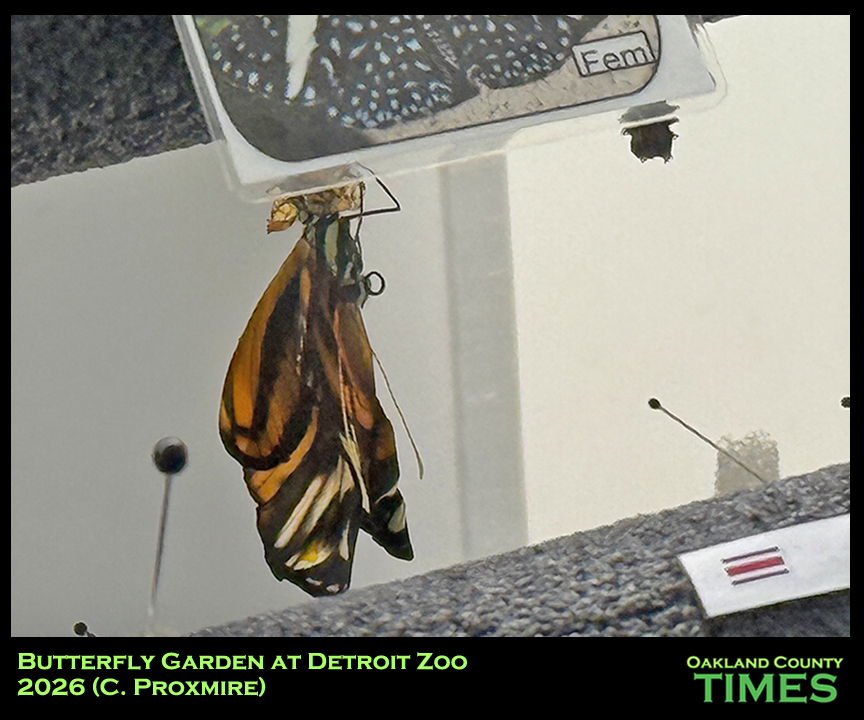
The cocoons go in a cubby where visitors can see them through a window. Each is pinned to a display that shows what type of butterfly will emerge. When enough of them have made their debut, they’re gathered in a net, taken to the main room, and gently placed on branches and leaves of the many plants that fill the enclosure, or the trellis just outside the window..
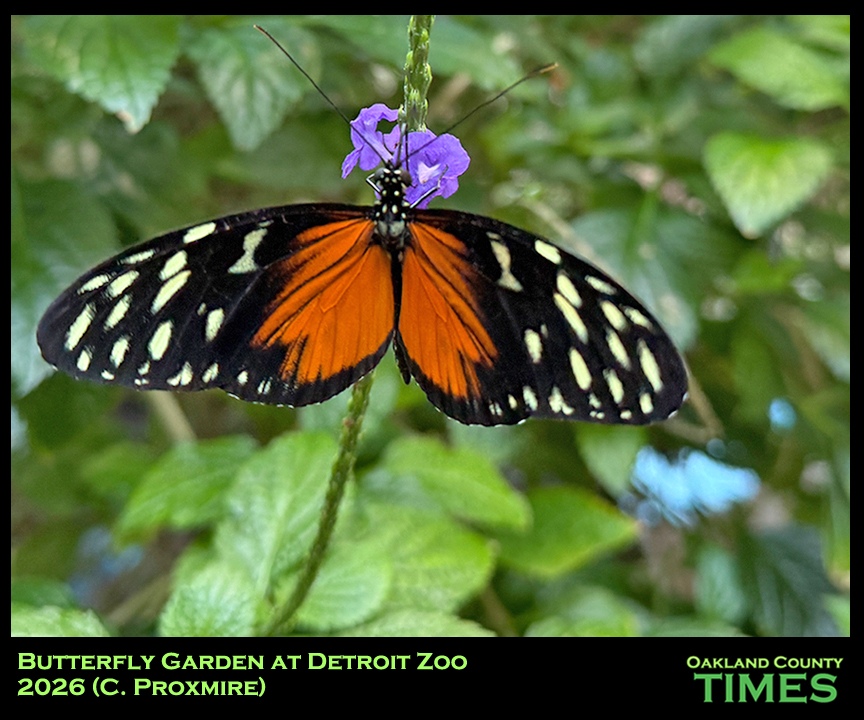
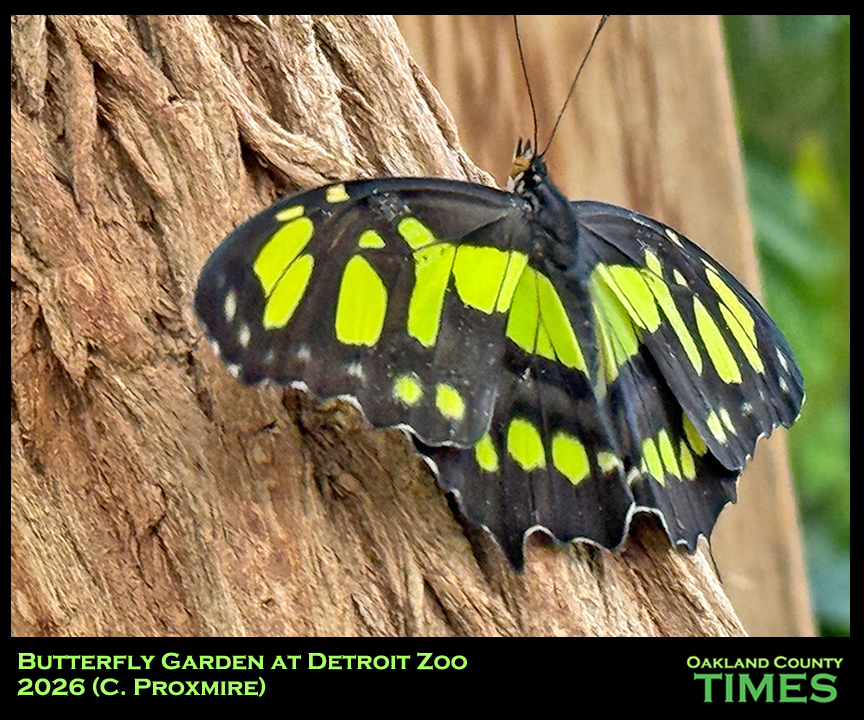
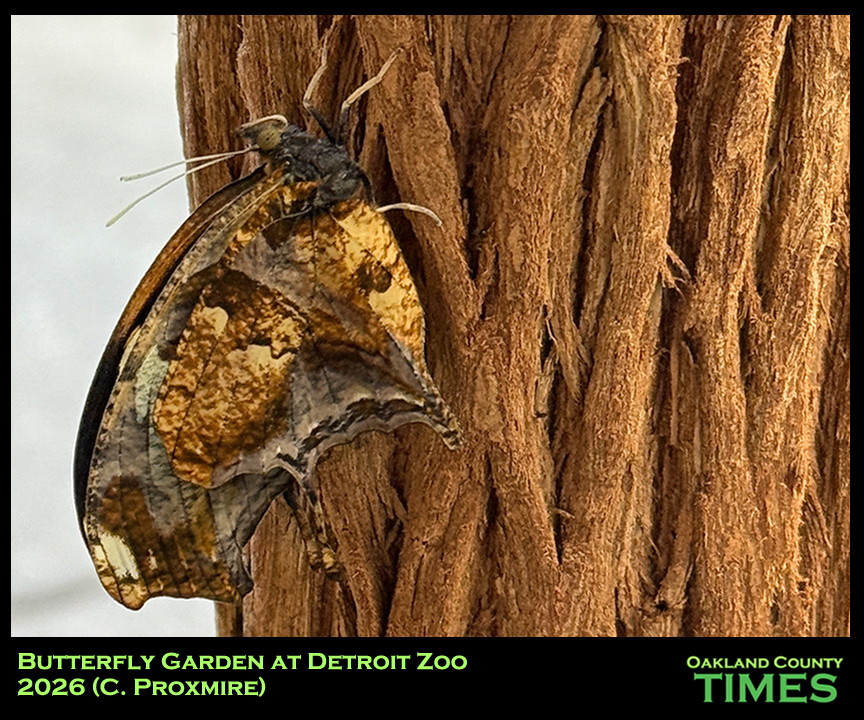
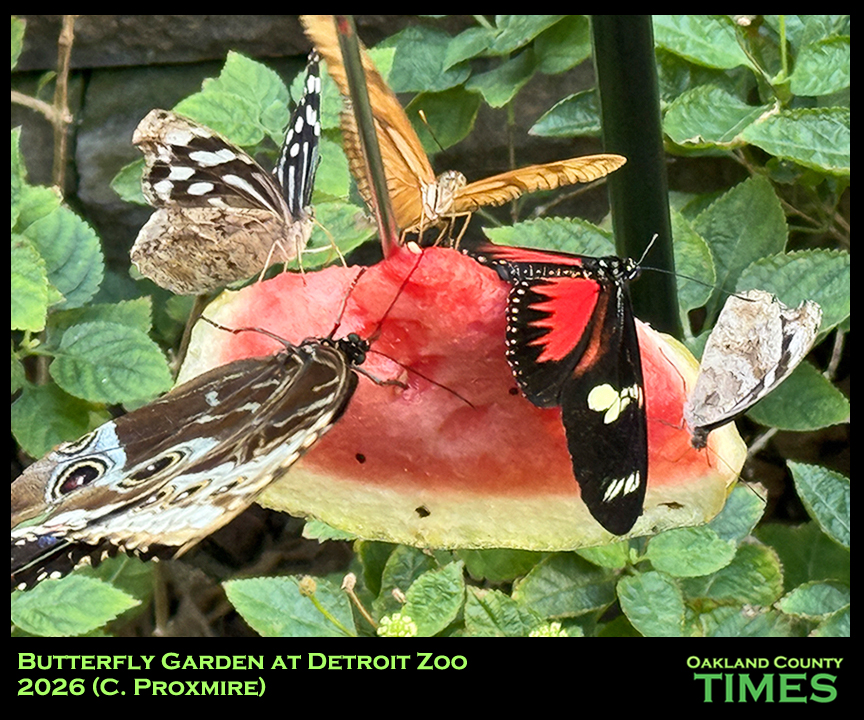
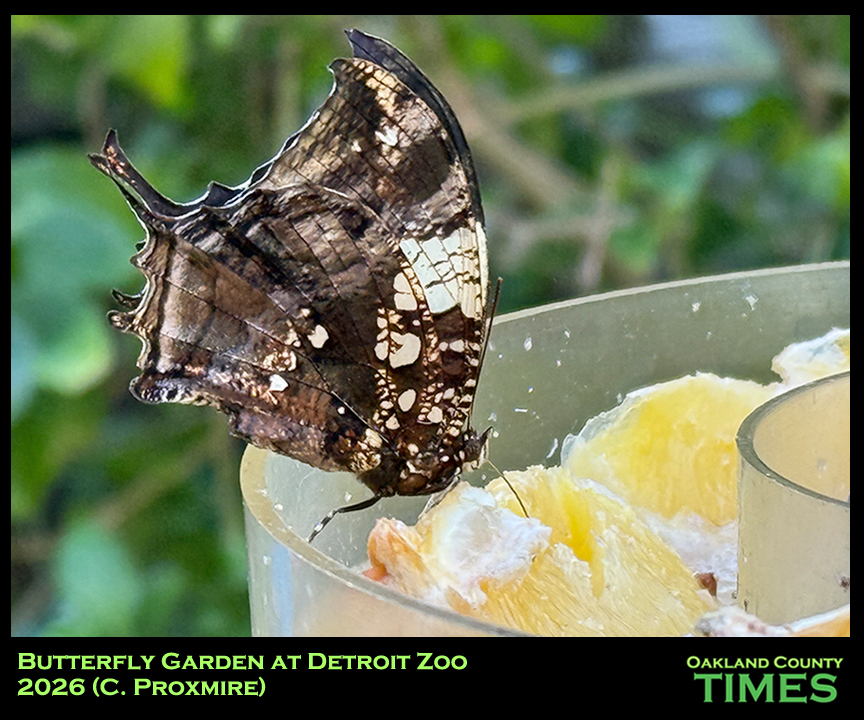
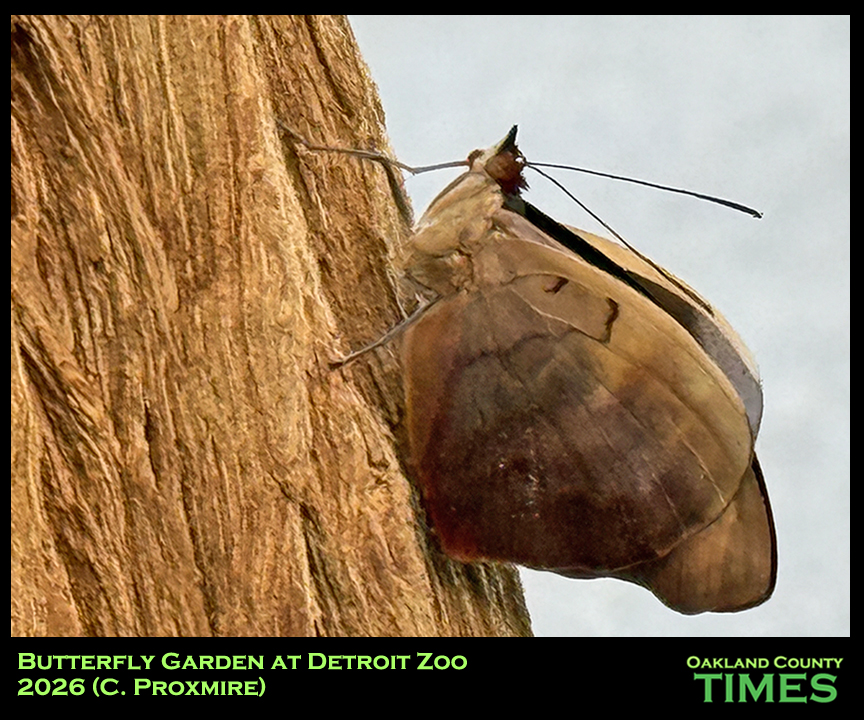
At any time, there are about 200-300 butterflies in the garden, with about 30 different species in the mix. Among the stars are Blue Morphos, Tiger Leafwings, One Spotted Prepunas, Malachitas, and Tiger Longwings.
The butterflies live for 2-4 weeks on average, though there are some that make it several weeks. The rules prohibit touching the butterflies, which is for their safety. If a butterfly is injured it can impact it’s ability to fly or eat.
The zoo has a USDA permit that does not allow for reproduction. “Each butterfly species will lay eggs on specific host plants,” Jozwiak said. “We have a USDA approved plant list that does not include host plants for the species that we receive. If we discover eggs or caterpillars, we will either remove the host plant, or we may discontinue receiving that butterfly species if we can identify which species laid the eggs.”

The butterfly garden hosts a variety of plants, with nectar for the little creatures to enjoy. There is also a water feature and feeders throughout the garden with sweet, delicious fruits. Guests can watch in amazement as butterflies uncurl their long proboscis to suck up nectar like a straw when they feed. And even on the coldest winter days, the butterfly garden is kept to a tropical 75 degrees, making it an enchanting, and comfortable, place to visit all year long.
Also inside the Wildlife Interpretive Gallery is an exhibit that explores Science on a Sphere, focusing on the planet, a wildlife-themed art gallery, and the Matilda R. Wilson Free-Flight Aviary which is home to multiple species of birds.Learn more about the Detroit Zoo, including the Butterfly Garden, at https://detroitzoo.org/











 Save this post to PDF
 Print this post
Comments are closed.