
Hello everyone, my name is martin and i am 17 years old and, to be honest, I don’t know anything about botany. But this days I was looking at the drawings in the Voynich Manuscript and I found something that for me is rare, i am from argentina and i dont know where i can post this, so i found this group.
The Theory
Everyone says the plants in this book are fake because they don’t exist, right? But what if they aren't fake? What if they are just really, REALLY old?
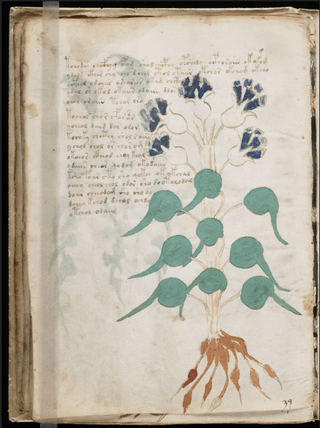
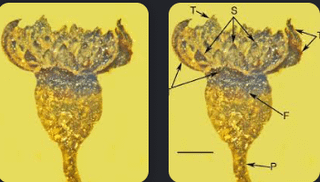
I was comparing Folio 9v (the one with the blue flowers) to a prehistoric flower called Valviloculus pleristaminis. This thing lived like 100 million years ago and was recently found perfectly preserved in amber.
Why I think they are the same:
- The Shape: Look at the blue flower in the drawing. It has that weird "cup" or "urn" base. It’s literally identical to the shape of the flower in the amber.
- The Center: The prehistoric flower has like 50 stamens (the little sticks in the middle) clumped together. In the Voynich drawing, the author didn't just draw a circle; they drew a bunch of tiny lines to show that "hairy" or "crowded" center.
- The Date: Here’s the crazy part: this flower was only discovered by scientists in 2020. How is it possible that it's in a book from the 1400s
My guess (The Amber Connection):
Maybe the author didn't imagine these plants.
sorry for my bad english, i used gemini to help my self about this topic so i was thinking if someone can explain me about it, thanks
by Such_Yogurtcloset384
2 Comments
So it’s actually even more interesting and there are theories that it has something to do with persecution of herbalists and medicine practicing. Especially with women that would be perceived as witches. and the theory is that every single plant design is code for a different plant design so they look alien, but there’s a secret translation that they are all actually native plants. It was a way to protect the knowledge.
Like for example, curly leaves could be code for a different type of leaf entirely. They might have been codes for recipes hidden in art. Like 50 stems could be referring to the dosage amount of the plant or something similar. Same with the amount of points on certain leaves.