
Special to the Observer-Dispatch
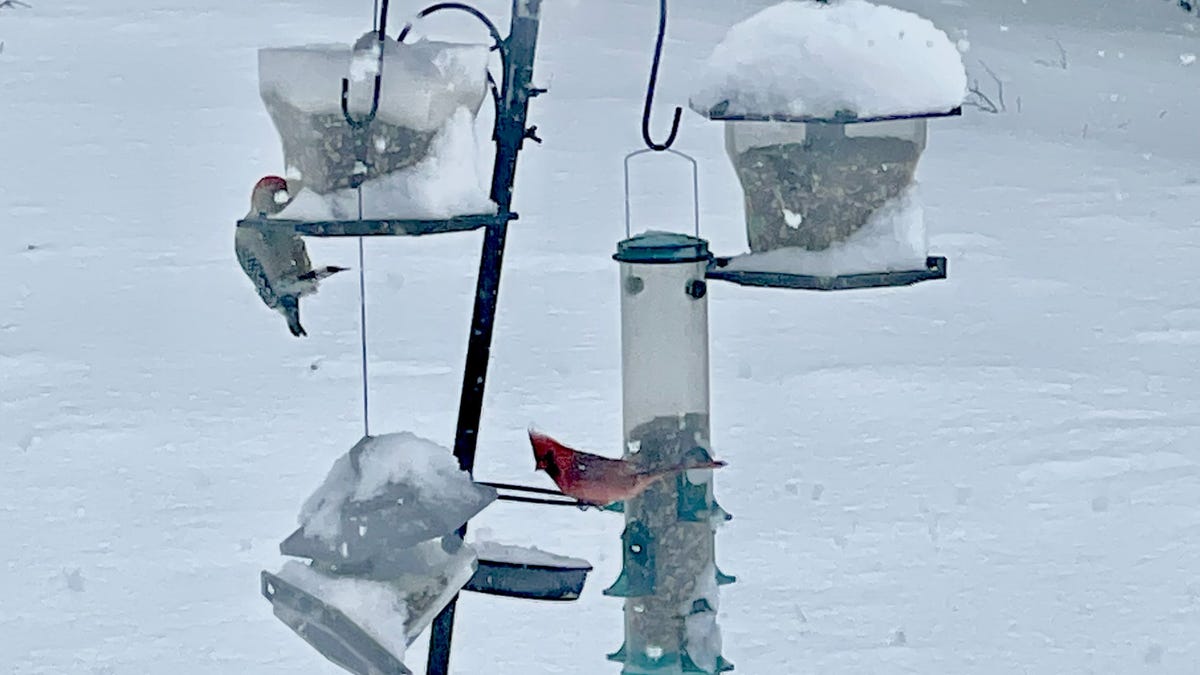
Woodpeckers, cardinals, blue jays, chickadees, and other year-round residents add life to a winter garden.
Some robins stay around. In Central New York we may only see the Dark-eyed Junco in winter. To attract more birds to your yard, one must provide water, shelter, and food.
Provide heated water in a bird bath if possible. If not, check daily to make sure the water is not frozen. Do not add things like antifreeze because it is extremely toxic.
Plant shrubs of varying heights, and trees, as shelters in your yard. Even a brush pile is a help. Plants as a food source help keep birds around for longer each day as they forage. A feeder makes it easier for predators. Natural foraging keeps birds from congregating in one spot where it is easier to spread diseases such as the Avian Flu.
Leave some perennial garden plants standing through winter. Seeds from thistles, Black-eyed Susan, Coneflower, asters, sedums, grasses, goldenrod, and other plants feed the birds. Provide berry sources such as Staghorn Sumac, viburnums, Virginia Creeper, Serviceberry, and Winter berry.
If you use a bird feeder, keep it clean and near shrubs and trees to give a place of escape from predators. Many seed mixes have fillers that do not provide any nutrition. There is often a better cost/benefit ratio to buy less of the more expensive seed rather than a lot of cheaper seeds. Robins like fruit. Many birds also like unsalted nuts, peanut butter, mealworms, or suet.
For more information on the use of bird feeders you can look at Cornell Labs Project Feeder Watch at https://feederwatch.org . An excellent video titled “TRANSFORM Your Garden To A Winter Bird OASIS!” is at https://www.youtube.com/watch?v=nhj03kJUUjI
Cornell Cooperative Extension Oneida County answers home and garden questions which can be emailed to homeandgarden@cornell.edu or call 315-736-3394, press 1 and ext. 333. Leave your question, name, and phone number. Questions are answered on weekdays, 8am to 4pm. Also, visit our website at http://cceoneida.com/ or phone 315-736-3394, press 1 and then ext.100.
Comments are closed.