
As Texas communities face more frequent flooding, rapid development and aging stormwater systems, a new Texas A&M AgriLife Extension Service resource provides help to local governments in planning smarter, nature-based infrastructure projects.
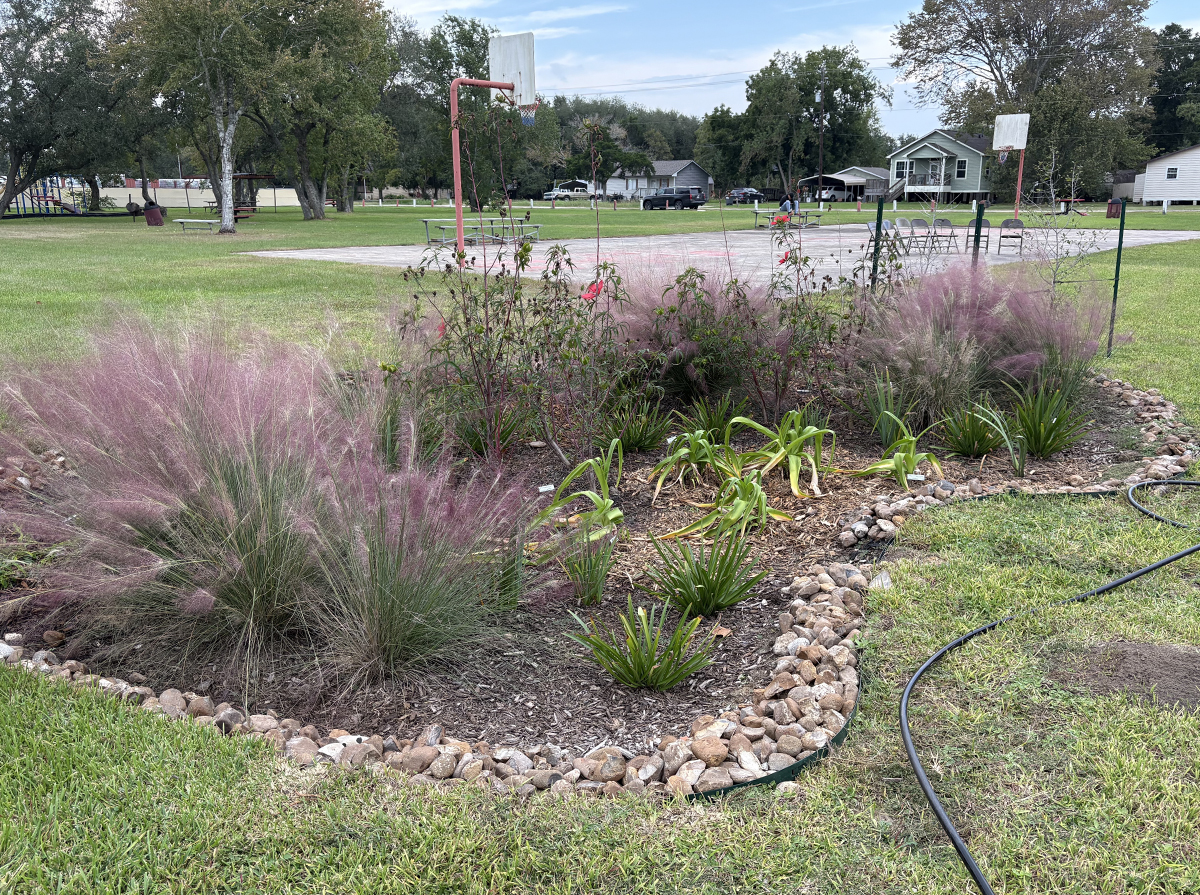 A rain garden designed to capture and filter stormwater. The garden uses native plants and engineered soil to slow runoff and reduce localized flooding. (Texas A&M AgriLife)
The Green Infrastructure for Texas Communities, GIFT, developed through AgriLife Extension’s Disaster Assessment and Recovery program, DAR, provides practical, research-based design guidance for nature-based solutions that manage stormwater while improving public spaces.
With support from the Texas General Land Office, the toolkit officially launched late last year and is now available statewide.
Flooding remains a persistent challenge across Texas, whether driven by intense rainfall, expanding impervious surfaces or development in flood-prone areas, said Charriss York, AgriLife Extension program leader at DAR.
“Water quantity is always an issue in Texas; it’s either too much or too little,” York said. “Nature-based infrastructure gives communities tools to intentionally manage where water goes before it becomes a problem.”
Blending nature with traditional infrastructure
Nature-based infrastructure solutions use soil, plants and landscape features to slow, capture and treat stormwater. They include rain gardens, bioswales, constructed wetlands and permeable surfaces that work alongside traditional infrastructure such as pipes and storm drains.
Build smarter stormwater solutions
DAR’s toolkit provides guidance, technical drawings and step-by-step design support for nature-based infrastructure projects.
York said these developments offer communities flexibility while delivering added environmental and social benefits.
“Instead of fencing off detention areas that people can’t use, nature-based infrastructure can create parks, trails and spaces that benefit residents and wildlife at the same time,” she said.
The toolkit is designed for engineers, planners and local officials who are interested in nature-based infrastructure but lack clear guidance on how to design and implement projects. While these practices have been used in Texas for decades, adoption has been uneven, York said.
“We’re seeing more interest from communities, but there’s still a need to raise the knowledge base for decision-makers and the consultants they work with,” she said.
A practical, start-to-finish resource
The new toolkit walks users through the full lifecycle of a project, from site selection to long-term maintenance. The toolkit’s design sets outline how to choose the right practice for a location, perform calculations, consider soils and vegetation, and account for construction and upkeep.
Each practice also includes technical drawings that engineers can adapt or city staff can use when reviewing plans submitted by consultants.
“If a community has never built a rain garden or bioswale before, this gives them a reference for what those elements should look like and what questions to ask,” York said. “Smaller projects may be designed and installed by local engineers, allowing cities to reserve outside funding for larger infrastructure needs.”
Supporting long-term mitigation
The toolkit is part of DAR’s mitigation unit, which focuses on reducing the impacts of future storms before disasters occur.
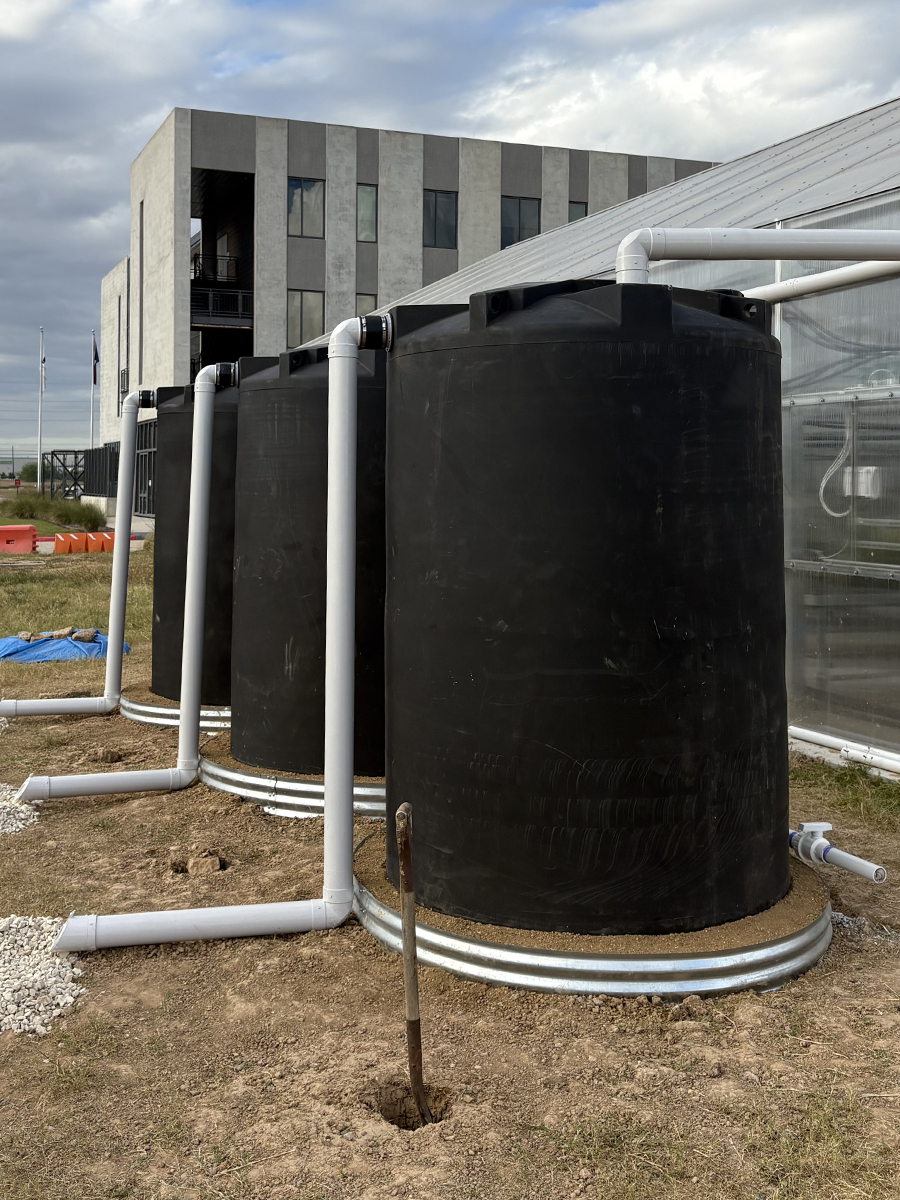 Rainwater collection tanks. The tanks capture roof runoff for reuse, helping reduce stormwater flow and to conserve water on campus. (Texas A&M AgriLife)
Monty Dozier, Ph.D., AgriLife Extension DAR program director, said the toolkit builds on years of applied research and on-the-ground action along the Texas Gulf Coast.
“With the introduction of this nature-based infrastructure toolkit, the GIFT team has launched a way to help communities more quickly and effectively expand efforts to further protect Texas families, homes and businesses from the ravages of Texas weather,” Dozier said.
York emphasized that nature-based infrastructure is not a replacement for traditional drainage systems but a complementary approach to help communities manage stormwater more strategically.
“If we don’t intentionally give water a place to go, it will decide for itself, and that’s when it ends up in homes and businesses,” she said. “The goal of this toolkit is to help communities move from talking about solutions to actually building them.

Share or print this post:
Comments are closed.