
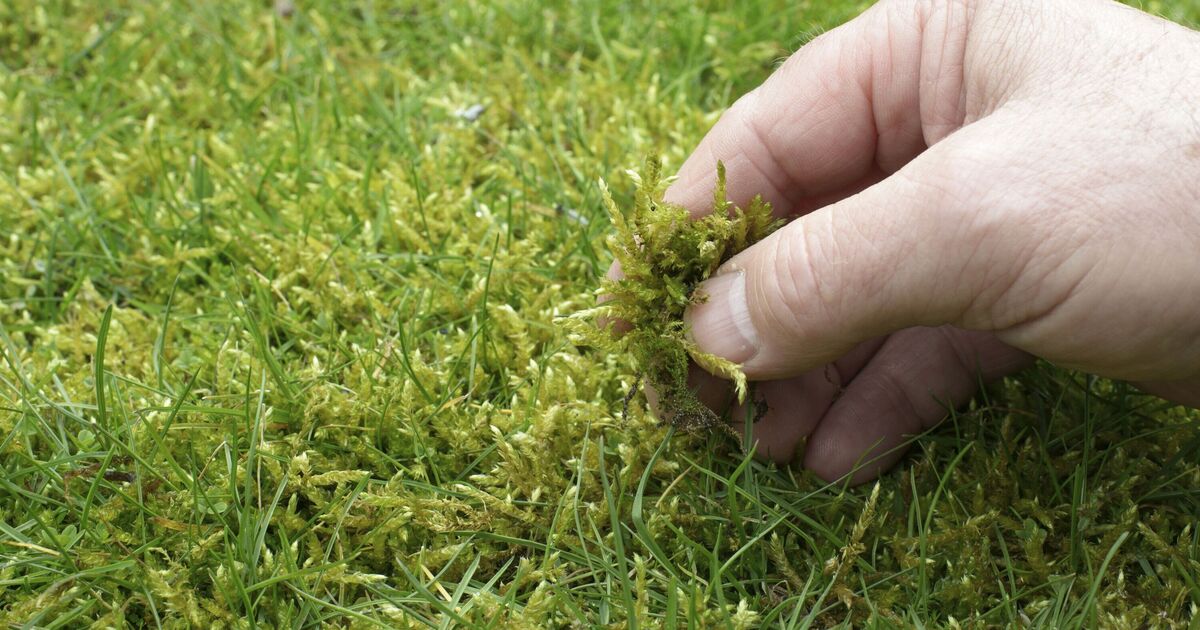
As gardeners begin planning for the spring season ahead, many will notice unwelcome patches of moss that have appeared during the cold, damp winter months. Moss thrives in damp conditions, meaning it’ll often pop up on lawn areas where there is little to no sunlight. It can also appear on driveways, patios and roofs where there is little light.
While it may not bother many people, leaving it unchecked can compromise lawn health and make the grass look tired and patchy. Luckily, Jane Fairlie, technical development manager at Pelsis Doff, has shared her advice on tackling moss effectively and restoring lawns.
The expert said: “Moss might feel soft underfoot, but it can quickly take over your lawn, preventing sunlight, water and nutrients from reaching the grass roots.
“It’s particularly noticeable after winter when grass appears tired and yellow, while moss remains stubbornly green. Since moss spores are always present, rain can easily spread them into bare patches, making permanent removal challenging.”
The best time to address moss is in March or September, at the start or end of the growing season. With March just a couple of weeks away, now is the best time to plan your approach.
According to the expert, there are two “most effective” methods for removing moss.
Jane said: “Raking or using a powered scarifier, which can be hired from your local tool hire company for a daily rate, effectively removes moss, especially when dry.”
This will leave some bare patches and uncover compacted areas, but this can be solved with aerating and over-seeding the entire area. Jane said this is the “safest way” to remove moss, though it is laborious.
The expert added: “You can use moss control products. Lawn care treatments turn moss black and dry it out by stopping chlorophyll production.
“These products also nourish the lawn and control weeds. However, following application instructions carefully to avoid over-application, which can leave black patches.”
One popular home remedy is to use washing-up liquid, but Jane warned against this as “it is not a registered plant protection product”.
Comments are closed.