
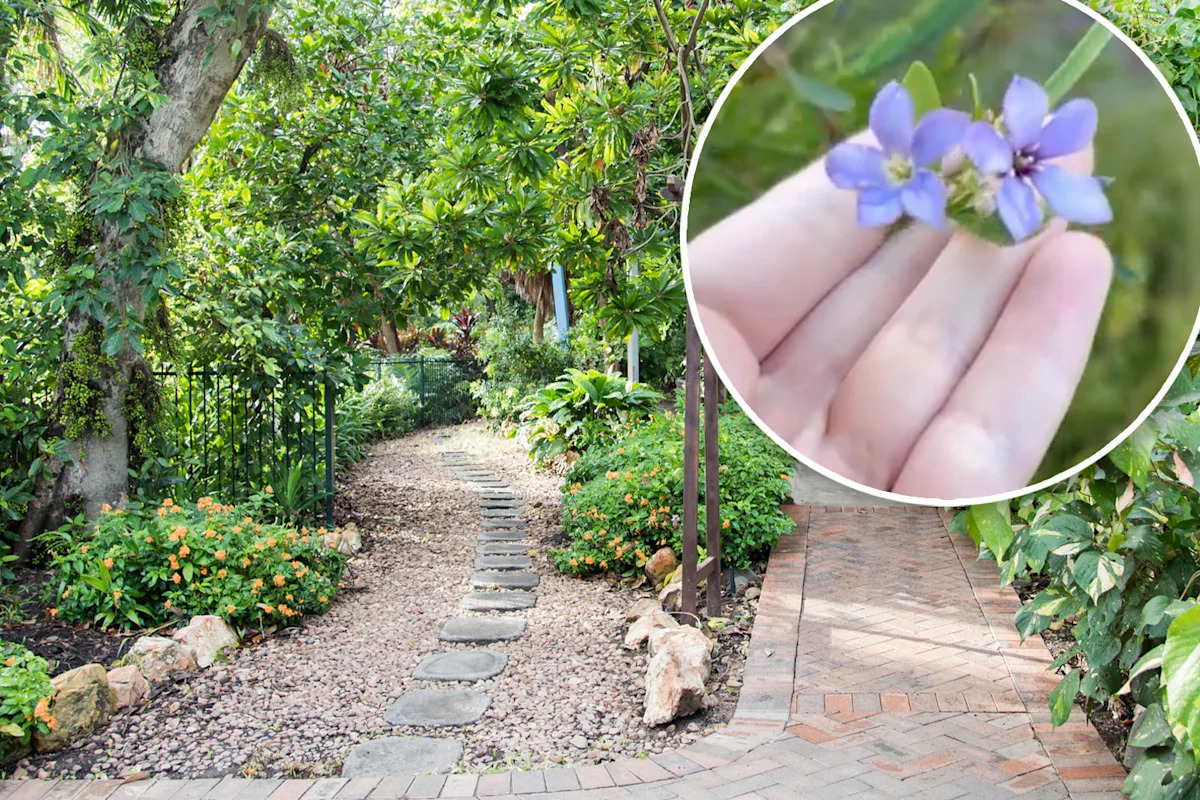
Aussies are being urged to scour their properties for a popular “pretty” garden plant that has “gone rogue”. With the “extremely invasive weed” now in full bloom, a council in Victoria is pleading with residents to remove the pest before it smothers its surroundings.
The backyard warning was issued by the Surf Coast Shire Council in the state’s southwest this month. Native to Western Australia, the bluebell creeper has been widely planted in gardens around the country, and is now a “serious environmental pest” in the local area.
The plant forms dense, tangled thickets and can climb up to five metres high by “scrambling over shrubs and trees”, the council said online.
The species, which is classified as a weed in Victoria, South Australia, Tasmania and the ACT, kills native plants by stealing their sunlight and strangling them.
It also increases the fire risk by linking ground fuels to tree canopies, the council said while urging residents to help protect local bushland by removing bluebell creeper from their yards.
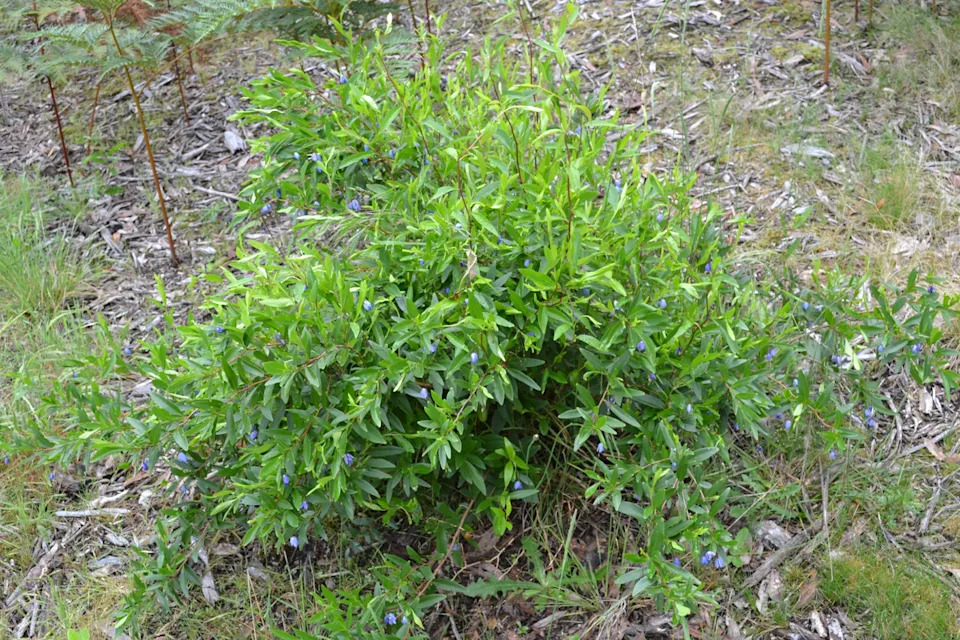
Bluebell creeper takes on a shrubby form in open areas. Source: Surf Coast Shire Council/Facebook
What does a bluebell creeper look like?
The climber, which takes on a shrubby form in open areas, produces small clusters of mainly mauve bell-shaped flowers every year from Spring to Summer, according to Green Adelaide, South Australia’s first government urban environmental organisation.
Sometimes the flowers can be pink or white.
The species, also known as sollya, also features light to dark green, glossy leaves and oval-shaped berries that ripen to a deep purple colour.
Each one can contain dozens of seeds, which are often dispersed by birds and feral foxes, which eat the fruit.
“The spread of bluebell creeper also occurs through disturbance of the soil seedbank following fire, soil movement or control efforts,” Green Adelaide states on its website.
It’s illegal to sell the plant in South Australia. The species is a declared weed under the Landscape South Australia Act 2019.
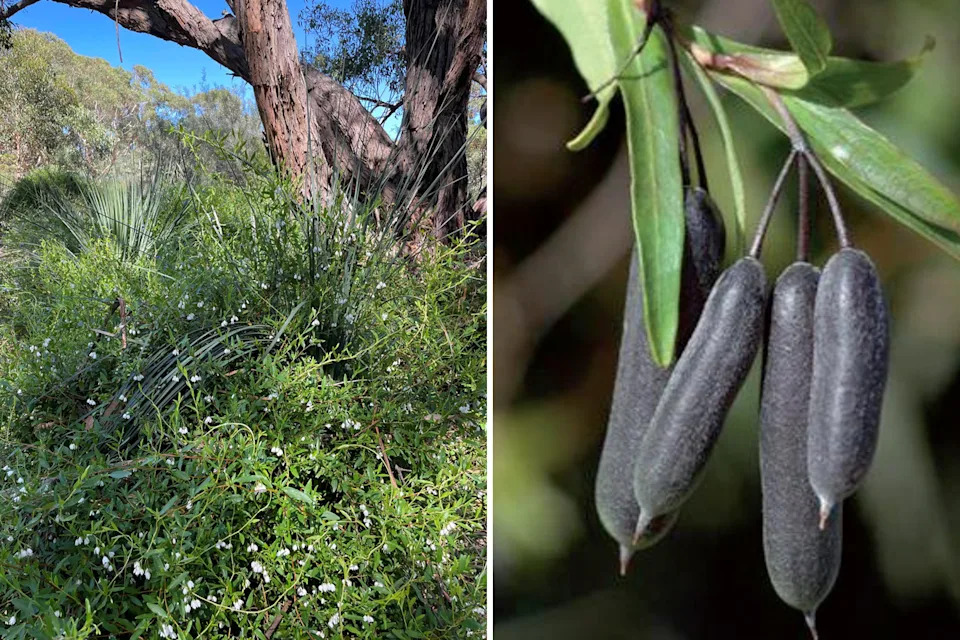
A white flowered variation of bluebell creeper seen smothering native understorey plants (left). The species also features oval fruit containing seeds (right). Photo credit: Julie Palmer/Green Adelaide/Surf Coast Shire Council
How do I remove the invasive weed?
Unlike many other invasive weeds, the bluebell creeper has shallow roots and can usually be hand pulled if caught early.
However, care should be taken as the plant’s toxins can cause skin irritation and nausea.
When removing the climber by hand, Aussies should try to minimise the soil disturbance as much as possible, as bluebell creeper responds to such activity with “vigorous growth”, according to Green Adelaide.
Small amounts of cuttings or seedlings can be disposed of in the household waste bin, as long as they are securely sealed in heavy-duty garbage bags.
Herbicides can also be used to treat cut stumps when the plant is actively growing.
However, gardeners should be sure not to mistake the climber for similar native species such as the sweet apple-berry.
Do you have a story tip? Email: newsroomau@yahoonews.com.
You can also follow us on Facebook, Instagram, TikTok, Twitter and YouTube.
Comments are closed.