
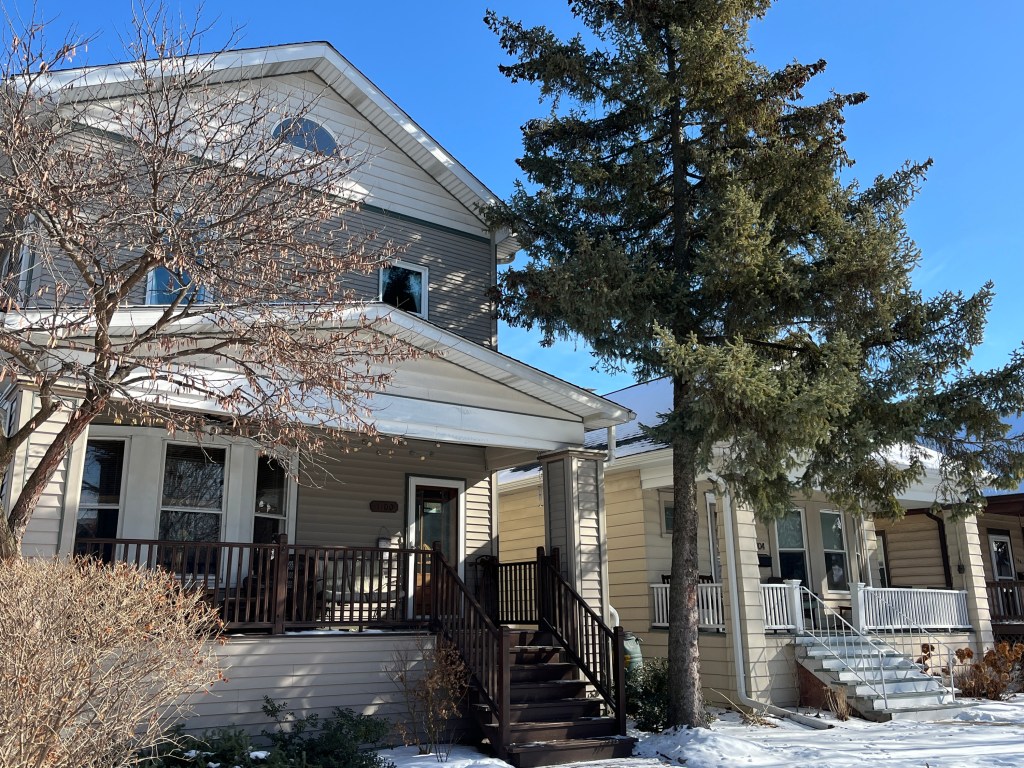
You’ve heard about people who brought a cute little puppy home from the shelter, and a year later the dog was the size of a Great Dane. In almost any neighborhood, you can spot homes where somebody brought a cute little evergreen tree home from the nursery, only to have it grow wide enough to consume the whole front yard, dwarf the house or block the sidewalk.
With trees, unlike puppies, there are easy ways to know what you’re getting into. “A plant’s label will tell you how tall and wide it is likely to get,” said Sharon Yiesla, plant knowledge specialist in the Plant Clinic at The Morton Arboretum in Lisle. “That is critical information to consider before you buy it.”
Choosing a tree or shrub without considering its mature size is a recipe for big trouble. A too-large plant or one that is planted too close to a building or path may grow to buckle the sidewalk or collide with overhead power lines, creating a major hazard.
Even homeowners who do think about a tree’s height often fail to consider that it also will get wider. That’s especially a problem with evergreens, which have branches all the way down to the ground. The lower branches continue to get longer as the tree grows taller.
The lowest part of the tree may grow to obstruct the sidewalk or the door, crowd the porch or completely block the front window. “You see some really unfortunate pruning where homeowners have tried to hack their way through an evergreen tree that is just too big for the place it is planted,” Yiesla said.
“A big evergreen crowding a house can make maintenance difficult in that area,” she said. It may damage gutters or lead to peeling paint or decay in the siding by holding in moisture.
Pruning a tree or shrub that is naturally too large for the site is an eternal chore. “You’re fighting the genetic programming of the plant, and you’re never going to win,” she said.
The solution is to choose trees or shrubs that, when they are fully grown, will still fit within the available space, both horizontal and vertical. Mature size information should be stated on the plant’s label. “Find those numbers and take them seriously,” Yiesla said. You can get more details from online sources such as the Arboretum (mortonarb.org/search-trees-and-plants).
It’s not enough just to look up the species, such as Norway spruce or arborvitae, because not all arborvitaes are alike. “The mature size can vary greatly between cultivated varieties of the same species,” she said. “Find out the details for the particular cultivar you’re considering. There are cultivars available in a wide range of sizes and shapes.”
For example, Globosa Eastern arborvitae (Thuja occidentalis ‘Globosa’) is a shrub that grows 4 to 6 feet high and wide. Nigra Eastern arborvitae (Thuja occidentalis ‘Nigra’) is about the same width, but is a medium-sized tree that can grow 30 feet tall.
It’s easy to be deceived by small plants in pots at a garden center. “They all look pretty much alike when they’re little,” she said. “The only way to tell them apart and imagine them in the future is by reading the label and researching the particular cultivar.”
To avoid being seduced by the wrong cute little plant, arm yourself with information before you go shopping. Take a hard look at the place you want a plant to live. Consider how much of the lawn or garden bed you are willing to give up to a mature tree or shrub. Think about how close the tree or shrub would be to the house or other building. Mark the width of the space you are willing to allow and measure it.
Look up. The height of your house can help you estimate how tall a tree would be to be appropriate for your yard. Is there an overhead power or telephone line nearby? In that case, plan on a tree or shrub that will get no more than 20 feet tall. Otherwise, utility crews will be forced to prune it severely for safety’s sake.
Write down the site’s measurements and take them to the garden center. If the choices seem overwhelming, take pictures of the labels of all the plants you’re considering and use them to consult online sources such as the Plant Clinic before you buy.
“If you’ve taken real measurements and you’re primed to think about a plant’s mature future size, it’s easier to resist an impulse purchase that could create big problems down the road,” Yiesla said.
For tree and plant advice, see the online resources of The Morton Arboretum at mortonarb.org/plant-care, or submit your questions online at mortonarb.org/plant-clinic or by email to plantclinic@mortonarb.org. Beth Botts is a staff writer at the Arboretum.
Comments are closed.