
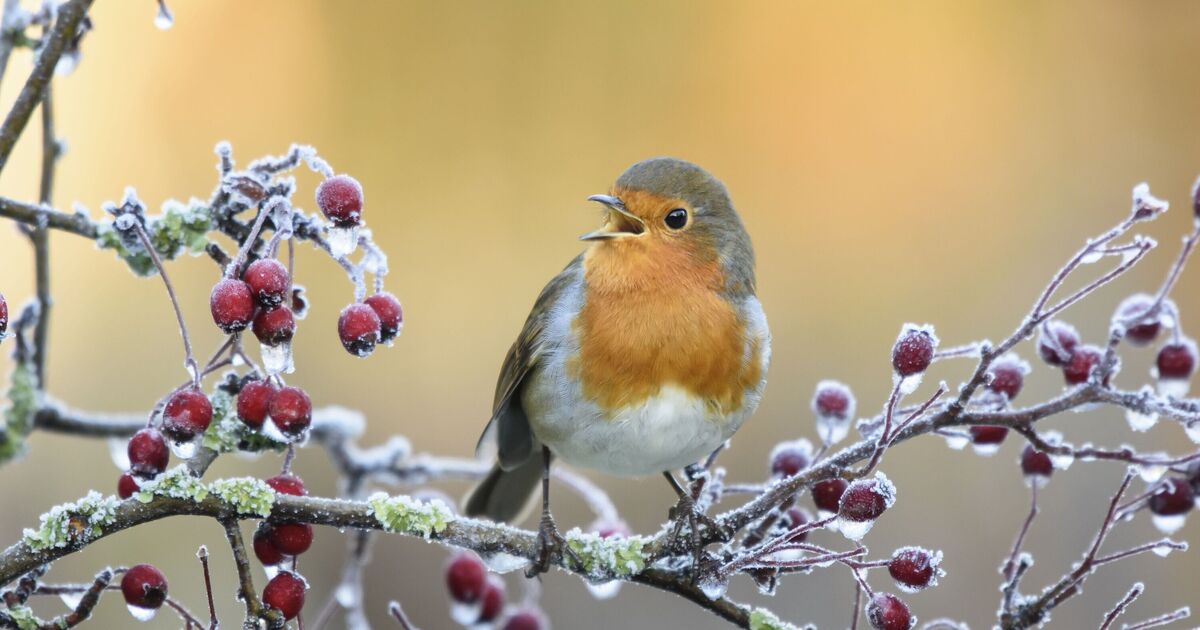
A kitchen staple you may already have at home will have robins and other birds flocking back to your garden, even during cold temperatures. Birds are a gardener’s best friend, helping green spaces feel vibrant and lived in, while doing a key job. In the warmer months, birds will hunt pests that can cause damage and disease to plants and flowers.
But the colder months of winter are a tough time for our feathered friends, as there’s less of their favourite food around due to the frozen ground preventing them from getting to the creatures they love to eat in warmer months. And the creatures will need a bit of extra support until the weather turns.
Perhaps the best way to make your garden an inviting environment for birds is to leave food and water to help them get the energy they need.
But you don’t always need to lay on seeds and grains. According to the RSPCA, garden birds like robins can eat a wide variety of different kinds of food, including a go-to “human food”: cooked pasta.
The carbohydrates in pasta are a great way to give the avian creatures an energy boost when it’s really cold. However, it’s vital that you only cook the pasta in water, without salt, butter, spices, oil, or anything else that can harm them.
It’s also recommended that larger pieces be cut up so it’s easier for them to eat. Using leftover pasta you don’t end up cooking means it doesn’t go to waste, and best of all, it’s an inexpensive option.
For example, Sainsbury’s Stamford Street Co. Penne Pasta, which contains 500g, is currently just 41p online. Other options are available across other supermarkets for well under £1.
It’s not the only surprising food garden birds are also partial to, according to the charity.
The winged creatures also like scraps like rice, boiled potatoes, cheese, and are even known to go for uncooked and unsalted bacon rind.
However, in all cases, these shouldn’t be cooked with any other ingredients.
Like humans, the critters need a balanced diet, and can eat various other things. According to the RSPCA, this also includes fruit (namely, raisins, sultanas, apples, pears and soft fruits), as well as grains and seeds that are suitable for them, such as nyjer, millet, oats, and sunflower seeds.
They can also eat peanuts, provided they’re not salted. They must also be fresh and not contain aflatoxin (a poison produced by certain moulds).
It also stresses that these should only be put in feeders with a smaller mesh, as whole peanuts are a choking hazard for young chicks.
Other alternative food options include net-free fat or suet balls or insects like mealworms or waxworms.
However, dog owners need to be careful with grapes, sultanas, raisins and some artificial sweeteners as they’re toxic to pooches.
Birds also need a healthy supply of fresh water, so gardeners are advised to leave out bowls of it regularly if they don’t have bird baths.
But it’s important to avoid placing feeders and bowls near places where birds could be vulnerable to predators.
Comments are closed.