
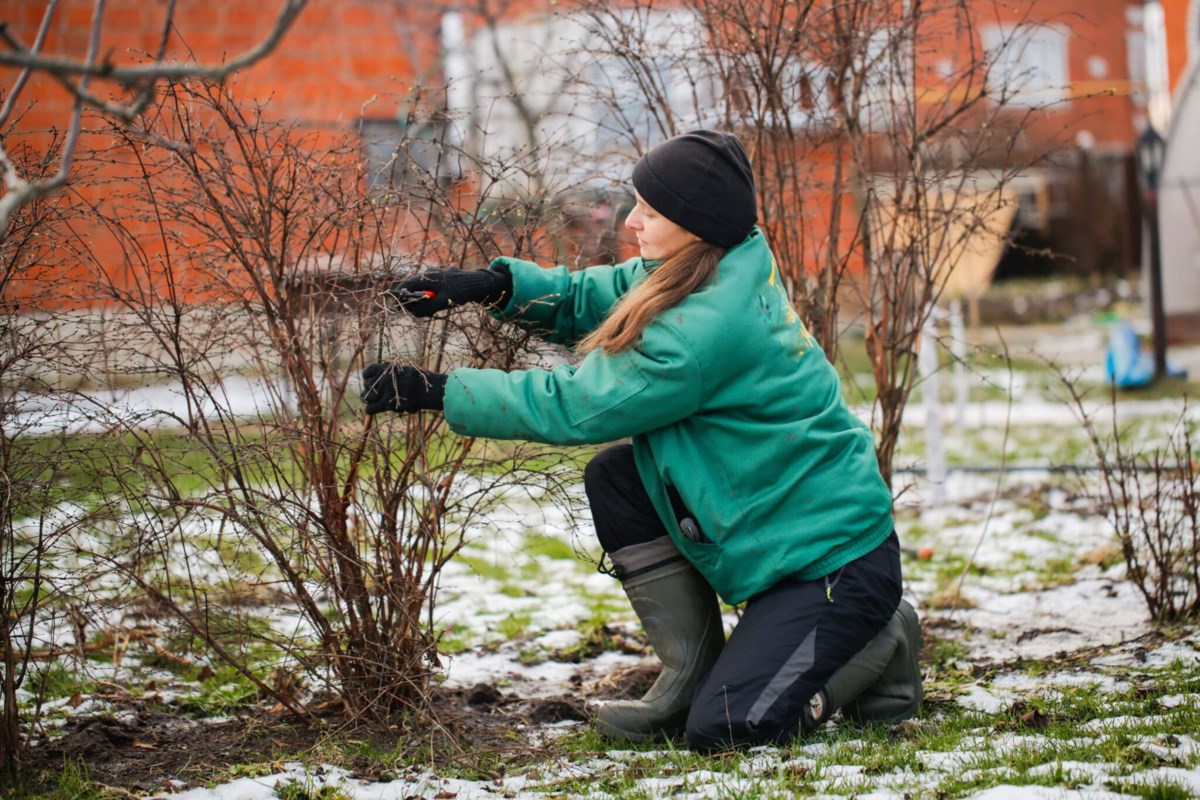
‘Winter pruning gives you something no other season can: visibility,’ gardening columnist says
In recent years, there has been a quiet shift in how we design for winter — a re-imagining of a wilder season where structure wildlife, and especially birds are part of the plan.
Far from dull, the winter garden is full of form and movement: cones, spheres, spires and frosted plumage catching the light.

A winter garden in structure: crabapple, dogwood, panicle hydrangeas, forsythia, climbing roses, cedars, junipers and perennial seed heads left standing for birds and beauty – Monika Rekola photo
In temperate climates, most woody plants are dormant through winter. Their energy is stored in roots and stems, waiting for the signal of warmth and light. And it is precisely this dormancy that makes late winter and early spring the most important pruning window of the year.
Pruning now does three powerful things
First, it allows plants to recover more easily. Cuts made during dormancy heal cleanly when growth resumes, rather than bleeding sap or stressing tender tissues.
Second, it directs spring energy where you want it most. When buds break, the plant pours its reserves into fewer, stronger shoots — healthier growth, better structure and often better flowering.
And third, winter pruning gives you something no other season can: visibility. With foliage gone, you can finally see the crossing branches, the weak crotches, the crowded centres and the awkward angles that summer politely hides.

Photo credit: Bracy’s nursery
The general rules of cold-season pruning:
Choose a mild, dry day and never prune too early in the winter, as incisions can dry out if the temperature drops well below freezing.
Remove dead, dying, broken or diseased branches
Any branches or stems that are dead, dying, diseased, or broken should be pruned. This can be done at any time of year—and the sooner, the better. At the very least, prune branches or stems before the plant produces new growth in spring so that it doesn’t waste energy on damaged areas and prevents spread of disease. Always cut on an angle in order to prevent water from pooling on the newly exposed plant tissue.
Crossed, inward or downward-growing branches
Remove branches that cross or rub against each other. Prune out branches that grow inward toward the trunk or form narrow angles (about 30 degrees or less). Downward-growing branches are often less healthy and more likely to contact soil or nearby plants, so removing them helps direct the plant’s energy into stronger, upward growth. Cut branches at the node, the point at which one branch or twig attaches to another.
But timing matters. Especially with flowering shrubs.
Before you lift the pruners, ask one simple question:
Does this shrub flower on old wood or new wood?
Shrubs that bloom on new wood should be pruned in late winter or early spring. This includes smooth (Annabelle) and panicle hydrangeas, which produce flowers on fresh growth each season.
Tip: Hard pruning — cutting plants back to about 12 to 18 inches — encourages fewer but larger blooms. Lighter pruning results in more, smaller flowers. Many experts recommend cutting smooth hydrangeas back by about one-third of their total height in early spring.
Old wood, new wood – what does it mean?

Pruning hydrangeas in winter’s embrace – Monika Rekola photo
Shrubs that bloom on old wood — last year’s growth — must wait.
If you prune these too early, you are literally cutting off this year’s flowers.
Wait until after they bloom in spring, then prune immediately after flowering fades.
Some examples include bigleaf, oakleaf and mountain hydrangeas
Most shade trees — oak, maple, hornbeam — are best pruned in late winter or early spring while dormant. Evergreens such as yew, holly, boxwood, spruce and fir also respond well to dormant pruning, before new growth begins.
Pines are the exception. They are pruned later, in early summer, when the soft “candles” of new growth appear.
Spring-flowering trees — dogwood, redbud, cherry, magnolia, pear — should always be pruned after flowering, never before.
Winter pruning guide
Some plants are forgiving. Others are not.
Butterfly bush: Cut all stems to the ground in late winter.
Apple and fruit trees: Keep centres open, avoid sharp V-shaped crotches, and thin moderately for airflow and light.
Fall-bearing raspberries are the easiest berries to prune. Because they fruit on new canes, you can simply cut all old canes to the ground in winter — no guesswork required. Fresh shoots will emerge in spring and produce the next crop, making them perfect for beginner gardeners.
Gooseberries and currants are most productive on younger wood. In winter, remove the oldest canes right to the ground to prevent a tangled mess and improve yield. Canes older than four or five years produce less fruit, while two- and three-year-old wood gives the best harvest.
Good pruning doesn’t end with the final snip.
Wipe your tools before and after use with rubbing alcohol or diluted bleach to stop diseases from hitching a ride. Clean blades mean healthier plants.
A trusty set of secateurs, loppers, and a folding saw will handle most jobs, while hedge shears and long-reach pruners make tricky cuts safer and easier.
If hand strength is fading, electric pruners are game-changers — less strain, more pruning power. Because the right tools turn winter pruning from hard work into pure satisfaction.
Monika Rekola is a certified landscape designer and horticulturist, passionate about gardening, sustainable living and the great outdoors. Contact her at [email protected].

Comments are closed.