
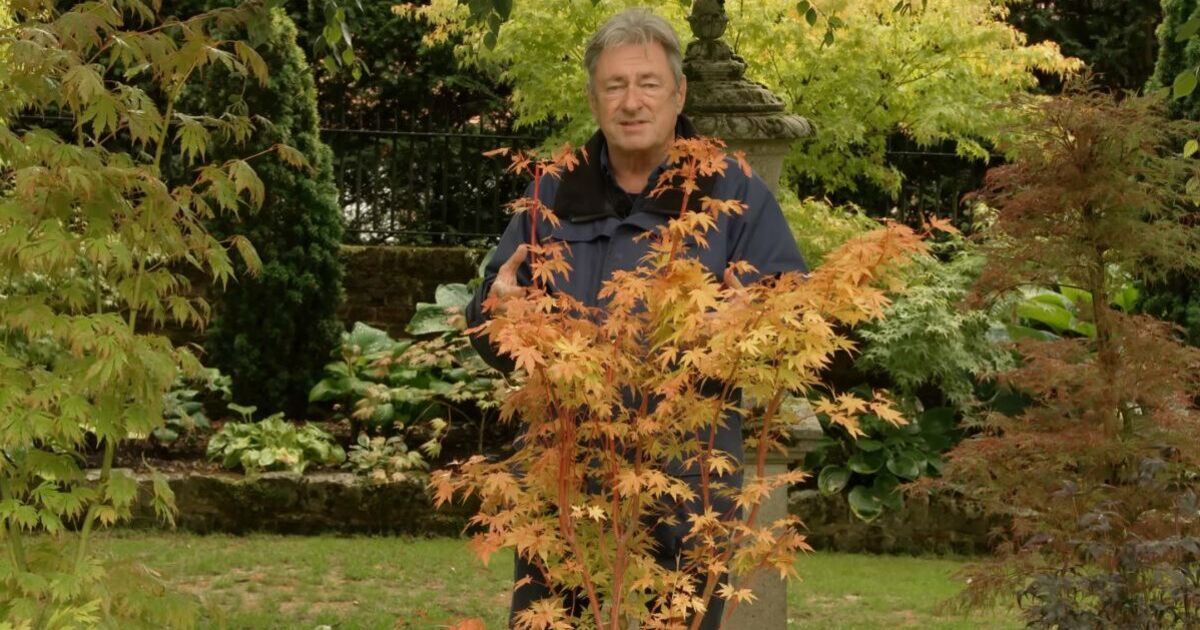
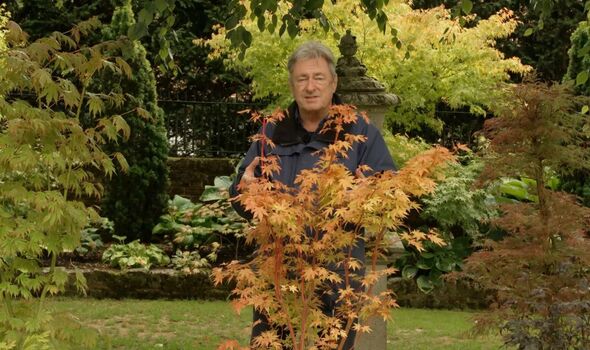
Alan Titchmarsh shares 5 Japanese maple trees he loves that’ll make any garden look better (Image: Gardening With Alan Titchmarsh/YouTube)
Everyone loves a Japanese maple, or at least that’s the way it seems. Even novice gardeners will often have a maple at the top of their must-have list. There’s more than one reason for the continuing popularity of maples. First and foremost, they are beautiful when in full colour as they have deep, gorgeous reds, auburn oranges and glossy green leaves that will be on display, bringing a bright, vibrant colour to any garden.
One of the biggest factors that make Japanese maples so popular is that they are fully hardy to the UK climate and so easy to grow. Even the most inexperienced gardener will get great results when they plant a maple. Sharing his love of Japanese maples, gardening expert Alan Titchmarsh took to his YouTube channel, Gardening With Alan Titchmarsh, to voice his top five picks of these trees.
Read more: Three fast-growing climbing plants gardeners say to cover walls and fences with
Read more: Moss will never appear on lawns again if killed with powerful item expert loves
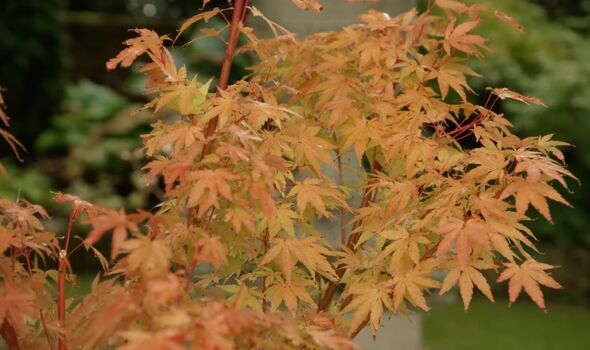
Out of all of his top Japanese maple picks, this one is “the most popular” (Image: Gardening With Alan Titchmarsh/YouTube)
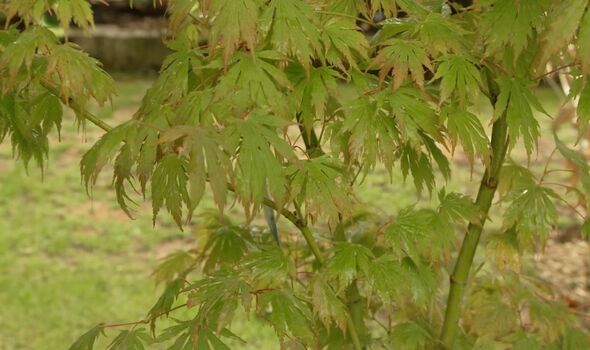
When it comes to this variety of maple tree, the colour of Arctic Jade changes more slowly (Image: Gardening With Alan Titchmarsh/YouTube)
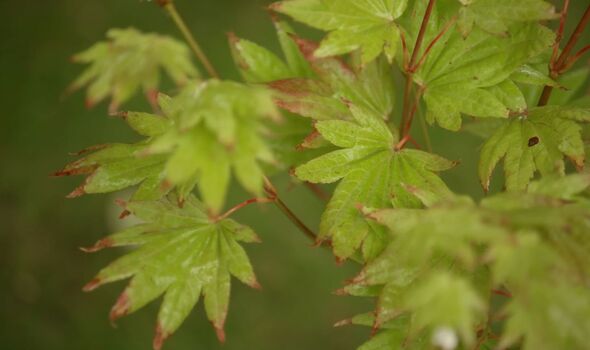
Alan pointed out that this Acer is “remarkably resistant to scorch” (Image: Gardening With Alan Titchmarsh/YouTube)
He said: “The number one tree that everyone loves and that transforms any garden is the variety of Japanese Maple known as Acer. The leaves are beautiful, the colours are spectacular, and there’s a variety that works in any size garden, you can even grow them in large pots.”
1. Acer palmatum ‘Sango-kaku’
Alan noted that he’s “never met anyone who doesn’t like Japanese maples”, particularly the Acer palmatum Sango-kaku variety, as they are “so beautiful, obliging, and they will fit in the smallest of gardens because they don’t grow terribly large”.
Out of all of his top Japanese maple picks, this one is “the most popular”. This variety is known for its “leaves turning from green to pinkish-red in autumn”.
2. Acer ‘Artic Jade’
The leaves of this Japanese maple tree turn from green to orange and red in autumn. However, when it comes to this variety of maple tree, the colour of Arctic Jade changes more slowly than that of Acer palmatum.
Alan pointed out that the leaves start to gain colour from the outside moving inwards, and their stems are green as opposed to the coral red colour on the previous Acer.
3. Acer shirsawanum ‘Moonrise’
Unlike the previous two Japanese maples, this variety grows to a lower height. Moonrise has these leaves that are a “bright, fresh green”, but with “pinkish-tinted leaf tips”.
Alan pointed out that this Acer is “remarkably resistant to scorch”. He explained that the thing about all Japanese maples is “they hate drying winds and scorching sunshine”; dappled shade is what they like.
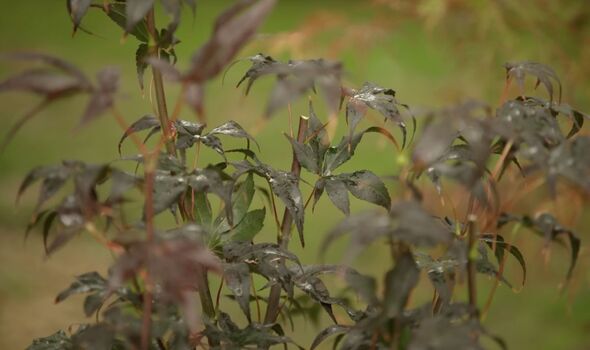
When it comes to dark foliage, few are a deeper shade than Acer palmatum ‘Bloodgood’ (Image: Gardening With Alan Titchmarsh/YouTube)
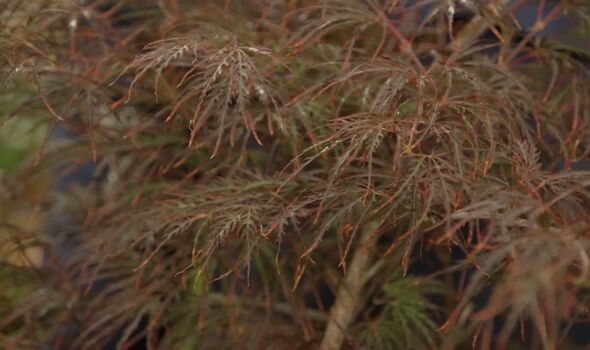
Japanese maples with very finely cut leaves are varieties of Acer palmatum ‘Dissectum’ (Image: Gardening With Alan Titchmarsh/YouTube)4. Acer palmatum ‘Bloodgood’
When it comes to dark foliage, few are a deeper shade than Acer palmatum ‘Bloodgood’.
This is a moderate-sized Japanese maple, with really dark leaves, which colour up before they fall. This maple is a good one to add contrast with the lighter green acers around it.
5. Acer palmatum ’Dissectum Garnet’
Japanese maples with very finely cut leaves are varieties of Acer palmatum ‘Dissectum’, which means that the leaves are dissected and divided more.
Alan prefers the purple varieties of Dissectum, which have an “arching habit of deep purple leaves turning bright orange in autumn”.
These Acers tend to form a lower mound of growth rather than them bein tall and upright, and that makes them “very suitable for small gardens, but also for planting in pots and tubs”.
Comments are closed.