
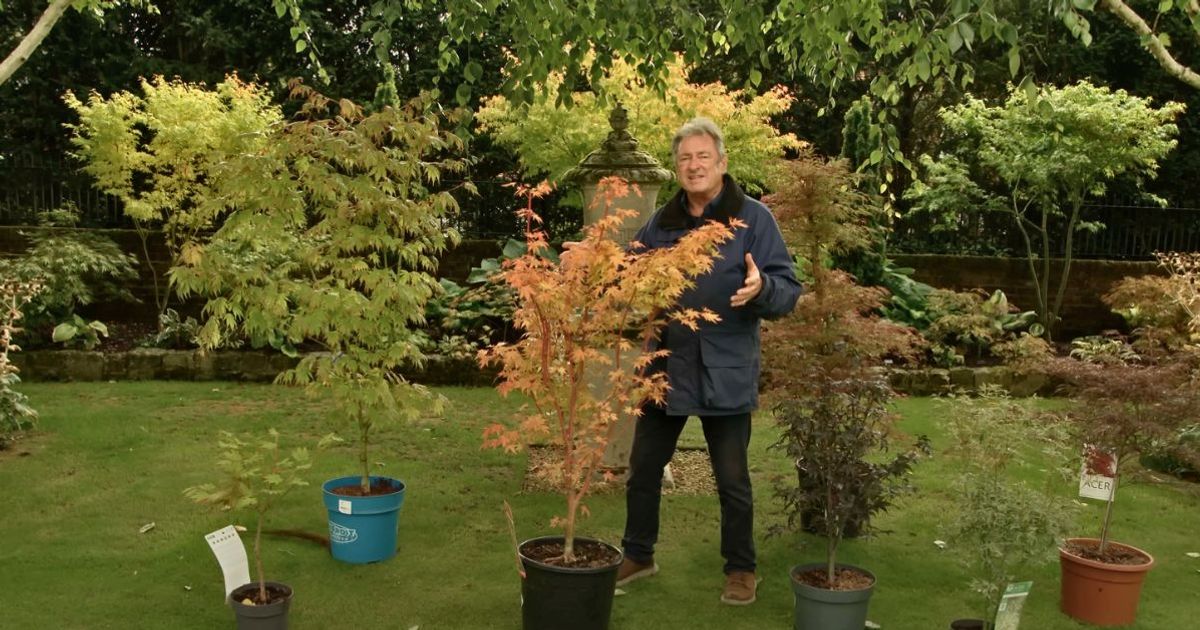
Gardening expert Alan Titchmarsh has shared his top plant to grow, claiming that he’s “never met anyone who doesn’t like it”.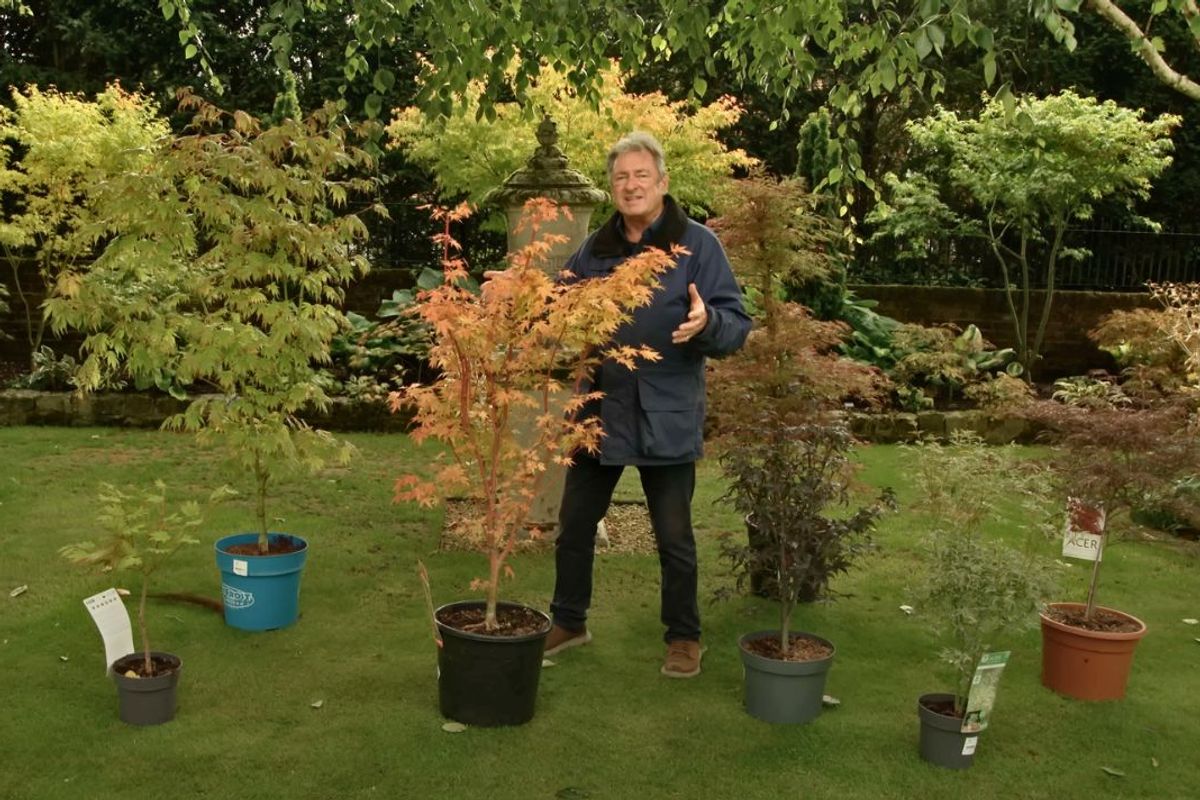
Alan Titchmarsh shares his ‘number 1’ plant that will make any garden look better
Japanese maples have captured the hearts of gardeners everywhere – or so it appears. Even those just starting will frequently place a maple right at the top of their wishlist.
The enduring appeal of these trees isn’t down to just one thing. Above all, they’re absolutely stunning when displaying their full palette, boasting rich, magnificent reds, warm burnt oranges and lustrous green foliage that transform any outdoor space with dazzling, lively colour.
One of the key reasons Japanese maples remain such firm favourites is their complete hardiness in British conditions and remarkably simple cultivation.
Even those with minimal gardening know-how will achieve impressive results when planting a maple.
Expressing his passion for Japanese maples, horticultural guru Alan Titchmarsh headed to his YouTube platform, Gardening With Alan Titchmarsh, to reveal his top five choices of these magnificent trees.
He explained: “The number one tree that everyone loves and that transforms any garden is the variety of Japanese maple known as Acer.
“The leaves are beautiful, the colours are spectacular, and there’s a variety that works in any size garden, you can even grow them in large pots.”
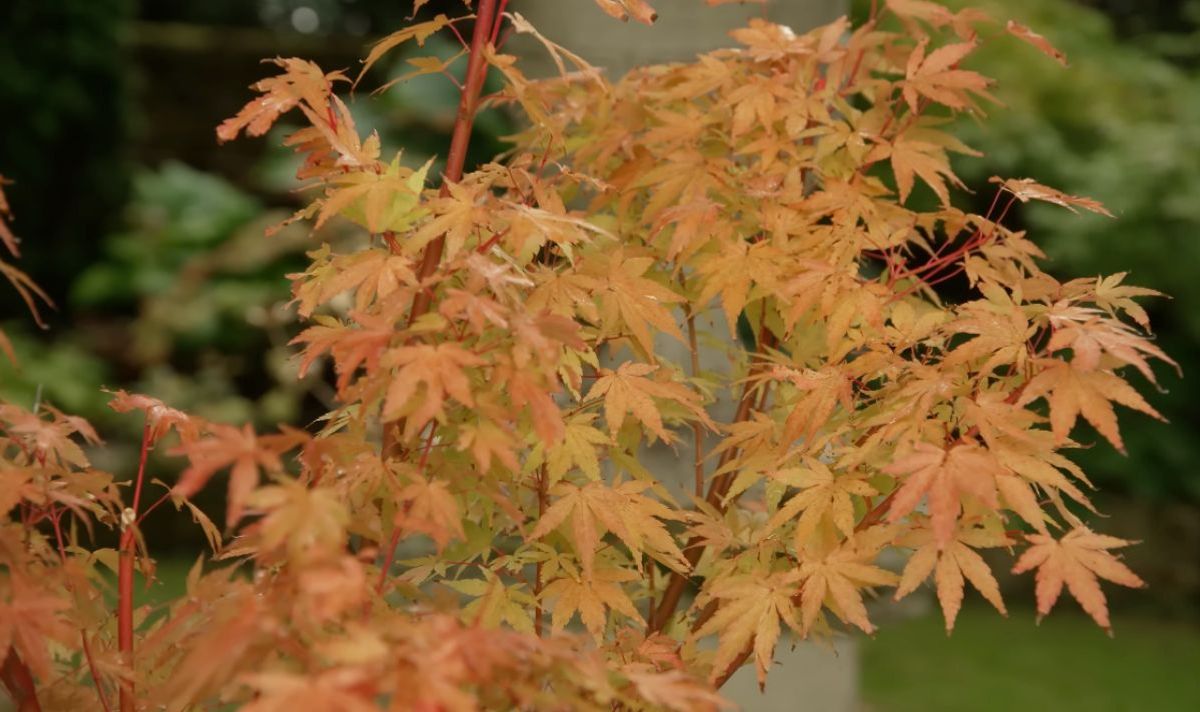
Out of all of his top Japanese maple picks, this one is “the most popular”
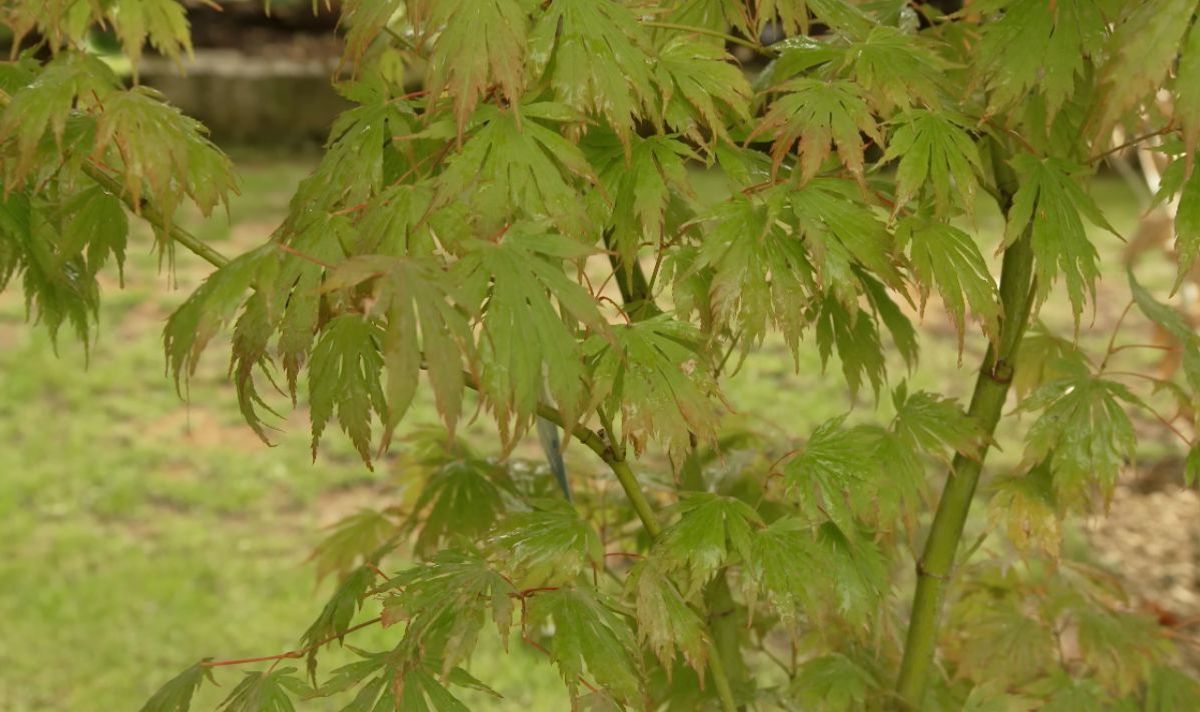
When it comes to this variety of maple tree, the colour of Arctic Jade changes more slowly
1. Acer palmatum ‘Sango-kaku’
Alan observed that he’s “never met anyone who doesn’t like Japanese maples”, especially the Acer palmatum Sango-kaku variety, as they are “so beautiful, obliging, and they will fit in the smallest of gardens because they don’t grow terribly large”.
Among all his favourite Japanese maple selections, this one is “the most popular”. This type is celebrated for its “leaves turning from green to pinkish-red in autumn”.
2. Acer ‘Artic Jade’
The foliage of this Japanese maple transforms from green to orange and red in autumn. That said, when it comes to this particular maple variety, the colour shift of Arctic Jade happens more gradually than with Acer palmatum.
Alan highlighted that the leaves begin gaining colour from the edges, working towards the centre, and their stems are green rather than the coral red shade seen on the earlier acer.
3. Acer shirsawanum ‘Moonrise’
In contrast to the first two Japanese maples, this type reaches a more modest height. Moonrise boasts foliage that’s a “bright, fresh green”, yet with “pinkish-tinted leaf tips”.
Alan noted that this Acer is “remarkably resistant to scorch”. He clarified that the issue with all Japanese maples is “they hate drying winds and scorching sunshine”. Dappled shade is what they like.
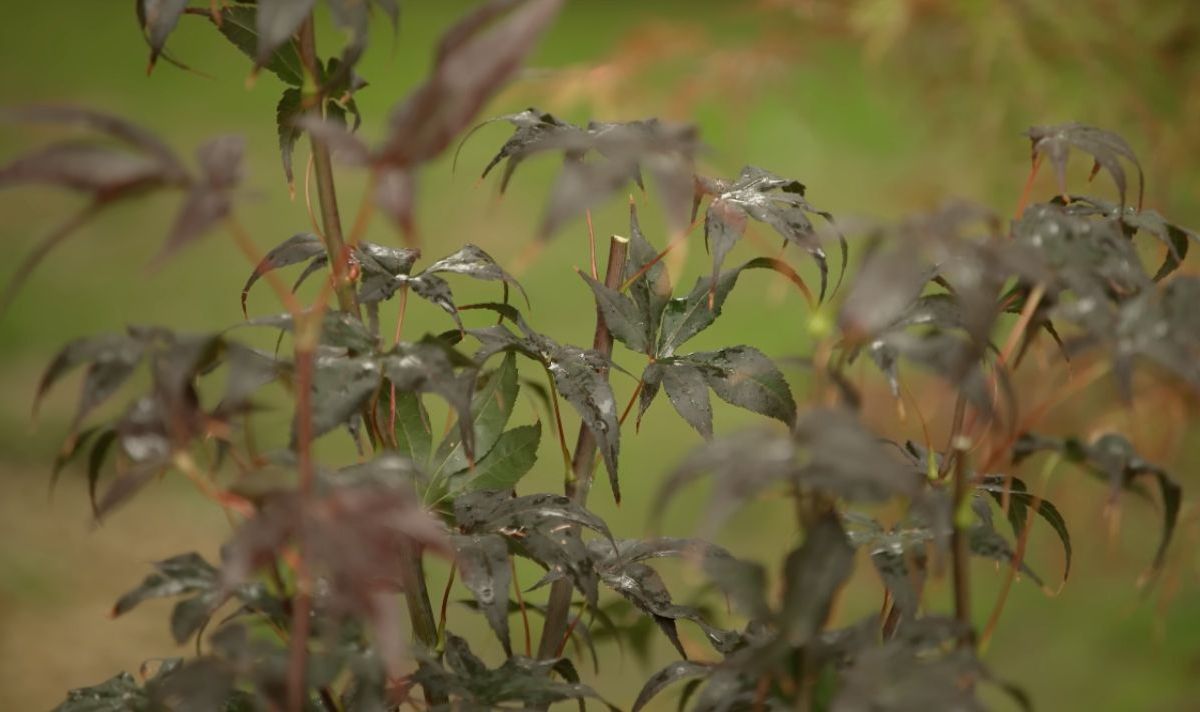
When it comes to dark foliage, few are a deeper shade than Acer palmatum ‘Bloodgood’
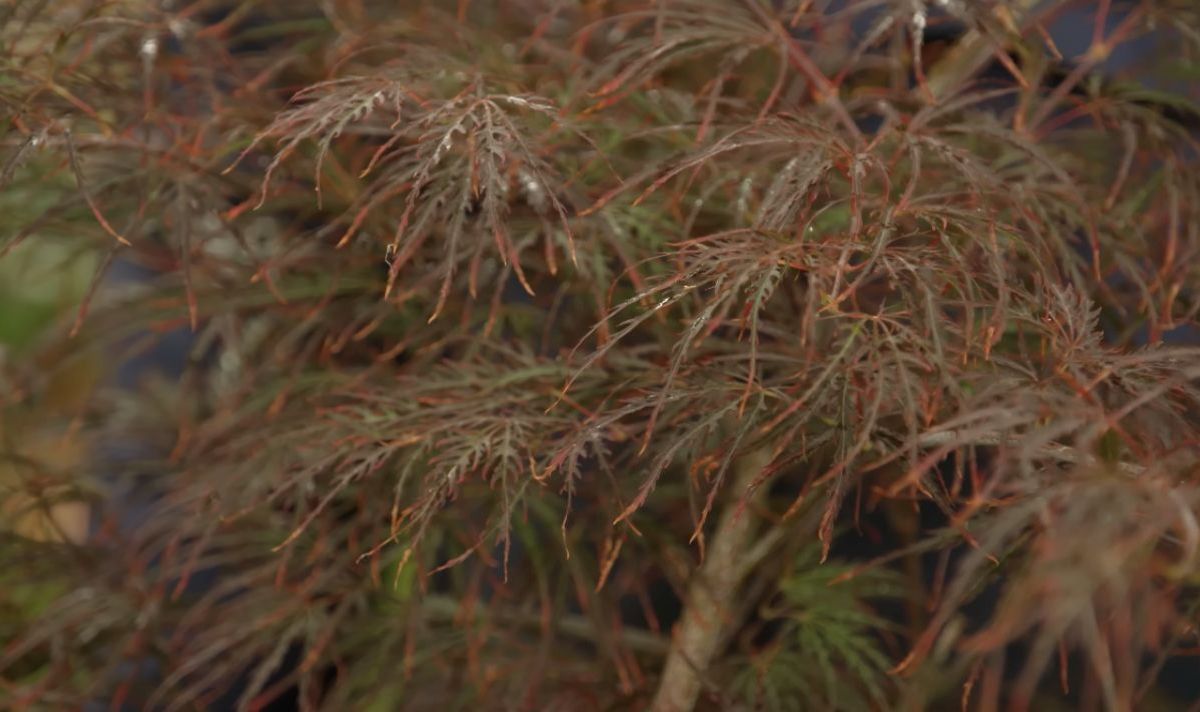
Japanese maples with very finely cut leaves are varieties of Acer palmatum ‘Dissectum’
4. Acer palmatum ‘Bloodgood’
When it comes to dark foliage, few varieties boast a richer hue than Acer palmatum ‘Bloodgood’.
This medium-sized Japanese maple features strikingly dark leaves that put on a stunning display before dropping in autumn. It’s an excellent choice for creating contrast alongside lighter green acers in your garden.
5. Acer palmatum ‘Dissectum Garnet’
Japanese maples sporting delicately cut foliage belong to the Acer palmatum ‘Dissectum’ family, meaning their leaves are more intricately dissected and divided.
Alan’s particularly keen on the purple Dissectum varieties, which boast an “arching habit of deep purple leaves turning bright orange in autumn”.
These Acers typically develop into lower, mounded forms rather than growing tall and upright, making them “very suitable for small gardens, but also for planting in pots and tubs”.
Comments are closed.