
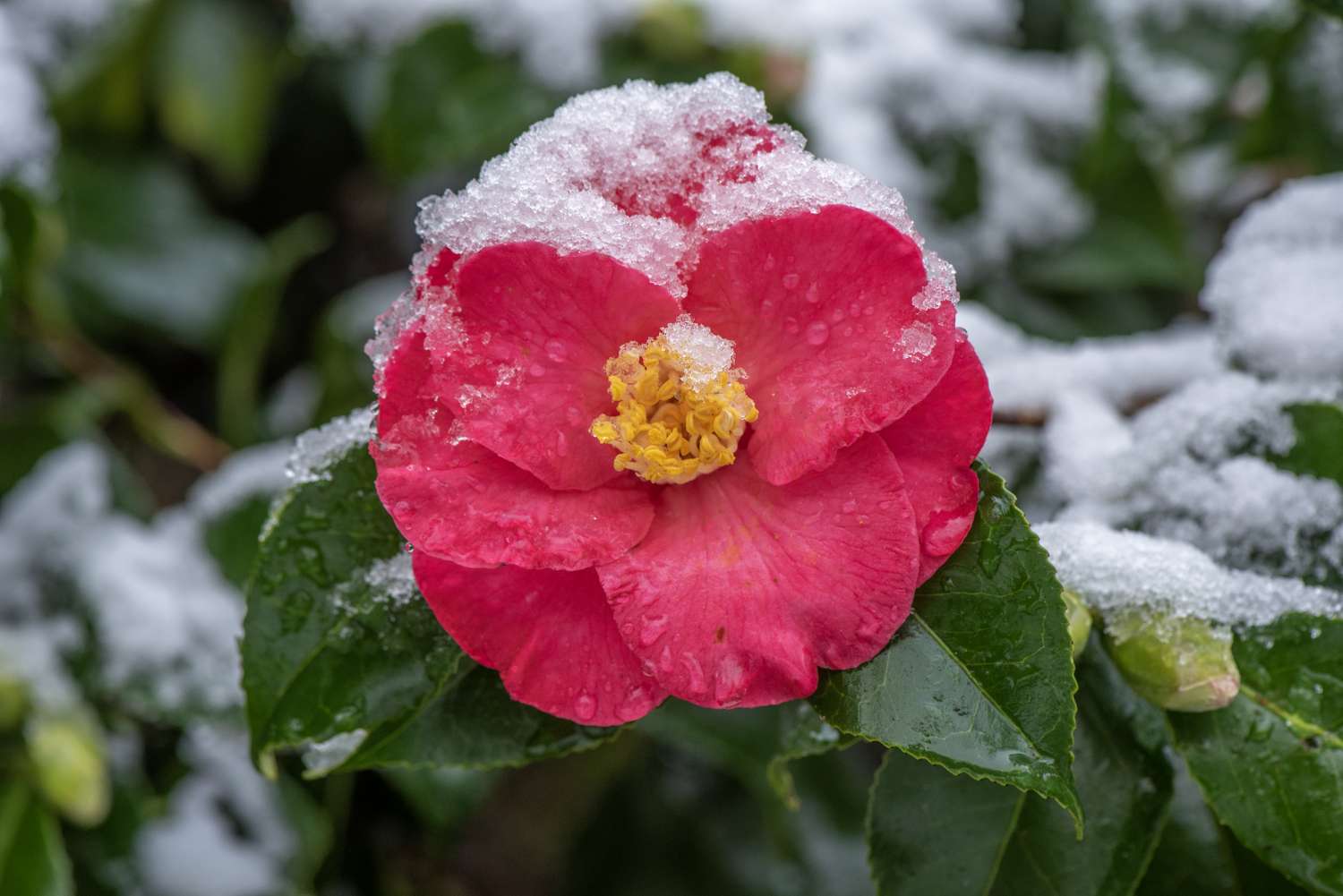
Steel magnolias or Southern-favorite camellias—in the battle of who’s tougher, the jury is out. But when it comes to winter weather that falls outside of the norm for its USDA zone, all bets are off. “Normal winter cold tends to be gradual and consistent, while storms often bring sudden temperature drops, strong winds, ice, and heavy snow,” says Jim Putnam, plant expert and host of YouTube gardening channel HortTube. “These conditions can simultaneously stress the plant.”
Whether you’re dealing with the effects of a winter storm that already came through or are looking to ensure your camellias are up for whatever mischief this season might still throw our way, consider these camellia tips your best plan for winter protection.
Jim Putnam is a plant expert for Southern Living® Plant Collection and host of HortTube, a YouTube gardening channel dedicated to demystifying gardening for the Do-It-Yourselfer.
Why Winter Damage Can Be Problematic for Camellias
Camellias are no shrinking violets. Even when a thick layer of frost covers the South, these tidy little blooms still manage to burst forth in all their glory. But, there are some circumstances that even the most compact and sturdy of varieties can’t seem to withstand. Winter storms aren’t the norm in most parts of the South, so when they hit, it’s especially important to keep an eye on your garden, including your camellias. “Camellias are tougher than they look, but winter storms can be especially hard on them,” says Putnam. “Wind pulls moisture from evergreen leaves, ice adds weight that can break branches, and rapid freezes can damage flower buds.”
Signs of Damage
Putnam warns of these signs of freeze and cold damage to look out for should your camellias be exposed to exceptionally harsh winter weather.
Bud drop or buds that turn brown and fall off prior to openingBrowning or blackened leaf edgesCurling or drooping foliageBranch dieback that appears later in the winter season or in early spring
When and How to Protect Your Camellias
Winter protection for your camellias should be considered part of their regular care routine. This is especially true for young plants, those falling near the edge of their geographic cold tolerance, or those planted in containers, says Putnam. “Established plants in protected locations can handle typical winter weather, but severe storms can overwhelm even healthy camellias,” he explains. “Simple steps to protect them from harsh weather can preserve both the plant and its bloom potential.”
Paxton’s Tips for Cold-Weather Camellia Care
Apply mulch around the base of the plant to better insulate the soil and protect the root system.Well-hydrated plants are better able to ward off cold damage, so water your camellias thoroughly before the storm.Smaller camellias or those planted in containers should be covered with a breathable cloth or burlap. This will help shield them from some of the wind and ice.If your camellia containers can be moved, go ahead and place them in a more sheltered area close to the house so they can receive some of its residual warmth. An unheated garage is also acceptable.
How to Care for Camellias After Winter Storm Damage
The first step in caring for camellias after a particularly harsh winter is to give them a little grace. Putnam says your camellias might have slight signs of damage, but these indicators oftentimes remedy themselves as spring growth begins. Once you start to see new growth, Putnam says it’s then safe to prune back to healthy tissue and fertilize. From there, stick with the basics: keeping plants evenly watered and refreshing mulch to provide protection for roots.
Finally, if you live in a region where winter storms are a regular concern, look for varieties that are better suited for standing up to this type of weather. “Sasanqua camellias, such as October Magic® Orchid™ Camellia, feature a compact growth habit with sturdy branches that can better support the weight of heavy flowers and snow,” says Putnam. “This variety of camellia will also bloom before the worst of the winter.”
Comments are closed.