
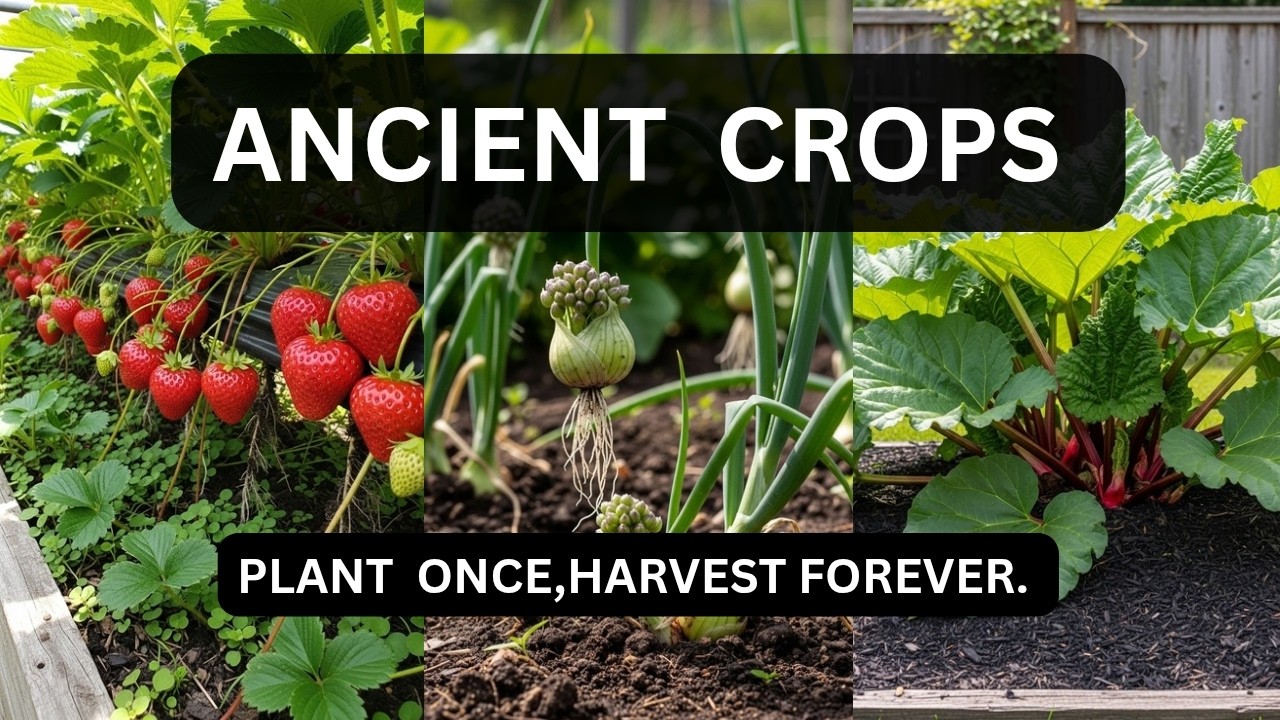
Discover 8 ancient crops you can plant once and harvest for years — even decades. These powerful perennial foods grow back on their own, multiply naturally, and require almost no maintenance. If you’re tired of replanting every season, spending hours weeding, and constantly starting over, this is the lazy gardener’s ultimate guide to growing more food with less work.
In this video, you’ll learn about self-sustaining crops like walking onions, asparagus, rhubarb, strawberries, fig trees, and more — plants our ancestors relied on for long-term food security. These crops don’t just survive… they thrive, spread, and keep producing year after year.
Whether you’re building a backyard garden, planning a homestead, or just want low-effort food sources, these “plant once, eat forever” crops can transform the way you grow food.
🌱 What you’ll discover: • Crops that produce for 20–100+ years
• Self-multiplying plants that spread on their own
• Foods that require little to no maintenance
• How to create a long-term, low-effort garden
• The ancient mound-and-mulch technique for easy growing
✔ Subscribe for more gardening hacks & plant care tips:
https://www.youtube.com/@EverGreenHomeLiving?sub_confirmation=1
🌱 Grow smarter. Live greener. Save more.
lazy gardening, perennial crops, plant once harvest forever, ancient crops, survival gardening, low maintenance garden, food forest plants, homestead gardening, self sustaining garden, grow food easily, beginner gardening tips, permaculture gardening, walking onions, asparagus growing, rhubarb plant, horseradish root, strawberry patch, jerusalem artichoke, sunchokes, lovage plant, fig tree growing, long term food crops, backyard food security, grow food for years, no replant gardening, easy crops for beginners, sustainable living, off grid gardening, food independence, evergreen home living, grow more with less work
1 Comment
Hello, I’ve been watching your channel for a while. The plants that are as you say aggressive can you take a 55 gallon drum or something a little bit bigger cut it in half and plant them so that they are contained in one spot now if you have anchorage and you don’t care, that’s one thing, but if you live in a town or a city and you’re using your backyard as a garden, wouldn’t that be more feasible? Joe