
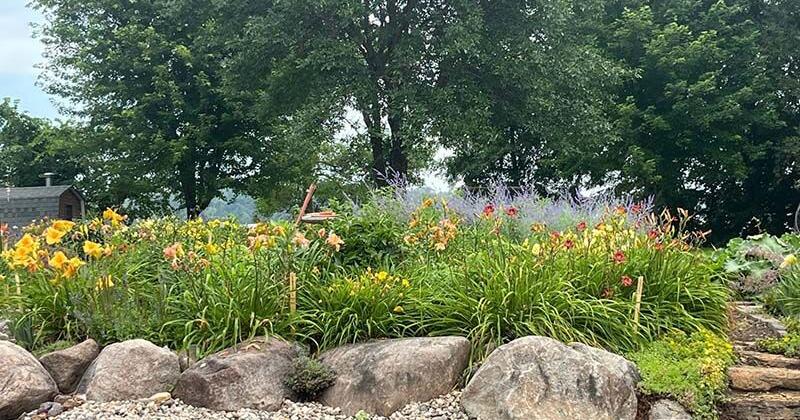
What do you do with an extra pile of river rock that you do not want to move? You make a rock garden — right where it is! After two years of looking at a messy pile of rock with a ripped blue tarp entangled in it, it was time to make a change. Sometimes we just need time to think things through, two years in this case.
Having pallets of landscape block on hand, it was a no-brainer. Leave the rock where it is and frame the blocks around it. Eventually as the rock gets scooped out and used up over the years, the rock garden will disappear. Who needs extra work?
This past spring, I had a dozen large bags of potting soil delivered. (Delivered is the key word there.) Instead of hauling them out to the garden work table, I potted the plants right there where the bags were delivered, on the sidewalk. I used some benches as staging areas and my trusty wheelbarrow for the potting mix. Truly, the simpler we can make our work, the more likely we are to do it. Now, if I could just figure out a simple way to move all those garden hoses around.
While we are waiting for the snow to melt, we have lots of time to review last year’s issues and think of solutions. By far, weeds continue to be my single biggest issue. Secondly would be insect issues, and lastly would be plant disease. It’s easy to visually notice the weed issues but often the insect pests can go unnoticed, unless they are in masses or clouds like whiteflies can be. Normally around here, you mostly see them in the greenhouses or on indoor plants.
Whiteflies, like aphids, literally blow in on the southern winds (yes, really). This is why some years you have them and some you don’t. Neither whiteflies or aphid adults survive our winters. Whiteflies feed on most any type of foliage, but in particular I have found them feeding on Viburnum Americana aka the American cranberry — clouds of them everywhere. Cut a branch and hundreds fly off. They are very tiny and move quickly. They have a piercing mouthpiece and harm plants by sucking out the juices in the leaves. This feeding distorts the leaves, and can lead to diseases getting in through the damaged area.
Whiteflies leave behind a substance called honeydew. This waste is a sticky sweet substance that will eventually attract a secondary pest to feed on it! Where does it end? The secondary pest may be a beetle, wasp or ants that will actually farm the whiteflies in exchange for the honeydew harvest. Like many of our garden pests, whiteflies lay their eggs on the underside of leaves where they are difficult to see. The ants will protect the white fly eggs from other insect predators for future honeydew harvests.
The honeydew can also develop what is called black sooty or sooty mold and it can make plants unsightly. There are sprays and dusts you can use that are effective on whiteflies. Remember though, chemicals — organic or not, are usually good at only one stage of the insect’s life, so you will likely need to reapply to get them all.
A non-toxic, effective method for the adult stage of some insects is to use yellow sticky traps. Numerous insects like whiteflies, aphids, moths, thrips and fungus gnats are attracted to the color yellow. Take advantage of this! You can purchase traps or make your own using laminated yellow paper and spreading on Vaseline or tanglefoot salve. The target insects are attracted to the yellow color and get stuck in the Vaseline. Traps should be hung low in the garden and early in the season — best to get them before the insects start breeding. As the traps fill up with insects stuck to them, you will need to replace with fresh ones. In a large garden, you may need several. Beneficial insects are not attracted to the traps, so no worries there.
With much warmer weather predicted for this next week, it is a great time to get outside and do some yard work! It is also a great time to prune trees and shrubs — but avoid the spring bloomers like lilac and forsythia. In late February our lake association is planning to remove and burn an invasive plant called Phragmites that has been taking over the lakeshore. This plant is also known as common European reed grass and it spreads aggressively from the root system.
Plants can be tricky and this one is no exception! It even releases bio-chemicals from its root system to inhibit the growth of other plants. Phragmites are about 10 feet tall with plume-type flower heads that are attractive, but unfortunately, they crowd out native shore plants. The Department of Natural Resources/University of Minnesota has started a spray program to eradicate them. Our group plans to cut them down and burn them, which should destroy the seed heads. It may take years to get it under control, but at least we are getting started on it!
Diane Dunham is a retired horticulture instructor and is the owner of Market Bakery.
Comments are closed.