
Key Points
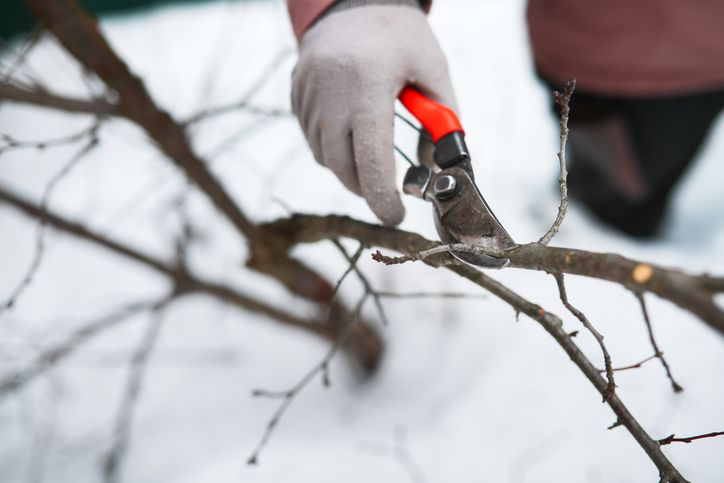
Pruning in February can stress dormant shrubs or removing potential blooms for certain species.Don’t prune gardenias, certain types of hydrangeas, loropetalum, evergreens, or pieris.As an exception, you should prune these plants if they have been damaged by a storm.
Although there are some shrubs you can (and should) prune in winter, pruning certain types of shrubs around February can stress them when they’re dormant or remove buds that will eventually bloom.
Here are five types of shrubs that should never be pruned in February—or any other winter month, for that matter—according to three gardening pros.
“As an exception, when a storm or other event damages the plant, gently prune the shrub to remove the damaged section,” homesteading blogger Lindsey Chastain of The Waddle and Cluck adds.
Meet the Expert
Caroline Ervin is a landscape designer and the owner of Caroline Ervin Landscape Design.
Lindsey Chastain is the owner of The Waddle and Cluck.
Jim Putnam is a gardener and a garden expert for Southern Living Plant Collection.
Gardenias
Credit:
magicflute002/Getty Images
Due to their dense, lush foliage and general tidiness, gardenia shrubs require only minimal pruning, and that should happen in fall, not winter, Jim Putnam, a garden pro from Southern Living Plant Collection, says.
Pruning earlier in the year, even once it’s warmer in the spring, risks removing developing buds and reducing flowering.
Hydrangeas
Credit:
KenWiedemann / Getty Images
Although smooth hydrangea varieties (think: Snowball and Anabelle hydrangeas) can be pruned in winter because they bloom on new growth, many hydrangeas bloom on old growth, and it’s best to wait until later to prune them.
Hydrangea macrophylla (Bigleaf Hydrangea) and Hydrangea quercifolia (Oakleaf Hydrangea) two examples.
“These hydrangeas set their buds for the following year in mid- to late-summer, so it is important to prune them in summer right after they have bloomed,” landscape designer Caroline Ervin says.
Loropetalum
Credit:
Moelyn Photos / Getty Images
Loropetalum blooms in spring, typically from March to April, and sets its flower buds on last season’s wood. Pruning in the winter risks cutting off the buds that would produce flowers this season.
“It’s important to wait to prune loropetalum until after it finishes blooming to maximize the spring display,” Putnam says.
Some loropetalum varieties barely need pruning at all. For example, Purple Daydream Dwarf loropetalum has a compact growth habit, so the shrub stays mostly neat and well-shaped without a lot of work.
(As with other shrubs in the winter, you can keep an eye out for dead or damaged branches and remove them rather than shape or decrease the shrub’s size.)
Evergreens
Credit:
Marina Denisenko
Many broadleaf evergreen shrubs and conifers typically don’t need regular pruning. During the winter, lightly prune them to remove dead or diseased branches, to maintain or achieve a certain shape, or to increase the density of their branch structure.
“Many evergreens should be pruned later in spring and early summer after their new growth has emerged and begun to harden off,” Ervin says.
Prune boxwood, holly, yew, and arborvitae in late spring to early summer after the lighter green new growth has emerged and before it has turned darker green.
Evergreen shrubs that bloom on old growth include azaleas, rhododendrons, camellias, and lilacs. These are best pruned just after they have finished flowering, usually in late spring.
Pieris
Pieris produces its flower buds early on. Buds that form in the summer will open up from late winter to early spring.
“Because pieris sets flower buds on last season’s growth, pruning in February would remove those buds before they open,” Putnam says. Removing buds means losing most or all of your flowers for the year.
Naturally compact, pieris doesn’t require heavy or frequent pruning. Prune as needed to remove damage or to lightly shape the plant. Do this after flowering to prevent cuts from interfering with the following season’s bud development.
Comments are closed.