
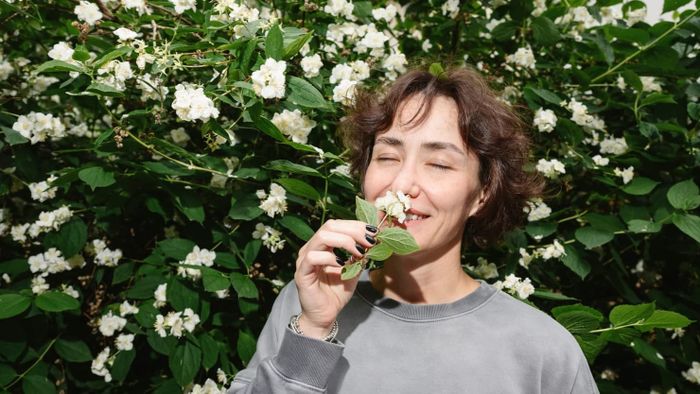
VERTICAL INTEREST: Scented climbers can be trained over fences, walls or pergolas (Image: Westend61/Getty)
This article contains affiliate links, we will receive a commission on any sales we generate from it. [Learn more]
When you’re pottering around the garden, looking for the first signs of spring, scented plants come as a welcome surprise. You can bring winter fragrance to the smallest of outdoor spaces, from perfumed climbers scaling walls and trellis to sweet-smelling flowers in pots and window boxes.
“Plants that flower in the winter have much stronger perfumes because plant scent is there to attract bees to the pollen. They have to try hard to attract the fewer things that are flying around,” says Tony Hall, head of arboretum and temperate collections at the Royal Botanic Gardens, Kew.
This means that many winter-flowering plants have a much stronger fragrance than those that flower during the summer. The author of Gardening With Scented Plants has shared the best ways to fill courtyard or patio gardens with fragrance at this time of year.
READ MORE
Use containers: Growing scented winter plants in pots is ideal if soil space is limited or the area consists mainly of hard surfaces, says Hall. Placing them near patio doors and windows, allowing you to inhale their rich perfume.
“You can do what they call nesting, where you group containers together, with different sizes, different heights and different plants.” Winter containers need good drainage, so place crocks in the bottom and raise them on feet to prevent moisture rising into the pots and to guard against frost.
Potted shrubs require minimal maintenance, just occasional pruning. “They will probably last in a container four or five years before they would need taking out and repotting or moving to a bigger pot,” he says
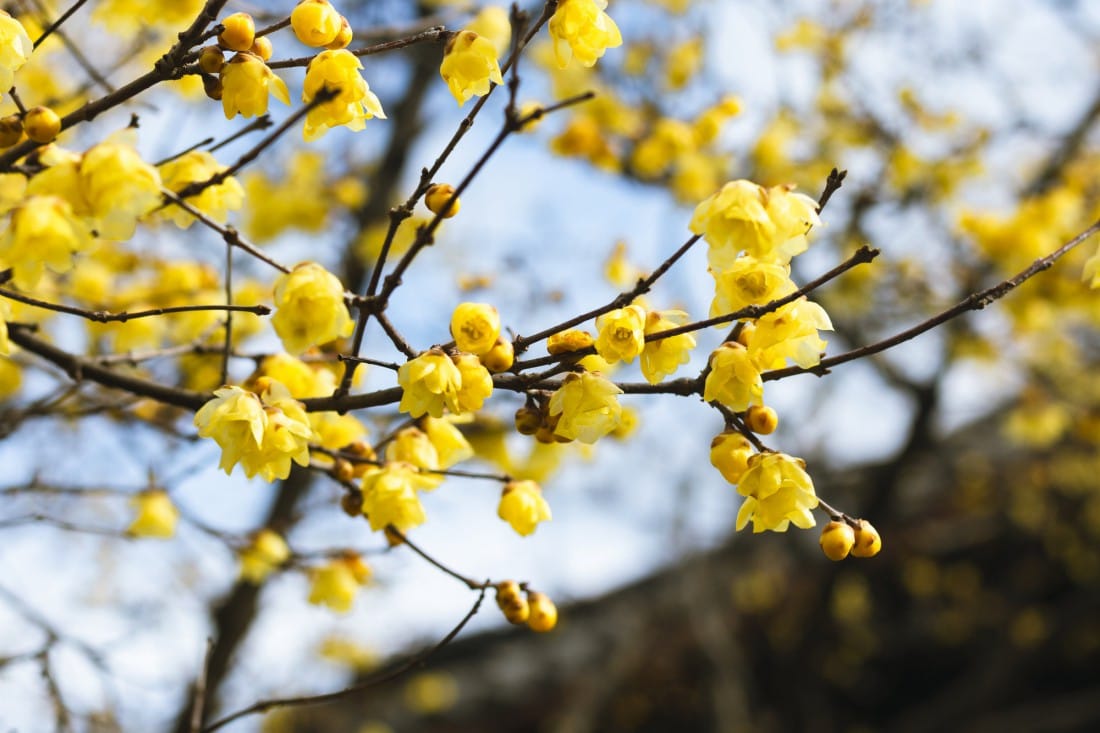 FRAGRANT FLOWERS: Wintersweet has a sweet-smelling, heady scent (Image: Masahiro Makino/Getty)
Grow vertically: “Even in the smallest gardens, if you’ve got beds you can grow things to train up walls,” says Hall. Scented climbers lift the spirits, provide early nectar for pollinator and add vertical interest, without taking up valuable ground space.
Choose size carefully: “If you have a small garden, it’s no good choosing a plant that’s going to get to four or five metres in a pot, because it’s always going to be struggling. Choose specimens which are going to be somewhere between half a metre and 1.5m, then they will just need pruning once a year,” he says.

Here are some of the best scented plants for winter gardens:
Wintersweet (Chimonanthus praecox): “This will fill an average-sized courtyard garden with scent. You can probably smell them from about 10m away. Even when the flowers have got frost on them you can still smell them.” says Hall. The deciduous shrubs have bowl-shaped, multi-petalled flowers on bare stems in January and February. Buy it here.Daphne: Hall says: “Daphnes are always going to be a popular choice and you can get deciduous or evergreen. They come in a variety of colours, from pure white through pink and dark pink, depending which cultivar you go for. As they have quite an upright growth habit they tend to be for a small garden, growing well in quite a small border or in a container.” Buy it here.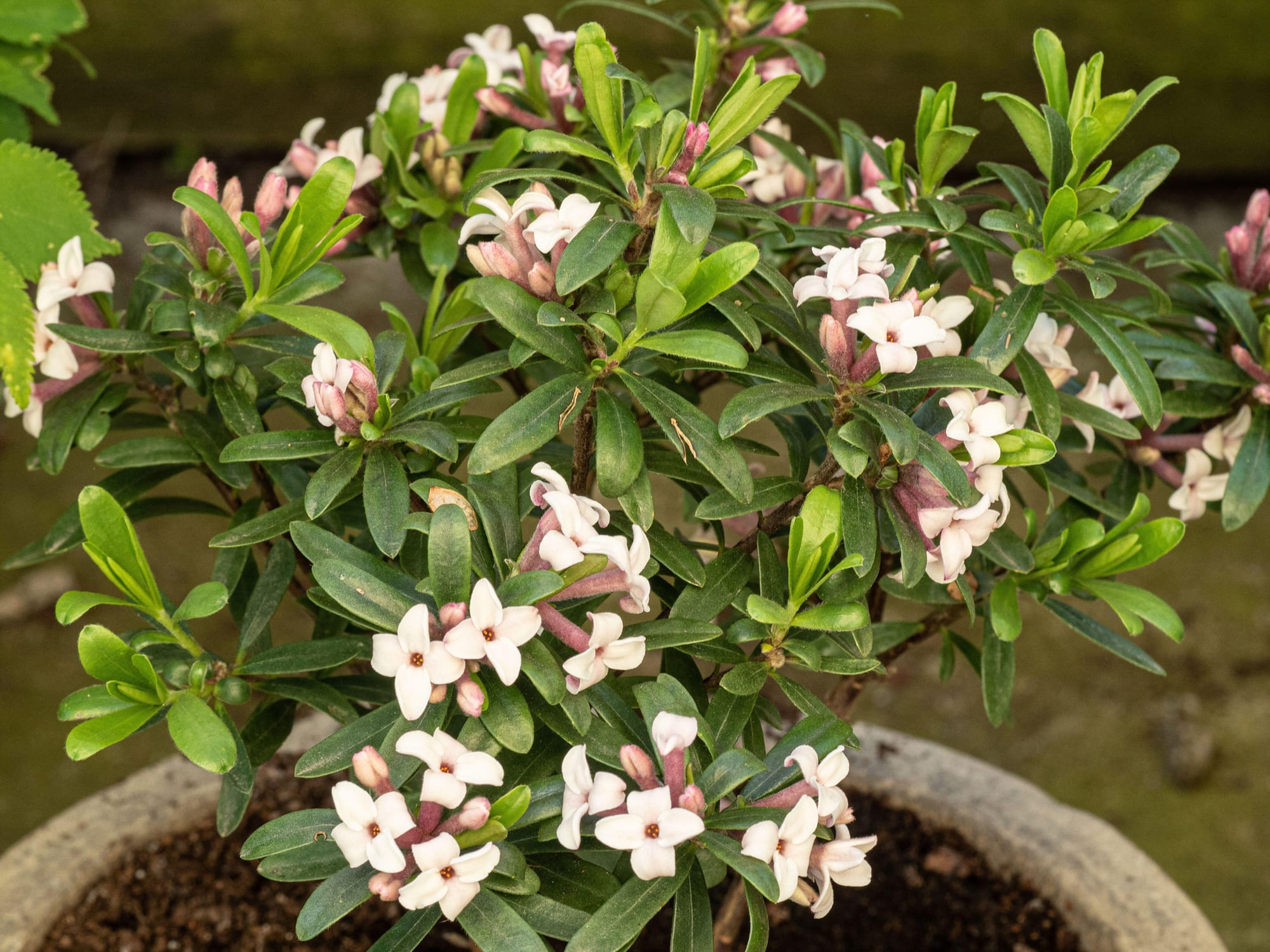 INTENSE SCENT: Daphne has clusters of small pink, white or yellow flowers (Image: Alamy/PA)Sweet box (Sarcococca confusa): “It is highly scented and evergreen, which is a bonus as most winter-flowering plants tend to be deciduous. The white flowers are followed by shiny black berries.” It’s unlikely to need pruning for two or three years in a pot, depending on its size at planting, he adds. Buy it here.Paperbush (Edgeworthia chrysantha): “This is quite an unusual plant, again heavily scented, deciduous and slow-growing. It produces creamy yellow flowers,” says Hall. If you have a small garden, the one to avoid is Edgeworthia grandiflora, which has bigger flowers but grows much quicker. Buy it here.
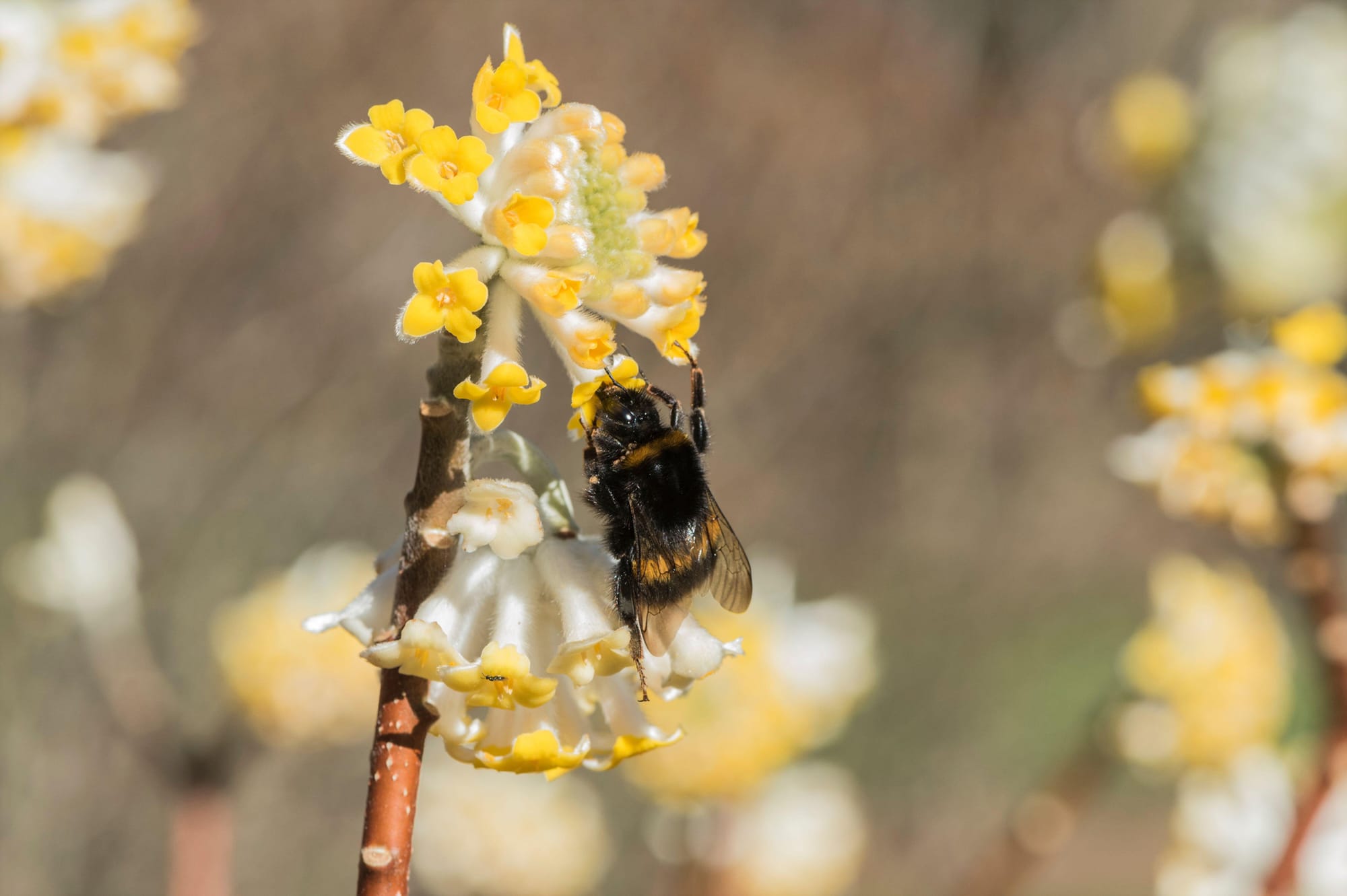 LESS COMMON: Paperbush is heavily scented, deciduous and slow-growing (Image: Alamy/PA)Witch hazel (Hamamelis vernalis): This species of witch hazel produces smaller but much more fragrant flowers than the larger, showier intermedia hybrids, yet still emits that familiar sweet and spicy scent. He says: “They still come in a range of different colours but stay smaller, so they are better for the smaller garden.” Buy it here.Viburnum: Hall says: “There are lots of different viburnums and they are nearly all scented, the bodnantense, the farreri, but there’s a particular cultivar, Viburnum carlesii ‘Diana’, an deciduous type with a nice rounded shape which would do very well in a container. That flowers very late, from March onwards.” Buy it here.
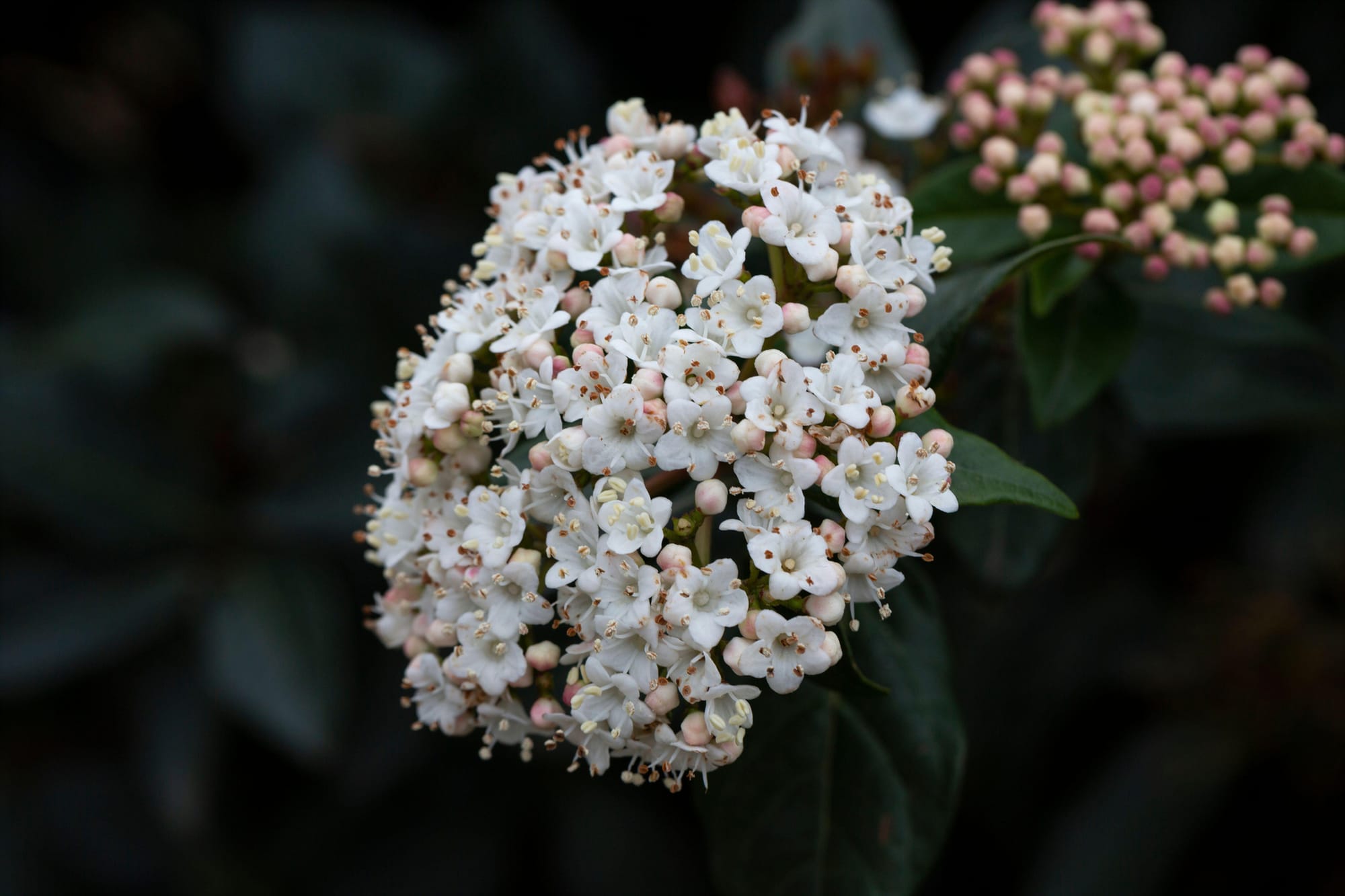 SCENTED CLUSTERS: Viburnum produces spectacular spring displays (Image: Alamy/PA)
If you only have a window box, consider scented narcissi such as paperwhites, or underplant some of your shrubs with them. Small daphnes and viburnums will also provide some fragrance in smaller pots.
However, don’t overdo it, says Hall. “If you have a small courtyard and you put in some daphnes, sarcococca, wintersweet and viburnums, the scent would be almost too much, because they would all be scented at the same time, slightly different perfumes, all quite powerful.”
Instead, mix fragrant plants with winter-blooming hellebores, Skimmia rubella, Eranthis and Iris sibirica. Use ground cover such as Euonymus to enrich the planting.
READ NEXT
Comments are closed.