
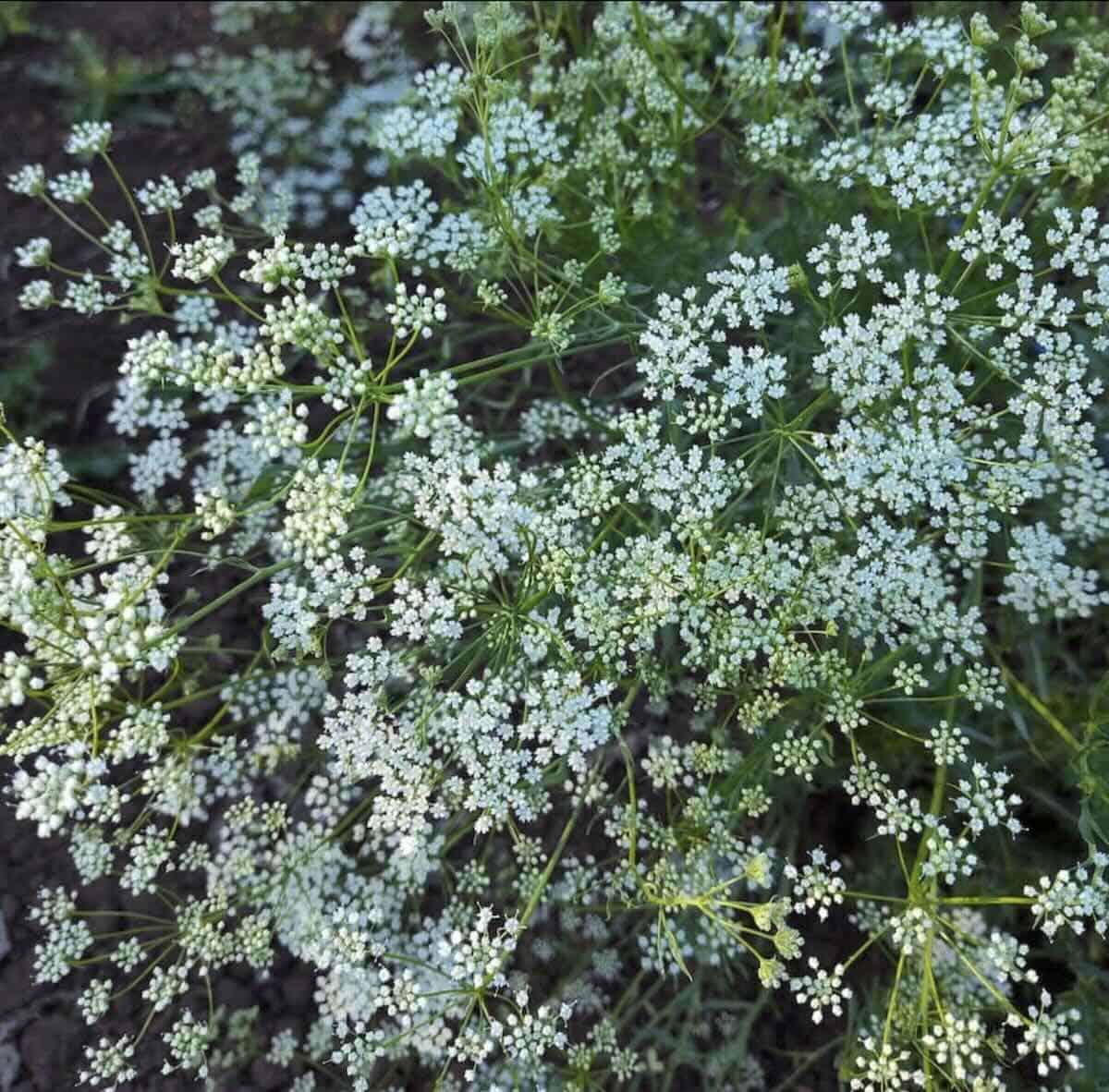
WHAT DO YOU SAY we explore expanding our herb-gardening efforts to include some goodies to fill those jars in the spice rack, too? Most of us have probably grown cilantro, for instance, with its distinctive-tasting bright green foliage, but I suspect few of us have harvested coriander seed, the other possible crop that same species of plant can yield.
Sarah Kleeger of Adaptive Seeds has been adding coriander and various other spice-rack possibilities to her garden, farm and seed catalog, like anise (above, in flower) and caraway and more, all plants that are also ornamental and beloved by the creatures she calls “our garden friends,” from beneficial insects to birds.
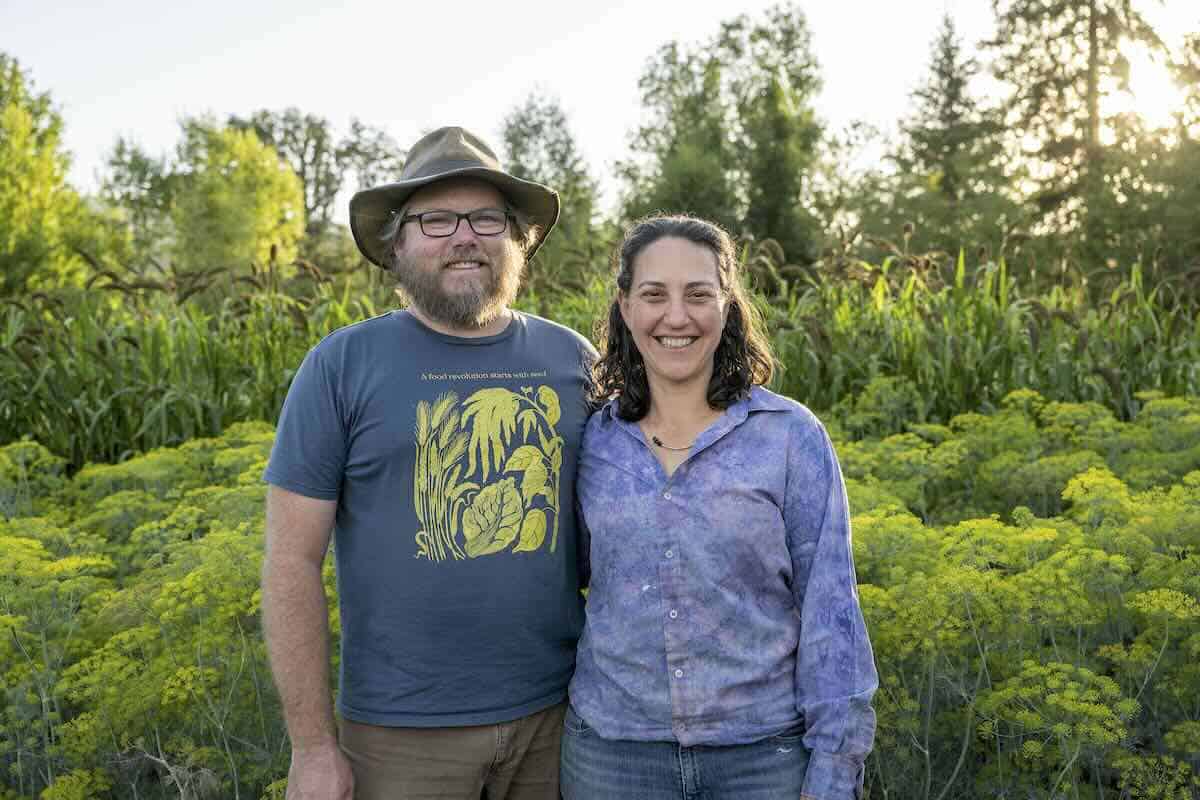
In 2009, Sarah Kleeger and Andrew Still (pictured below; photo by Shawn Linehan) founded Adaptive Seeds, their certified-organic, farm-based seed company near Sweet Home, Ore., whose mission is to steward rare, diverse, and resilient seed varieties for ecologically minded farmers, gardeners, and seed savers.
All their varieties are open-pollinated and adapted to the Pacific Northwest and other short-season Northern climates, including selections of some garden-grown spice rack favorites that are our topic today, along with some unusual leafy green herbs you may not have tried, either.
Read along as you listen to the Feb. 16, 2026 edition of my public-radio show and podcast using the player below. You can subscribe to all future editions on Apple Podcasts (iTunes) or Spotify (and browse my archive of podcasts here).
 spice-rack herbs from seeds, with sarah kleeger
Download file | Play in new window | Duration: 00:25:53
Subscribe: Apple Podcasts | Spotify
Margaret Roach: Welcome back to the program, Sarah, all the way from Oregon [laughter]. And as I sort of alluded to in the introduction, most of us grow herbs—basil and dill and cilantro and parsley and such. But when it comes to the seeds that fill many of those jars in the spice rack, maybe not so much. What got you started thinking about these?
Sarah Kleeger: Well, I mean, as a seed grower, everything I grow is for seed. So that’s just sort of my background, and I’m always looking at things from the seed perspective. So we started adding some mustard seed just from regular leafy green mustard—not the yellow mustard—but adding that to our pantry.
And as you mentioned, I think cilantro/coriander is one that’s very easy and probably an entry level sort of spice for people to add. And that one’s in just so many different cuisines that it’s kind of a no-brainer. And then just sort of every couple of years adding more to that. There’s just really a lot of opportunity out there that we can grow in temperate gardens. Not all things, of course, but …
Margaret: Right. Now you told me recently in an email that these plants aren’t just delicious, which of course is part of the attraction, but they have other qualities that you’ve come to treasure. And as I said in the intro, you said they appeal to “our garden friends.” So tell us a little bit about that—and their other sort of characteristics that make them good garden subjects, not just for seed farming.
Sarah: Right. Well, so a lot of the spices and the spice rack, they’re in the Umbelliferae family, they’re carrot relatives. And so their flowers are these great compound sort of umbrellas of many, many little small flowers and they can bloom over a long period of time. And they’re just really appealing to not only honeybees, but also lots of smaller pollinators like syrphid flies and sweat bees and ones that are not necessarily as popular or well-known, but that are really important ecologically.
So the dill is another one, along with the cilantro, that is like… A lot of gardeners grow this for the herb, for the leafy green part. But then if we let it go to flower and beyond, then we are gifted with, and also our garden friends [laughter] are gifted with, a source of forage and shelter and all of these other things. And also, I think they’re quite beautiful, especially the stacking, and they grow different heights compared to other garden plants.
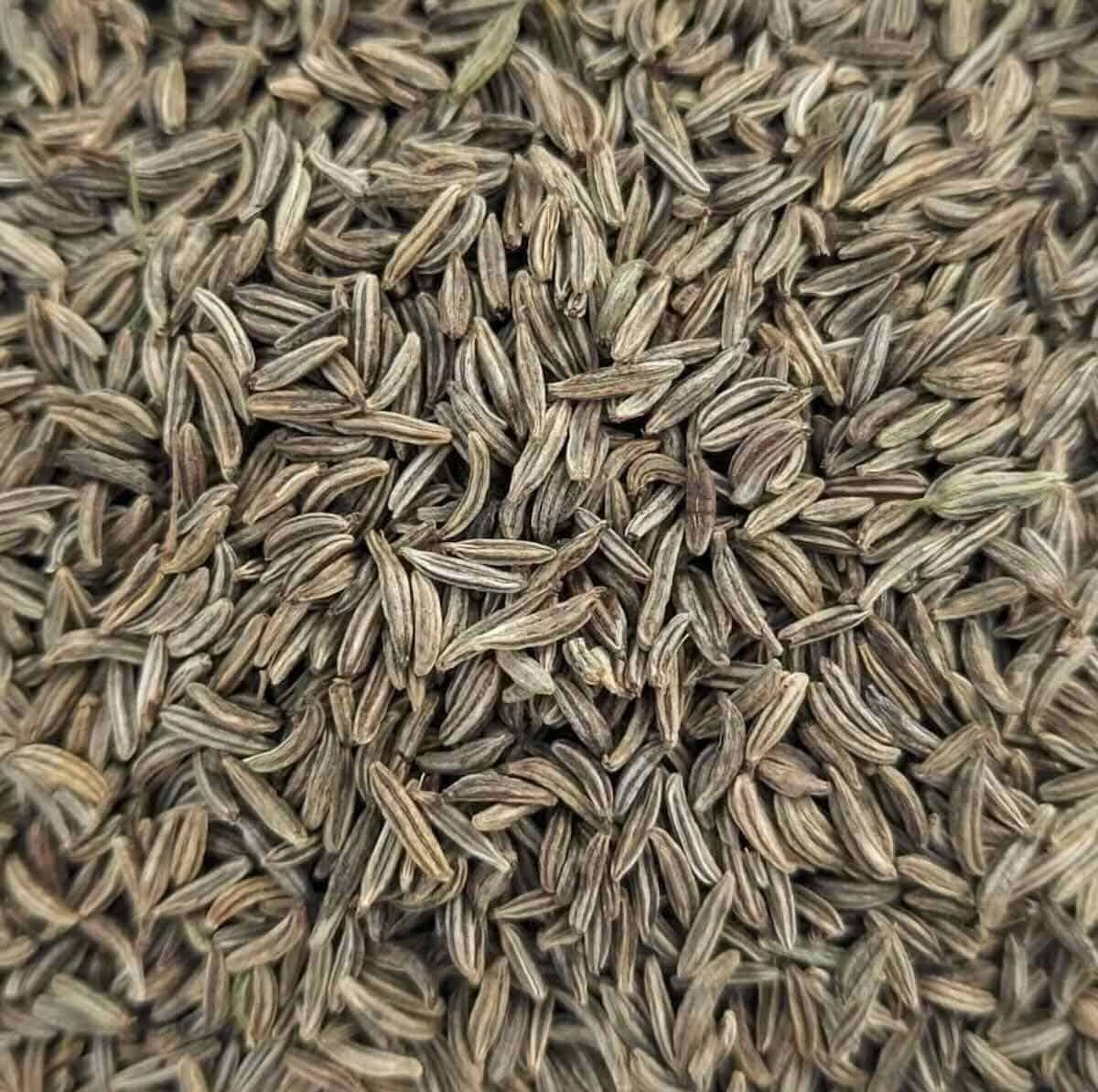
So yeah, it’s really kind of amazing. And we’ve been growing. So dill and cilantro, pretty obvious. Caraway [above] is another one that’s in that family, not quite as flashy, but still has that same sort of flower type. And then fennel, of course, which those plants get really tall. And in our garden, wasps are what are mostly pollinating our fennel. And if you start early in the spring, then there’s this kind of progression through the season where there can always be something flowering there, because consistency with the nectaries is also important for beneficial insects.
Margaret: The cilantro, again, easy to grow and pretty quick. I always do successions because it doesn’t last forever; I sow it a couple of times during the season. But for getting seed, you have a particular variety—it’s not the same green-leaved varieties that you’re listing to grow as cilantro. You have one that’s specifically for seed, you’ve selected it or you have identified it as a good seed-producing variety, yes?
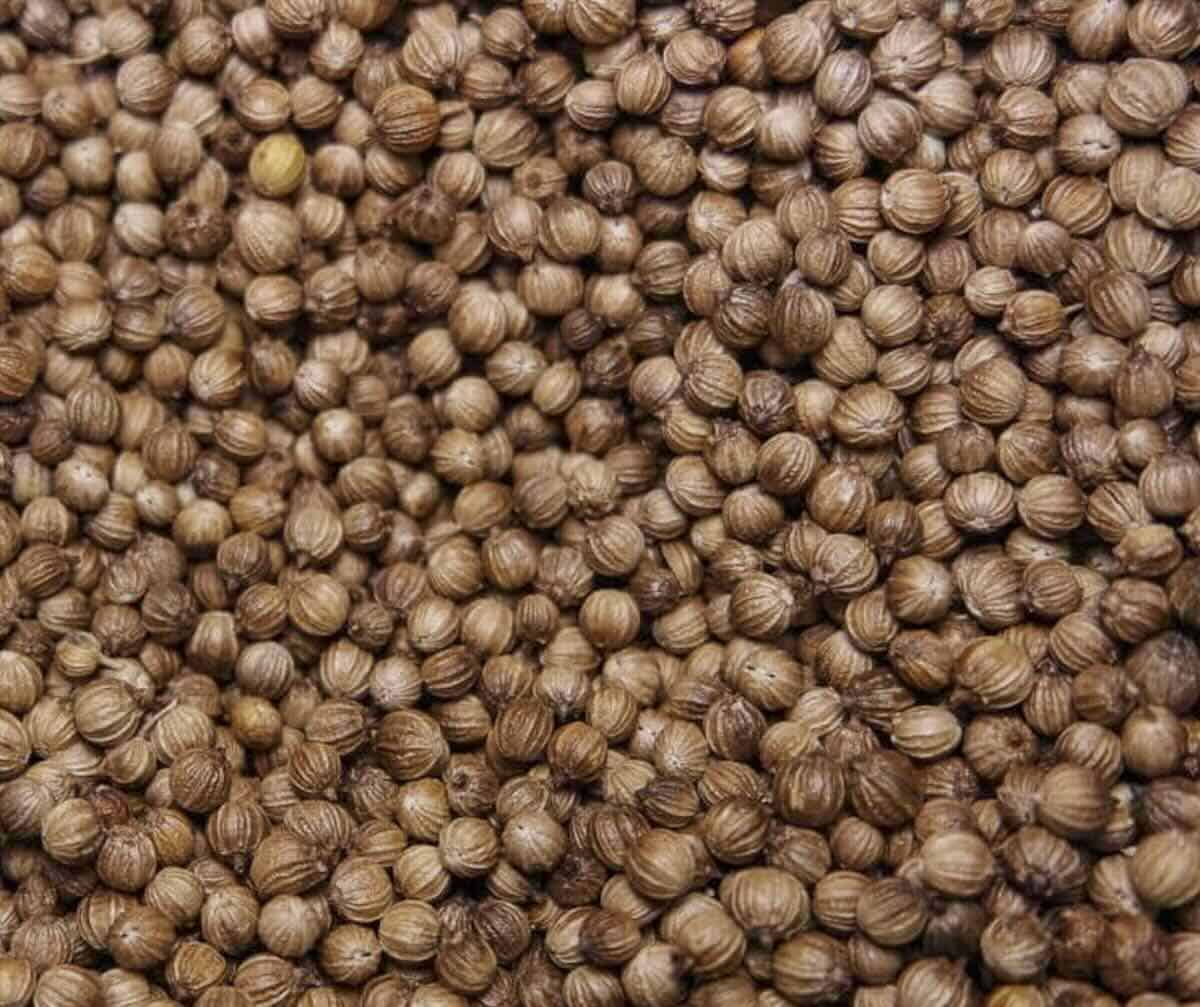
Sarah: Right. Yeah. It’s ‘Kanchanaburi’ coriander [above], and that’s a variety that we picked up in Thailand, and it was selected not by us, but by the generations of seed stewards that came before. And its seed is just a little bit bigger, and a little bit more flavorful. It’s got that sort of lemony undertones that is a pretty important flavoring in Thai cuisine, and they get it in all sorts of places. But yeah, so it goes to seed a little bit more quickly and makes the larger seeds as opposed to focusing on the vegetative growth like most cilantro has been.
Margaret: When approximately do you get seed from that? How far into the season are you from, say, a spring sowing?
Sarah: Gosh, that’s a great question. I think a lot of it depends on the timing when you’re planting it. So we plant almost all of our seed crops when we plant pretty much our whole farm [laughter], which is over a two-week period in the second half of May. And that’s mostly because that’s when our soil can be worked. And then the cilantro and coriander seeds are ones that come in August probably. So yeah, I don’t have the specific days to maturity, but it is a little quicker. The ‘Kanchanaburi’ coriander one is a little bit faster to make seed.
Margaret: And so then another flavor that people either like or don’t like, just like cilantro and coriander, but you have anise; Pimpinella is the genus, I guess. And that’s another one, people in Italian cookies and lots of different, especially like you mentioned in the catalog, I think specialty liqueurs, like ouzo, right? [Laughter.] So that sort of licorice-y kind of flavor. I don’t know that I’ve seen it growing, but yeah, so that’s another one. And how about that one?
Sarah: Yeah, I mean, that is the one that made me be like, “Oh, Margaret, we got to talk about spice racks and pollinators,” because this is one that we’ve just started to grow more recently.” And actually, I’m glad to hear you say at first, “anise,” because of course there is [pronounces it differently, “ah-NIECE”].
Margaret: [Laughter.] I know. I have no idea. I’ve always said anise, whatever. I’m in Camp Anise also; that’s two of us.
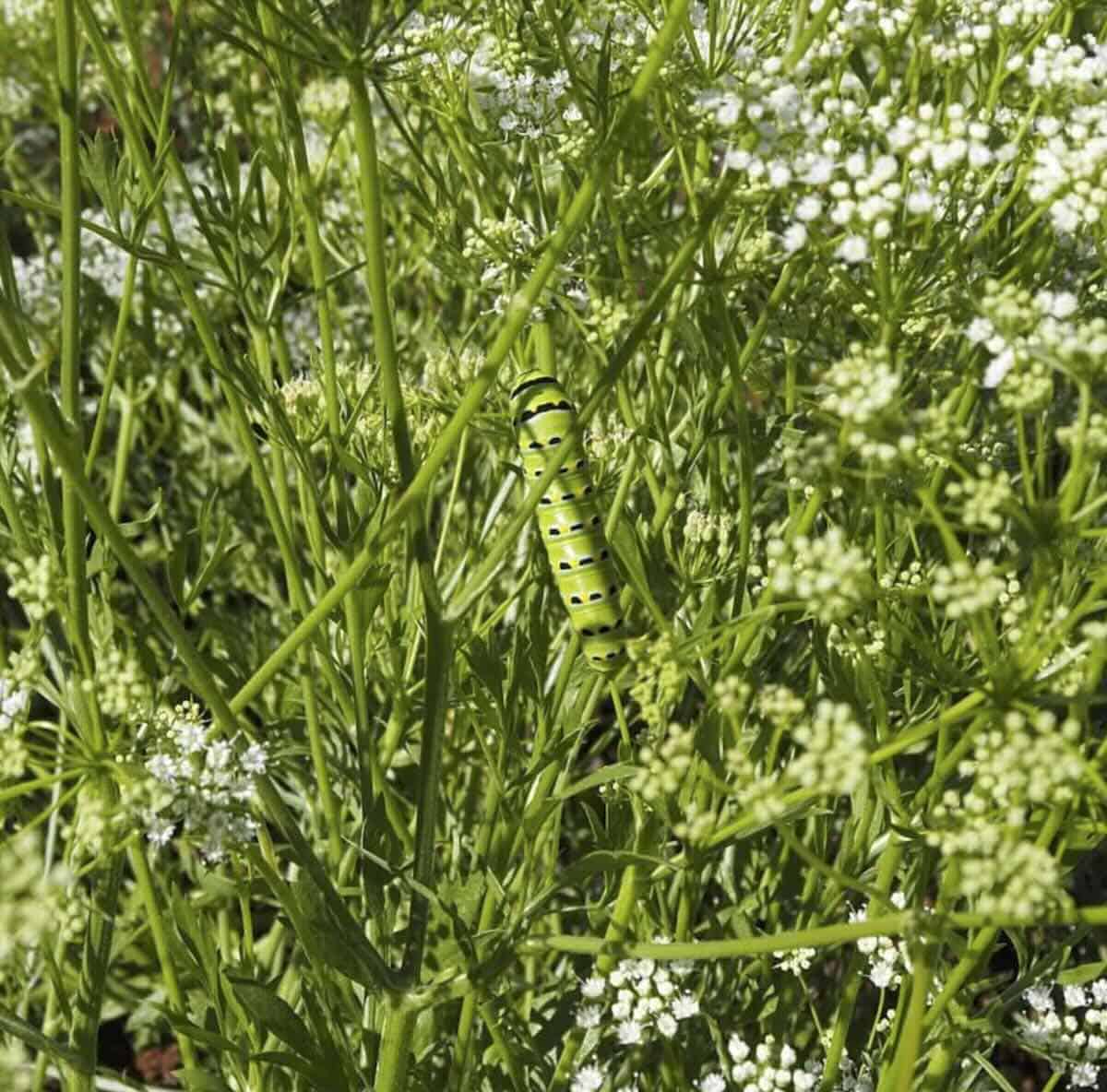
Sarah: But yeah, this past year when we grew it, it was our second time growing it. And the plants are not quite as showy, but we were walking through the gardens and found there’s an anise swallowtail butterfly that’s native to a lot of the West Coast, and their fat caterpillars were just all over this plant. And we have tiger swallowtails as another swallowtail that we have here, and they’re fairly common. And I, up to that moment, was unaware that we also had the anise swallowtails. And so was like, oh, this is a nursery crop for a really beautiful kind of special native species of butterfly as well. And to the point that they’re called anise swallowtails [caterpillar, above]. I think they also go for fennel.
Margaret: Right. But if you plant it, they will come. It’s sort of interesting. It’s the weirdest, right? How do they find it? But they do.
Sarah: Yeah, no, I mean, it was incredible. And it’s an abundant seed-yielder, especially for how much I use it in the garden or in the kitchen, which is not that much, if I’m being honest, but it is a plant that I am going to grow every year now, now that I know that we have this garden friend who sort of prefers it. And I want to do what I can in my gardens and in my fields to encourage the biodiversity of not only plants, right, but also the animals and insects and everybody else.
Margaret: Right. So anise, that’s another one. I think in the catalog listing, it says that’s a 75-day annual. That one is an annual.
Sarah: Yes, it is. Most of these are annual. And so that’s, I think another interesting and kind of fun part of it. If we’re looking at herbs, those are more perennial and pretty fabulous. You can just plant it once and grab your rosemary whenever you-
Margaret: Right. And thyme and oregano and this kind of … Right, right.
Sarah: Yeah. But these are all annuals. And if you do plant them and then you take them to the spice rack, then you also conveniently have your seed for replanting the next season.
Margaret: Oh, that’s true. Oh, that’s funny. That’s like harvesting beans as dry beans and then saying, “Ooh, I’ve got some beans left from last year’s harvest. I think I’ll plant them.” One crop, two purposes.
Sarah: Exactly. When the seed is the crop, that’s our favorite anyway.
Margaret: And so then also you sort of branched out into caraway as well; you’re growing caraway. And I think that’s usually a biennial, isn’t it?
Sarah: I think it usually is, but we found one that’s been more selected for annual production.
Margaret: Ah, good. Yeah.
Sarah: It did take us a couple of years to get the timing right and the spacing. But yeah, the caraway is one that we’re now able to get a pretty dependable yield from. And caraway and the anise and dill, they’re smaller plants, so they can actually be spaced much closer together and therefore create a more visually appealing, denser sort of arrangement or whatever in the garden. And then also the yield is better.
Margaret: They’re white-flowered? Are they white-flowered?
Sarah: Yeah, they are. Almost all of these are white, kind of lacy, almost like Queen Anne’s lace or wildflower-looking with just different sizes.
Margaret: And I don’t need a 40-foot row or something to get enough, because again, we’re using these with anise, for instance, it’s not like I need 10 pounds.
Sarah: Exactly. With the anise, our first year, we grew maybe 5 feet in the garden, which is maybe a lot on a garden scale. And then we’ve got 3 cups of this seed. And I made biscochitos. Do you know the cookie? It’s the state cookie of New Mexico. It was kind of a shortbread cookie with lard I think as a key ingredient. I made it with butter. It did not come out quite right, but flavored with anise and then with cinnamon sugar sprinkled on the top and it was 3 teaspoons or something. Right. So a little bit goes a long way and they’re really yummy.
Margaret: And then I was surprised also to see one that I had never heard of its culinary properties. I know Nigella I guess it’s damascena, love-in-a-mist flower, that I’ve grown as an ornamental, had self-sow around the edges of the garden and so on. But I didn’t know that it had a cousin [laughter], a different species, Nigella sativa. I didn’t know there was one that was culinary, so that was interesting.
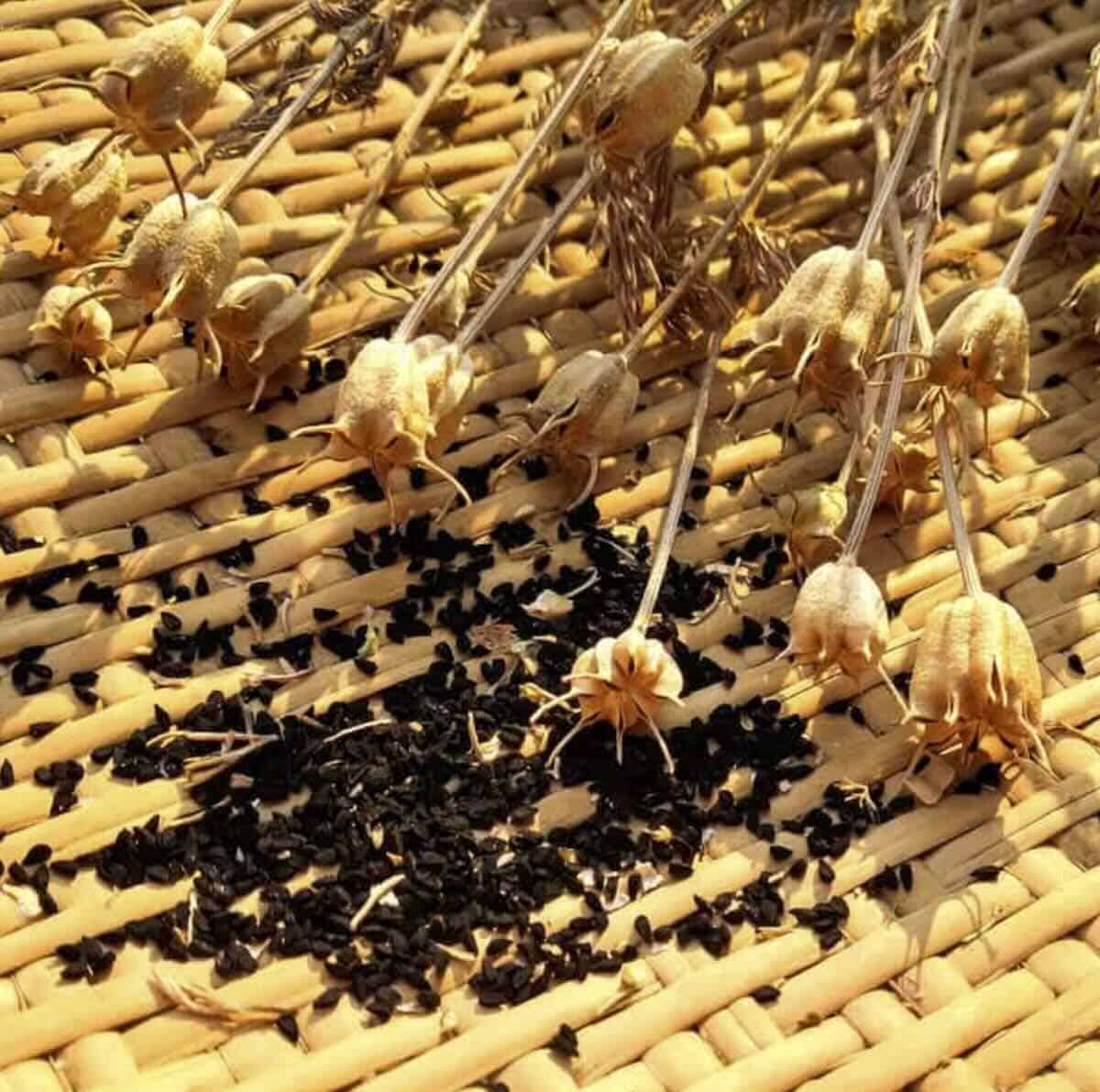
Sarah: Yeah. It’s the culinary nigella, it’s also known as blackseed [above, pods and seed], and it’s in a lot of just Middle Eastern and South Asian cooking. And it’s used on flatbreads and naans and as a food topping sprinkled on top and in stir fries. And it’s really got a lot of, I think, nutritional qualities. It’s said to be immune-boosting, too, traditionally, but it’s beautiful just like the regular garden nigella, although it holds its seed slightly more tightly so it doesn’t shatter; like the regular garden nigella tends to fling its seed around this one.
Margaret: It does do that, doesn’t it? [Laughter.]
Sarah: Right. You plant it once and you’ve got it. But yeah, the culinary nigella, it’s a little bit smaller plants, but yeah, just as beautiful. It is of course not one of the umbels. So the flowers are a little bit different, but it is also one that’s like, it’s quite beautiful and pollinators enjoy it as well. And yeah, easy to grow, especially if you’re using it in sort of small sprinkle-on-the-top kind of quantities.
Margaret: Well, and not that many things have blue flowers, right? So blue is a color some people really like, and that would be an attraction, too, yes? Now, do these all get to the ones that we’ve talked about so far, are we direct-sowing these or are we starting them indoors? What’s your advice with that?
Sarah: It’s a little of this and a little of that. I think we definitely direct-sow the dill and cilantro and the nigella, just because they’re planted at such a density that transplanting doesn’t really make that much sense. You’d have to just be burying a million plants right next to each other. But we have been transplanting the anise and the caraway and of course the fennel. And that’s partially to get a little bit of a jump on the season and on the weeds in our field [laughter]. If we can translate something, we tend to do that just because there’s less slug pressure and weed pressure for sure.
Margaret: Yeah. Oh, absolutely. So then it’s funny, I also saw that you’re growing sesame. And just a week or two ago, I had talked to people that you also know, Dylana Kapuler and Mario DiBenedetto at Peace Seedlings. And they were talking about sesame, and working on sesame, since it’s really a heat-lover, it’s I guess subtropical or something like that, technically, in its origins, and trying to make a Northern strain or whatever you would call it, a Northern selection of it. And you’re doing that, too. You’re interested in sesame, too. Have you been having fun with that?
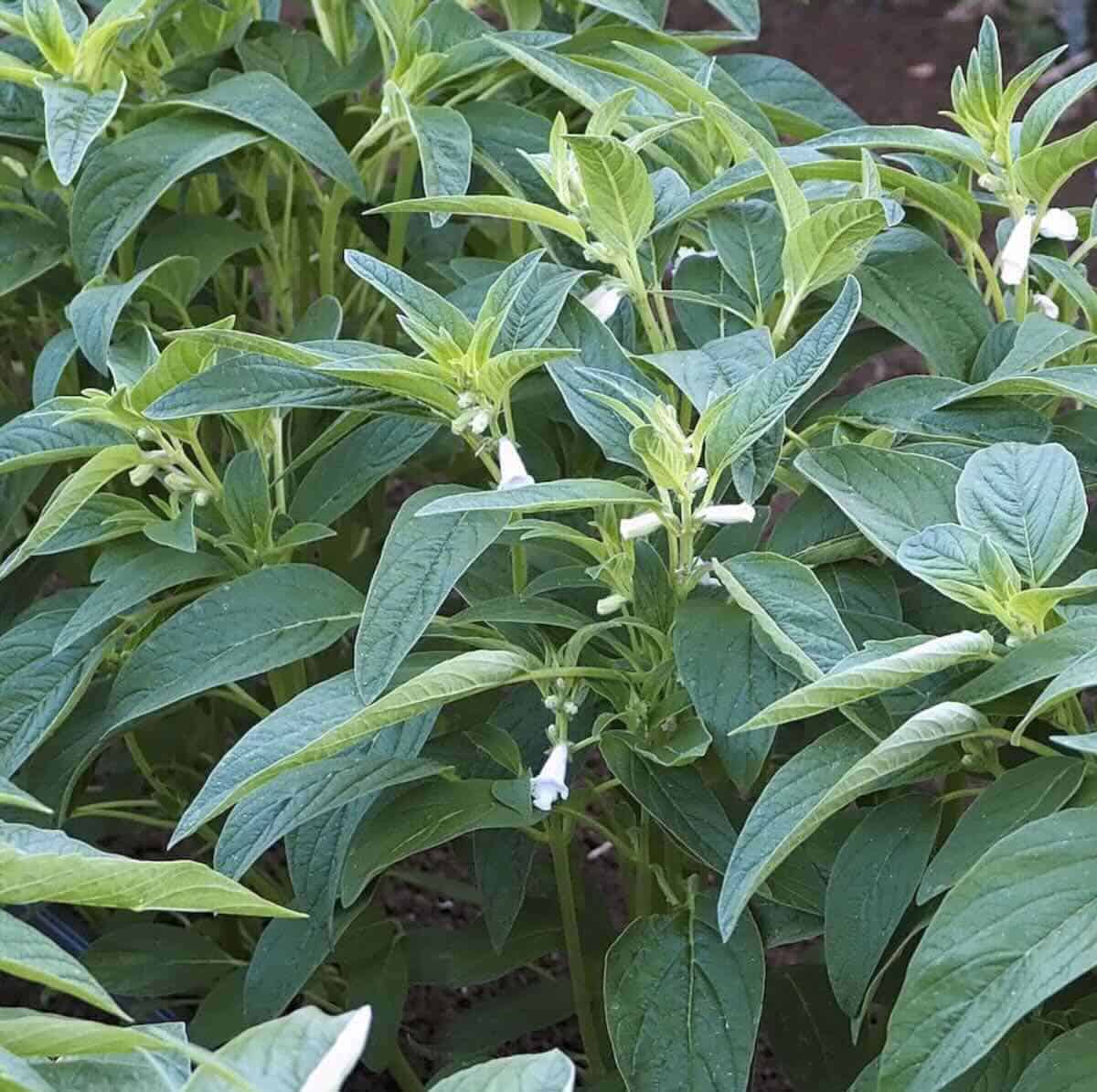
Sarah: Yeah, it’s been really great. I think we were partially inspired by them. We had tried to grow sesame years ago and just failed outright and then visited with those guys in 2024, I guess, and they gave us the secret to success of how to grow it. There is in one part the germplasm, the seeds that you’re starting with, being adapted. But then there are also a couple of different tricks. So we started with their Shades of Sesame that they talked about, which is really great. And then also worked with some people at Oregon State University who had accessed some Northern-adapted sesame germplasm from USDA GRIN—the germplasm repository—and done a little bit of selection with stuff that they got out of Russia, basically. So we grew all of them together and sort of did another selection, based on what grew well from that.
And yeah, sesame is great. It’s another one that I think I want to grow a lot more of, because it’s such a high nutritious crop that you can grow on the garden scale. And also they’re just so pretty. The flowers are kind of like foxglove flowers almost.
Margaret: Yes. You said they’re reminiscent of tobacco or foxglove [above].
So just to detour a little bit and take a little time to talk about some of the other sort of herbs that you offer that I think people should make room for, and maybe they don’t [laughter]. I love that you have lovage, a perennial herb. I mean, I’ve had my lovage plant, I don’t know, 25 years or something like that, I mean at least. And it’s just this delightful creature and never gives up, just keeps producing sort of celery-ish flavor. But you have some interesting ones that I don’t really know about, like this plant called Alexanders [Smyrnium olusatrum], I think. Is that what it’s called?
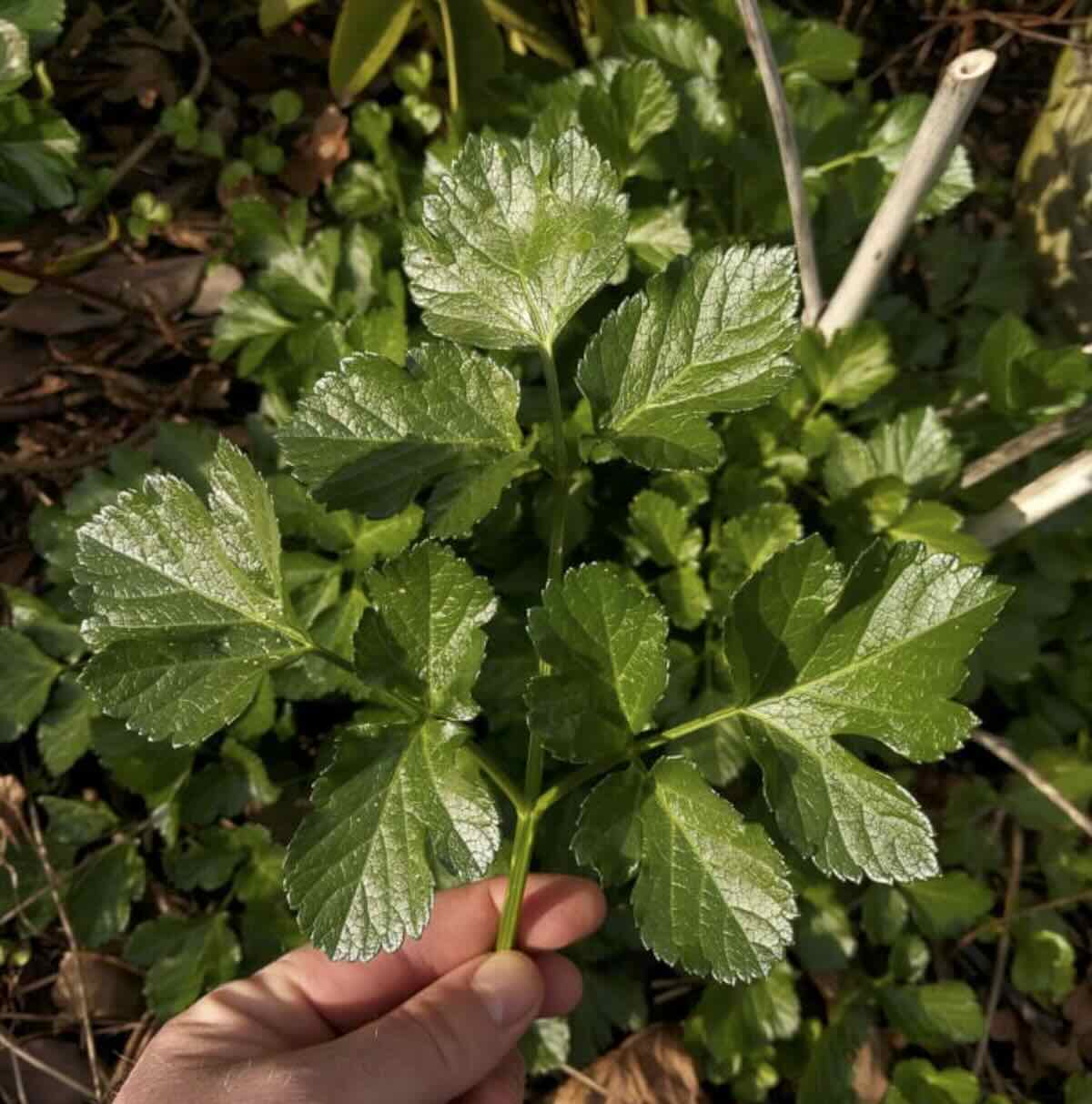
Sarah: Yeah, Alexanders [above]. It is interesting that it’s not as well known. And this is actually another plant that came from Alan Kapuler, I think, is how we know it to have been introduced into our sort of local gardening scene. And it’s not a perennial, it’s like a biennial or triennial sort of thing, but it is another kind of ancient herb that goes back to ancient Romans used it, and it can be found throughout a lot of Europe. And it’s really got this delightful celery, almost parsley—there’s some floral notes to it—kind of a flavor. And it’s one of these plants that once you get it established, if you let it go to seed, it will self-sow readily and sort of always be present in the garden. But it is another one because it’s in that umbel family that its flowers are yellow, but it also is another sort of haven for the beneficial insects as well.
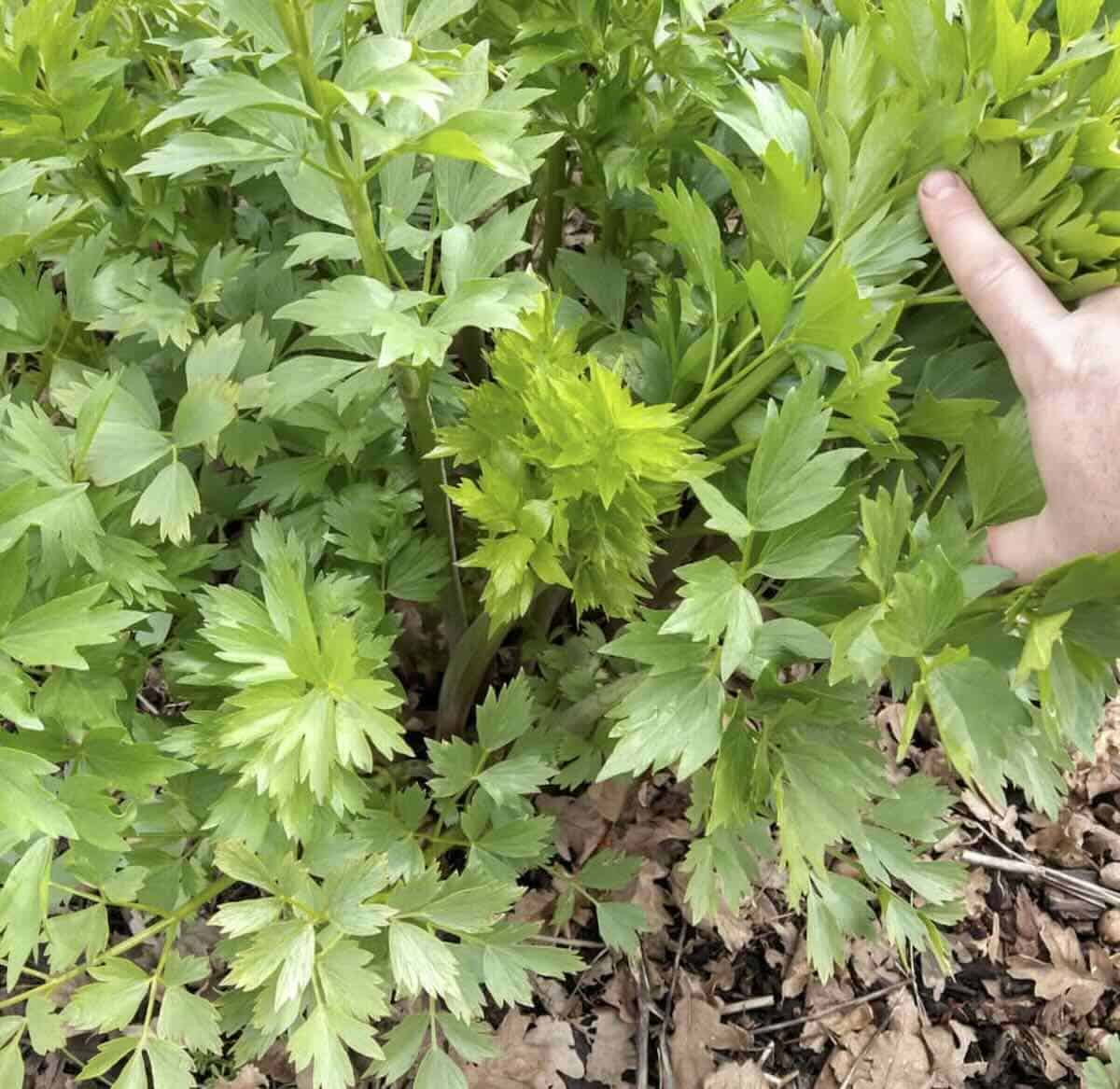
Margaret: I think you have lovage [above] in the catalog, too, which isn’t an herb exactly. I use it to make soup—and excuse me, not lovage, sorry, lovage I already mentioned. I mean sorrel [below]. Sorrel, I eat it like a salad as well. It’s delicious, like lemonish, right?
Sarah: Right. Yeah. The sorrel’s very lemony.
Margaret: Yeah. Is that something that people … Is it popular with people? I mean, do you guys enjoy it? I love it. And that I must have had 30 years. I mean, it’s a patch; it’s been growing for 30 years, a perennial [laughter].
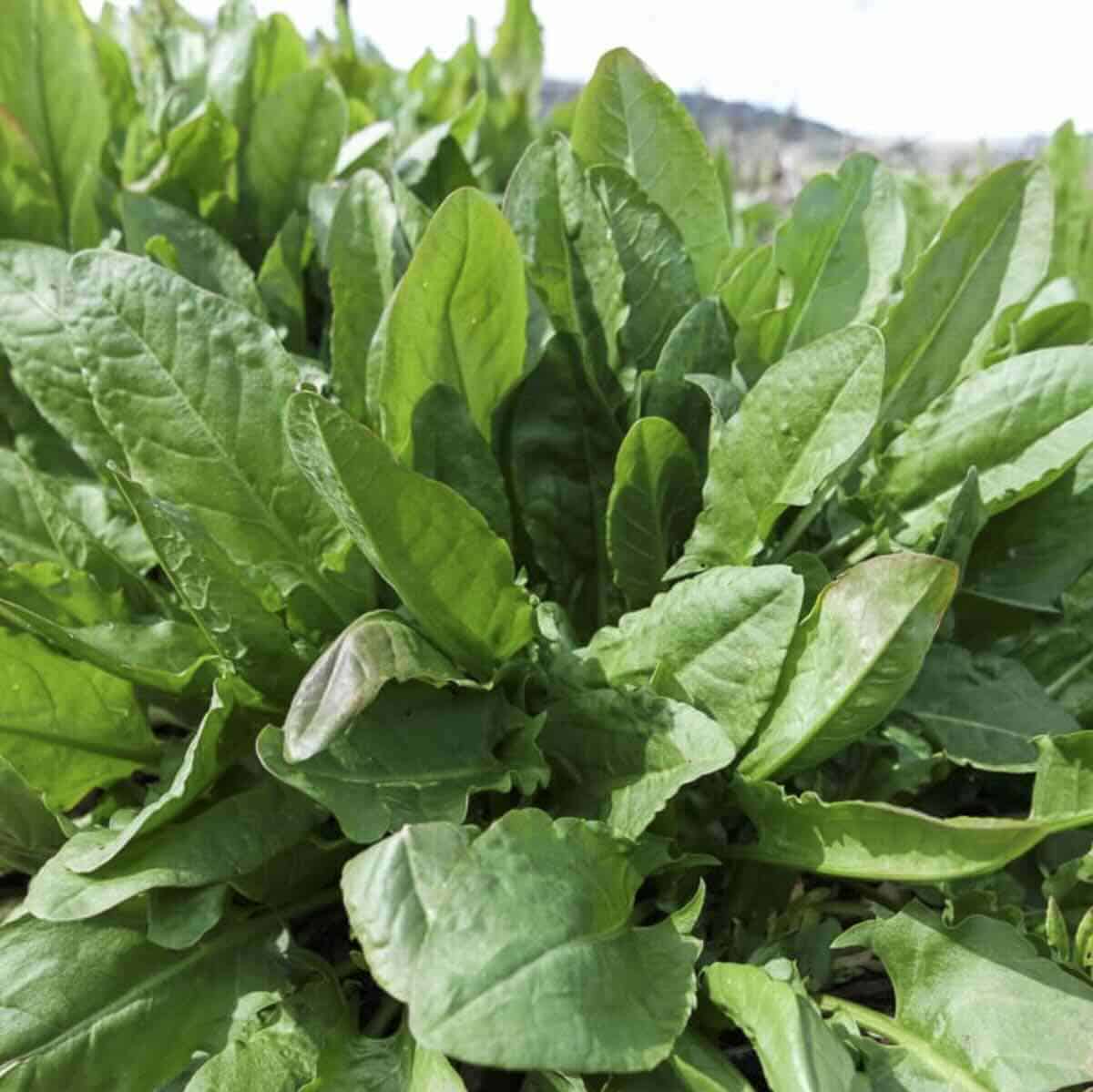
Sarah: And they just take care of themselves. I mean, I think we have one, we have a patch as well, and it is something that we definitely… people buy it. The culinary use, I think, of sorrel and a couple of other of our perennial greens, they have this particular time of year when they really shine. And when they’re valuable in the garden and in the kitchen is sort of this early spring where they have this lush growth early on, before any of your annual garden things get going. And it’s just like, “Oh, a fresh green thing.”
And I’ve been on a real salad kick lately. I’ve been eating mostly chicories, but I’ve just about finished them. And so in a walk in the garden today, the sorrel is up; the leaves are a couple of inches long. And then we’ve got the sculpit is another one, or Silene inflata that tastes lettucey, and is also I think known as bladder campion—it has these little balloon kind of flowers. That’s good in salads.
Margaret: In the last minute then or so, just any others that you want to say, “You know what? Give this a try because you probably never heard of it, but … ” [Laughter.]
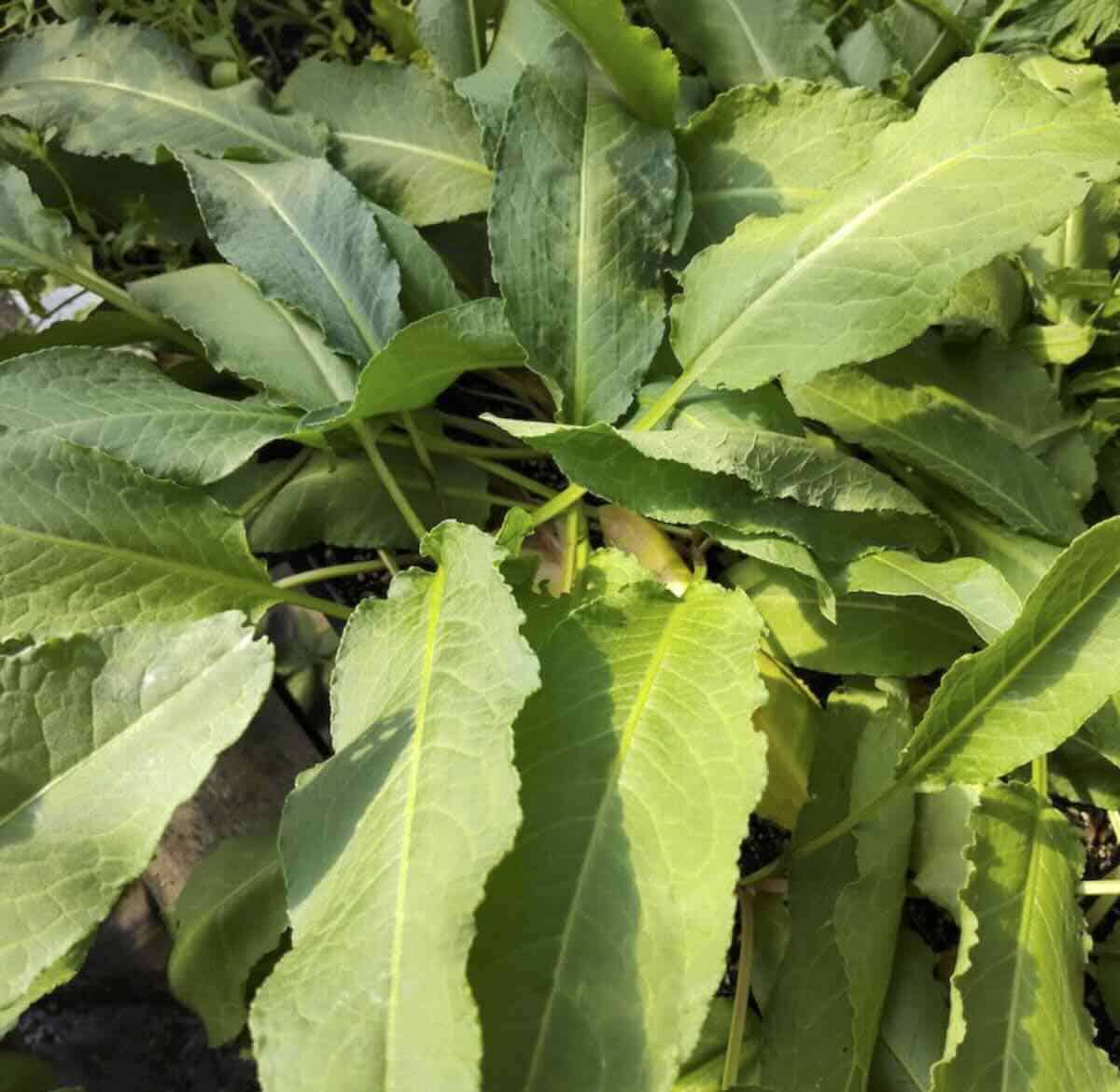
Sarah: I mean, I really just want to plug: Patience dock [Rumex patientia] [above] is a new one that we added this year. It’s a dock, right? So we have yellow dock in our garden or field that’s weedy, but Patience dock is native to Central and Eastern Europe. It’s a perennial leafy green, and it really tastes just very similar to a mild spinach. And again, it’s something that fills that early season.
Margaret: Oh, I’ll go look for that one, too.
Sarah: And also it’s really great in a sort of permaculture setting, like under fruit trees and a lower story, because it grows early in the spring and then it’s kind of done everything it needs to by June. So then if your fruit trees are leafing out, then-
Margaret: Perfect partners. Well, Sarah Kleeger of Adaptive Seeds, thank you so much for making time. And I’m going to look now at these other ones, too; I didn’t notice some of those, so that’s great. Thank you. And I hope I’ll talk to you again soon.
Sarah: Yeah, likewise. Thanks so much, Margaret. Take care.
(All photos from the Adaptive Seeds website.)
more from sarah kleeger
prefer the podcast version of the show?
 MY WEEKLY public-radio show, rated a “top-5 garden podcast” by “The Guardian” newspaper in the UK, began its 16th year in March 2025. It’s produced at Robin Hood Radio, the smallest NPR station in the nation. Listen locally in the Hudson Valley (NY)-Berkshires (MA)-Litchfield Hills (CT) Mondays at 8:30 AM Eastern, rerun at 8:30 Saturdays. Or play the Feb. 16, 2026 show using the player near the top of this transcript. You can subscribe to all future editions on iTunes/Apple Podcasts or Spotify (and browse my archive of podcasts here).
Comments are closed.