
Q: Hi Master Gardeners! What can I propagate during February? Is it too late? — A.
A: Winter is actually one of the easiest and most reliable times to propagate these plants, so you’re not too late! Hardwood cuttings root reliably in cool conditions, and the plant’s dormancy reduces water loss during propagation. Many common shrubs and fruiting plants in our yards can be propagated in winter using hardwood cuttings, including fig, blueberry, forsythia, and elderberry.
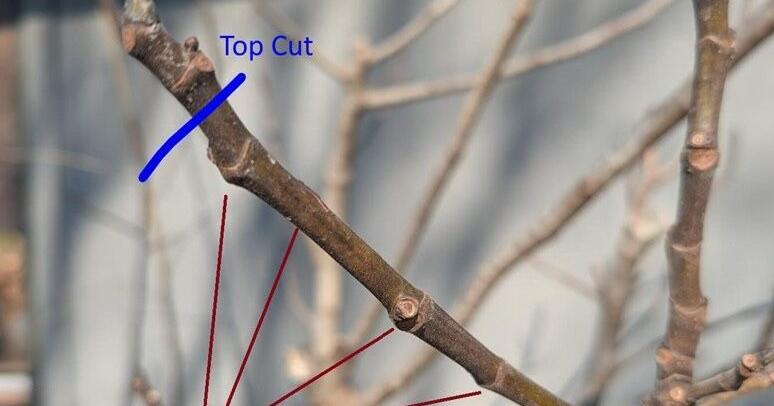
Hardwood cuttings are taken from woody stems that grew during last year’s growing season. For most plants, a cutting with 4 — 6 nodes works well. Make your bottom cut flat just below a node, and make your top cut angled right above a node. The flat cut helps you remember which side goes down. Make sure to use clean cutting tools and sanitize them between each new plant! The pictures included indicate cutting locations for a dormant fig tree cutting.
Gently remove any other leaves from the cutting, and, if available, dip the base in rooting hormone up to the second node from the bottom. The rooting hormone is optional, but it can increase rooting success. Then, insert the cuttings into moist, well-drained mix. Your mix can vary, but usually, a mix of sand, peat moss, or coconut husk works well. Bury half of the cutting and ensure that at least two nodes are buried beneath the mix. Remember to leave space between the cuttings so air can circulate! The picture included demonstrates fig cuttings in a sand/coconut husk mix that have been rooting for 3 weeks.
Keep your cuttings evenly moist, but not soggy, and keep them in an unheated greenhouse, a cold frame, or a sheltered outside bed while the cuttings root between late winter and early spring. In early spring, gently tug on the cutting to check for roots. Then, pot up the plants or transplant them after your last frost date. One of the most common mistakes in propagation is
moisture inconsistency, so make sure that the cuttings remain evenly moist — if they dry out, they will die, and if they are too wet, they will rot or grow mold. The picture included demonstrates a fig cutting that was rooted and then potted up into potting soil to grow out roots in preparation for planting outside.
Some commonly propagated plants in our area include figs, blueberries, elderberry, and forsythia. Figs are one of the easiest plants to root from hardwood cuttings, and they are even more successful when rooted inside on a heat mat. Blueberries require a more acidic rooting mix (peat can work well), and they can be slower to propagate but are worth the wait! Elderberry is a native plant and excellent for wildlife, and cuttings root well and grow quickly.
If you’re more interested in ornamentals, forsythia is an easy shrub to propagate and can even be propagated in water! Forsythia cuttings can be grown out for erosion control, borders, or an early pop of color in your landscaping. American Beautyberry and Buttonbush are two more native and easily propagated shrub that will support wildlife habitats and pollinators in our area.
Winter propagation is inexpensive and deeply rewarding once you’ve got the hang of it. A handful of pruned stems can become dozens of new plants for home orchards, wildlife habitat, and beautiful landscaping.
If you have gardening questions, contact a Master Gardener Extension Volunteer at the UGA Cooperative Extension Carroll County office at 900 Newnan Road, Carrollton at 770-836-8546 or via email at ccmg@uga.edu.
Comments are closed.