
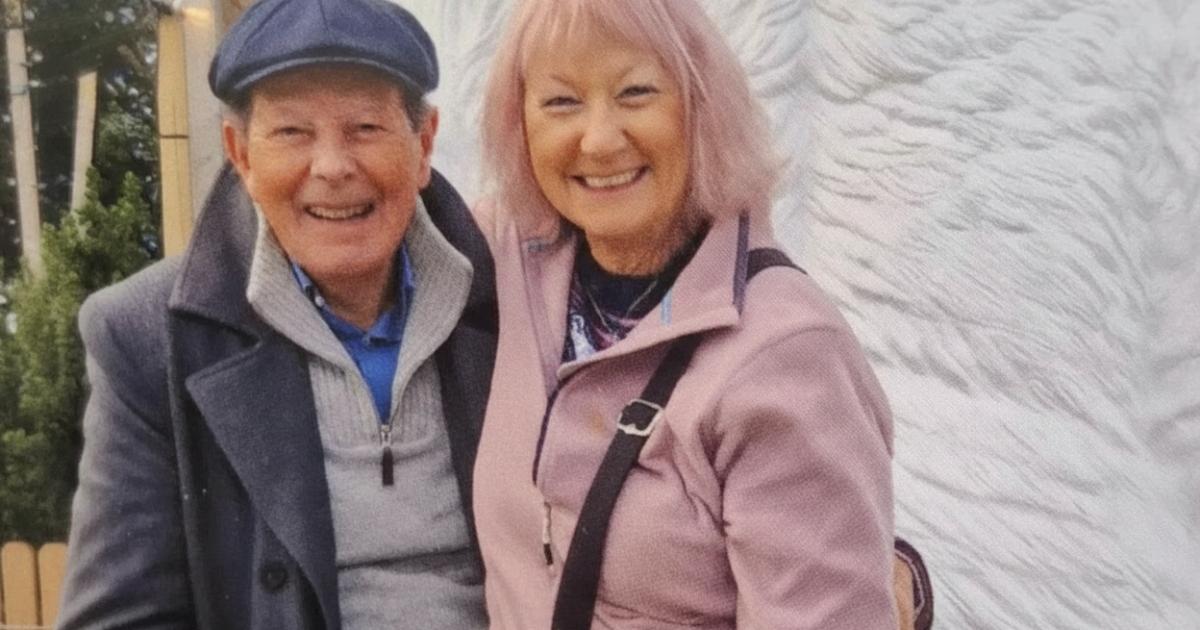
Theresa Gilsenan said test results show her husband Anthony died aged 82 after contracting Legionnaires’ disease. She believes he inadvertently inhaled spores released when he opened a bag of peat-free compost.
She is now campaigning for clearer, more prominent warnings on compost packaging to help prevent similar tragedies.
Theresa, 79, said: “Anthony died just 12 days after opening a new bag of multi-purpose peat-free compost.
“Our olive tree’s soil needed topping up, and just a three-inch layer of compost is all that was needed to end his life so abruptly.
“We were such a happy couple. His death has left a huge hole.”
Theresa said Anthony began to feel unwell around a week after opening the compost at their home in Ashington, in West Sussex, in August last year.
When his condition subsequently worsened, he was seen by a doctor, and told that his symptoms were the result of a virus.
However, Theresa later became concerned and rang 111, with Anthony admitted to Worthing Hospital on August 8.
He sadly died just two days later.
Anthony’s death came as a huge shock to Theresa, as her husband of 55 years had always been fit and healthy.
He enjoyed cycling every day and used to transport brides to their weddings in his beloved Mark 1 Jaguar car.
In addition, he had been active in charity work, helping to raise almost £3.5 million for the Queen Elizabeth’s Foundation for Disabled People, through commentating for years at a car show.
Theresa said: “The staff at the hospital were wonderful.
“A diligent ICU nurse had managed to take a sample from Anthony’s chest which was sent to the Health Security Agency laboratory, from where I got the devastating diagnosis of Legionella longbeachae, a rare form of Legionnaires’ Disease.”
Legionella longbeachae has been linked to compost in previous cases.
Theresa added that Anthony had not been aware of the risks involved with compost, and the instructions on the bag were “extremely small”, but he had worn gloves and opened the bag outside.
She said: “Who wears reading glasses when gardening and reads manufacturers’ online instructions when going out in the garden to plant a tree?
“Some bags have better, higher up warnings, but it is a game of Russian Roulette; any bag could contain these spores.”
Legionella bacteria thrive particularly well in warm environments of between 20C and 45C, and Theresa is concerned that the warmer weather experienced in recent years could result in an increase in cases.
She is advocating for larger warning labels on bags in the UK, and believes garden centres should also display signs to warn customers of potential dangers.
In addition, she is hoping to meet with Mary Creagh, Parliamentary Under-Secretary of State for Nature, to discuss the issue.
Legionnaires’ disease is typically caused by the bug Legionella pneumophila, which lives in bodies of water.
Legionella longbeachae, found in compost, is much more rare in the UK, with just nine cases reported between 1984 and 2010, according to industry guidance.
In Australia, cases of compost-related Legionnaires’ disease fell after warning labels were introduced in 2003.
Anyone who can help Theresa with her campaign can contact her at curtainthersa@gmail.com.
Comments are closed.