
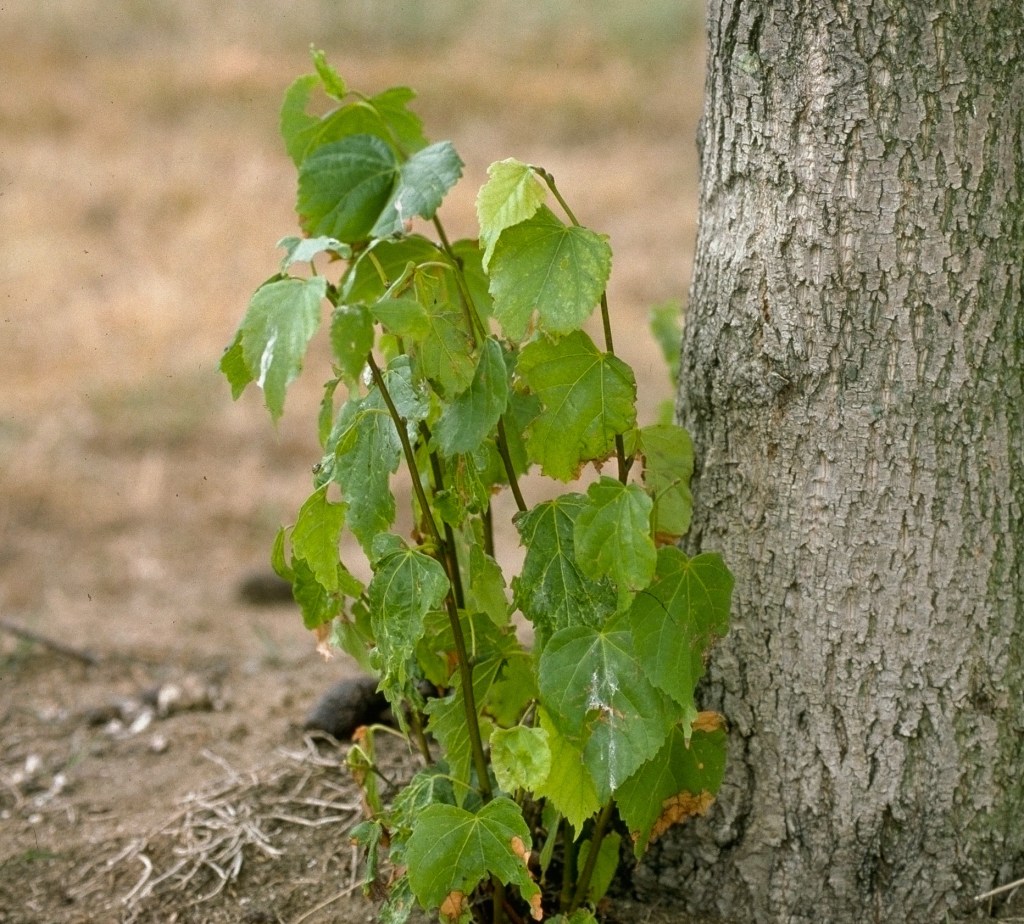
My crabapple and witchhazel sprout extra stems at the bottom of their trunks. I prune those stems off, but they just keep growing back. Why?
The growths you describe are suckers, which are new stems produced from the root system or base of the main stem (trunk). Suckers often grow at a much more rapid pace than the growing tips of the older branches.
Suckers can be stimulated to grow for a variety of reasons, such as the vigor of a plant’s root system in situations where the plant is grafted (as many non-native witchhazels and tree cultivars are). In that case, the sucker growth is a different variety or species from the top growth; if allowed to mature, it won’t have all of the same features as the plant you purchased.
Another trigger is a response to stress or injury, as a means of supplementing food reaching the roots when carbohydrate levels decline in the canopy. A common cause is bark damage from a mower or string trimmer when trees are growing too close to a lawn without a sufficient zone of protection from mulch or other plantings.
While some tree and shrub species sucker naturally to reproduce and colonize more ground, they are usually undesirable and should be removed. For your crabapple and witchhazel, remove suckers while they are still young (under 6 to 12 inches long). Ideally, you want to find the base of a tender sucker’s stem and pull it off of the wood it’s emerging from, as this is more likely to remove the tissue that would continue to generate replacement suckers if it were merely cut off instead.
A plant prone to suckering (assuming it’s not a response to preventable plant damage) will likely do so for the rest of its lifespan, but vigilance to remove suckers promptly will keep them from overwhelming the rest of the plant. Suckers aren’t universally bad, though, and they can be an easy way to rejuvenate a shrub that needs to have its oldest stems removed, such as with lilacs whose aging stems stop flowering well or become too vulnerable to borers.
When should I spray dormant oil? (I’m going to try to control a scale outbreak, plus smother overwintering pests or diseases on a fruit tree.) Does it matter, as long as the plant is dormant?
Dormant oil is a slightly more concentrated form of horticultural oil, which can be used to smother some fungal spores and overwintering insect pests like aphids, mites, and scale. Horticultural oil is a collective term for a group of oil-based products refined specifically for use on plants.
Dormant oil can cause phytotoxicity (damage to plant tissues from a chemical exposure) if applied during the growing season, which is why it’s applied while plants are dormant, usually in late winter. You’ll need to consult the product label for any specific parameters, but in general, make sure air temperatures during application are at least 50-60 degrees for several consecutive days (with nightly lows above freezing). Mild temperatures ensure the oil maintains the proper viscosity, so spray applications are even and thorough. This also ensures that any treated insects are using enough oxygen to be impacted by the oil’s suffocating effects.
Fruit trees are sometimes also sprayed with other materials, like preventative fungicides, while they are dormant or just beginning to expand buds. Regardless of whether you use an organic or synthetic product, check the label to make sure it is compatible with horticultural/dormant oil, or else you will need to separate applications by enough time to avoid phytotoxic interactions between the ingredients.
University of Maryland Extension’s Home and Garden Information Center offers free gardening and pest information at extension.umd.edu/hgic. Click “Ask Extension” to send questions and photos.
Comments are closed.