
Time is running out for 30 residents in Culpepper Garden’s assisted-living wing to find other housing before its planned closure this summer.
With the wing still at 40% capacity, officials at the apartment complex for low-income seniors say they are working with each of those residents to determine the best course of action.
“A lot of the folks we have now don’t have much family, don’t have many options,” said Marta Hill Gray, CEO of Culpepper Garden’s parent organization, the Arlington Retirement Housing Corporation.
Hill and other Culpepper Garden personnel spoke at a Feb. 2 meeting of the county’s Commission on Aging.
Citing unsustainable costs, Arlington Retirement Housing Corporation officials announced last summer they would close the 73-unit assisted-living facility that had been in operation for a quarter-century.
Some residents have since transitioned into Culpepper Garden’s independent-living apartments, while others have moved elsewhere. The remainder continue to consider their options.
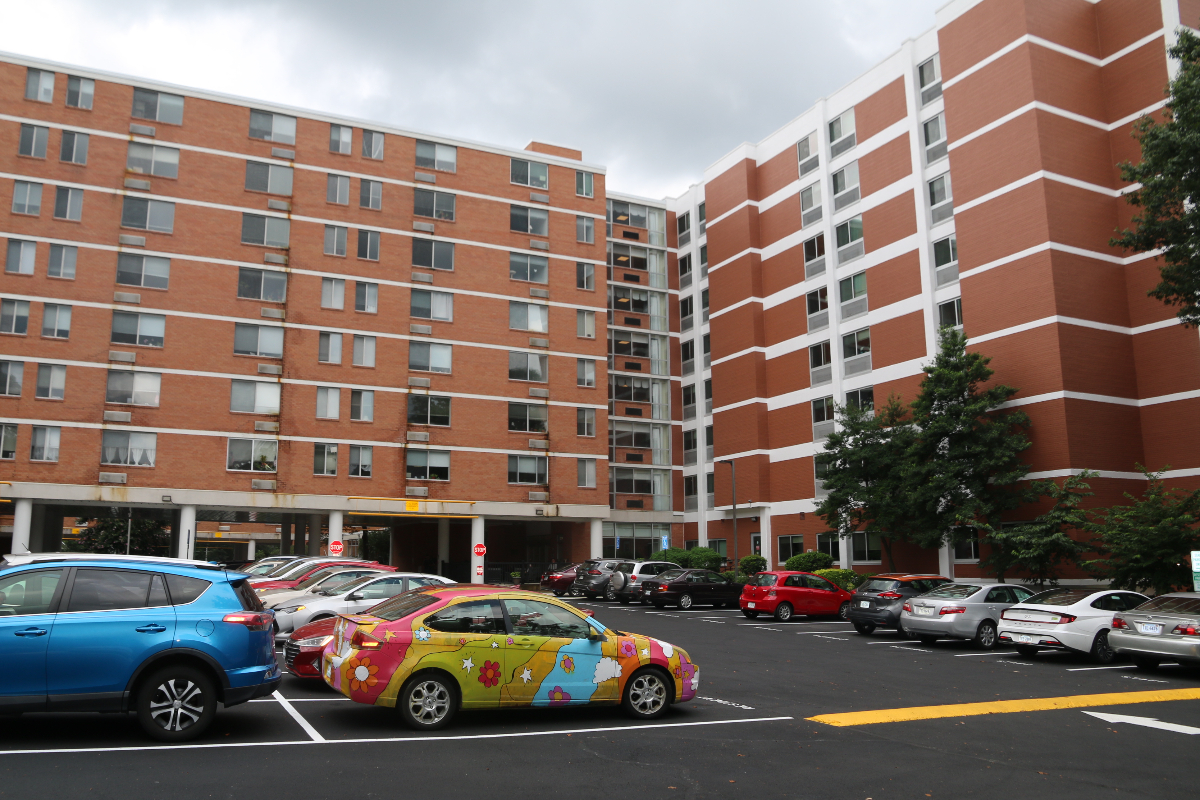 Culpepper Garden (staff photo by Scott McCaffrey)
As a deadline approaches, Gray said her organization has been “taking some of the folks who have been a little slow to get off the mark, to really work with them and their power of attorney and caregivers, to make sure they’re progressing.”
Renita Payne, the facility’s resident services coordinator, said that many impacted residents want to either stay at Culpepper Garden or in other nearby options.
Families are “wanting to keep them close, in Arlington and Alexandria, and not take them to Springfield or Reston or further out,” Payne said. “They want to stay close by.”
Those moving to Culpepper Garden’s independent-living apartments will receive some additional support but will not have the array of services available through the assisted-living wing. Gray said the nonprofit housing organization was doing its best to support residents moving from assisted living to independent living.
“We’re really doing a lot to backfill, to keep them here,” she said. “I think that will give them a lot of comfort.”
William Way, who chairs the Commission on Aging, said the Feb. 2 update was beneficial to provide the community with more information after a lull since last summer’s announcement.
“If there’s a void [in communication], people fill in with their own ideas about ‘this is what must be happening,’” Way said.
Culpepper Garden officials will be invited to return to the commission in the spring and then after the transition is complete.
The 79 assisted-living apartments are being converted into independent-living units. Fifteen residents have already moved in, said Paul Timpane, Culpepper Garden’s property-operations manager, with more on the way.
“There are not just vacant units sitting over there unused. We are actively filling those,” he said.
The increase in independent-living units has temporarily reduced a waiting list that’s often one to two years long for prospective residents. Once those vacant apartments are occupied, the typical waiting period is expected to return to norms, Timpane said.
Culpepper Gardens traces its history to the 1970s.
An effort led by the Unitarian Universalist Church of Arlington resulted in the purchase of a 5-acre tract near Ballston at a below-market price to construct independent-living facilities for those 62 and older with limited assets.
Beginning in the 1920s, the property was the private home of Charles Culpepper, a U.S. Department of Agriculture botanist.
Culpepper lived long enough to see the first residents move into the original eight-story, 210-unit apartment building in 1975. He died in 1980 at age 91.
An additional independent-living wing with 63 units opened in 1991. The assisted-living facility opened in 2000.
Comments are closed.