
“The Garden We Dreamed is one of the more attractive films in the migrant genre.”

It’s one of nature’s great miracles: the migration of the Monarch butterfly. Each winter up to a billion butterflies journey from east of the Rocky Mountains to Central Mexico to winter, migrating back in summer while producing new generations along the way. Mexican director Joaquín del Paso uses this metaphor for The Garden We Dreamed, a story about the plight of human migrants passing through the same Central Mexican mountains and valleys, crossing the path of the butterflies. With a stupendous sound design and a hard but somewhat nuanced look at the illegal logging that threatens this important biotope, The Garden We Dreamed stands out as a story of resilience and the power of family in a environment that is under threat.
Junior (Faustin Pierre) and Esther (Néhémie Bastien) are a Haitian couple migrating north through Central America, together with Esther’s two young daughters Flor (Kimaëlle Holly Preville) and Aisha (Ruth Aicha Pierre Nelson). Junior has found employment with an illegal logging outfit, so the family of four has made the forests of Central Mexico their home for the time being. Junior’s coarse foreman Toño (Carlos Esquivel) has his crew build a hut for the family, expecting them to be a lookout for any threat to his operation. At first, the beauty of the forest is idyllic, and Junior and Esther enjoy the peace and quiet around their simple home, but when Flor falls ill they become increasingly aware that life in these parts is rough and ruthless for migrants like themselves. Run-ins with nearby villagers who see the logging outfit as infringing on their territory and livelihood, and the tightening grip of Toño on their lives, make Esther realize that her family has to move on. Yet Junior wants to do one last job.
As The Garden We Dreamed opens, it immediately introduces the film’s most eye-catching, or rather ear-catching element. As the forest slowly wakes up, a symphony of nature sounds comes to life. The sound design by the team of Lena Esquenazi and Valeria Mancheva is breathtaking and immediately immerses the audience in an environment that can be tranquil but also brutal, which soon becomes apparent when we transition into the noise of the loggers, with their chainsaws and other heavy machinery, and snapping sounds like gunshots of trees being felled. The story emerges from this cacophony, which guides the film as a second score of its own. When Toño enlists Junior to cut down a particularly majestic tree, the kind you see Monarchs roost in during one of those BBC nature documentaries, it almost sounds as if the forest giant is breathing.
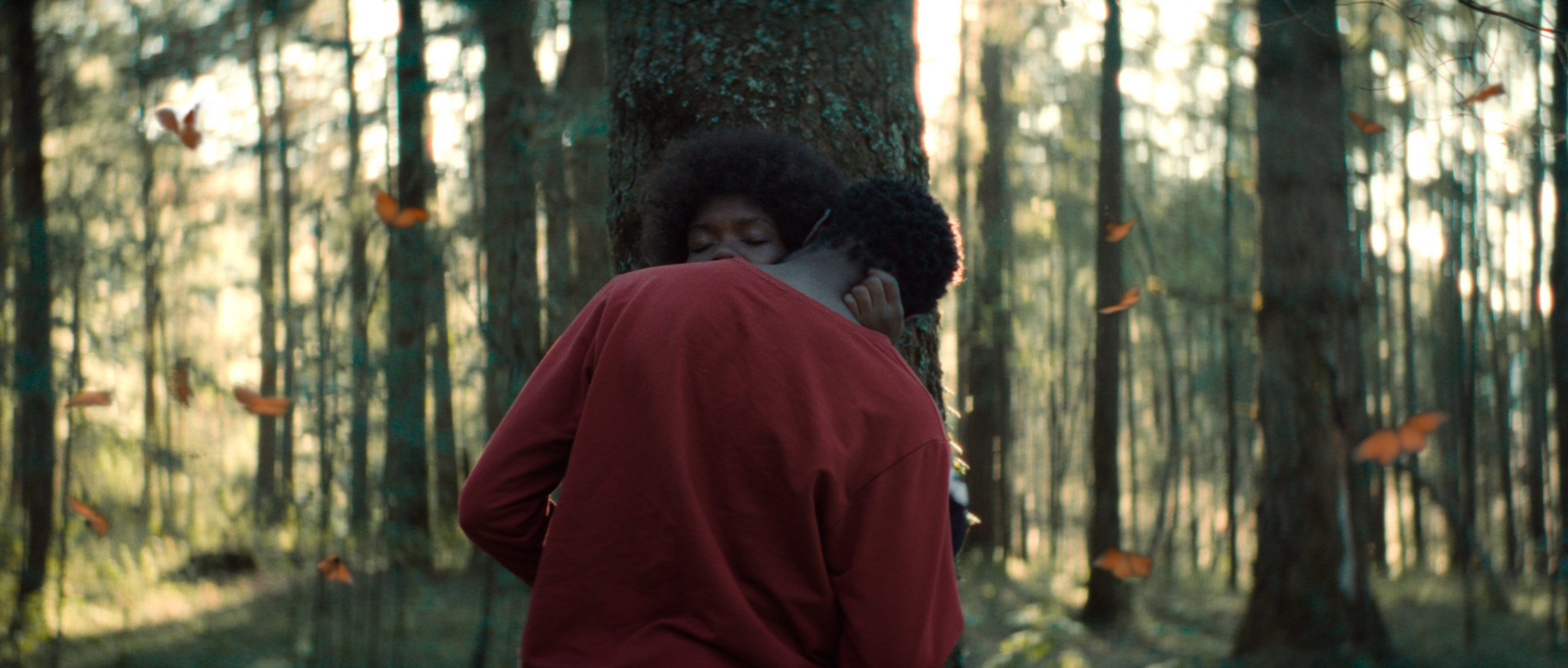
Complementing this is Gökhan Tiryaki’s cinematography. The Turkish DoP, a frequent collaborator of compatriot Nuri Bilge Ceylan, has a field day with the interplay of light and shadow in the forest surroundings, and despite the story getting increasingly dark and dire he keeps the image vibrant and full of contrast until perhaps the most dramatic moment near the film’s end. Lush greens abound, of course, but with plenty of pop in the vibrant colors of the butterflies that are a recurring motif. The film was shot on location in Central Mexico, so enough of the fluttering lightweights appear, and the little girls collecting dead ones and putting them in their scrapbook is a reminder about the perils of migration.
When it comes to the human side, The Garden We Dreamed follows the traditional paths of a migration drama, highlighting the hardships and exploitation of those with the least rights and the smallest influence over their own lives. Surprisingly, the most nuanced character is Toño, the film’s antagonist. While he proves himself duplicitous and not by any stretch a good man, he does provide the family with medicine and a doctor for young Flor, and in perhaps the most poignant moment points out to Junior the hypocrisy of people’s protests against logging, illegal or not, since they fill their homes with wooden furniture. It’s an argument that is never followed through, but it’s unexpected for the antagonist to raise the most interesting question in the film. With strong work by Bastien and a lovely child performance by Preville, combined with the visual and especially aural splendor, The Garden We Dreamed is one of the more attractive films in the migrant genre, although a bit more surprise and deepening of its themes would have lifted it to one of the best.
Comments are closed.