
Here are 5 things to consider this week:
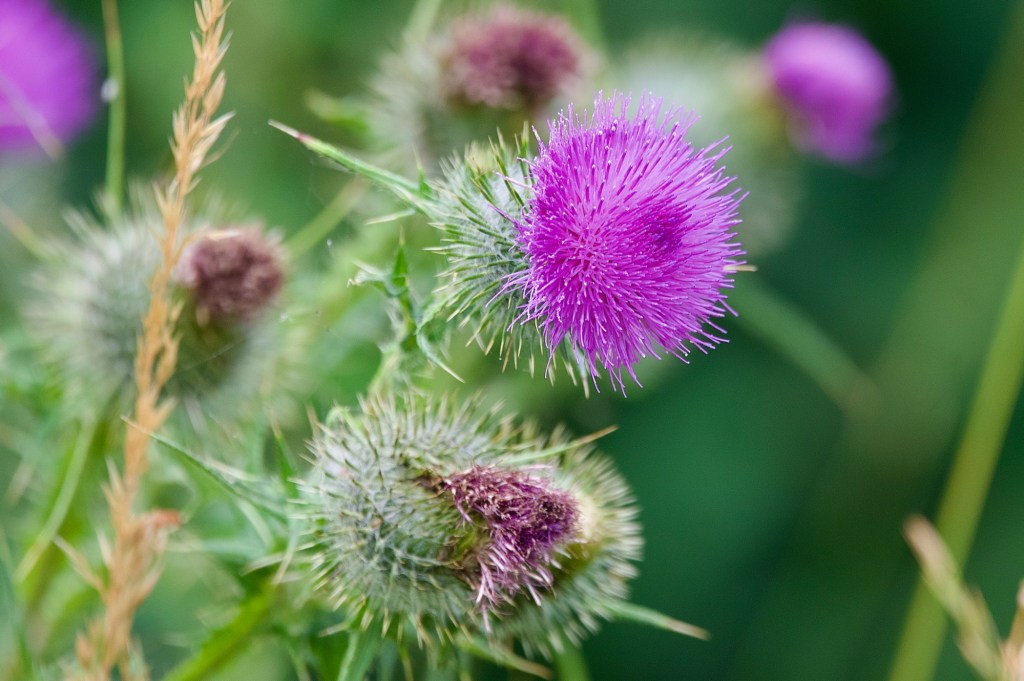
Herbs. Milk thistle (Silybum marianum) is one of the most attractive local weeds. Lush foliage is laced with wavy white patterns, complemented by purple flowers. Its seeds have long been used as a complementary treatment for liver conditions such as cirrhosis and hepatitis. The seeds have a nutty flavor and may be eaten raw, added to salads or smoothies, or brewed into a tea.
Fruit. Soursop (Annona muricata) has been touted of late as a superfood for its medicinal potential, especially as an extract from its leaves has been found to induce death of cancer cells in breast, pancreas, and lung tumors when tested on animals. It’s in the same genus as cherimoya (Annona cherimoya) and similar in appearance, although its taste is more tart than that of its more familiar cousin. Soursop is highly sensitive to cold, however, and should be grown in a container so that you can take it indoors when days shorten and temperatures drop. It is widely available through Internet vendors.
Vegetables. Watermelon radish is an heirloom Daikon radish variety with pale green skin and a pink interior. The roots are roundish and somewhere between a golf ball and a tennis ball in size. Eat this radish raw in your salad or roast or pickle it. As an heirloom, by allowing some of your crop to go to seed, you can replicate it in your garden year after year. Heirloom varieties breed true from seed as opposed to hybrids, whose seeds produce unpredictable crops.
Petunias. It’s February and a petunia I planted in the fall is still blooming with bright yellow flowers. We normally think of petunias as purple, pink, red, or white, but serious breeding efforts have led to yellow varieties as well. Technically speaking, petunia is a perennial and, as long as the winter is mild as this year’s has been, my petunia may survive for another year in the garden. A yellow petunia, however, of hybrid origin, is sterile, as are most of the petunias you find in nurseries or garden centers. However, heirloom petunias, which often self-sow, are available from certain mail-order nurseries, such as Baker Creek (rareseeds.com), where all seeds sold are heirlooms.
I can report from personal observation that oleanders in the east San Fernando Valley are disease-free after many years of suffering from oleander leaf scorch, a disease transmitted by the glassy-winged sharpshooter insect. This is the result of parasitic wasps that prey on sharpshooters having been released throughout Los Angeles County, starting in 2001. It may still be a while until nurseries start selling oleanders again because of the concern that the pest may still be active in some areas. I have seen many oleanders that I thought were dead and now exhibit lush growth with large clusters of blooms. Oleanders are prized for their long bloom period and drought resistance, never needing water once they have established after a year or two in the ground.
Comments are closed.