
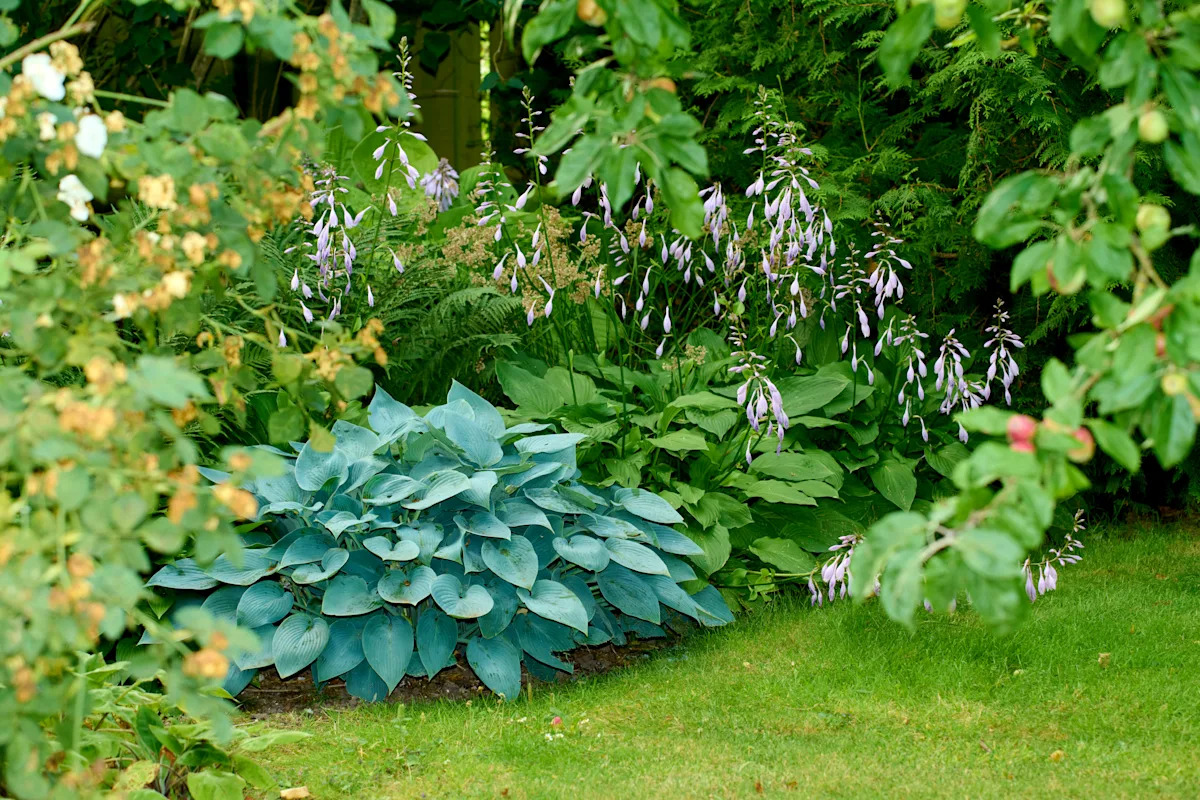
There is something irresistible about a closed gate.
A hedge just tall enough to conceal. A gravel drive that curves out of sight. A weathered sign that says “Private” in serif lettering, as if the word itself were an invitation.
For most of the year, America’s finest private gardens exist like rumors. You hear about them in passing. A friend knows someone who once walked the allée of hornbeams in June. A neighbor swears there is a reflecting pool hidden behind those boxwoods. You imagine them and move on.
Then, for a few luminous days each season, the gates open.
The Only Nationwide Private Garden Visiting Program
Since 1995, the Garden Conservancy has orchestrated one of the most quietly remarkable cultural programs in the country: Open Days. It remains the only nationwide garden visiting program in the United States, offering rare public access to gardens that are otherwise off limits.
Over the past three decades, 1.5 million visitors have stepped behind hedges and through side gates to explore more than 4,500 gardens in 40 states. In 2026 alone, more than 350 private gardens across 26 states will welcome guests, with over 100 opening for the first time.
From urban rooftops and organic farms to historic estates and experimental suburban backyards, Open Days is less a tour and more a pilgrimage. You are not just seeing plants. You are seeing devotion made visible.
As James Brayton Hall, President and CEO of the Garden Conservancy, puts it, the thrill lies in “discovering hidden gems and sharing the beauty of these private sanctuaries with fellow garden lovers.”
He is right. But it is more than that. It is the intimacy that moves you.
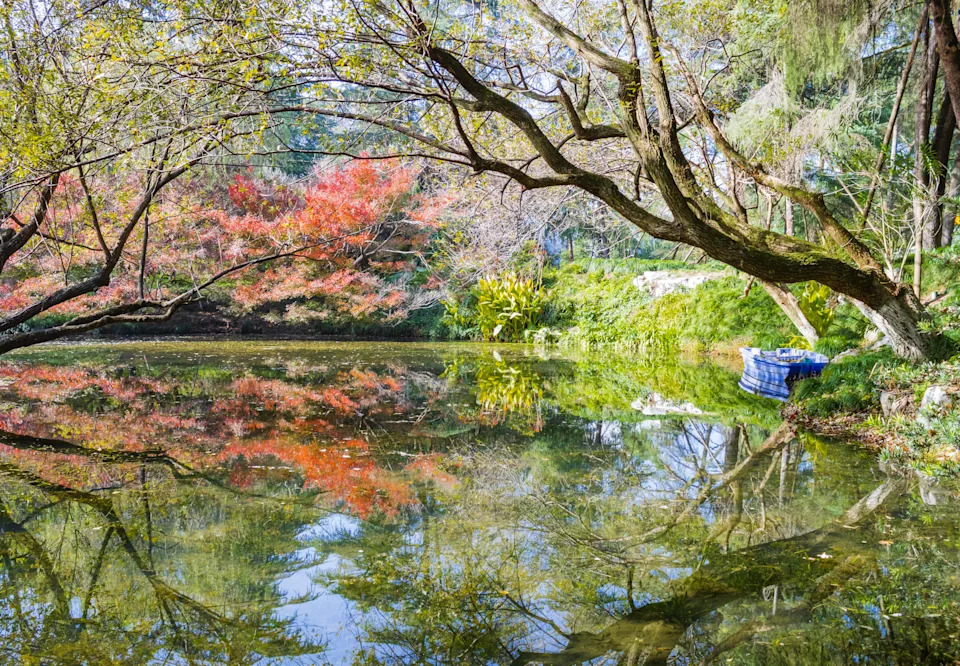 Northeast: Fern Groves, Reflecting Pools, and Atlantic Light
In Connecticut, Sleepy Cat Farm in Greenwich stretches across 13 and a half acres like a cinematic sequence. A long reflecting pool gathers the sky. A pebble mosaic terrace glints in afternoon light. Sculpture punctuates boxwood topiary with a theatrical precision that feels both grand and personal. You move from greenhouse to garden room as if turning pages in a carefully edited book.
In New Canaan, Ann and Haig’s Garden is a study in shade and texture, with more than 120 varieties of ferns threading through dogwoods, viburnums, and Japanese maples. A woodchip path winds quietly through woodland beds before opening onto summer blooms around a pool. It is immersive without being overwhelming. A master class in restraint.
Then there is Nomadica in Weston. Only half an acre, yet expansive in imagination. Production beds of flowers, fruits, and vegetables mingle with perennials and a native mini meadow. Beehives hum. Chickens patrol. A stream cuts softly through the landscape. It is a working ecosystem that feels alive, collaborative, curious.
Across the line in East Hampton, the gardens surrounding a 1928 beachfront home owned by Alexandra Munroe and Robert Rosenkranz blend formal parterre with meadow looseness. Yew enclosed rose beds give way to woodland trails planted with Asian specimens. A croquet lawn rests like punctuation between cutting gardens and the sea.
Nearby, the Garden of Marshall Watson transitions to organic practices with disciplined elegance: holly hedges, a potager, espaliered fruit trees, Versailles planters brimming with roses and figs. A reflecting pool mirrors the sky while deer resistant plantings nod toward practical beauty. It is refinement without fragility.
Mid Atlantic and Midwest: Rooms, Moss, and Wright’s Belief
In Pennsylvania, Havenwood House & Gardens unfolds like a series of chapters. Yew arches frame entrances to garden rooms. Hornbeam hedges create quiet corridors. A pergola heavy with wisteria shades a fruit tunnel. A wildlife pond and bog of candelabra primula remind you that gardens are habitats, not just ornaments.
In Detroit, the Turkel House, designed in 1955 by Frank Lloyd Wright, embodies his conviction that the garden is the most important room of the house. After an award winning restoration of the structure, the landscape evolved into four distinct realms: meadow, woods, sculpture courtyard, terrace. The boundaries between architecture and garden soften. You begin to question where one ends and the other begins.
In Wisconsin, the Sievert Garden is almost entirely the work of its owner’s hands. More than 800 hostas ripple through shade beds. Moss settles across salvaged bricks and cobblestones. Three stumperies, a sunken garden, a hillside garden, and a Williamsburg inspired formal section coexist with a water garden of three distinct elements. It is obsessive in the best way. A life’s work written in chlorophyll.
West: Desert Modern, Mediterranean Dream, Alpine Edge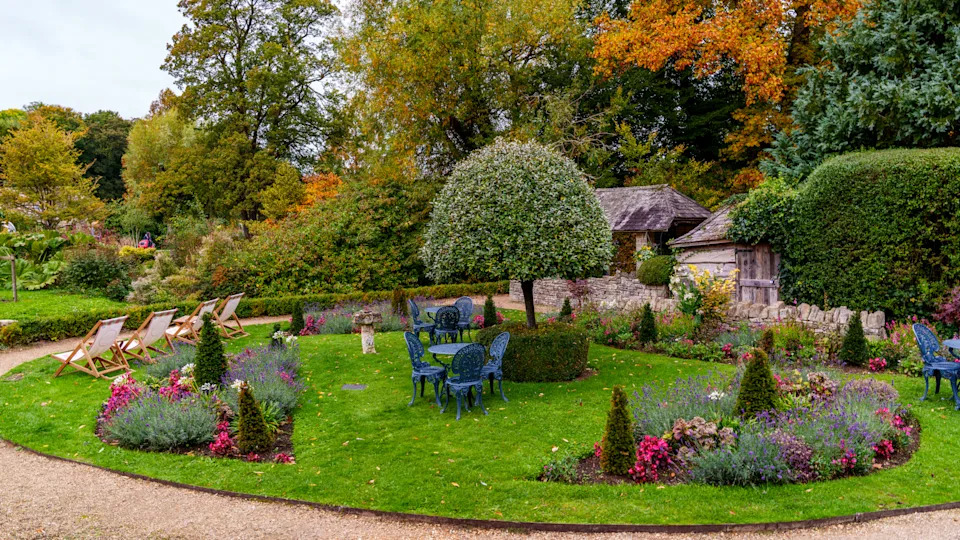
In Palm Springs, Villa Vecchia, built in 1931, sits like a mirage made permanent. Once isolated in desert, shielded by tamarisk trees, it has been transformed by professional landscapers into a tapestry of exotics, natives, succulents, cycads, boojum, cactus, aloes, and palms. Stone gathered from nearby deserts anchors the design. A casita wall gleams with more than 300 ceramic plates. It is theatrical and grounded at once.
In Pasadena, Mi Sueño del Sur draws inspiration from Mediterranean gardens and the Getty Villa. Olive trees and Italian cypress stand in conversation with bronze and steel sculptures. A restored reflecting pool commands the front yard. At sunset, the light turns everything honeyed and you understand that gardens are performances staged by the sun.
In Santa Fe, Robin Magowan’s Rock Garden clings to a mountainside in crevice formations that host more than a thousand alpine species from granitic soils around the world. Mason built staircases thread through dwarf plants tucked between stone. Piñon trees frame distant views. It is rigorous, austere, breathtaking.
A Quiet Shift Toward Ecological Gardening
In 2026, more than two thirds of Open Days gardens display the Nibbled Leaf icon, a mark of nature friendly maintenance developed in partnership with the Perfect Earth Project. Native plants. Organic practices. Space for pollinators and creatures not always invited.
The shift is subtle but significant. These gardens are not museums. They are living systems adjusting to climate, water scarcity, and biodiversity loss. The romance remains. So does responsibility.
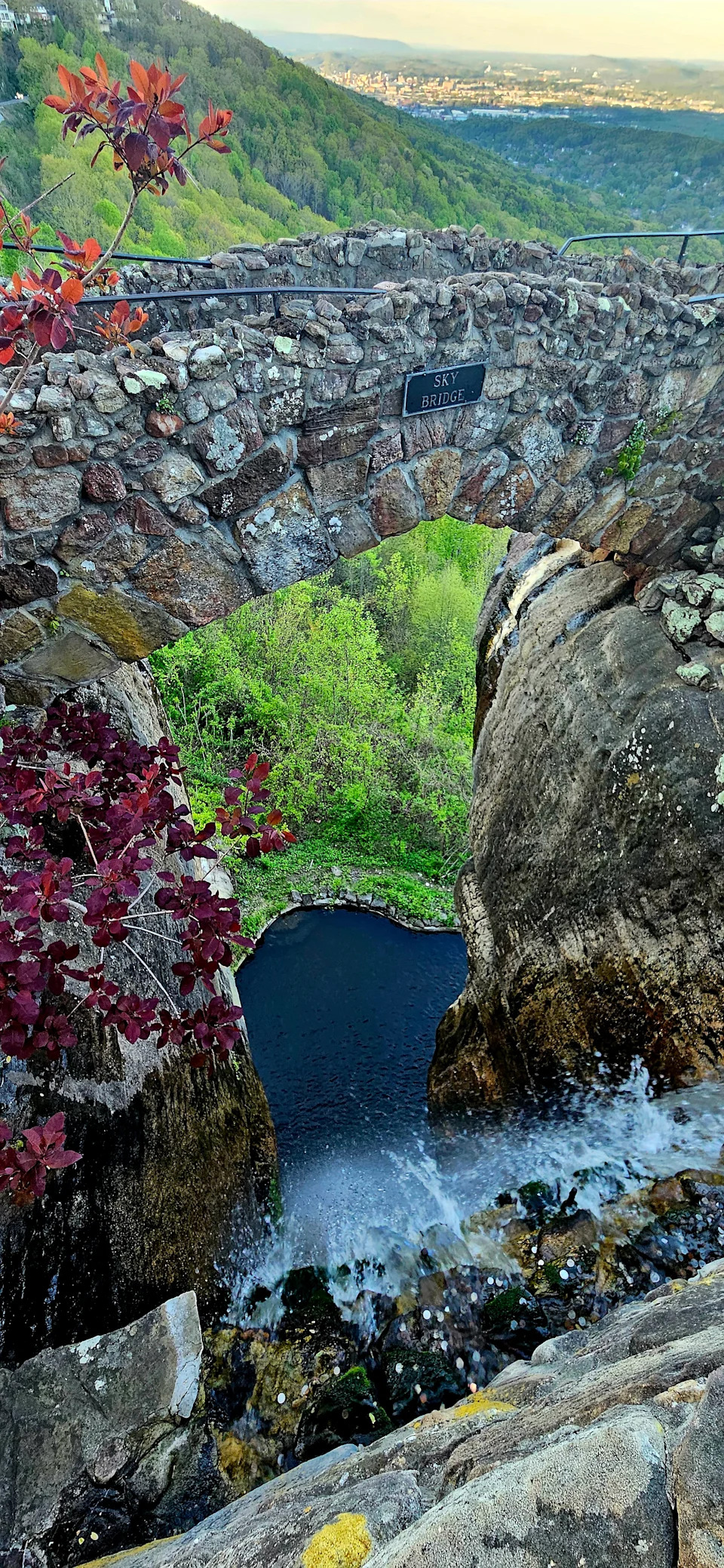
Rock Bridge in a tranquil setting
(Malika Bowling)How to Visit Open Days 2026
Tickets for 2026 Open Days are released approximately two months before each event. Registration is $10 per person, $5 for members of the Garden Conservancy, and free for children 12 and under accompanied by an adult. All registrations are processed online through the Garden Conservancy website.
The season runs from spring through November. Some gardens open for a single afternoon. Others appear twice, like an encore.
If you are planning a visit, do not over schedule. Choose one or two gardens and linger. Ask questions. Notice plant pairings. Watch how gravel meets lawn. Pay attention to scale.
The true luxury of Open Days is not exclusivity. It is access to someone else’s imagination.
Closed gates hold power because they imply something precious beyond them.
Open Days offers the opposite gesture. It says: come in. Walk slowly. Learn from this. Take inspiration home.
And then, when the day ends and the gate closes again, you carry a fragment of that garden with you. A way of shaping space. A way of tending life.
For a few hours, the mystery is shared.
Comments are closed.