

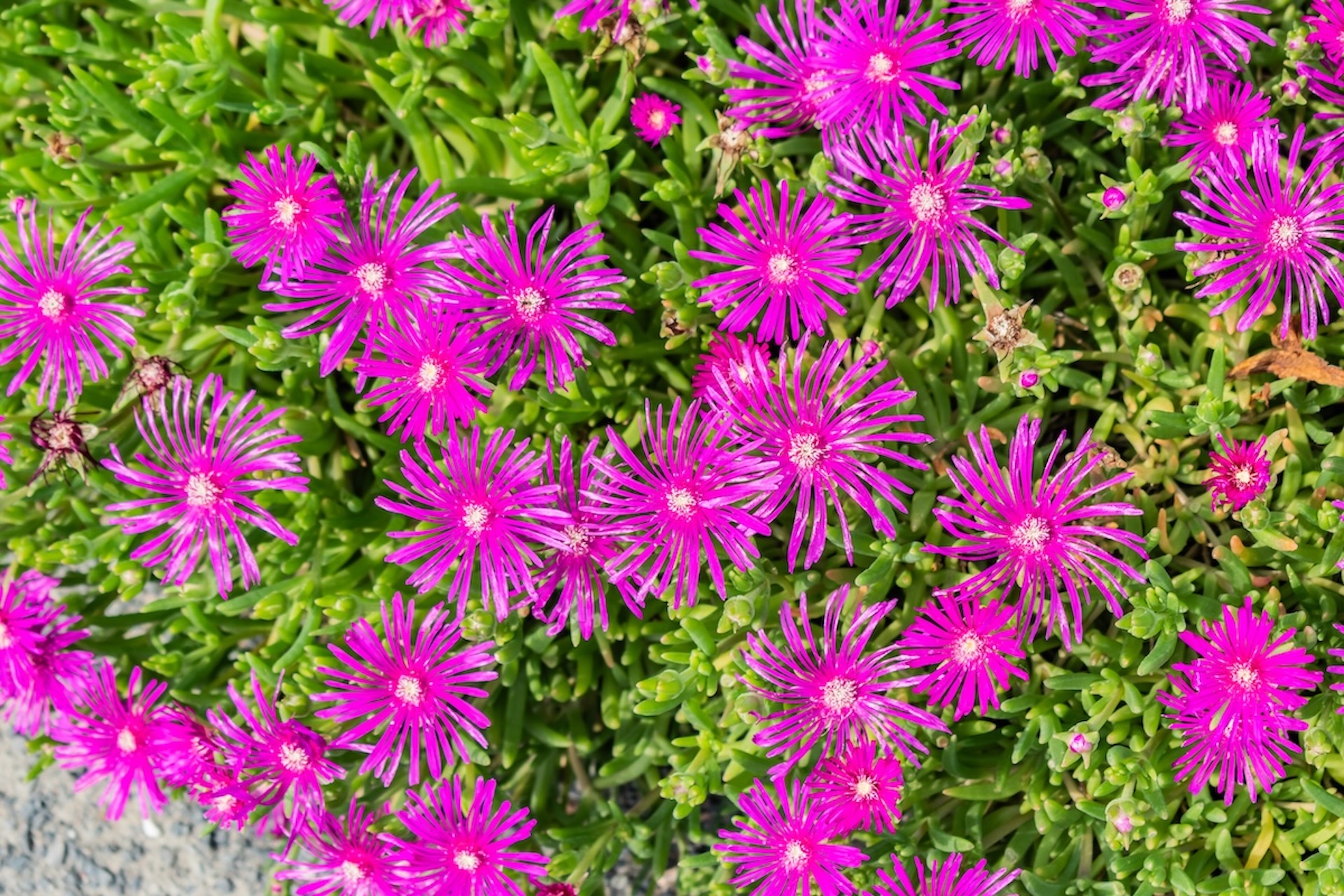
Low: Ice plant (Delosperma cooperi). This mat-forming succulent spreads vigorously to form an evergreen ground cover. A South African native, it grows to 4-8 inches tall, and 24 inches wide, or more, and, from June to September, creates an abundance of
2-inch-wide, daisy-like red-purple flowers. (Credit — Tournasol7 via Wikimedia Commons)
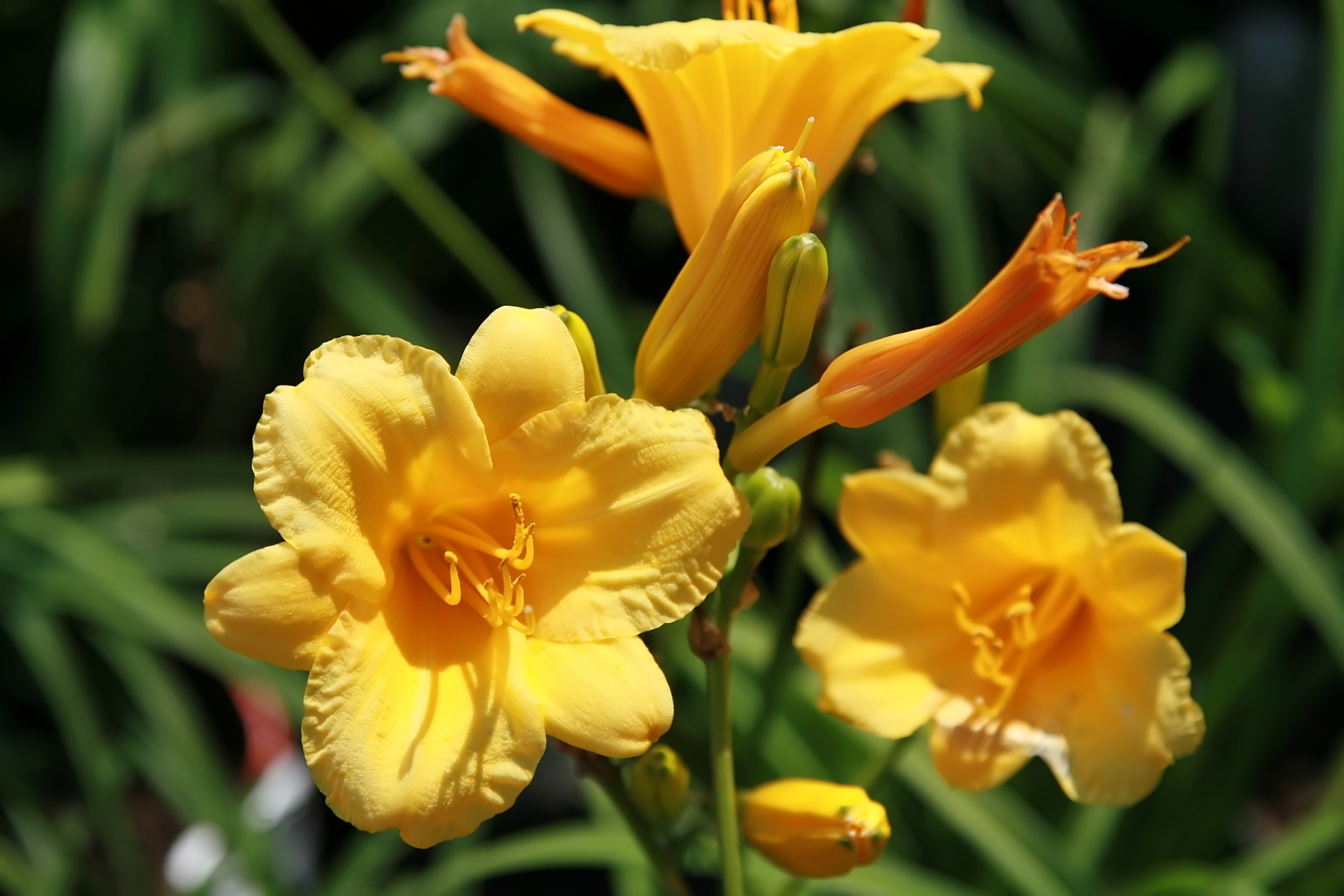
Low: Reblooming dwarf daylily (Hemerocallis). This plant was developed from a genus that includes 15 species, native to Asia and central Europe. This cultivar, classified as a
miniature, grows up to 1 foot tall and, from May to August, produces 2.75-inch-wide yellow
flowers with ruffled edges and deeper yellow throats. This award-winning variety is popular for its compact size, vigorous growth, profuse bloom and very long bloom period. (Credit — David J. Stang via Wikimedia Commons)
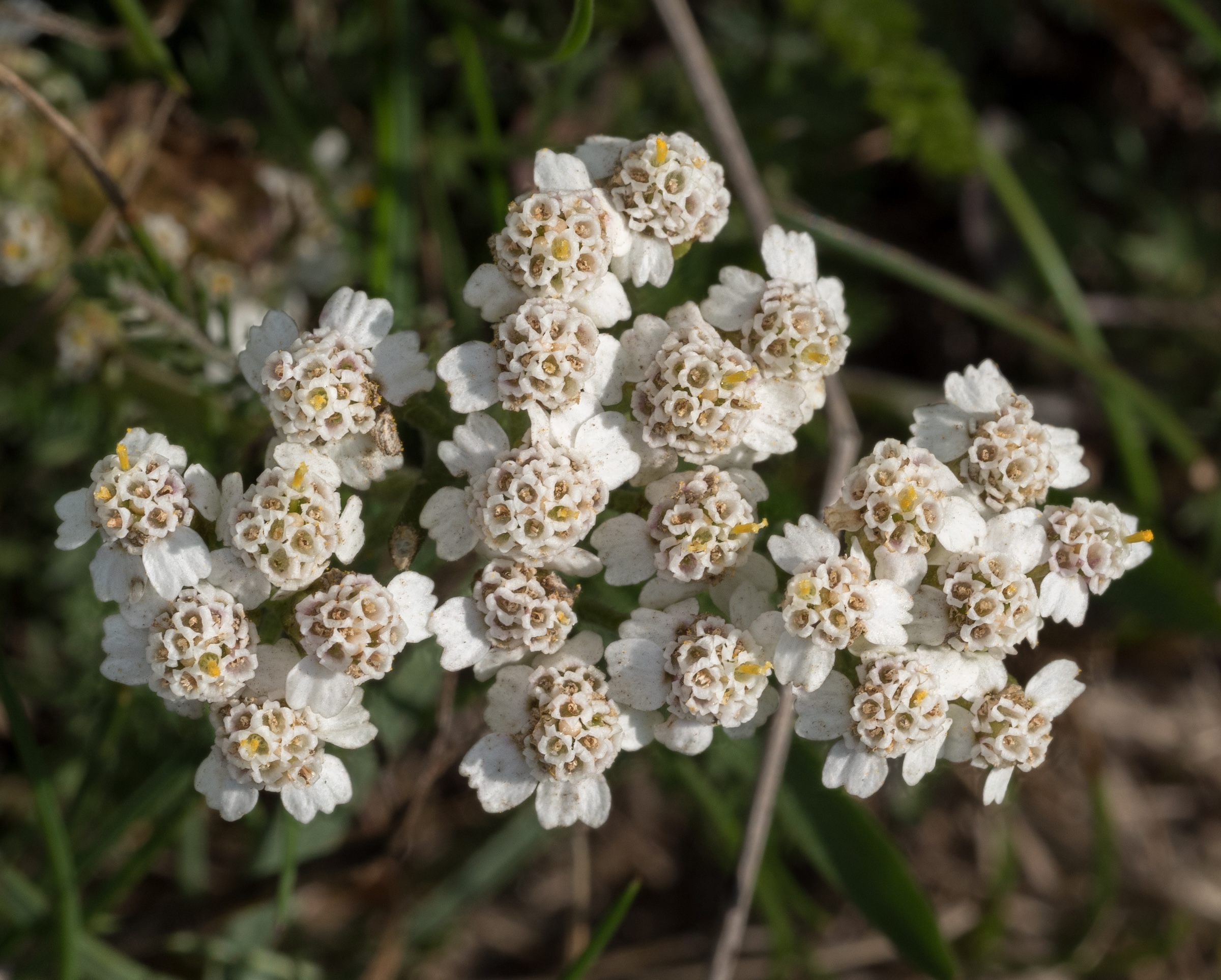
Mid: Yarrow (Achillea millefolium). This durable, easy-to-grow, rhizomatous perennial
reaches 3 feet tall and 1 1/2 feet wide. The plant has fern-like, aromatic, medium-green foliage.
From June to September, it produces tiny, long-lasting, white flowers in dense, flattened,
compound, corymb-like, 4-inch-wide arrays. The flowers attract bees, butterflies and other
insects. (Credit — Rhododendrites via Wikimedia Commons)

Mid: Dwarf Mexican marigold (Tagetes lemmonii x patula ‘Gold Medal’). This shrub-like perennial grows to 2 feet tall with aromatic, dissected, medium green foliage and lightly fragrant,
gold-yellow daisy flowers that bloom heaviest from fall through late spring, and can stay in
bloom much longer. This plant is a hybrid of Mexican marigold (T. lemmonii), which can reach 6 feet tall, and the 12-inch-high French marigold (T. patula). (Credit — Jim Evans via
Wikimedia Commons)

Upper: Whirling butterfly (Oenothera lindheimer or Gaura lindheimer). This native to Texas
is a clump-forming perennial with arching red stems, pink flower buds and 1-inch wide, four-petaled snow white flowers on long, terminal, wand-like panicles rising above the foliage. The
plant grows 4 feet tall and wide, and produces blossoms from May to September. (Credit — Didier Descouens via Wikimedia Commons)
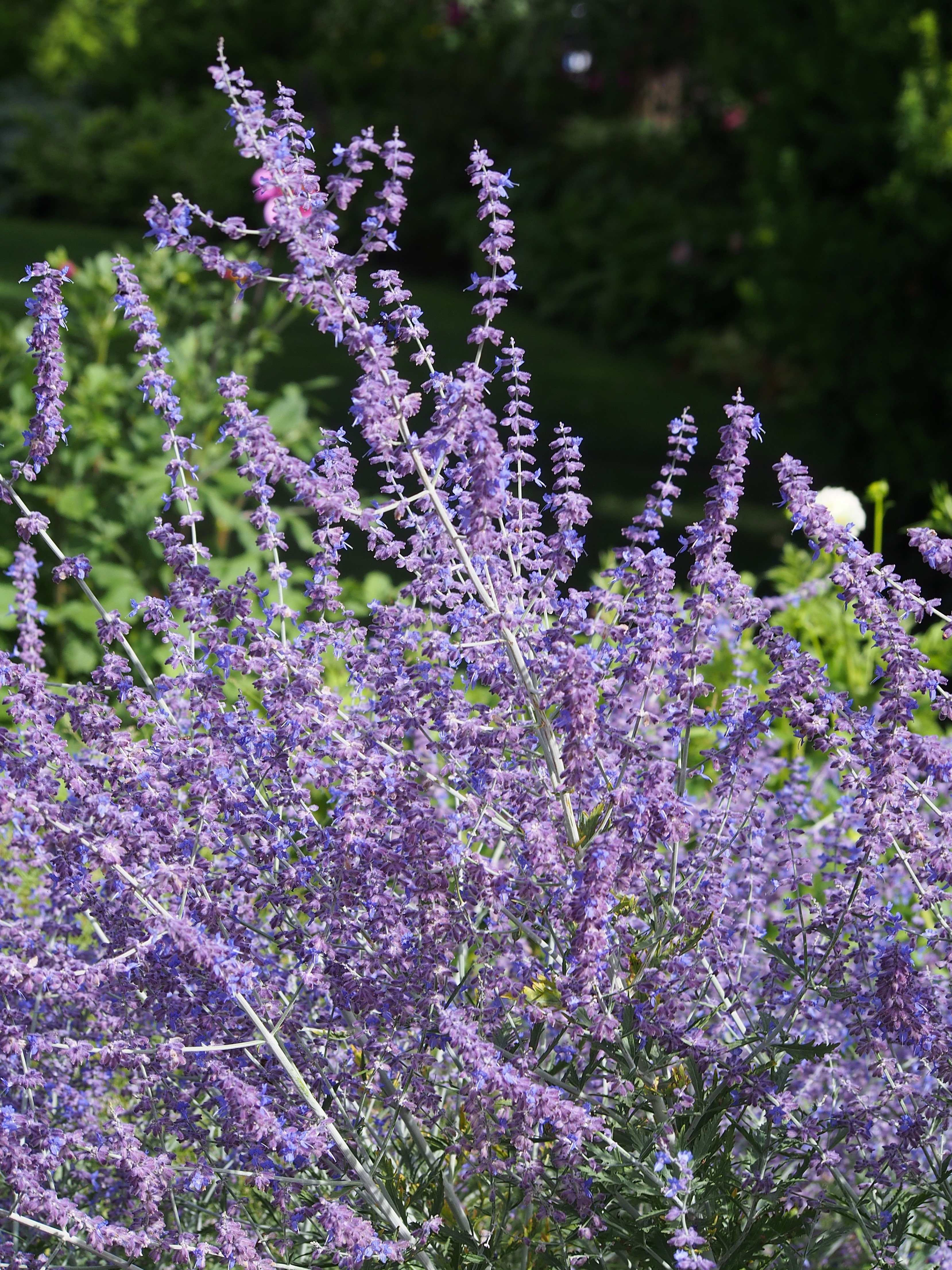
Upper: Russian sage (Perovskia atriplicifolia or Salvia yangii). This woody-based perennial
of the mint plant family (Lamiaceae) develops tall, airy spires of lavender-blue color on highly textured silver-gray foliage. From July to October, it produces whorls of two-lipped, tubular, light blue flowers tiered in branched, terminal panicles (12-15 inches high). The overall height reaches 4 feet, and occasionally 5 feet. Despite its common name, this plant is native to the Himalayas and western China. (Credit — Jonathan Billinger via
Wikimedia Commons)
Show Caption
1 of 6
Low: Ice plant (Delosperma cooperi). This mat-forming succulent spreads vigorously to form an evergreen ground cover. A South African native, it grows to 4-8 inches tall, and 24 inches wide, or more, and, from June to September, creates an abundance of
2-inch-wide, daisy-like red-purple flowers. (Credit — Tournasol7 via Wikimedia Commons)
Expand
The current cold, rainy days provide time to develop the spring landscape.
Gardeners can pursue a variety of landscaping objectives. This column assumes an established garden and addresses the gardener’s landscaping objectives, focusing on floral displays for spring, summer and fall.
Today’s image gallery
The accompanying photos feature low-growing, mid-sized and tall, long-blooming perennial herbaceous plants. My garden includes plants of various sizes, but they are not in bloom now, so I drew these selections from Wikimedia Commons.
Trees and shrubs
The classic strategy for developing the landscape of an undeveloped parcel begins with hardscape, followed by the installation of trees and shrubs. Landscaping with trees or shrubs yields structure to the garden and requires substantial planning, cost and maintenance. We can explore these landscaping options in the future.
Annuals
Many gardeners enjoy the flowers of annual plants. Once planted, they germinate and grow quickly, produce a wide range of flower colors, and require minimal maintenance. Seedlings cost little, and growing from seed requires less upfront investment and provides greater satisfaction. Popular annuals like petunias, marigolds and zinnias bloom for several months when given adequate exposure and irrigation. As an added benefit, most annuals reseed freely, providing next season’s flowers without the gardener’s effort.
There are a few disadvantages to annuals. For example, establishing a new annual bed each year requires time and the cost of buying and planting seeds or seedlings. Irrigating and fertilizing involve regular activities, especially for containerized annuals. Controlling aphids, snails, slugs and other pests and diseases can keep the gardener busy. Some annuals look best only when the gardener prefers to remove seedheads after blooms fade, and trim when foliage fades and becomes unsightly.
Perennials
Compared with annuals, perennials offer long-term beauty, require minimal maintenance and provide a foundational landscape that evolves over time. The disadvantages of perennials include higher initial cost, extensive soil preparation (depending on existing conditions), relatively slow establishment and annual maintenance.
In landscape design with perennials for a specific site, the gardener’s primary selection criteria should focus on the plant’s compatibility with the site’s climate, soil quality and sun exposure.
Next, the designer considers the plant’s mature size, flowering period and blossom color.
For a detailed landscape, the designer also considers foliage texture, branching structure and clustering similar and compatible plants.
For this column, our focus is on the mature sizes of perennial plants with relatively long bloom periods. We can also enjoy short-blooming perennials, such as irises, peonies, poppies and many others. Our current emphasis on longer-blooming perennials prioritizes longer color displays in the garden.
We have also selected plants for review that are compatible with the Monterey Bay area’s summer-dry climate and full sun exposure. When designing a perennial landscape for a specific site, the gardener should consider the site’s conditions and exposure.
Sample list of perennials
To present a list of perennial plants compatible with the Monterey Bay area, we compiled plant information from several sources and organized it into three height layers: lower, middle and upper. These layers are relevant while planning a landscape.
Garden designers can search through the many available perennials that meet our broad criteria and select plants that meet their aesthetic criteria.
Given those factors, here is a sample list of perennials, organized by height and with notes for mature size and bloom period.
Lower layer
• Homestead purple verbena (Verbena canadensis): 1/2-1 1/2 feet, May to August.
• California fuchsia (Epilobium canum): 3-18 inches, summer to fall.
• Ice plant (Delosperma cooperi): 4-8 inches, June to September.
• Mexican fleabane (Erigeron karvinskianus): 6-12 inches, spring to fall.
• Sulphur buckwheat (Eriogonum umbellatum): 6-12 inches, summer to fall.
• Reblooming dwarf daylily (Hemerocallis): .7-1 foot, May to August.
• English snake flower (Bulbine frutescens): 12-18 inches, April to June.
• Pincushion flower (Scabiosa columbaria): 12-18 inches, May to September.
Middle layer
• Autumn sage (Salvia greggii): 2-3 feet, June to October.
• Blanket flower (Gaillardia x grandiflora): 2-3 feet, June to September.
• Catmint (Nepeta): 2-3 feet, April to Sept. 6.
• Foothill penstemon (Penstemon heterophyllus): 1 1/2-2 1/2 feet, May to July.
• French marigold (Tagetes ‘Gold Medal’): 2 feet, June to November.
• Littleleaf sage (Salvia microphylla): 2-3 feet, spring to summer to fall.
• Purple coneflower (Echinacea purpurea): 2-3 feet, June to August.
• Shasta daisy (Leucanthemum x superbum): 2-3 feet, July to September.
• Threadleaf coreopsis (Coreopsis verticillata): 2-3 feet, June to September.
• Wallflower (Erysimum linifolium): 2-3 feet, May to August.
• Wood sage (Salvia x sylvestris): 1 1/2-2 feet, March to June.
• Yarrow (Achillea millefolium): 2-3 feet, June to September.
Upper layer
• Russian sage (Perovskia atriplicifolia/Salvia yangii): 3-5 feet, July to October.
• Whirling butterflies, gaura (Oenothera lindheimeri): 3-4 feet, May to September.
Landscaping with long-blooming perennials
To plan for a landscape bed of longer-blooming perennials, the designer clearly considers the bed’s size. The following example applies to a 500-square-foot planting bed.
Our very basic strategy for designing a landscape is “taller plants in back.” We have seen some designers suggest placing taller plants in the foreground, especially when using plants with open branching. This alternative approach to our basic strategy could offer a “peekaboo” view of the lower plants. It might work with some perennials, such as Russian sage.
For a 500-square-foot planting bed, the designer would need about this number of plants:
• Lower layer: 30 plants, spaced 18-24 inches apart.
• Middle layer: 17 plants, spaced 2-3 feet apart.
• Upper layer: eight plants, spaced 3-5 feet apart.
The cost of this collection of 55 plants depends on the sizes of the plants. Purchasing plants in one-gallon containers at a convenient estimate of $10 each would total $550. A landscape contractor can acquire plants from a wholesale nursery at lower rates.
The bed’s shape affects the layout of the plants. For a 500-square-foot circular bed (about 20 feet by 25 feet) with access from all sides, the usual layout places the upper layer plants in the middle, surrounds them with the middle layer plants and installs the lower layer plants on the bed’s perimeter.
For a 500-square-foot linear bed (about 5 feet wide and 100 feet long) along a wall or fence, the same plant list can apply, although the result depends on the designer’s assessment of the layout. My visualization of this imaginary bed suggests that the overall effect may require more upper layer plants to establish a satisfying background.
Advance your gardening knowledge
Gardeners can discover many compatible plants of various sizes by observing fully grown plants in gardens, searching for plant names online or using artificial intelligence to list plants in a specific size category. For example, ask an AI (such as ChatGPT) to generate a list of tall, red-flowered plants.
This week in the garden
This week would be a good time for enthusiastic gardeners to dive into developing a bed of long-blooming perennials. Depending on the plant selection, the sequential bloom periods could begin in May.
Enjoy your garden!
Tom Karwin is a past president of Friends of the UC Santa Cruz Arboretum and the Monterey Bay Iris Society, a past president and lifetime member of the Monterey Bay Area Cactus and Succulent Society, a Lifetime UC Master Gardener (certified 1999-2009), past board member of the Santa Cruz Hostel Society and a current member of the Pacific Horticultural Society and other garden-related societies. To review the archive of recent On Gardening columns, visit santacruzsentinel.com and search “Karwin.” Visit ongardening.com to review columns from 2012-2020 (and eventually) from the following years. Please send comments or questions to gardening@karwin.com.
Comments are closed.