
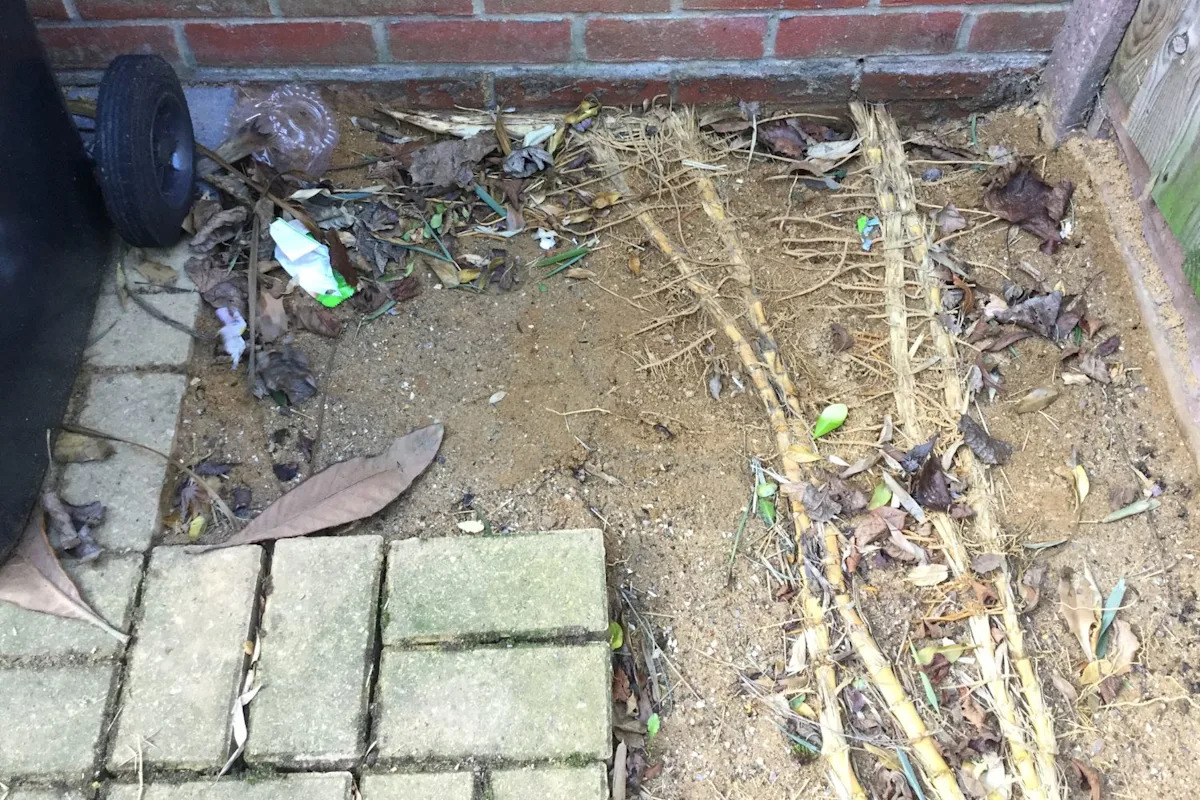
As Brits prepare to brave a visit to the garden after a cold, wet winter, some may find unwanted foliage and aggressively growing plants outdoors – or, sometimes, even in their homes.
Invasive plants are nothing new, but there has been a renewed focus on the dangers an untreated bamboo infestation can cause to gardens and property.
Bamboos are exotic, vigorous, easy to grow and ideal as living screens. But they can also be invasive and difficult to control – if you have planted the wrong variety.
The runners grow strongly underground and can loosen patios, destroy decking and pierce tarmac. The cost of removing invasive bamboo is typically not covered by building insurance.
Removal of a bamboo infestation can run into the thousands, with many treatments starting at around £2,000 and rising to £30,000 or more, according to bamboo removal specialists.
One infestation in Hampshire cost homeowners around £100,000 when a neighbour’s bamboo hedge spread into their house and started coming through the skirting board.
The entire ground floor of the house had to be removed and replaced to rectify the damage caused.
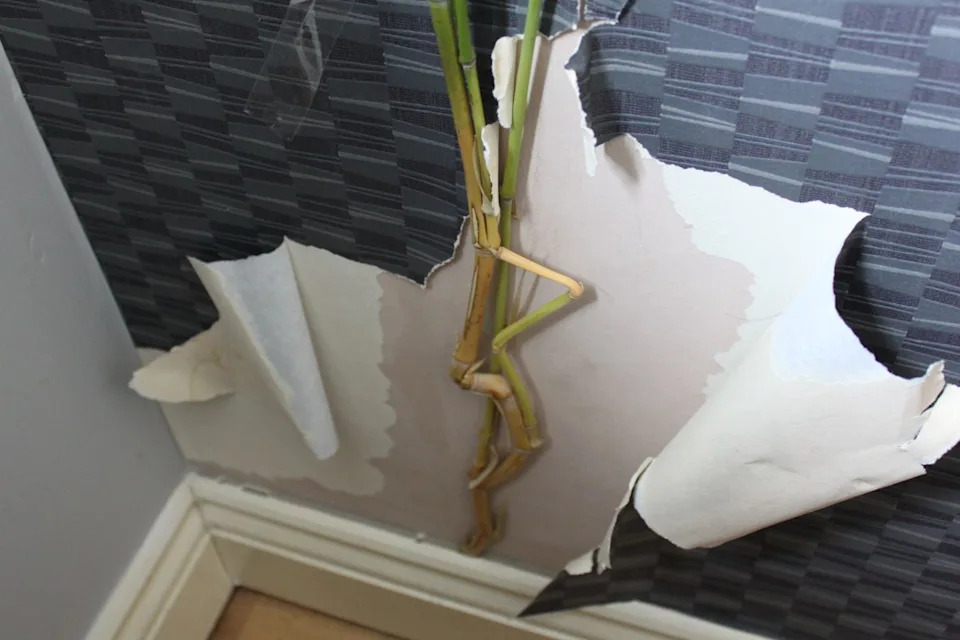
Bamboo can make its way inside homes if allowed to spread.
(EnviroNet)
A YouGov survey undertaken in March 2024, commissioned by Environet, found that 8% of homes in the UK have bamboo growing on their property, while 3% of people have experienced bamboo spreading across their property boundary.
According to Emily Grant, a director at Environet, bamboo is a growing threat because of its popularity amongst gardeners over the past 20 years.
She told Yahoo UK: “I think it is a growing problem purely because of how popular it was, in the 00s and ’90s, when all of the fashion changed from planting nice perennial plants to planting more tropical, exotic-looking plants.
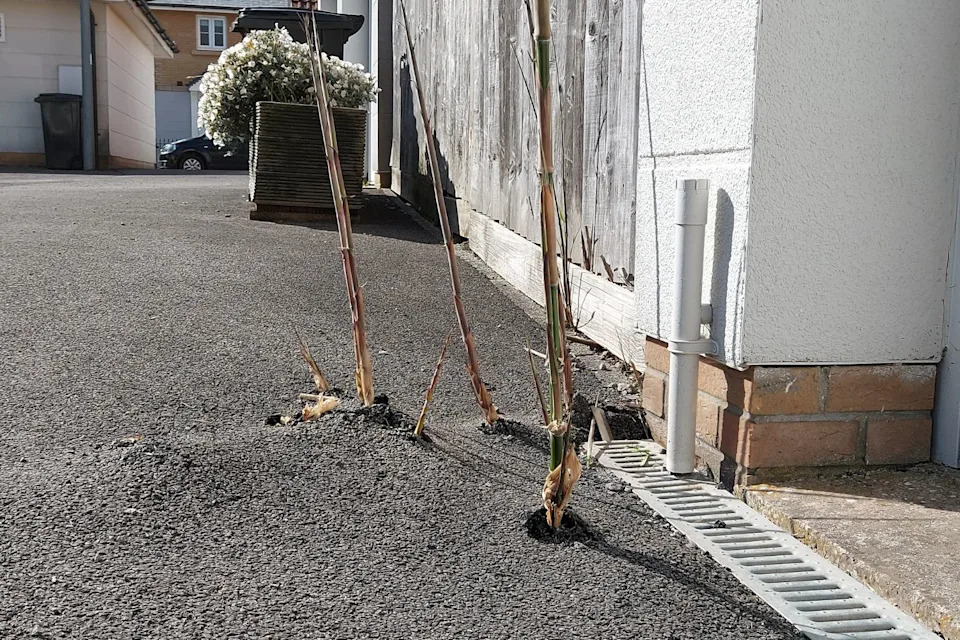
Experts have warned that invasive bamboo can ‘push its way through almost anything’.
(EnviroNet)
“It was the fad back then, and rather than spending money on buying nice, expensive, carefully contained, well-managed bamboos that were recommended by professional growers, people went out and bought cheap alternatives.
“And these cheap alternatives are the ones where the garden centres can quickly reproduce them because they grow fast, and they are vigorous, and that means that garden centres can grow them easily and sell them cheaply.
“They may take a while to take root, but once they are in, there is no stopping them. Now, 20 years or so later, those same plants are out of hand.”
What are the signs I have bamboo in my garden?
It’s important to remember that not all bamboo is invasive and spreads. They fall into two categories: clumping bamboo and running bamboo.
Clumping bamboo grows in tight, contained clusters, making it ideal for gardens, while running bamboo has aggressive, far-spreading roots.
Running bamboo is the type that can cause issues with its roots or rhizomes, breaking through boundaries and potentially damaging building materials.
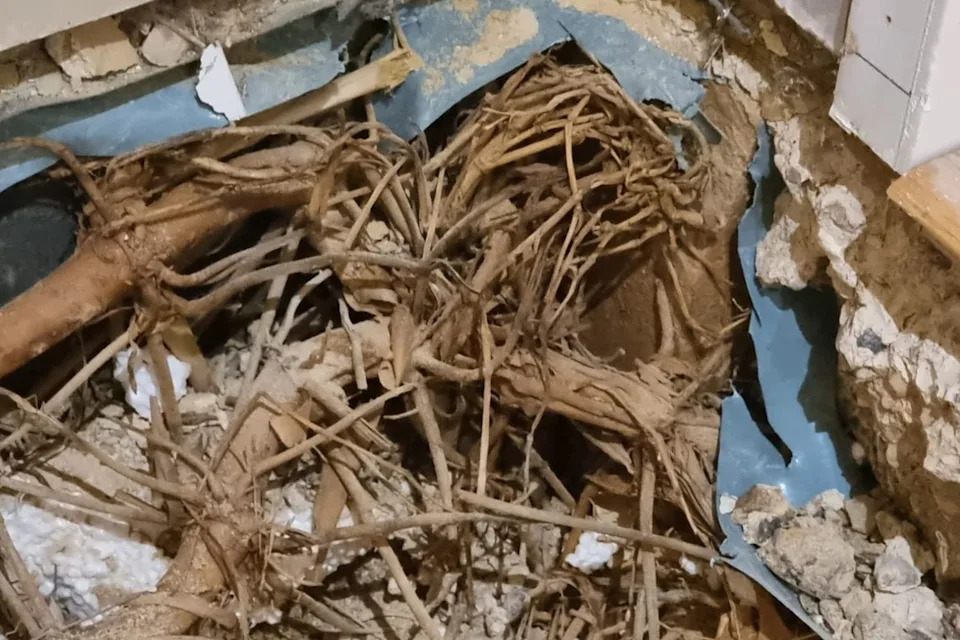
Experts believe properties are suffering issues with spreading bamboo due to its popularity around 20 years ago.
(EnviroNet)
As running bamboo grows, its shoots will push through almost anything that gets in the way, including bricks, drains, cavity walls, patios and cracks in concrete.
A key characteristic of running bamboo is that it can escape from some pots, such as wood or plastic. Even when detached from the parent plant, bamboo can grow independently, with nodes capable of developing roots and new shoots.
In the wild, bamboo has been recorded growing as fast as a metre in height in one day, and underground rhizomes can grow as much as five metres from a parent plant.
Shoots in the lawn
The most obvious sign that there is bamboo in your garden is random green leaves or small spiky stumps emerging from your lawn or flowerbed.
Chief executive at The Garden Centre Association, Pete Burks, says that the leaves will look completely different from normal grass.
“Running bamboo produces a small green leaf that looks out of place amongst the other plants, probably in a border and looks like nothing you’ve planted,” he told Yahoo UK.
“Often there will be no sign of what is growing under the soil. And I’d advise any gardener to look to see if your neighbour has bamboo in their garden, as the roots can travel quite far.”
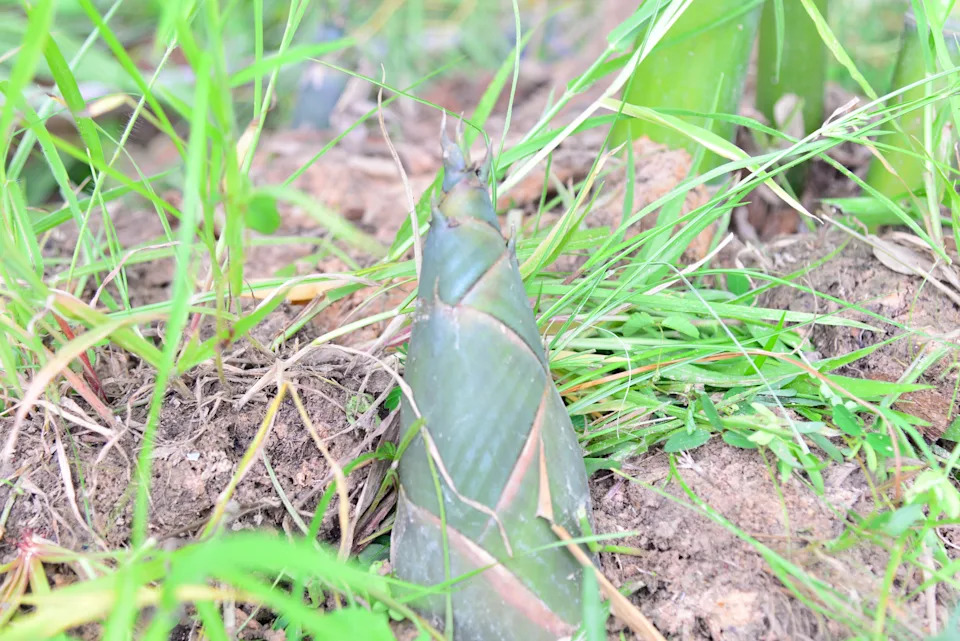
What to look out for in your lawn.
(toeytoey2530 via Getty Images)
Grant said that often the first warning signs are usually seeing shoots emerging at least 30 to 50cm away from the original area it was planted.
“This is an indication that this is a running variety of bamboo, rather than a clumping variety, and it has spread,” she said.
“You can have them in your garden for a number of years before they start escaping but, once they start to spread, they can go at quite a pace.
“They grow until full height, and they begin to harden off and the leaves come out.”
Lifts in blockwork or paving
Paving stones or blockwork that appears out of place or has been raised could be a sign of bamboo.
Grant adds: “If you’re seeing new shoots pushing up in new locations, lifted paving stones or shallow runners under the surface of the ground, those are classic red flags of invasive bamboo spreading aggressively.
“Wherever there is a gap they will push through. That can cause real damage.”
Similarly, knobbly runners growing through your lawn or under the surface are another bamboo red flag.
Patches of your lawn may not grow properly
Grant adds: “Patches of your lawn may not grow properly due to a bamboo invasion. New shoots could also be emerging, often in your flower bed further away.”
Drainage
Bamboo can often grow into underground drains and pipework, affecting drainage in your home.
Grant told Yahoo UK: “We have also seen issues with drainage. We have also seen drains becoming blocked, and that would be a sign that water is not draining away properly. Flooding [is] the worst case-scenario – we have seen toilets not running and bamboo growing into septic tanks.”
Comments are closed.