
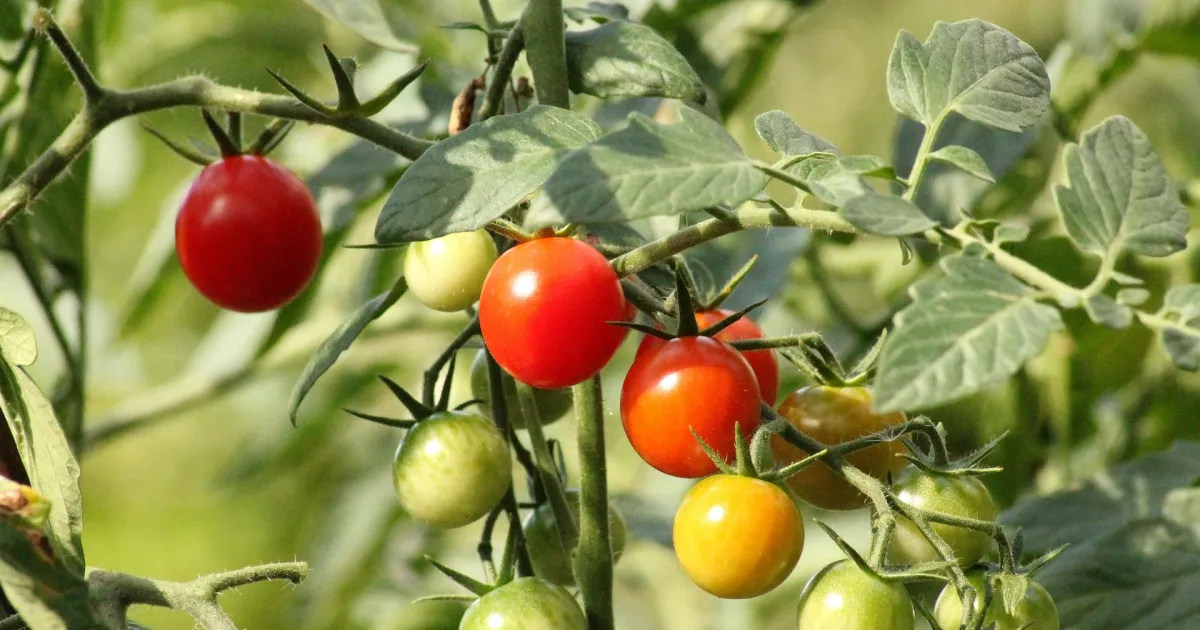
Tomatoes are popular in summer vegetable gardens.
This column is written by the Master Gardeners of Yolo County each month. It provides answers to selected questions recently asked by Yolo County gardeners.
Question: I want to start a vegetable garden. What do I do?
Answer: Starting a vegetable garden is one of the most rewarding gardening projects you can take on. There is something special about eating fresh vegetables that you grow yourself right out of your own backyard. It can also be a great activity for the kids or grandkids. Growing vegetables doesn’t have to be complicated, but some up-front planning will save you frustration later.
Choose the right location. Most vegetables need at least eight hours of direct sun each day, although leaf vegetables such as kale and Swiss chard will do ok with six. Observe your yard and pick the sunniest spot that also has a nearby water source. Since our valley soil is often high in clay, good drainage is important. Avoid low spots where water pools after rain.
Decide if you are going to grow vegetables in containers, raised beds, or the ground. Containers are easy and quick, and a good choice if you have limited space or want to grow just a few plants. Tomatoes, peppers, squash, lettuce, kale, and other vegetables can be easily grown in containers. Be sure to use large containers, at least five-gallon size, and bigger is better.
It is possible to grow a garden in our native soil. People have been doing it for a long time. Establish permanent growing areas and pathways. Each year, you can improve the soil in the growing areas. Your beds should be narrow enough so that you can comfortably reach the center. Pathways should be wide enough for a wheelbarrow.
Preparing the soil is the most important step. The secret to growing in our native soil, which can be heavy, is to add compost. Start with six inches on each growing bed and work it into the top six to twelve inches of soil once it has dried out enough to work easily. Each year, work in at least two more inches of compost.
Many people prefer to grow a vegetable garden in raised beds. These require additional work and expense to build, but nicely define your growing areas and pathways. You might be able to find used materials that will serve the purpose and save some money. They warm up faster in spring and drain better. Beds that are twelve to eighteen inches deep are common. Shallower beds can work just as well if you improve the native soil they are on, as discussed above. To fill raised beds, you will probably need to buy soil. A mix of fifty percent topsoil and fifty percent compost is commonly used.
For your first summer garden, start with crops that are easier to grow. Tomatoes, summer squash, peppers, green beans, corn, and cucumbers are a good start. Buying young tomato and pepper plants is a good idea for a beginner, but the other crops mentioned do better when seeds are planted in the ground.
You will need to irrigate your summer garden. Vegetables prefer deep watering with several days in between, not frequent shallow sprinkling. Water early in the morning to reduce disease. Clay soil holds moisture longer, so check before watering. A drip system will let you calculate how much water you are applying in a given period and can be set on an automatic timer.
Add a layer of mulch, straw, or dried leaves around plants to retain moisture, suppress weeds, and keep soil cooler in summer heat. Fertilize vegetables with a balanced fertilizer, especially heavy users like tomatoes.
Our climate also allows for cool-season vegetables to be grown in the late fall, winter, and early spring. Vegetables such as lettuce, kale, broccoli, carrots, radishes, and peas will do well in our mild winters. There is less need to irrigate and fewer pest problems.
Vegetable gardening is a learn by doing endeavor. Expect that some plants will fail and the pests will win on occasion. Keep notes on what worked and varieties that did well. Here is some additional information, including a chart that will help you plant at the right time.
UC ANR’s Vegetable Planting Guide
UC ANR’s Vegetable Garden Basics
UC ANR’s Tried and True Vegetables for Yolo County
Have a gardening question? Send it to jmbaumbach@ucanr.edu, with “Ask MGs” in the subject line. Include as much detail as possible and pictures if you have them.
Comments are closed.