
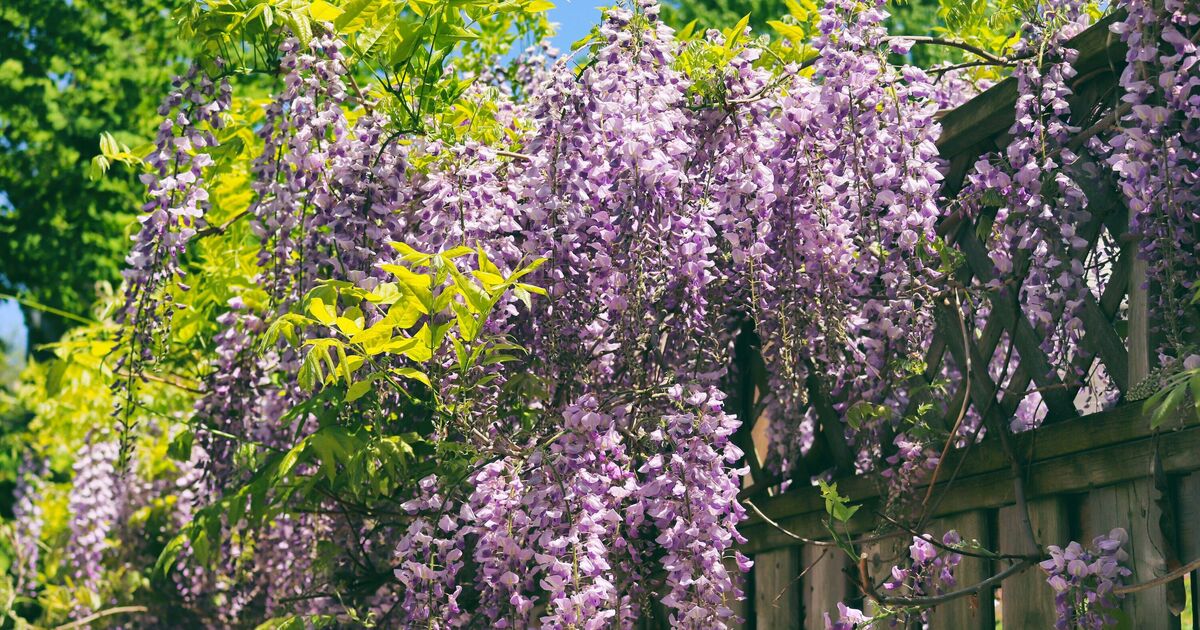
As we edge even closer to the end of the winter season, the time to prepare your garden and plants for a bountiful spring and summer bloom is running out. Wisterias tend to start flowering around May, but if you’ve struggled in previous years to get to bloom, a gardening expert has shared three important jobs you can do now to make sure your plant is in tip top shape for blooming season.
Gardening expert and TikTok creator Ish recently shared his method for getting his wisteria plants prepared for the upcoming season. These can be done as soon as possible. Ish said: “If your wisteria doesn’t normally flower and you want to get it to flower this year, it’s not too late to try. There’s a few things you can do in order to do it.”
How to encourage wisteria growth
Firstly, you want to make sure your wisteria plant has been planted in the best possible location in the garden. Wisterias thrive in the sun, so you want to make sure it’s been planted in a place where it can be drenched in sunlight.
The exposure to sunlight will help encourage the flowers to bloom. The next thing you’ll want to do is give the wisteria a decent prune.
Ish advised to look out for “whippy stems” and snip off above around three buds where the stem has become “whippy”. He said: “By doing that, what you do is that you stunt the growth here, encourage brand new shoots, and the energy should be focussed there and it’ll create new flowers.”
By pruning wisteria, it increases the chance of growing flowers back bigger and developing more sideshoots for blooms to appear. Trimming back while dormant will also help to keep the plant in shape and prevent the flowers from growing to a massive and out of control height.
Pruning wisteria not only will help it keep its shape once in bloom, but it’s also beneficial for the plant’s health. Be on the lookout for damaged stems (to cut right back), diseased stems that have signs of fungal infection, and dead stems that will have a grey-ish colour.
By pruning in the winter, you will help the wisteria get a good kickstart when the spring arrives.
Once pruned, Ish advised giving the wisteria a good feed, ideally a slow-releasing feed into the ground or pot, depending on how your wisteria is planted. A good feed like pellets, bloodfish or bone gives it a “good boost” of nutrients.
Ish said: “On top of giving it the cut and the sunlight, that should give it the fantastic amount of energy it needs in order to get those flowers.”
Comments are closed.