
Steve Conaway
| Special to the Telegram & Gazette USA TODAY NETWORK
By February most New England gardeners have had enough. We are dreaming of spring blooms and dreading the damage wrought by winter conditions on our precious plants. But sometimes the garden receives surprising benefits from a consistently snowy winter, such as this one.
Deep snowpack can act like a crystalline mulch, providing a protective cover with extraordinary insulating properties. Without snow, exposed soil experiences dramatic temperature swings that can freeze, crack or kill unprotected roots. For sensitive plant species, especially those growing in shallow or rocky soils, snow cover can mean the difference between emerging healthy in spring or suffering fatal winter injury.
Wildlife in New England is well adapted to consistent winter snowpack, and small mammals such as mice and voles create a seasonal subway system of interconnected tunnels to get from place to place. The subnivean zone, the layer where snow meets the soil, is host to active feeding by rodents (a famous exception being the hibernating groundhog who is rudely awoken on February 2). After the thaw, gardeners should inspect stems and perennial crowns for gnawing and feeding damage. Thankfully, if temperatures are consistently cold throughout the winter, snow stays fluffy and gives better access to hungry predators such as foxes and raptors to keep the rodent damage in check.
Snow collects atmospheric nitrogen as it falls and serves as a stockade of moisture and nutrients to be released in a surge of spring growth. Native spring ephemerals have evolved a temporal niche in a brief seasonal window. Early emerging species, such as trout lily (Erythronium americanum) and Trillium, soak up these resources before they wash downstream.
Bouts of extreme cold can serve a gardener well when their garden is protected by a blanket of thick snow. Low temperatures act as a hard reset on some pest populations, killing insects, especially invasive species not fully adapted to traditional northeastern winters. Native eastern hemlock trees (Tsuga canadensis) receive a respite from wooly adelgids (Adelges tsugae) following a deep freeze.
But plants are also affected by the extreme temperatures above the snow. Gardeners should give woody plants rising above the snowpack attention because hungry deer and rabbits certainly will. With less access to ground vegetation, they will look upon any living bud on shrubs and trees as a tasty morsel.
Stems should be protected against gnawing before the snow falls, and installing guards around young tree trunks can offer additional benefits by warding off damage from wild swings in temperature. Winter bark cracking is often termed “southwest injury” due to its occurrence on the southwest side of thin-barked trees such as maples (Acer spp.) redbuds (Cercis spp.), and apples (Malus spp.). The sun warms the side of the trunk during the day, activating sap flow and dormant cells on the trunk. When temperatures plumet suddenly at night, the affected area freezes and cracks. Bark with preexisting injuries from string trimmers and poor pruning are more susceptible to bark cracking. A white reflective cover can prevent winter damage by keeping trunks from warming up too much during sunny winter days.
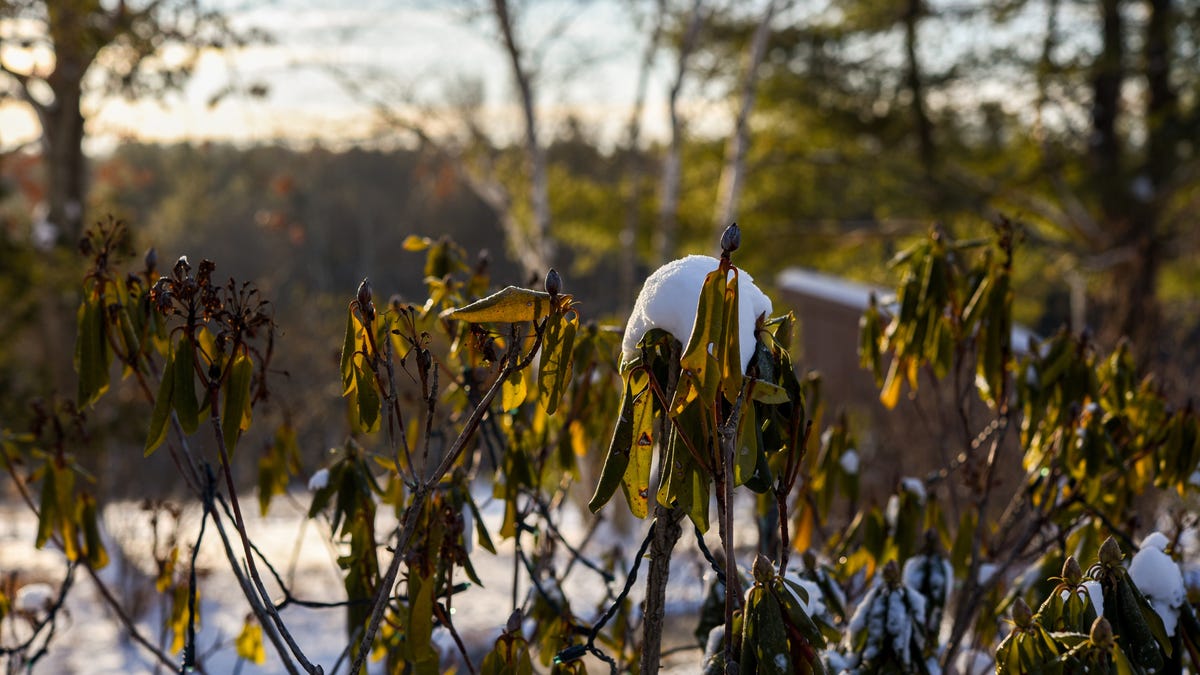
Cold essentially makes a dry desert landscape. Frigid temperatures reduce the moisture holding capacity of the air and tie up liquid water in ice. Moisture loss and desiccation are major hazards for broad-leaved evergreens. On especially cold days you can see the plants’ adaptations in action: tightly curled Rhododendron leaves shield their stomata pores from the wind, reducing moisture loss. Even with these protections deployed by the plant, expect to see dieback in the spring and summer. But do not be too hasty in removing damaged parts. Woody plants can surprise us with their resilience, activating dormant buds under their bark to rebound from nibbled stems and frost-bitten branches. Prune lightly in late spring, allowing latent growth to emerge.
As you look out onto the snowy landscapes, remember that this is an important and necessary part of your garden’s seasonal change. The care and appreciation for your plants throughout the growing seasons help set them up for success and survival during these cold winter months. Be thankful for the benefits and beauty of a snowy cover as you wait out the remainder of winter.
Gardening Central Mass. offers ecologically focused tips and helpful stories for home gardeners from New England Botanic Garden at Tower Hill CEO Grace Elton and Director of Horticulture Steven Conaway. Located in Boylston, New England Botanic Garden creates experiences with plants that inspire people and improve the world. Learn more at nebg.org. The column is published on the third Sunday of the month.
Comments are closed.