
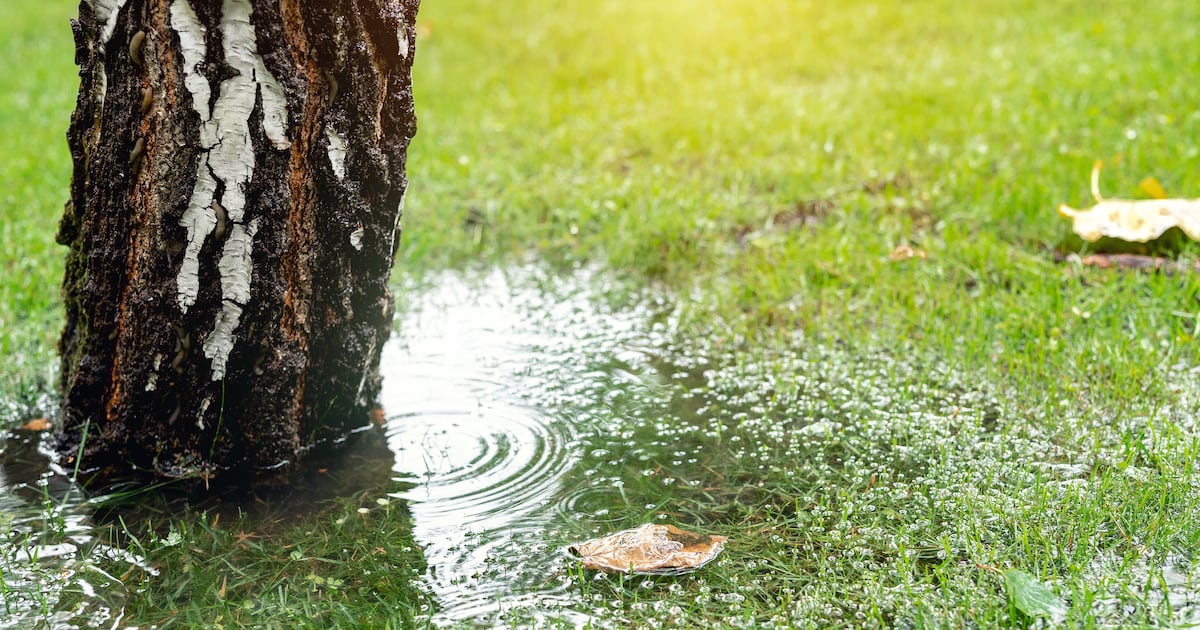
Fliuch báite, or soaking wet, is how I’d describe the current state of most Irish gardens including my own. The majority are badly waterlogged, their plants bedraggled, while slug populations – unless we get a dry spring – are certain to skyrocket with consequences for seedling plants and emerging perennials. What to do?
My first piece of advice, counterintuitive as it might seem, is to do nothing for the moment. That means no digging, no hoeing, no raking, no mowing, and certainly no intense cultivation with a rotovator, all of which run the real risk of aggravating the damage done by recent rainfall amounts that in some parts of the country were up to four times the average for this time of year. Even something as simple as walking on a waterlogged lawn is likely to cause soil compaction, with long-term consequences for drainage and soil fertility.
How long before the ground becomes workable again? On average, a waterlogged soil typically needs several weeks of predominantly dry weather to start to recover its equilibrium, more again if it’s clay-based rather than a freer-draining loam. But in severe cases of flooding, experts reckon that it can take from six months to a year for the delicate, complex balance of soil micro-organisms necessary for its healthy function to properly re-establish.
This is because flood water compresses the different soil layers, squeezing out air, disrupting its all-important nitrogen cycle and causing anaerobic conditions utterly hostile to soil life. Contamination caused by sewage, wastewater or other pollutants carried in flood water can further aggravate the problem.
Flood damage aside, the kind of torrential rainfall recently experienced in many parts of the country also flushes away key plant nutrients while simultaneously creating conditions that encourage the spread of plant diseases.
But while time is the great healer, the good news is that there are ways we gardeners can help, just so long as we wait until ground conditions have started to improve. A simple way to gauge the latter is by gently squeezing some soil into a ball. If it holds its shape and feels very wet to the touch, then hold off. On the other hand, if it crumbles apart when pressed, then you’re good to go.
Where to start? Gently piercing the surface of the soil with a garden fork to a depth of 10cm-15cm is a simple but effective way to aerate it and help boost its recovery. A generous organic mulch (5cm-7cm deep) around the base of plants, followed by a sprinkle of slow-release organic pelleted fertiliser in early March (wait until you see early signs of growth) will also really help to reboot the kinds of healthy soil processes and plant root functions disrupted by both flooding and waterlogging.
Home-made garden compost, leaf mould, well-rotted farmyard manure, foraged seaweed (collected with permission) are all ideal for this purpose, but may be hard to source in large enough quantities. If so, then consider instead using a high quality, commercially-produced alternative (suppliers include landscapedepot.ie, geeup.ie, enrich.ie and envirogardenandhome.com). Whichever mulch you decide to use – and you can use a mixture – make sure to keep it out of direct contact with plant stems to avoid the risk of disease. Alternatively, sowing a green manure/ cover crop is an excellent way to repair and rejuvenate water-damaged soils in vegetable beds left empty over winter (recommended seed suppliers include fruithillfarm.com).
[ Gardeners are close observers of nature’s clock and the havoc wreaked by climate changeOpens in new window ]
In gardens where plants’ roots systems have been left exposed and vulnerable as a result of altered soil levels caused by flooding, it’s important to rebury them by carefully correcting/ topping up soil levels and then gently firming down with your foot. Just make sure not to raise the soil above its original level, which can bring a whole new set of problems as regards plant health.
To revive plants damaged by flooding and help protect them from disease, it’s also a good idea to cut away any dead or damaged branches or foliage. Just bear in mind that yellowing of leaves is normal after bad flooding and the plant may very well recover on its own with time. On the other hand, some plants – especially trees – may take years to fully express the extent of any long-term damage to their root systems.
In flooded gardens or allotments where there’s reason to suspect that the ground may have been contaminated by sewage, wastewater or other pollutants, it’s important to dig up and bin all overwintering vegetable crops as these pose a risk to human health if eaten (wear gloves while doing so). The RHS also advises against growing raw food crops (for example lettuce or strawberries) in this kind of contaminated soil for at least two years, while crops destined for cooking can typically be safely grown only after a year-long interval. For the same reason, it’s also important to thoroughly wash down any hard surfaces and garden furniture.
As for longer-term solutions, as gardeners we need to weigh up practical ways to help reduce the risk. Well-designed and properly installed land-drains, raised beds, planting trees and shrubs into raised mounds and using wooden boards to spread our weight when working on the soil are all strategically useful, as is the reduction of impermeable hard surfaces or their replacement with more permeable alternatives that allows rainwater to percolate. Even installing a green roof on a garden shed can make a difference to surface water levels, as can storing rainwater in a series of water butts connected by garden hose. For those who have space, other options include installing a garden pond, or creating a rain garden, or a series of swales to help capture rainwater run-off. In this strange new universe that we find ourselves in, all these tools will help us to meet the challenges of climate change.
This week in the garden
Order flower and vegetable seeds plus tubers and bulbs of summer-flowering plants such as dahlias, lilies and cannas while stocks of popular or hard-to-get varieties are still high. Irish suppliers include brownenvelopeseeds.com, irishseedsavers.ie, greenvegetableseeds.com, seedaholic.com and all good Irish garden centres.
Wash down glasshouses and polytunnels in preparation for the beginning of the busy spring season, using a soft sponge or brush and an eco-friendly cleaning liquid suitable for use around plants. This is also a good time to repair any tears in the plastic or broken panes of glass.
Dates for your diary
Snowdrop Month at Altamont Gardens, Co Carlow Continuing for the rest of February (9.30am-4.30pm, tours at 2pm). For details of other notable Irish snowdrop gardens opening to the public, see huntingbrookgardens.com, huntingtoncastle.com, burtownhouse.ie, hesterfordegarden.com, rhsi.ie (for Bellefield), shankillcastle.com, woodvillewalledgarden.com and @primrosehillgarden_ireland on Instagram.
GLDA Seminar 2026: The Interconnection of All Things Crowne Plaza Hotel, Santry, Dublin; Saturday, February 28th. With guest speakers Neil Porteous, Galen Fulford, Margie Ruddick, Lulu Urquhart and Adam Hunt, glda.ie.
Comments are closed.