
Bangalore-based studio Shibanee & Kamal Architects explains why gardens are central to how it designs housing projects in one of India’s most densely populated cities. For the practice, open soil and planted courtyards are not decorative afterthoughts but structural parts of everyday life, as essential as walls or roofs.
“No Garden, No Project” – Shibanee & Kamal Architects
Gardens form the starting point for the practice’s residential work, influencing decisions long before walls or roofs are drawn. They shape the layout of rooms, the way buildings occupy their sites, and even the sequence in which projects are constructed. For Shibanee & Kamal Architects, a house is not complete until it has a living outdoor heart, a space where light, soil, and daily life can meet.
Green architecture and gardens in Bangalore
They expressed:
“Every single home that we build has a garden – if it can’t have a garden, we won’t do it.”
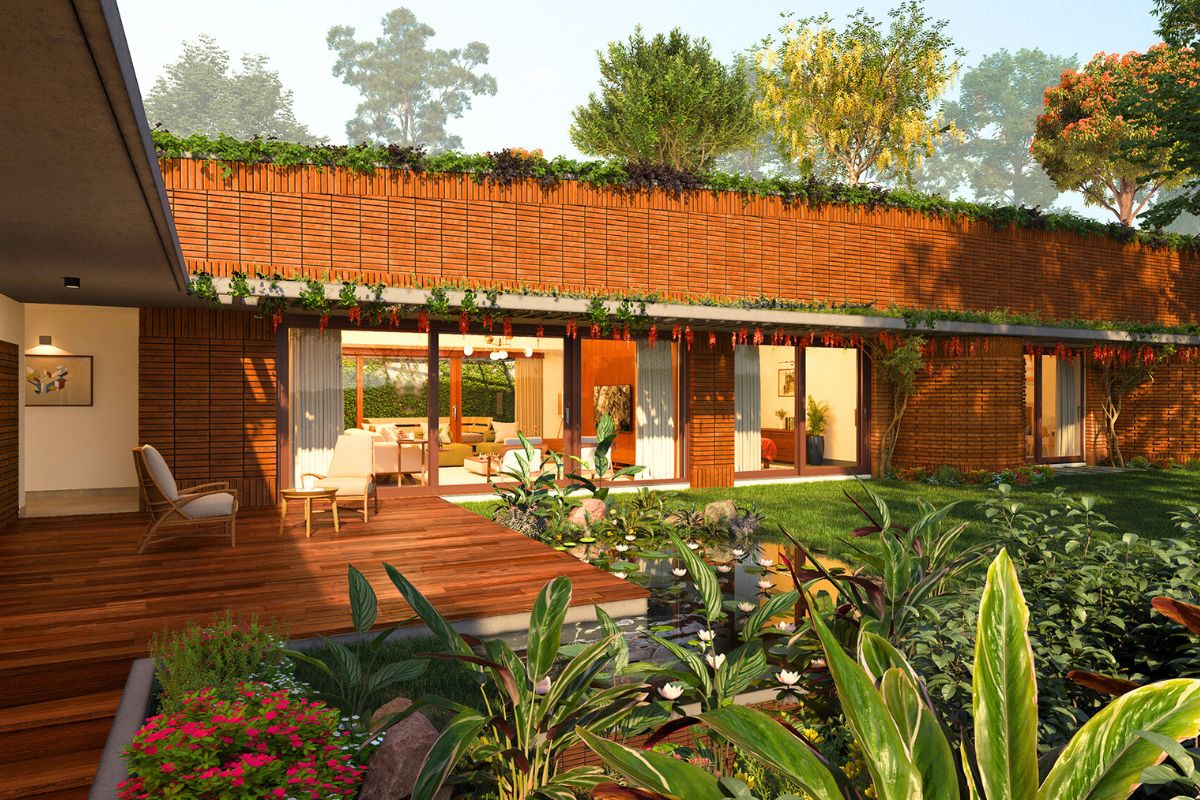
Render of a house with a colorful, green garden
The architects describe this stance as a practical response to Bangalore’s density and climate. In a city where apartments rise higher each year, and open ground becomes harder to find, they see gardens as small acts of resistance – places that slow a building down and reconnect it to the rhythms of weather, seasons, and neighborhood life.
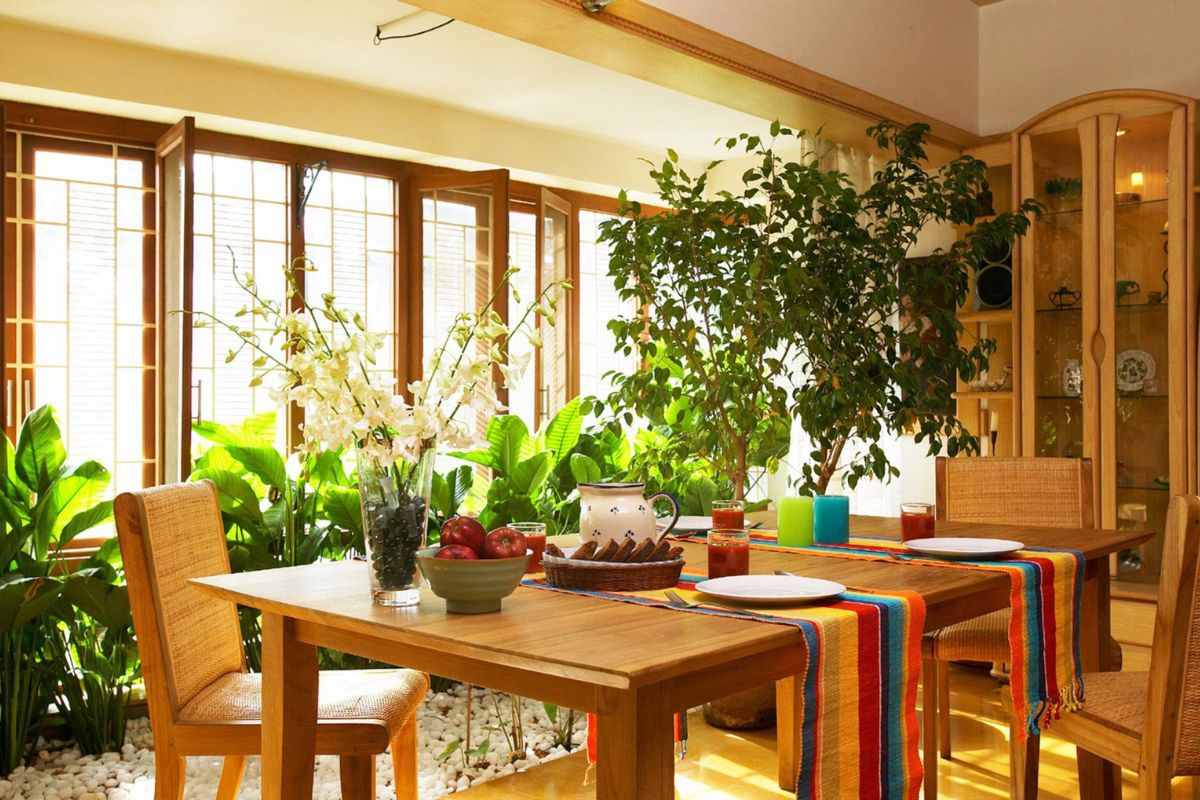
Gardens and plants give life in and out of the house
This approach affects more than appearance. Windows are positioned to borrow greenery from courtyards, staircases are pulled toward planted edges, and even the thickness of walls is considered in relation to shade and growth. A garden, in their view, is a framework that guides how people will eventually live inside it.
Spatial and Intelligent Strategies to Incorporate Greenery in Bangalore
Working in Bangalore, one of India’s most densely populated cities, the studio has developed a range of spatial strategies to incorporate greenery within constrained urban sites. They tried all the different formats. Some are staggered in alternate directions, some are duplexes, some are L-shaped – and in some cases, the gardens are inside the home.
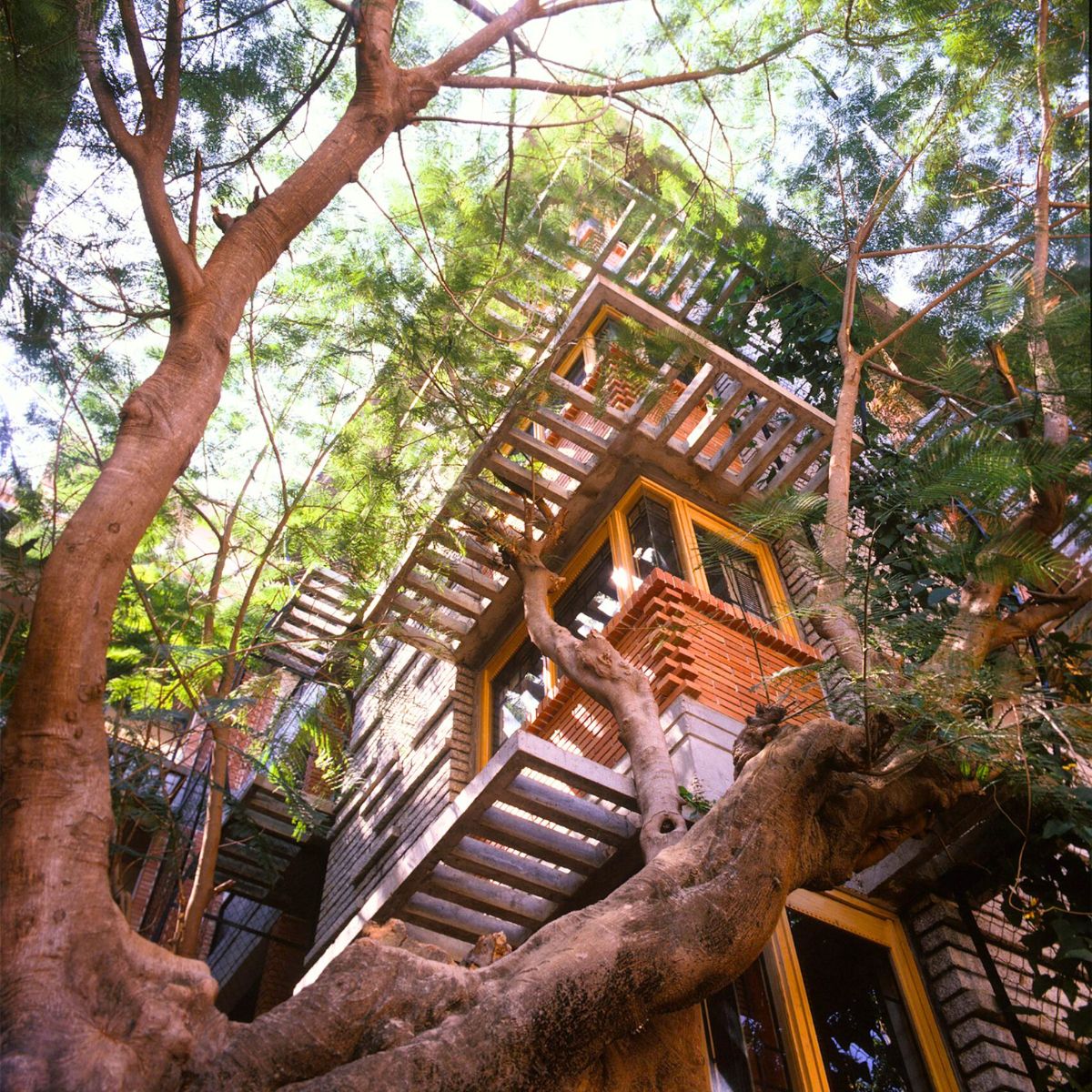
House between nature and trees
The concept emphasizes the importance of gardens in home design and experience, instead of only viewing them as a mere decoration. The home just doesn’t feel like a home unless it has a garden. The studio’s methodology has also influenced how it delivers projects.
After seeing its designs altered while working with third-party developers, Shibanee & Kamal Architects decided to take control of the entire process by bringing architecture, construction, and development under a single model through its own construction and development arm, Total Environment.
Kamal explained that the early experience with external developers was frustrating, with carefully considered proposals being changed almost immediately after presentation. From his perspective, the only viable solution was to manage every stage directly — to find the land, design the project, build it, and bring it to market without outside interference. Any other route, he suggested, would compromise the integrity of the work.
Timeless Design Inspired by Nature
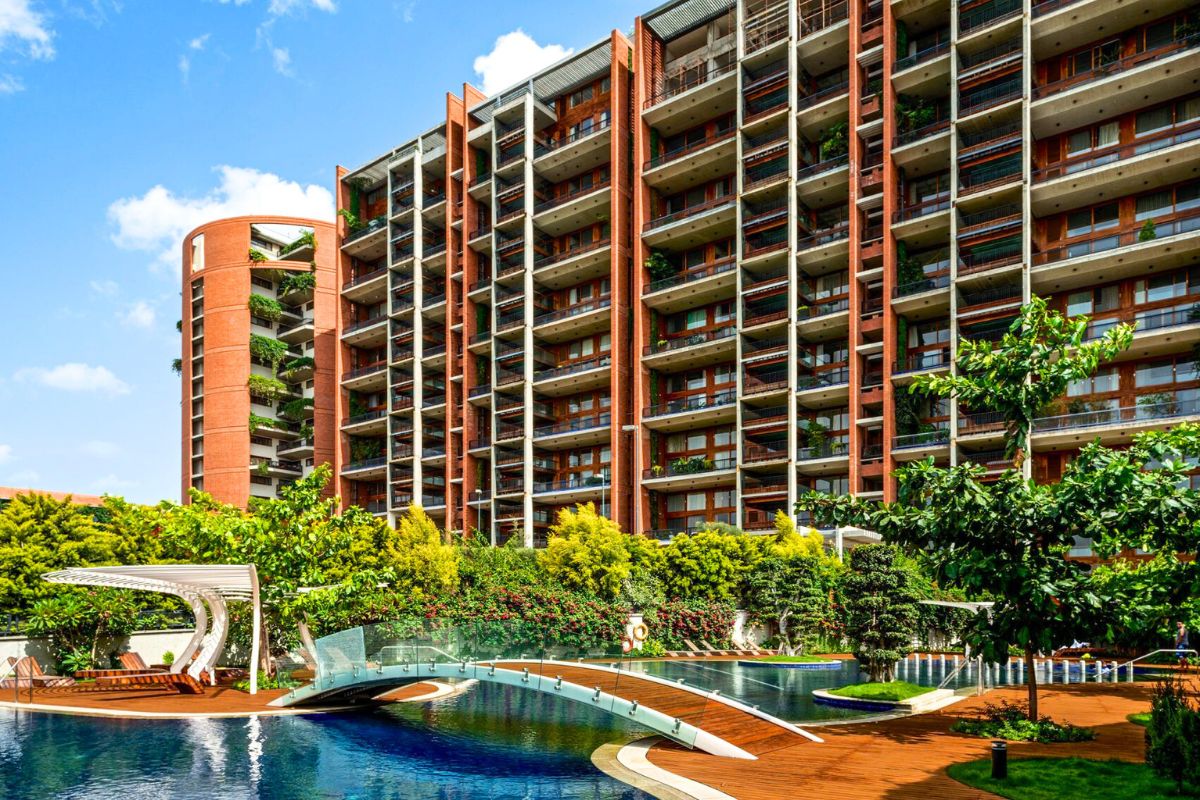
Kamal noted that the project now contains more green space than existed on the land before construction began, an outcome the practice views as a measure of genuine success. The architects often refer to the idea of “timeliness design” – creating homes that do not feel dated or in need of constant reinvention. According to the studio, many residents have lived in their projects for two decades without feeling any desire to remodel or move, which the studio sees as proof that the spaces continue to serve people well over time.
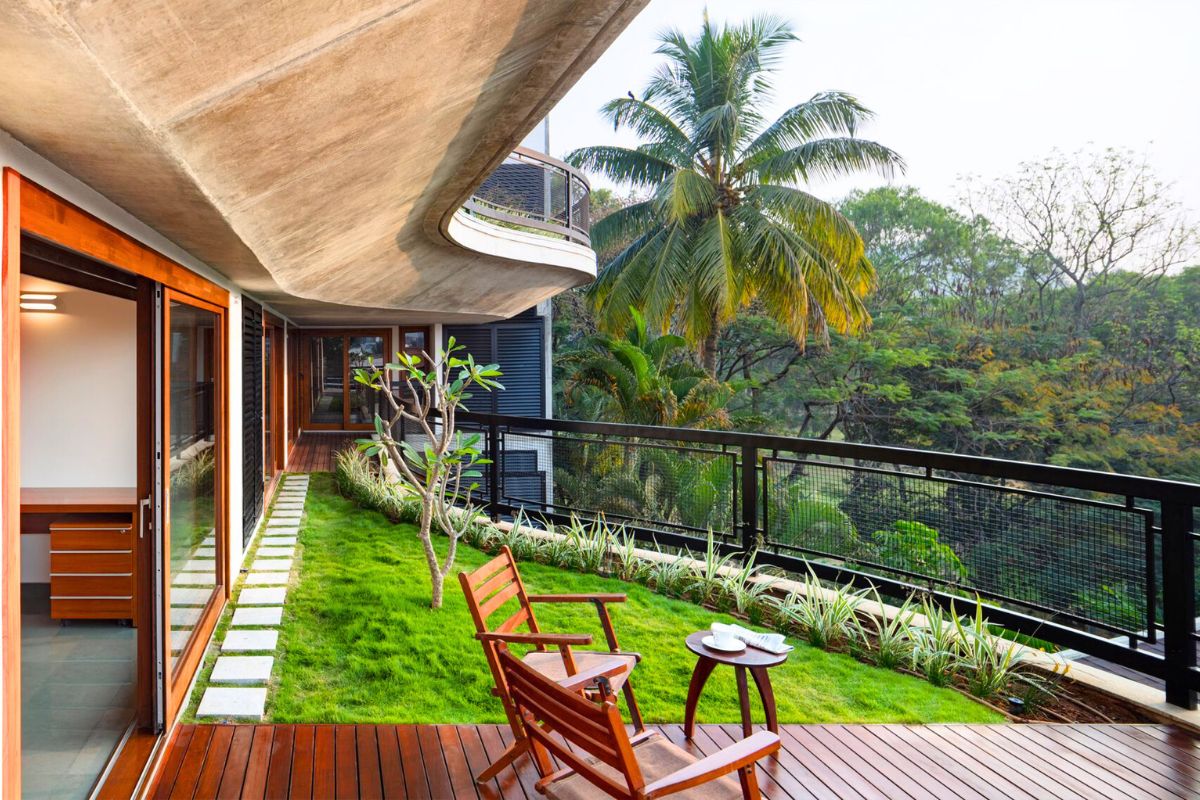
This commitment to vegetation and landscape is not only professional but personal. Kamal has spoken about how childhood reading, particularly stories like The Magic Faraway Tree by Enid Blyton, shaped an early imagination filled with forests and secret gardens. Those influences, he said, have remained with him and inform the desire to create buildings that feel connected to nature. For the studio, allowing architecture to overflow with plants and greenery is less a stylistic choice and more a way of recreating that sense of wonder within everyday urban life.
Photos: @total_environment
Comments are closed.