
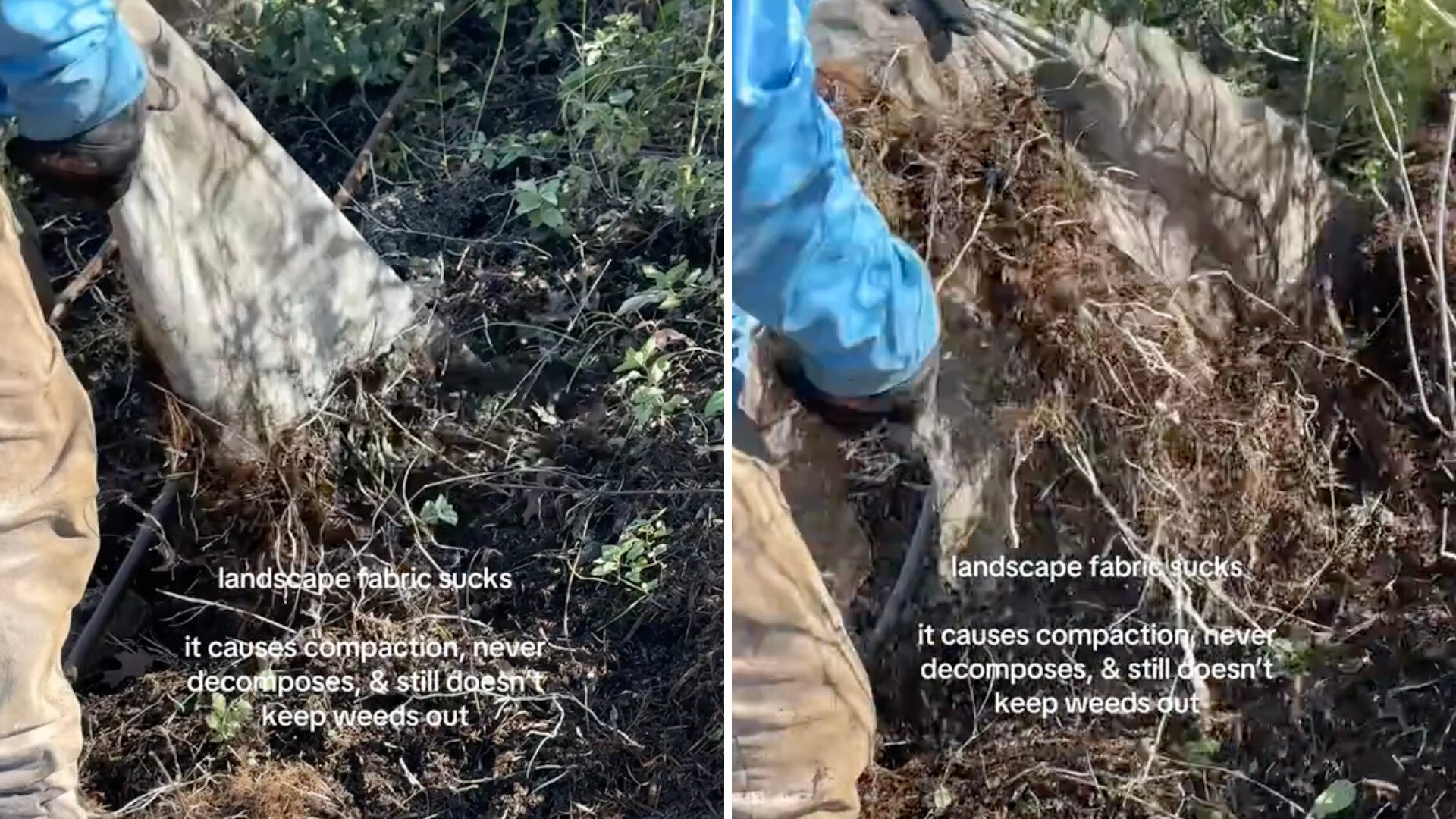
In a TikTok video, native gardener Karla (@nativotx) demonstrated why landscaping fabric does little to prevent weeds.
“Weed fabric hater for life,” Karla captioned in her video.
@nativotx weed fabric hater for life #landscape #sustainablelandscaping ♬ original sound – Karla | Nativo Gardens
She showed a clip of a gardener peeling away old weed fabric from the soil, the sound of roots ripping away as the compacted soil is lifted.
“Landscape fabric sucks,” she explained. “It causes compaction, never decomposes, and still doesn’t keep weeds out.”
Landscaping fabric is a popular landscaping tool sold at most home improvement stores to help prevent weeds in the lawn. The woven plastic fabric is meant to block sunlight to the weeds below, but it is still breathable, allowing water, air and nutrients to reach the soil underneath.
A major drawback to using landscaping fabric, however, is that its success is only temporary.
Camino’s hemp-derived gummies naturally support balance and recovery without disrupting your routine, so you can enjoy reliable, consistent dosing without guesswork or habit-forming ingredients.
Flavors like sparkling pear for social events and tropical-burst for recovery deliver a sophisticated, elevated taste experience — and orchard peach for balance offers everyday support for managing stress while staying clear-headed and elevated.
Weed seeds that are carried by the wind and land in the fabric can still take root, despite the physical barrier in the way. According to Piedmont Master Gardeners, the roots can penetrate downward through the fabric, making it even harder to pull surface weeds without ripping up the entire fabric.
A garden design expert explained for Pollinator.org that the permeability of the fabric also decreases as the fabric ages, seeing more clogging in the fabric’s woven holes, which blocks the exchange of air, water, and nutrients. These factors can result in dried or cracked dirt and poor soil health, which is reflected in the health and biodiversity of the ecosystem above the ground.
Over time, the plastic material also breaks down into microplastics that never quite disappear. Microplastics have been linked with a host of serious health conditions, including an increased risk of colon cancer, decreased lung function, and fertility issues.
Invasive weeds are not only a threat to native ecosystems, but they are frustrating to remove — they always come back.
TCD Picks » Upway Spotlight
💡Upway makes it easy to find discounts of up to 60% on premium e-bike brands
Incorporating native plants in your landscaping or lawn redesign helps discourage invasive plant species from taking root. They are also generally easier and less expensive to maintain compared to traditional grass lawns — an invasive grass species that requires much more hands-on maintenance.
Native plants also benefit local wildlife, including pollinators that support plant reproduction, protecting the human food supply.
Buffalo grass and clover are two lawn replacement options that offer savings on time and money associated with maintaining the green grass lawn.
You can have a healthy lawn without the shortcuts. No landscaping fabric is required.
“Should be illegal to sell,” one user wrote under the TikTok video.
“Oh my God does it suck to rip up,” another commenter said.
Get TCD’s free newsletters for easy tips to save more, waste less, and make smarter choices — and earn up to $5,000 toward clean upgrades in TCD’s exclusive Rewards Club.

Comments are closed.