
“Anyone who thinks gardening begins in the spring and ends in the fall is missing the best part of the whole year; for gardening begins in January with the dream.” — Josephine Nuese
Did you enjoy our few days of snow? Underneath the snow and ice, seeds and bulbs have likely benefited from the chill hours. Soon their green stems and shoots will reappear. Midway between winter solstice and spring equinox, even though February is often very cold, a gardener begins to plot and strategize. Anticipation is real. Winter is an excellent time for garden planning in South Carolina. Gardens require less labor this time of year, so cooler months are an excellent time to organize seeds for the spring and summer garden. Setting up a personal seed library is a great place to inventory and ease browsing when it is time to plant.
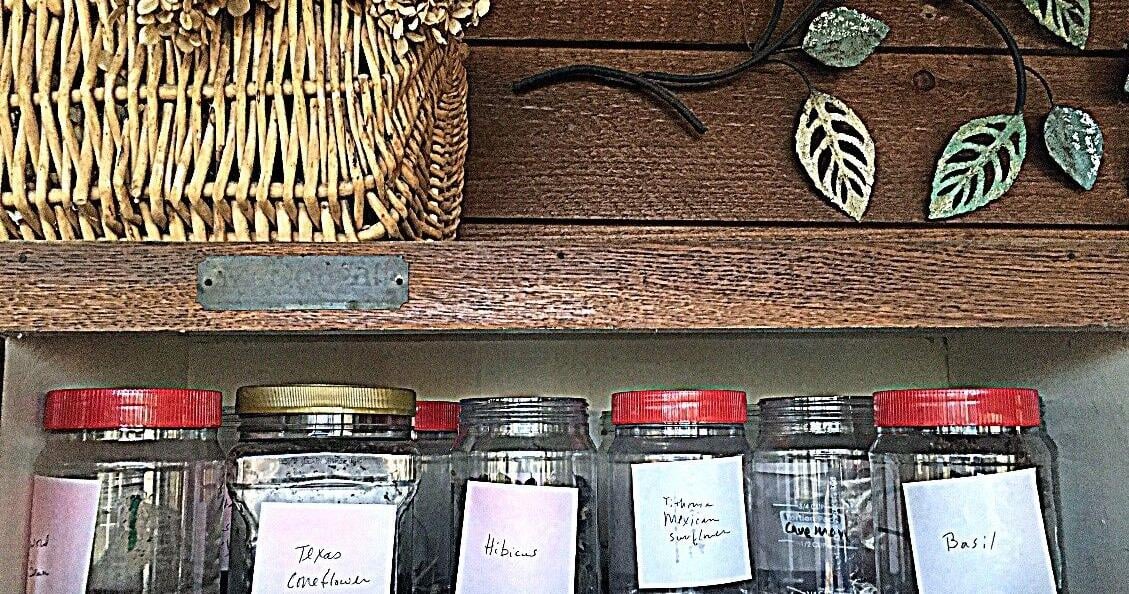
Organize seeds into a storage container or binder by categories such as growing season or crop types. Consider putting seed packets into plastic trading card pages within a 3-inch binder. Add a desiccant packet, and remember that stored seeds need a cool, dark, low-humidity spot for long-term storage. A freezer is always recommended. Personally, I use clean peanut butter jars to hold most of my flower seeds, which I place in my grandmother’s Hooser cabinet on my back screen porch, labelled and ready for spring sowing.
If you have saved seeds for several years, you should check seed viability before using. For smaller seeds like lettuce, to test germination, place 10 seeds between two moist paper towels, insert them into a plastic bag and place the bag in a warm, dark location. Some seeds require light to germinate and will need to be placed on top of a moist towel in a plastic bag in a bright location. Consult the packet instructions to determine if any light is required. For example, the packet will sometimes state, “do not cover seeds.” Check every other day for signs of germination. Most vegetable and annual seeds will germinate within 7 to 10 days. If the germination rate is less than 7 of 10, replace that packet for the upcoming growing season.
For larger seeds like peas, use the float test. Place 10 seeds in a bowl or cup of water. Let them sit for 5 minutes. Seeds that sink are viable but seeds that float should be discarded. Again, if most of the seeds float, replace that packet for the upcoming growing season.
Once you have organized and tested your seed packets, it’s easy to begin planning for the growing season. Using graph paper, draw diagrams of where crops will be planted. Crop rotation schedules can also be planned at this time. Rotating crops in a bed throughout the growing season will enhance soil fertility, improve soil health and help to manage pests and diseases. Utilize companion planting to maximize the use of all available growing space. If you kept a journal of past plantings, be sure to consult your notes before the season’s sowing begins.
You can begin sprouting some early growers now, like parsley, lettuce and kale. To start seeds indoors during the late winter months, now is the time to begin your yearly check on seed starting equipment. Inventory your seed starter trays and pots. Plug in grow lights and allow them to fully illuminate. Plug in the warming mats, if used, and allow 15 to 30 minutes to reach an optimal temperature. Using the back of your hand, check that the entire mat feels pleasantly warm and there are no cool spots. Remember that our last average frost date is usually early to mid-April, so do not rush to plant outside.
Of course, Clemson’s Home and Garden Information Center can inform the home gardener with a number of relevant Factsheets. See HGIC 1259, Starting Seeds Indoors and HGIC 1330, Crop Rotation. These online resources can be complemented through correspondence with Aiken Master Gardeners. Of note: We are no longer staffing an office through the Clemson Extension office on Richland Avenue, but we can still be reached through our email at aikenmastergardeners.org. We will soon reappear at the monthly Lunchbox series, and we will soon be present on Saturday mornings at the Aiken Farmers Market. You can also schedule a home visit by filling out a form on our website or by sending an email to rent@aikenmastergardeners.org.
During the last few weeks of winter, I can plan for spring. I will prune my roses on Valentine’s Day. I will take notes of my seed collection. I will germinate some parsley and lettuce. I will draw up a plan for my next wildflower bed. Seeds may be small, but they carry entire futures. There is no despair in a seed. There’s only life, waiting for the right conditions of sun and water, warmth and soil to be set free. Every day, as spring gradually approaches, millions of seeds will begin to lift their two green wings.
Comments are closed.