
Hello!
I’m looking for advice from people far more experienced than me. I live in British Columbia, Canada, between Hope and Yale. I believe this puts us roughly in zone 8b, though I’ve seen it listed as 7b – 8a depending on the source.
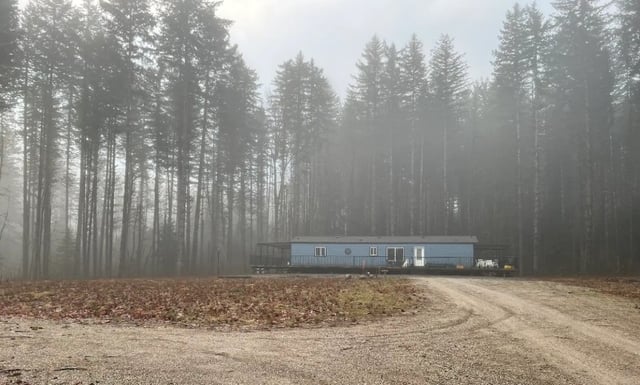
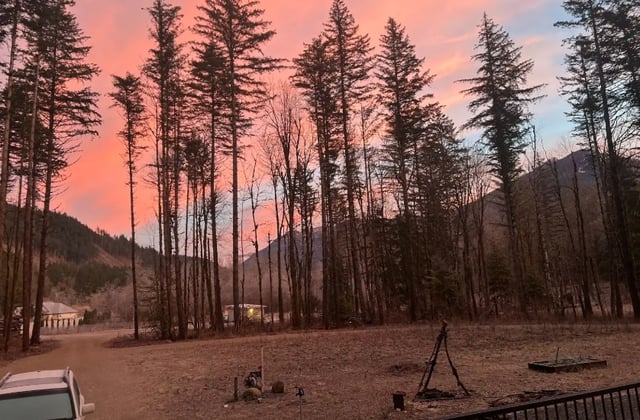
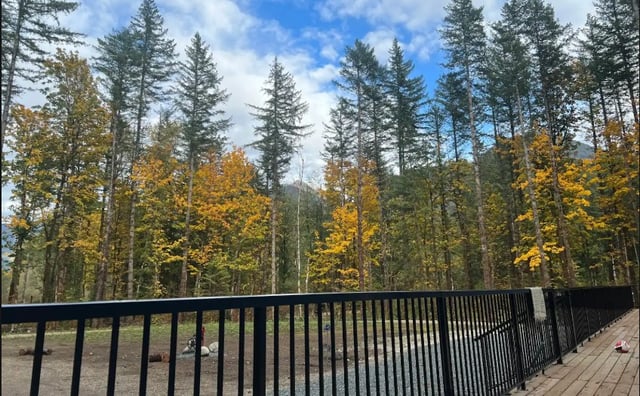
I’ve attached photos of my yard. I have a lot of space to work with and absolutely no idea where to start. We’re fully surrounded by tall trees, get heavy rain year-round, and spend over half the year with very little direct sunlight. Temperatures range from about -20°C in winter to +45°C in summer, though our average is closer to -1°C to +22°C.
Our soil is very compacted, sandy on top and almost entirely clay underneath. We’ve had no success growing anything directly in the ground, including grass (we’ve tried seed twice with no luck), so I’m fairly confident raised beds will be necessary.
What I’d like to work toward:
· Fruit trees
· Raised garden beds (steel, some with trellises)
· Native plants and lots of herbs
· Making good use of the space long term, with a strong focus on perennials and plants that work well together in our area
· My fiancé is a beekeeper, and we have bees on the property
· I’ll be doing 99% of this myself, so keeping things DIY and budget-friendly is important
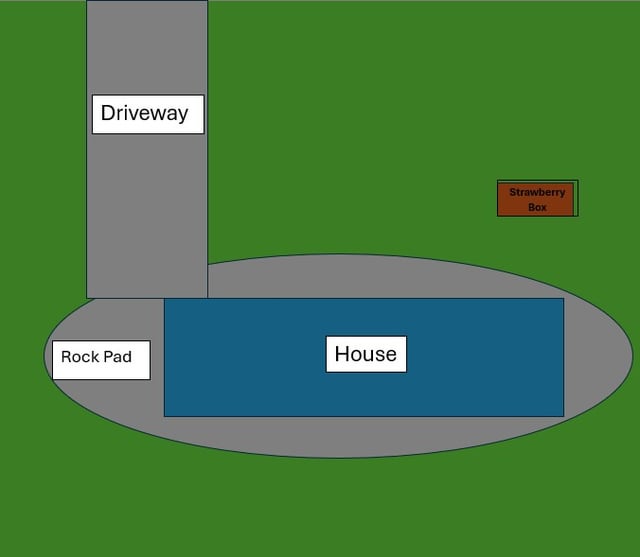
We can use any part of the yard. In the last photo I attached a diagram of sorts. I have planting space to the left and right of my driveway as well as my back yard. Down the road, I’d love to build a greenhouse (likely next year), and eventually attach a small chicken coop to it.
All of this is to say: I’m overwhelmed. The research I’ve done so far has only made me more confused, and I don’t have the budget for trial and error mistakes this season. I don’t have family I can ask about this, and my friends are all indoor plant enthusiasts.
TL;DR – Looking at my yard, where would you put:
· Garden beds
· A greenhouse/chicken coop
· Fruit trees
If anyone responds, thank you, truly. Any advice on how to start this season would mean a lot.
by notarobot_trustme
3 Comments
Seeds are the cheapest way to cover large areas. Research those which are native to your area and thrive in your conditions and pay close attention to the germination codes which will tell you when to sow them (usually fall for winter adapted species). Site prep is very important—find a way to clear an area of grass and other plants and protect it from critters as the seeds germinate. Most importantly, start small and learn as you go. With a project this size, I would do it in chunks unless you have a huge budget. Check out native wholesalers in your area for woody plants—there are places that sell them small but less expensive
You’ll want to check out a permaculture group. They’ll have better knowledge on your project goals.
I live in Vancouver, so I have a few relevant tips. I DIYd my own yard, though its obviously a fraction of the size of yours haha
Your property seems to be surrounded by tall trees – this summer, you could put a camera out and do a timelapse video, and see what parts of your yard receive full sun – 8+ hours is considered full sun, 4-6 hours is part shade, and less than that would be full shade. Follow the planting guide for the seeds/plants you purchase and plant them in the appropriate spots.
That being said, you could get some work done this year. Just guess where you think your best sunlight is and build some beds there. You don’t necessarily even need raised beds – just flip the sod, maybe get rid of the sod (start a compost pile) – and do some planting, for fun if not for anything else. Maybe get some bulk compost you can find add it to the soil. My own raised beds, I got free pine 2x4s from a construction project nearby, they just gave me the scaffolding wood for free, but steel beds are really nice (very luxurious)
For native plants, I think your area is the historical site of some Garry Oak meadows. Shoot Satinflower nurseries an email for additional advice on those. They also sell a seed pack for seeding a Garry Oak meadow, though it may not be available now (usually available in fall). Unfortunately it seems difficult to find Garry Oak saplings for sale, but Plan Bee native plants might have something for you. They also have some native trees that are native that produce nuts/fruits, but those aren’t going to be as productive as a proper fruit tree. Traditionally, and currently, native peoples would cut back conifers encroaching on the garry oaks, as they grow much faster, though I dont know if you are allowed to do that.
Costco sells some affordable fruit trees. In my experience, apples are pretty easy, if you dont mind occasionally competing with bugs. Cherries are the same. No matter what fruit tree you get, you’ll need to learn to prune them after they are established for them to stay productive, and maybe some pruning early on to shape the trees into a productive form. My dad is fan of espalier training trees, but I find it too much work.
Maybe something your partner would be interested in, but the best pollinators for early blooming fruit trees like the above are mason bees. Get some native mason bee species, maybe from crown bees, but also BC Bee Supply has them for order (order them soon – the cocoons need to be released to coincide with fruit tree bloom times). I found my mason bees laid more cocoons than the initial 20 I purchased, so managing them can result in an continuous supply.
For irrigation, I bought a kit from irrigation direct Canada. Its great quality and more affordable than anything at Home Depot. One of their basic 200$ kits can irrigate a fair amount of space. I highly HIGHLY suggest automating irrigation, so you can use that time to build all the other stuff you want.
Yeah, get started on some of the easy stuff, like a couple of garden beds. LOOKS LIKE A FUN PROJECT!