
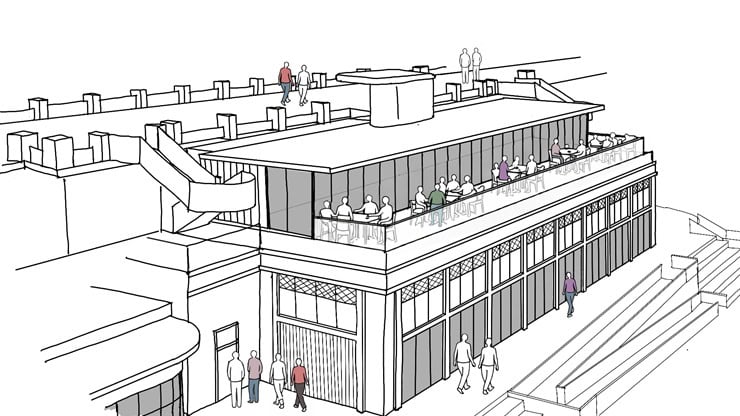
 The proposed rooftop restaurant Image Lee Evans Partnership
A steady stream of people have visited the Margate Digital Campus site today (February 10) to view the proposals for the reopening of the Winter Gardens.
Both the Main Hall and the Queen’s Hall will be restored for events use and fully accessible to the public in plans from the team at Westwood One Theatre – also operator of the Granville Theatre in Ramsgate and Under 1 Roof nurseries.
Westwood One has a 999-year lease agreement with Thanet council to take on the Fort Crescent building and receives a £4 million grant towards the renovation from Margate’s £22m Town Deal fund.
The redevelopment will introduce a mix of complementary uses to ensure year-round activity and long-term sustainability, including:
Reopening Main Hall and Queen’s Hall for performances, events, and public gatherings A c.100-place nurseryA drama schoolA rooftop bar and restaurant, designed to maximise panoramic sea views
Westwood One says these uses will create a lively, multi-functional building that supports education, culture, and leisure while celebrating the unique coastal location.
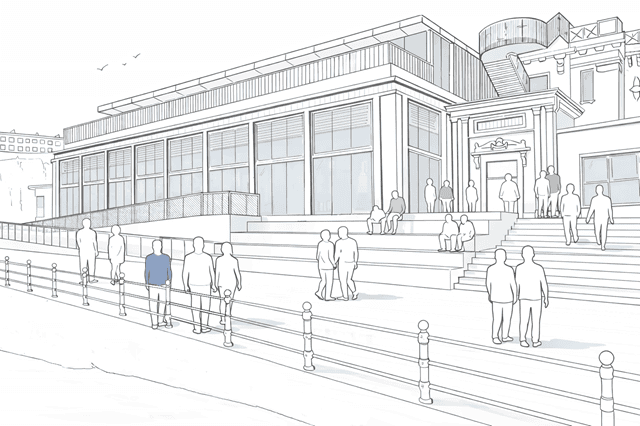 Image Lee Evans Partnership
The aim is to bring the landmark building, which has been shut since 2022, back into active public use.
The team say: “We envision the space being regenerated with heritage at the forefront, working with the beauty of the existing building and improving services to create a vibrant hub of activity.”
The building will be in use throughout the day and the seasons with varied operating hours between the nursery, college and restaurant, separate to the performance times for the Halls.
Main Hall
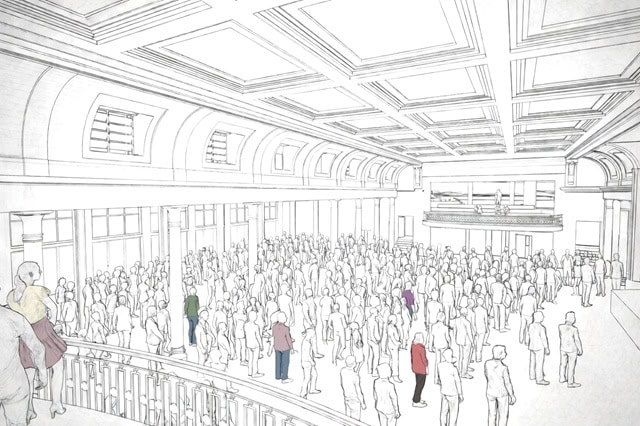 Image Lee Evans Partnership
The proposals for the Main Hall focus on reinstating its use as an entertainment and performance space, reflecting its historic function. Where possible, views towards the sea will be reopened to strengthen the hall’s original relationship with its coastal setting.
The existing decorative features will be retained and conserved through a low-impact restoration approach, preserving the significance of the space.
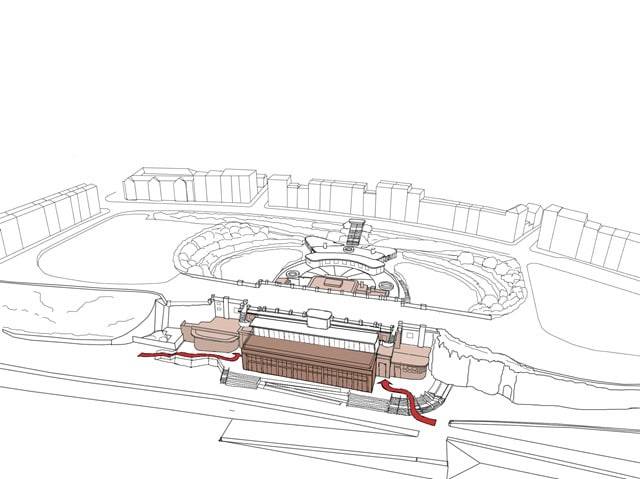 Image Lee Evans Partnership
Internal layout adjustments will improve capacity and functionality, with the introduction of bar facilities to support event use. The two existing balcony areas will be retained and adapted to provide additional viewing and hospitality space, making use of their architectural character without compromising the historic fabric.
Drama School & Queen’s Hall
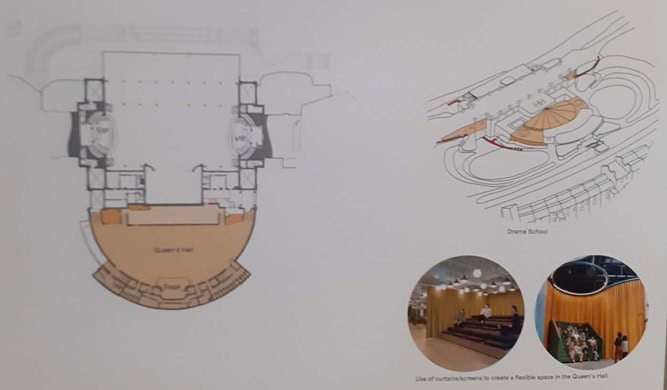
The Queen’s Hall will be refurbished as a flexible space for both performances and education. It will provide a more intimate event venue, complementing the Main Hall, while also supporting the drama school by allowing students to rehearse and perform in a professional setting.
The hall will work alongside dedicated classroom and dance studio spaces elsewhere in the building.
Refurbishment will retain the character of the space and allow for both seated and standing events, with improved bar facilities introduced to support its use.
Rooftop restaurant
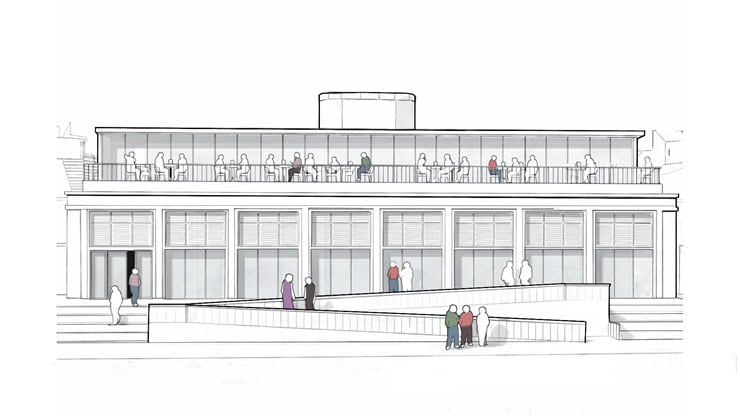 Image Lee Evans Partnership
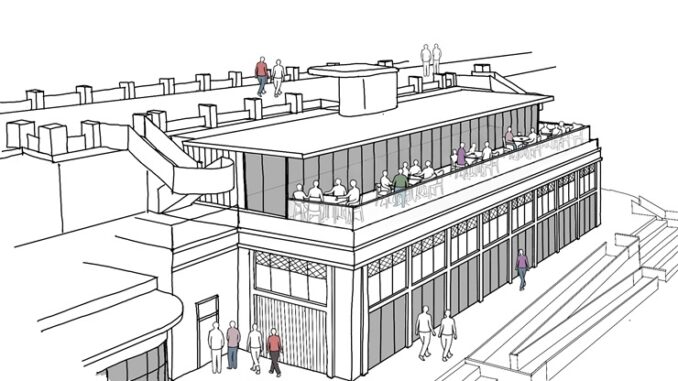
A new rooftop restaurant is proposed above the Main Hall, making use of the site’s panoramic sea views.
The restaurant will include an indoor dining area and an outdoor terrace, with canopies providing shade during the summer months.
The team say the design of the extension will be modest and respectful of the existing building.
Operating hours will be separate to performance times and improved access from the upper promenade will strengthen the connection between the Winter Gardens and the seafront.
Nursery
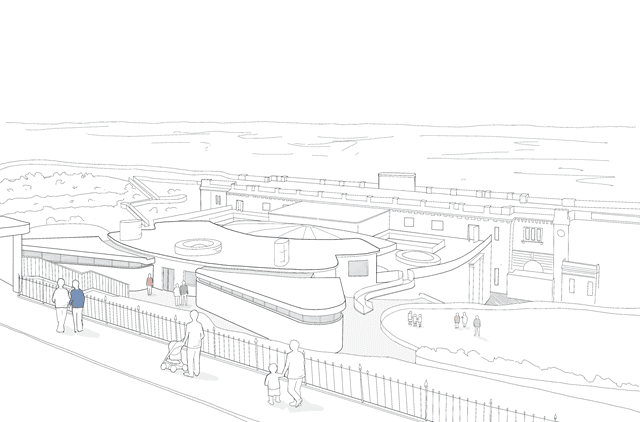 Image Lee Evans Partnership
A new nursery is proposed to introduce a secure, day-to-day use at the upper part of the Winter Gardens site, close to the steps from Fort Crescent.
The facility will provide a 100-place private nursery. Small extensions on either side of the existing building will retain the symmetry of the site. The nursery will operate as a self-contained and secure facility.
Historical timeline
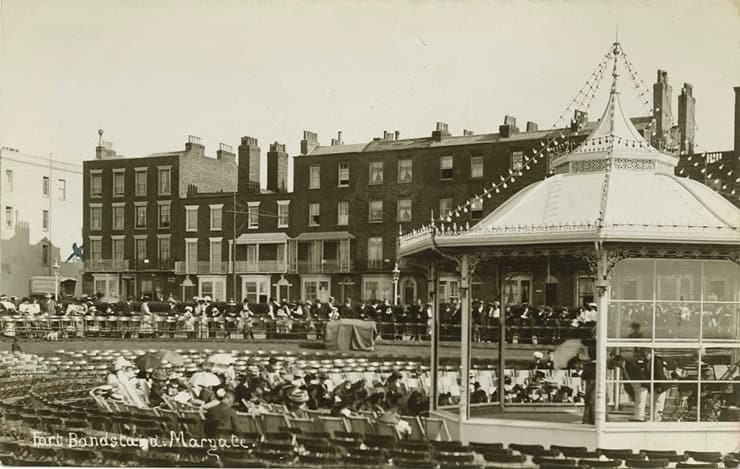
1911
Construction started in November 1910 with the removal of the Fort bandstand and 43,643 cubic yards of chalk. A covenant meant that no tall buildings could be erected on Fort Green, in order to preserve the sea view of the houses opposite on Fort Crescent. The new concert hall was therefore sunk below the level of the cliffs into an artificial hollow.
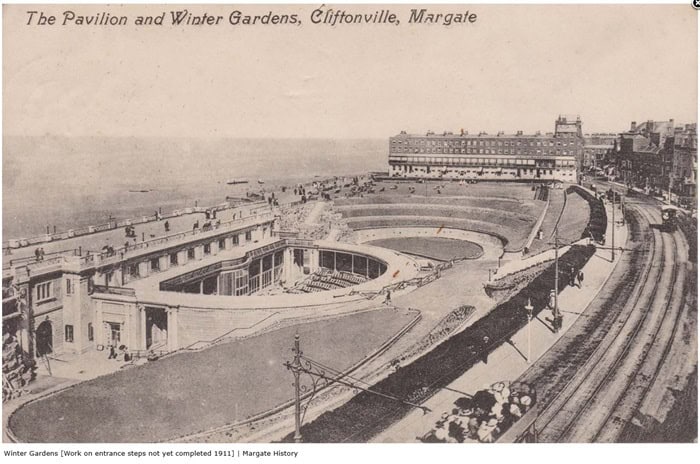
When completed, in August 1911, the Pavilion and Winter Gardens consisted of a 140 × 95 ft Concert Hall, four entrance halls, two side wings and an open amphitheatre. Stage visibility was possible from both inside and the open-air section through floor-level sash windows. Internally, the Pavilion and Winter Gardens was decorated in a Neo-Grecian style and could house 2,500 people inside and a further 2,000 outside.
1920s & 1930s
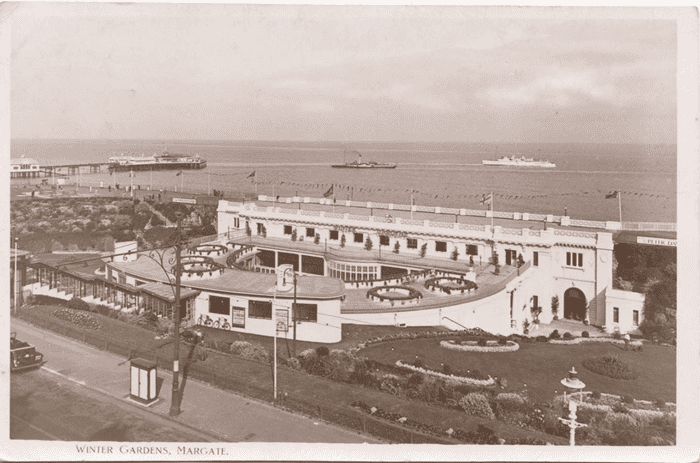
The Winter Gardens thrived and the venue became part of the fabric of Margate’s identity, offering leisure and culture during both summer and winter seasons. In 1935, the balcony ‘Seaside’ café was added, the stairs covered, a closed entrance built and the Amphitheatre
glazed to create a sun lounge. The stage became weather-sealed and enclosed.
1941
During World War II, like many coastal venues, the Winter Gardens was requisitioned for military use. It was initially re-purposed for the Dunkirk evacuee reception, but later became an ARP shelter and food depot.
In January 1941 a sea mine caused some damage including broken windows; however the building suffered a direct hit on 7th July 1941, inflicting structural harm. From 1946 to August 1946, the building was restored, costing £40,000—nearly double its original construction cost.
1960s
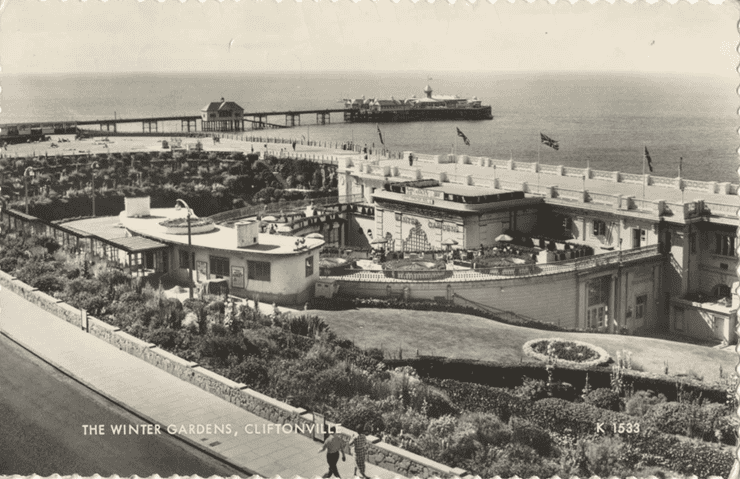
After the war, it resumed its role as an entertainment hub. The 1960s were a golden era, with performances from stars like Laurel & Hardy, The Beatles, Danny La Rue, and Dame Vera Lynn.
It became a major stop for popular touring acts and comedians. In 1964, the Amphitheatre was fully enclosed and renamed the ‘Queen’s Hall’, allowing for more year-round and night time events.
1970s
From the 1970s onwards, like many seaside venues, the Winter Gardens experienced a slow decline due to changes in holiday habits, the rise of television, and economic challenges. Despite this, it remained in use for concerts, comedy acts, community events, and even wrestling matches.
Comments are closed.