
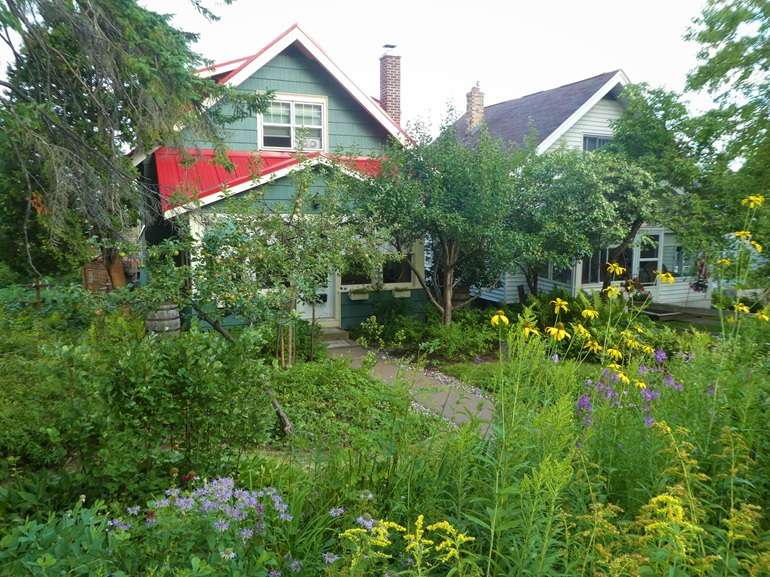
 Charlotte City Council amended its ordinance to allow for pollinator gardens like this on residential properties during Monday night’s meeting. (Photo by Sarah Foltz Jordan/Xerces Society)
Charlotte City Council held a business meeting on Monday night, its first such meeting in nearly a month.
Monday night’s agenda included an update on a potential land acquisition by Historic West End Partners at Five Points for the development of affordable housing, plus votes on a number of business investment grants and a change to the city’s Overgrown Vegetation ordinance to allow residents to cultivate pollinator gardens and naturalistic landscapes.
Below we take a quick look at some of the night’s notable decisions and discussions.
On the Agenda:
Affordable Housing at Five Points & State Legislative AgendaBusiness Investment GrantsOvergrown Vegetation OrdinanceOther Business ItemsAffordable Housing at Five Points & State Legislative Agenda
Many business meetings are preceded by action preview presentations, which allow council to get a deeper look at an issue they will be voting on in a future meeting. Monday’s action preview segment included presentations on a proposed affordable housing development in Five Points and the proposed 2026 State Legislative Agenda.
The first presentation involved a potential land acquisition at Five Points, the intersection in front of Johnson C. Smith University where West Trade Street, Rozzelles Ferry Road, West 5th Street and Beatties Ford Road intersect. (For context, the fifth “point” is State Street, which leads right up to Five Points but no longer intersects with the other roads.)
In partnership with LISC Charlotte, Historic West End Partners wants to build 145 units of affordable housing on the property that was most recently home to a now-closed Church’s Chicken location.
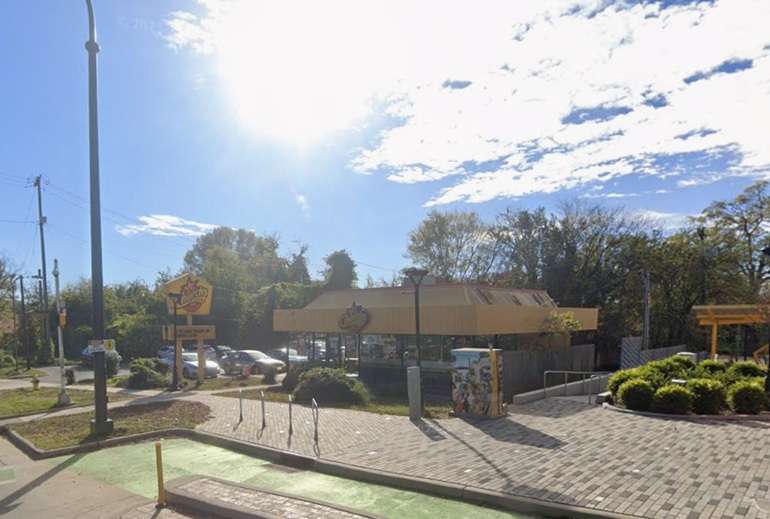 The city will vote later this month on whether to purchase this property for LISC Charlotte and Historic West End Partners to build an affordable housing development. (Via Google Maps)
The city would pay $4.13 million for the land. The money would come from the Affordable Housing Density Bonus Fund, which developers pay into when they cannot or will not meet affordable housing minimums as part of their respective housing developments.
Council member JD Mazuera Arias said the project is an example of why the city needs to fund community/business organizations like Historic West End Partners with line items in the annual budget, as their work is truly impactful on the ground level.
Mazuera Arias echoed Dimple Ajmera’s suggestion that the city use that project as a model elsewhere in Charlotte, adding, “This is a huge moment for our city.”
Council will vote on that project on Feb. 23.

Ajmera presented the city’s proposed 2026 State Legislative Agenda, which shows what the city’s priorities will be this year in dealing with state lawmakers in Raleigh.
The agenda, which can be seen here, points to public safety as a top priority, including requests for more funding to go toward mental health support, law enforcement recruitment/retention, and staffing in the courts.
The city also wants to see harsher criminal penalties for repeat offenders and those who assault public transit operators.

Renee Johnson said there are certain things that are consistently missing from the state legislative agenda that would help the city, including allowing for inclusionary zoning and impact fees, which council learned about during a trip to Boston last year.
“Those obvious things, you’ll see we don’t ask for those because our historical approach has just been more politically correct,” Johnson said. “I would love to push those forward but are they going to be approved?”
Kimberly Owens pointed to a bullet point in the agenda that states the city’s desire to “Support efforts to eliminate fatalities and serious injuries on roadways including strategic infrastructure improvements and leveraging technology.” She said she would like to see a move made to utilize red light cameras.
Read more: Tracking Vehicle-Related Deaths on Charlotte Streets in 2025
“I am absolutely convinced that I am going to be killed every day in Uptown,” Owens said, adding that she feels endangered when she needs to cross Caldwell Street daily and regularly almost gets hit despite being in the crosswalk and having the right of way.
Council will vote on whether to approve the proposed State Legislative Agenda on Feb. 23.
Business Investment Grants
Council approved a slate of Business Investment Grants for companies that are either moving to Charlotte this year or expanding operations in the city. Each grant was previously approved in closed session meetings to entice the respective companies to make their own investments in Charlotte.
Maersk Agency USA, Inc. will receive $269,435 over eight years. On Nov. 18, 2025, Maersk announced it would relocate its corporate headquarters to Charlotte, committing to a capital investment of $16 million and the creation of 520 jobs with an average wage of $115,227.
Pacific Life Insurance Company will receive $170,695 over six years. The company announced it would open a new office in Charlotte in October 2025 and has committed to a capital investment of $12,300,000 and the creation of 298 jobs with an average wage of $177,584.

Scout Motors will receive the largest grant approved on Monday: $7,285,518 over 15 years. The automotive startup announced it would relocate its corporate HQ to Plaza Midwood in Charlotte on Nov. 12, 2025. Scout has committed to a capital investment of nearly $207 million and the creation of 1,200 jobs with an average wage of $179,771.
SoFi Technologies will receive $40,615 over seven years. The financial services provider announced it would expand its presence in Charlotte in October 2025, committing to a capital investment of $3 million and the creation of 225 jobs with an average wage of $108,000.
Overgrown Vegetation Ordinance
Alden Picard with the North Carolina Wildlife Federation addressed council to speak in favor of changing the city’s Overgrown Vegetation ordinance to allow residents to cultivate pollinator gardens and naturalistic landscapes.
As it existed before Monday night, the Overgrown Vegetation section of the city’s Health and Sanitation Ordinance required property owners to cut grass, weeds and vegetation exceeding 12 inches in height. The amendment creates an exemption for pollinator habitats and naturalistic landscapes when registered with the city and properly maintained by the property owner.
Picard said many valuable plants and flowers are considered weeds in the existing ordinance and routinely mowing your yard under 12 inches can cause all sorts of issues that are counterproductive to environmental health.
Picard said the change would save water, reduce pollution, capture carbon, restore soil health and return life and ecological function to the land.
The next speaker said, “This isn’t just about pollen, it’s about people.” She pointed out that, from a mental health perspective, people respond to green spaces, birdsong and other environmental factors that have been shown to improve mental health in numerous studies.
“This ordinance being changed is the direct result of community input,” said Dimple Ajmera, who acknowledged that advocates for the change repeatedly spoke at public forums. “That just goes to show the power of community organizing.”

Rebecca Hefner with Housing & Neighborhood Services emphasized that the new change would not supersede any rules put in place by homeowners associations where they exist.
Renee Johnson and Joi Mayo suggested that the city put together social media posts educating residents on the change, what it does and doesn’t mean for the city’s ordinance, and what pollinator gardens look like so people can recognize those as compared to a neglected yard.
The amendment passed unanimously.
Other Business Items
During consent agenda discussion at the beginning of the meeting, LaWana Mayfield pulled a few items that she had concerns about.
The items were related to properties along the Catawba River where homes were flooded and destroyed following Hurricane Helene. Those homes have since been razed and the city wants to purchase the properties to include them in the city’s Tree Canopy Preservation Program by granting conservation easements with the Catawba Lands Conservancy.
Mayfield’s reservations were related to the price point: Four properties totaling 2.3 acres for a total of $1,084,000.

The funding would not come from tax dollars but the Tree Canopy Preservation Fund, which developers can pay into in lieu of meeting tree preservation minimums on certain projects.
That vote was deferred to Feb. 23 so that staff can provide council members with more information in the time before then.
Later in the meeting, council approved an interlocal agreement with Mecklenburg County to carry out the Mallard Creek Stream Restoration Project, which will improve water quality, enhance the aquatic environment and better manage the streamflow along Mallard Creek, a “heavily degraded, urban stream.”
The county will fund the $6.2-million project, which will also include the city’s Toby Creek Sanitary Sewer Project, hence the need for an interlocal agreement.
Council also approved a $1.25-million contract with DOT Construction, Inc. to construct a shared use path along Norland Road in east Charlotte, part of the Central/Kilborne/Norland Intersection and Street Upgrades project that’s been nearly a decade in the making due to delays.
This phase will include developing 1,800 feet of a 12-foot-wide shared-use path along Norland Road from Evergreen Cemetery to Central Avenue with accessible curb ramps, two enhanced pedestrian crossings, storm drainage improvements and water main relocation.
The estimated completion date for that project is the second quarter of 2027.
Charlotte City Council will hold its monthly zoning meeting on Monday, Feb. 16.

Comments are closed.