
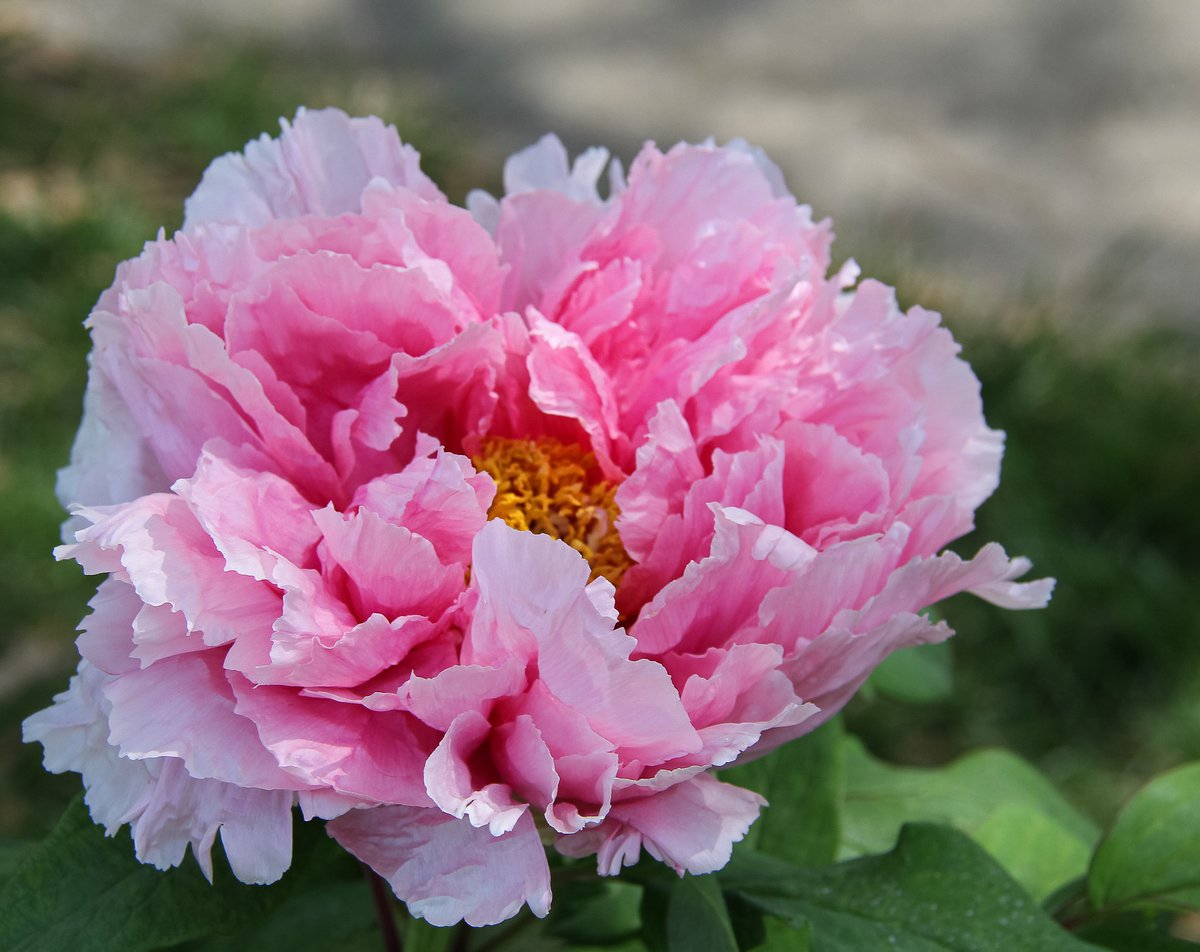
Only 38 days until the first day of spring (March 20) and only 67 days until the Historic Garden Week Old Town Alexandria House and Garden Walking Tour, set for Saturday, April 18 from 10 a.m. 4 p.m. Tours benefit the restoration of historic gardens and landmarks in Virginia.
The event is hosted by the Hunting Creek Garden Club and the Garden Club of Alexandria. Co-chairs are Betsy Regnell and Maureen Bates.
Tickets are $55 per person and go on sale Monday, Feb. 16. If tickets are purchased the day of the tour, they are $65. If purchasing tickets on the day of the tour, visit the Alexandria Visitors Center, at 221 King St. Tour tickets are not sold at the homes on the tour. A full-priced ticket is required for all tour attendees. Children under five are free when accompanied by a paying adult.
Complimentary light refreshments will be available at St. Paul’s Episocopal Church from 11:30 a.m. to 3 p.m. (the church will also be open for touring). Speciality boutique vendors will be featured at the Marketplace at the Athenaeum, from 9:30 a.m. to 4 p.m. 201 Prince St. Bartlett Tree Experts will have an educational table and free tree saplings while they last from 10 a.m. to 2 p.m.
Please visit VaGardenWeek.org for a complete listing of tours, suggested itineraries, maps and to purchase tickets.
All of the properties on the 2026 Alexandria tour are located in Old Town Alexandria (descriptions courtesy of organizers):
312 Queen St.: The house sits on a lot with a rich and layered history dating back to the Colonial era. First sold in 1750 to Jonathan Roe with the condition that a structure be built within two years, the property was transferred in 1752 to William Ramsay, an original trustee and the first mayor of Alexandria, who would serve for 36 years. Ramsay’s tenure saw multiple informal transfers of the property, including one that same year to his brother-in-law, Daniel McCarty. A copy of the original deed and indenture from this transaction, notably witnessed by a 20-year-old George Washington—then recently appointed surveyor of Culpeper County—is proudly displayed in the home’s main room. The original document, believed to still be in the possession of Ramsay’s descendants, bears one of Washington’s earliest known signatures. Construction of the current dwelling, excluding the later rear kitchen addition, began around 1796–1797 and was completed in 1798 under the ownership of Isabella Shaw and her husband, John Elton, a local carpenter. Over the centuries, the house has remained closely tied to American history. During World War II, Fleet Admiral William “Bull” Halsey owned the home, and his tenant, George Kennan, would later serve as U.S. ambassador to the Soviet Union. More recently, the property was owned by Don Beyer, a former U.S. ambassador to Switzerland and current member of Congress, and his wife Megan, until it was purchased by current owner in 2012. Owner: Miguel Estrada
115 Prince St.: Situated on Alexandria’s iconic Captain’s Row, this elegant townhome combines timeless charm from colonial times, maritime history, and garden beauty. Built in 1783 and surveyed by a young George Washington in 1784, it originally served as a haven for sailors, offering food, lodging, supplies, and a well-used tavern that is now the dining room. After a fire in 1827, the lot sold for just $100. The current brick house was constructed in 1853 by an Italian ship captain and his Irish wife. From rare documents, we know the history of each owner and have copies of every deed. There are even documented ghost stories. Pine floors, crown moldings, and five fireplaces showcase its enduring character. A detached kitchen once stood in the garden to prevent fires, and the parking space was once a chicken coop. A grand living room, added in 1938, remains largely unchanged. The garden provides a peaceful retreat with blooming camellias, azaleas, star jasmine, roses, and boxwoods. Cheryl Amyx, owner
209 S. Fairfax St.: The exact age of the house is unknown, but John Kempf is believed to have lived here as early as 1787. Before 1811, it housed a tannery and a coach-building shop. In 1833, a prominent Alexandrian, John Green, purchased it. He operated a furniture factory across the street, now the Green Steam condominiums. It remained in his family until the 1890s, when it was divided into 207 and 209 and handed down to Green’s two children. His daughter, Frannie Lee Kemper, received 209. Over the years,many additions were made, such as the dining room and kitchen, after the Civil War. The family room was added a century later, with a second floor built in the early 2000s. In the 1960s, Henry Fowler, Treasury Secretary during the Johnson administration, bought and renovated the home. American Home magazine published an article about it in 1964. The current owners purchased the property in 2015. They excavated the basement to create a wine cellar inspired by Mount Vernon’s and added a downstairs bedroom and family room. During construction, they discovered miles of secure telephone lines within the walls, which allowed Secretary Fowler to have direct access to the White House in the 1960s. Adria Villar and Amir Tayrani, owners
511 Prince St.: This historic residence dates to May 7, 1763, when George Washington bought about two acres of land in Alexandria. He built a house for himself on Cameron Street. The remaining land was at the corner of Pitt and Prince Streets, stretching west to what is now 511 Prince Street. Washington constructed two rental houses, and the vacant lots were leased to a builder who, in 1793, built the houses from 503 to 511 Prince Street. After Washington died in 1799, the properties were transferred to Martha Washington. By 1855, William McVeigh, a well-known Alexandria architect and builder, expanded the house. A small hallway room, called a hyphen, between the living and dining rooms, connects the original house to the new addition. By the early 1900s, the house had been converted into a five-unit apartment building; however, by mid-century, it had reverted to a single-family home. Its four finished floors include three bedrooms, a library, a den, an office, and a family room. Initially heated by wood, it contains ten working fireplaces. The current owner has enjoyed this beautiful home since 2001. Dave Cleary, owner
317 S. St. Asaph St.: The origins of this property date back to a land grant from King Charles II to Sir Richard Berkeley, the then-Governor of Virginia, dated May 2, 1669. It wasn’t until around 1750-70 that a simple “flounder” house was built, consisting of a fireplace room with a bedroom above. Flounders were popular at the time, characterized by a high, windowless back and a steeply sloping roof. It is believed that these relatively inexpensive structures were built to meet the requirement of construction within two years of ownership and included a windowless wall to reduce the then-existing “glass tax.” In 1820, the front of the house was constructed, which still features the original staircase. By 1860, a bay window had been added to the façade. The kitchen was originally located in the old smokehouse but was later connected to the main structure. A new kitchen was added in 1980. The garden was designed to bloom sequentially throughout the growing season. The decorative millstone in the garden was brought from Hanover County, Virginia, in the early 20th century. This property was opened for Historic Garden Week in 1944. Ruthie Birch, owner
Feb. 09, 2026
3:34 p.m.
Comments are closed.