
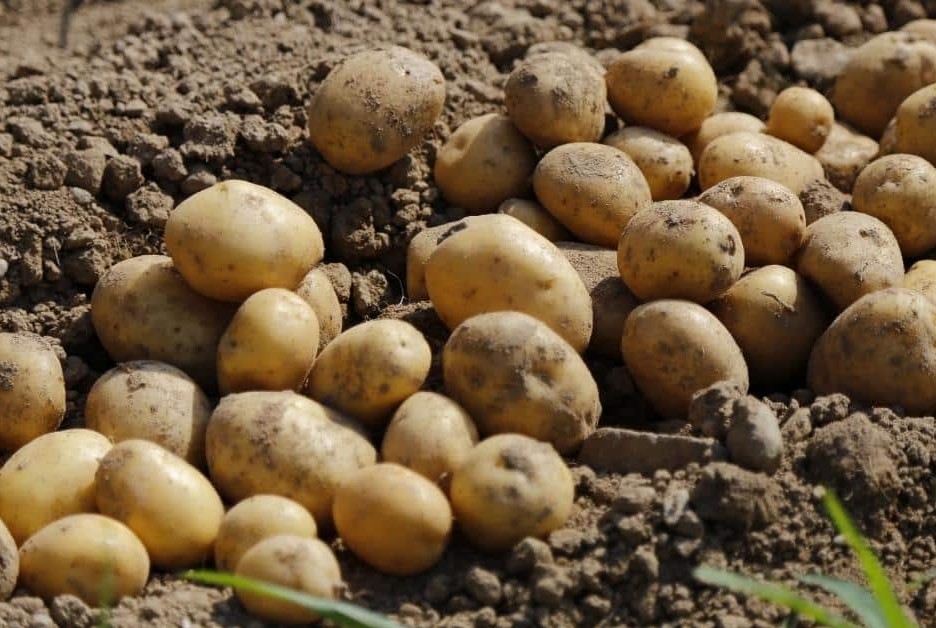
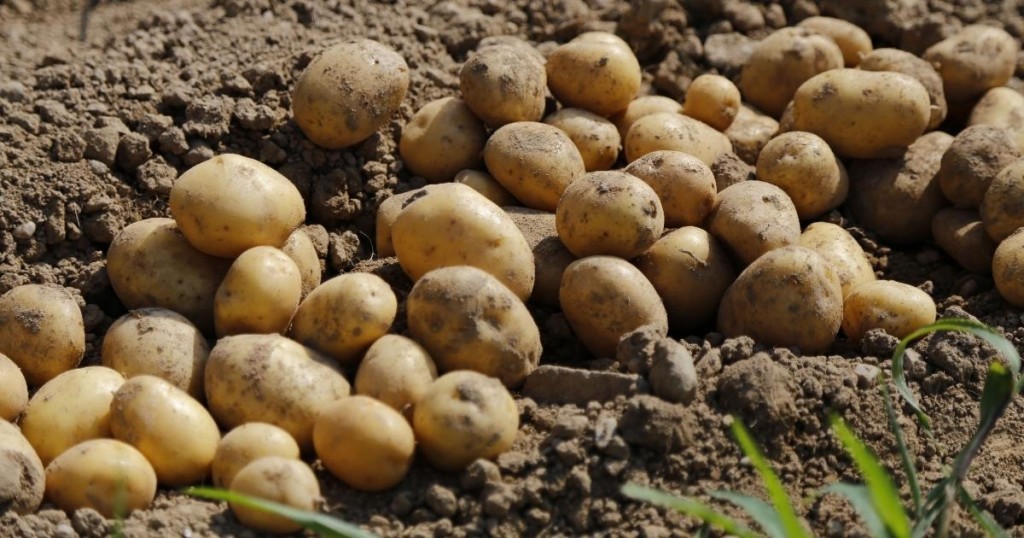
 Four simple steps will help your potatoes thrive, according to Susan Fisher. Photo from Penn State Extension.
Potatoes are a versatile and somewhat easy crop to grow. Now through March 1 is the best time to plant, and in approximately 90 days, you will be harvesting fresh potatoes while everyone else is just getting their gardens started. You can plant in the ground, raised beds, or containers as long as you have a little room, fluffy, non-compacted, well-draining soil, and loads of patience!
Here are four steps to success.
Prepare your soil
Potatoes like loose, sandy loam that drains well; they do not like wet, compacted soil. Till or dig your area to a depth of 8–10 inches and incorporate lots of organic matter, such as compost and some fertilizer. Think fluffy, well-fed soil that allows potatoes to grow and stretch out! Potatoes also like acidic soil with a pH of 4.8-5.4. Have your soil tested at the Macon-Bibb County Extension Office to check the pH and your fertility. Included in your results will be instructions on how to amend the soil for optimum results.
Sowing seeds
Technically, potatoes don’t grow from seeds but from seed pieces. Have you ever left a potato in the pantry for way too long and it looks like a little baby alien when you finally find it? All those stems come from the potato “eyes.” Purchase certified seed potatoes, cut them making sure each piece has at least 2–3 “eyes,” and allow them to dry and heal over for a day or so prior to planting. Plant your seed pieces 12–15 inches apart and 5–6 inches deep. Cover the top of the pieces with about an inch of soil and then add a few inches of straw or mulch. Water in and sit back and wait.
Maintenance
When the sprouts reach about 5–6 inches in height, it is time to start “hilling up.” Carefully, with a hoe, pull soil (not too deep!) from between the plants and begin hilling up around the base, leaving a few leaves poking out. Fluff up mulch or straw around them to keep the sunlight from penetrating down to the crop. Potatoes that form in sunlight will be green and inedible. Good, consistent soil moisture is key for a great harvest. Again, potatoes like moisture, not soaking-wet feet. Always check the soil before watering.
Harvest
Potatoes typically take 70–90 days, depending on variety and conditions. You can begin harvesting “new potatoes” when the plants bloom. Feel underground near the surface of the soil for the small potatoes and remove a couple, leaving the rest to grow until maturity. When the plant yellows and fades, it’s time to harvest the mature potatoes. Carefully use a shovel or potato fork and dig up the potatoes, using extra precaution not to pierce them. To prevent rot, do not wash the potatoes until you plan to use them.
Homegrown potatoes are easy to grow, fun to harvest and extra delicious when you eat them! Mashed, fried, boiled or baked, you cannot beat a potato grown fresh in your own backyard.
If you have any questions, please feel free to email me at Susan.Fisher@UGA.edu or follow Macon-Bibb County Extension on Facebook and Instagram for more tips on gardening! Learn more about planting potatoes at “Gardening Basics for the Cool Feb. 10, at 6 p.m. Call (478) 310-2130 to register.
Comments are closed.