
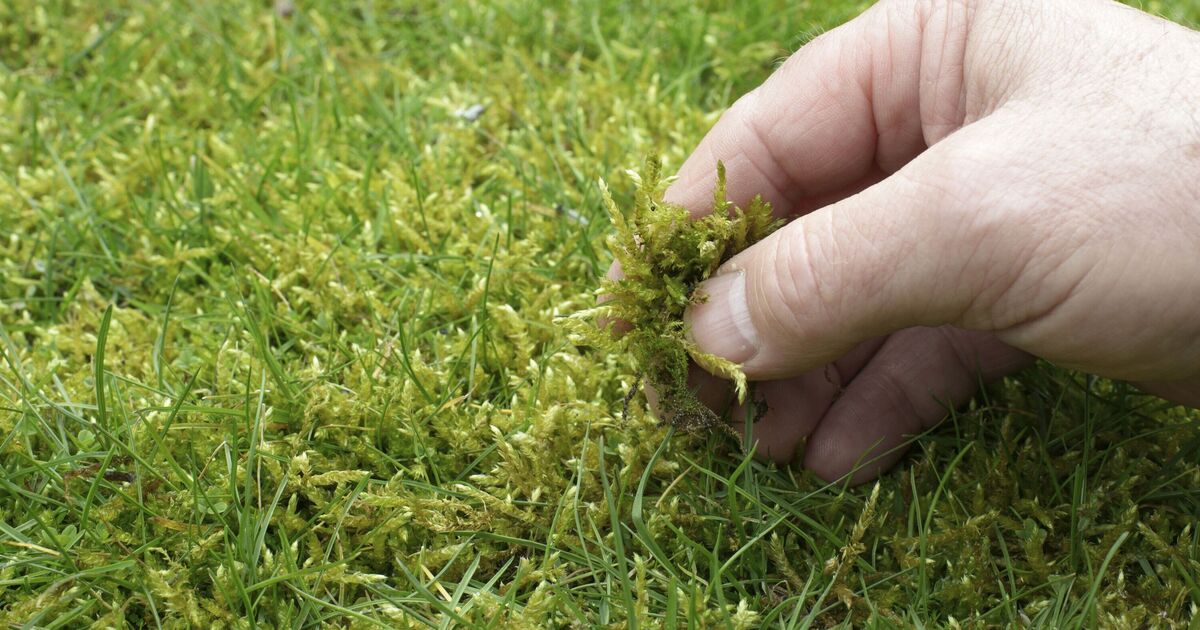
Short days, steady rain, and cool temperatures create ideal conditions for moss to outcompete tired lawns. Healthy grass wins by growing fast enough to fill the space. In winter, growth slows right down while moss keeps ticking over.
Josh instructed: “For serious moss issues, you need to use a chemical moss killer containing ferrous sulphate to get rid of moss.”
Using these ferrous sulphate products, you just apply them to your lawn and wait for the moss to change to black or brown, which usually takes around two weeks.
The colour change in the dead moss makes it easier to spot any areas of moss you may have overlooked.
After that, you can remove the moss using either a spring-tine rake or a lawn scarifier.
Josh explained that “the reason this works” is that the iron in ferrous sulfate draws all the moisture out of the moss, even if the soil is wet.
The expert said, “This kills the moss, but it can also kill the grass as well if you’re not careful. Always apply moss killer with caution, targeting areas of grass with a particular moss problem.”
You can also purchase lawn sand products that are specifically formulated to assist with moss control due to their iron content.
Additionally, there are blends available that combine moss control, weed killer, and fertiliser, which not only eliminate moss but also tackle other garden weeds on your turf, enhancing the overall health of your lawn.
These convenient all-in-one mixes are typically applied to the lawn using a spring tine rake.
After that, you can wait for two weeks before removing the dead moss from your lawn.
Comments are closed.