
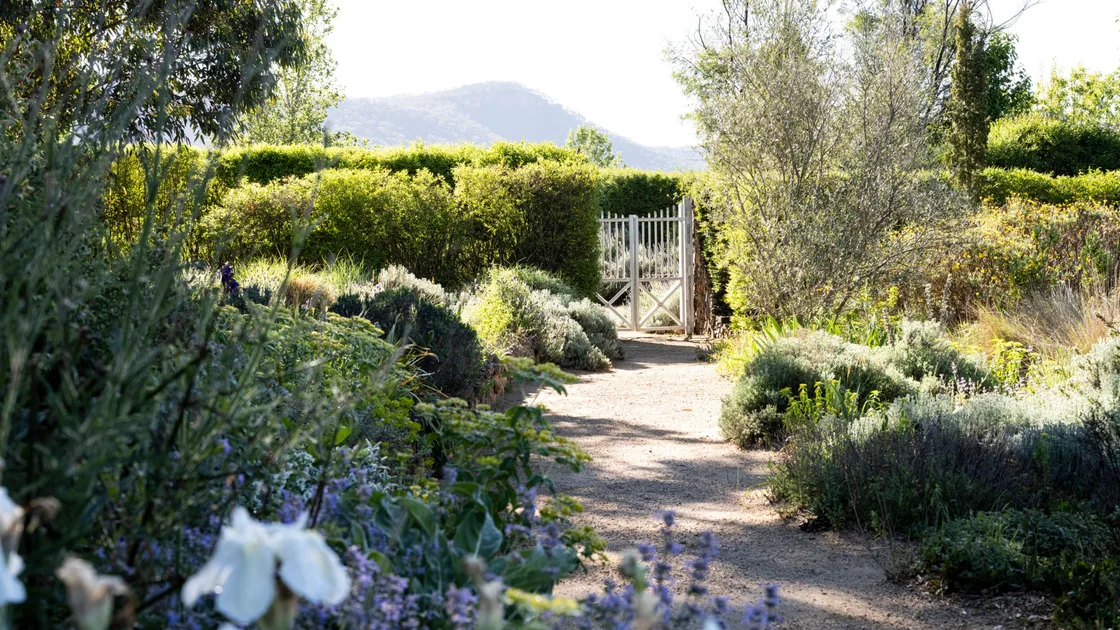
Eleven years ago, this gently sloping parcel of land at Little Hartley, two hours’ drive west of Sydney and 20 minutes from Katoomba on Wiradjuri Country, was bare, barren and completely unforgiving. “We went to plant the boundary trees and discovered that the soil was like concrete,” says David Kennedy, the Blue Mountains-based horticulturalist who, along with his partner Andrew Dunshea, a retired fashion designer, has transformed the three-hectare site now known as Highfield Gardens. “We had to use crowbars; it was that bad. We ended up ripping it up with big machinery so we could lay down pathways and add the irrigation and drainage infrastructure.”
David’s passion for gardening began in childhood. “That came from my grandmother. She was one of those people who could grow a fence post,” says the plantsman, who founded Clover Hill Rare Plants nursery over 20 years ago while creating a showcase garden at his Katoomba property, Clover Hill. In 2014, eager to cultivate a larger garden with a guesthouse, David and Andrew purchased the dusty cow paddock with 360-degree mountain views. “It was the views that got us there – definitely not the soil,” David says.
 Highfield’s owners Andrew Dunshea (left) and David Kennedy with dogs Teddy and Billie, two of their five beloved Jack Russells. (Photography: Brigid Arnott)
Working from a sketch, the couple carved up the land, adding feature walls, pathways, stairs, ponds and vital drainage channels funnelling rainwater to the dam at the property’s lowest point. They laid all the stonework, largely using rock pulled from the property, and David treated the soil with a mixture of compost, gypsum and cow manure. Conifers and wattles were planted to form windbreaks, and plans were drawn up for the Gate House, an elegant holiday home perched on the acreage’s highest point.
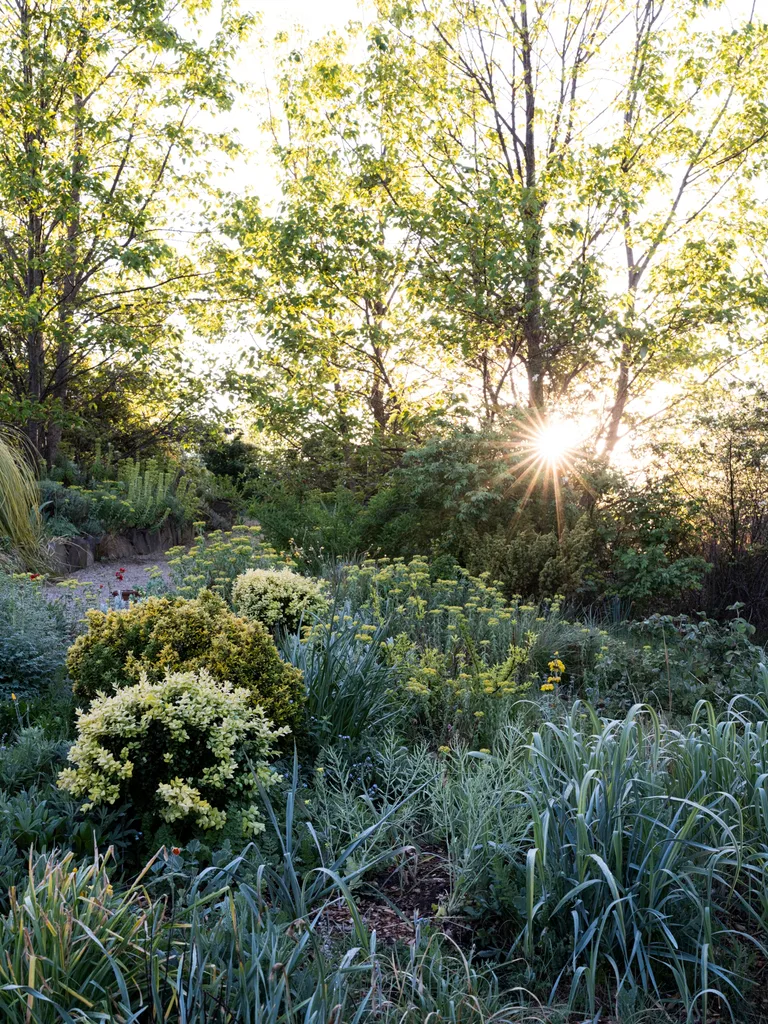 Clumps of golden buxus, euphorbia and iris line one of the paths winding through Highfield. (Photography: Brigid Arnott)
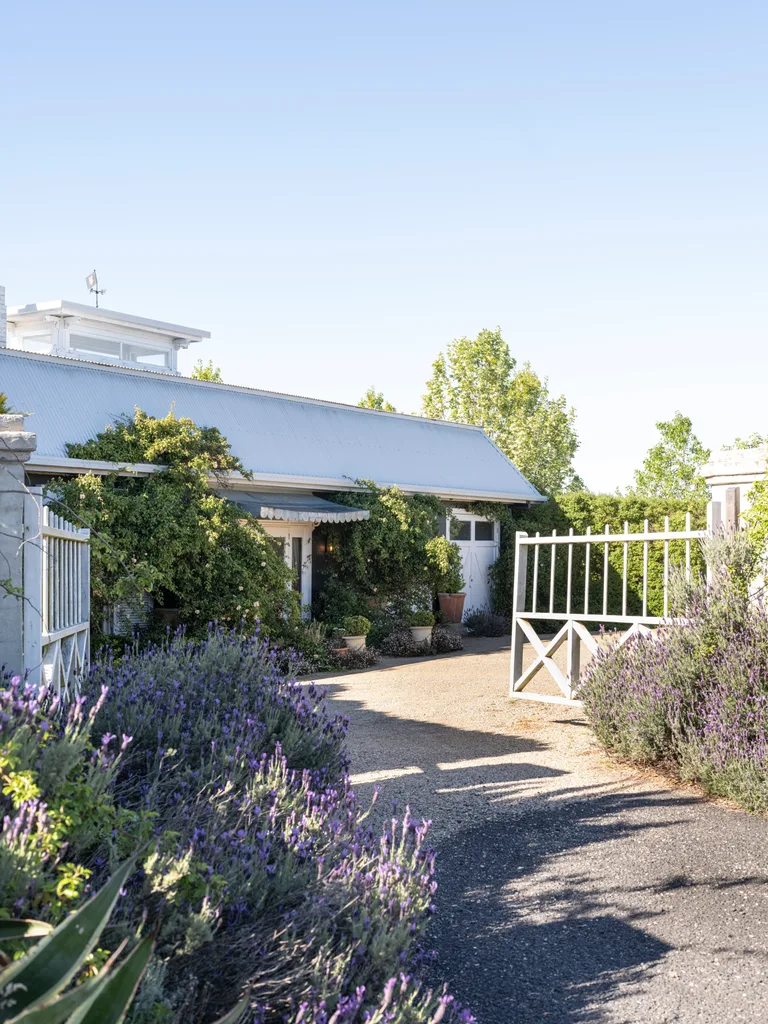 The Gate House oozes cottage charm, with Lavandula stoechas ‘Avonview’ in the foreground. (Photography: Brigid Arnott)
Within five years, Highfields was opened to the public. In 2018, renowned garden photographer Claire Takacs featured Highfields in her book Australian Dreamscapes, selecting it for the front cover. Since then, the garden has grown and flourished dramatically.
Today, more than 20 garden rooms unfold across the undulating landscape, marked by shifts in the hardscaping or the planting style. Garden beds curve into nooks where seating invites a moment to pause, and every area bursts with a rotation of seasonal highlights, ensuring year-round beauty. “There are bulbs underneath all the perennials, so the bulbs flower during wintertime into spring, and then the perennials come up and cover the dying foliage
of the bulbs,” David explains.
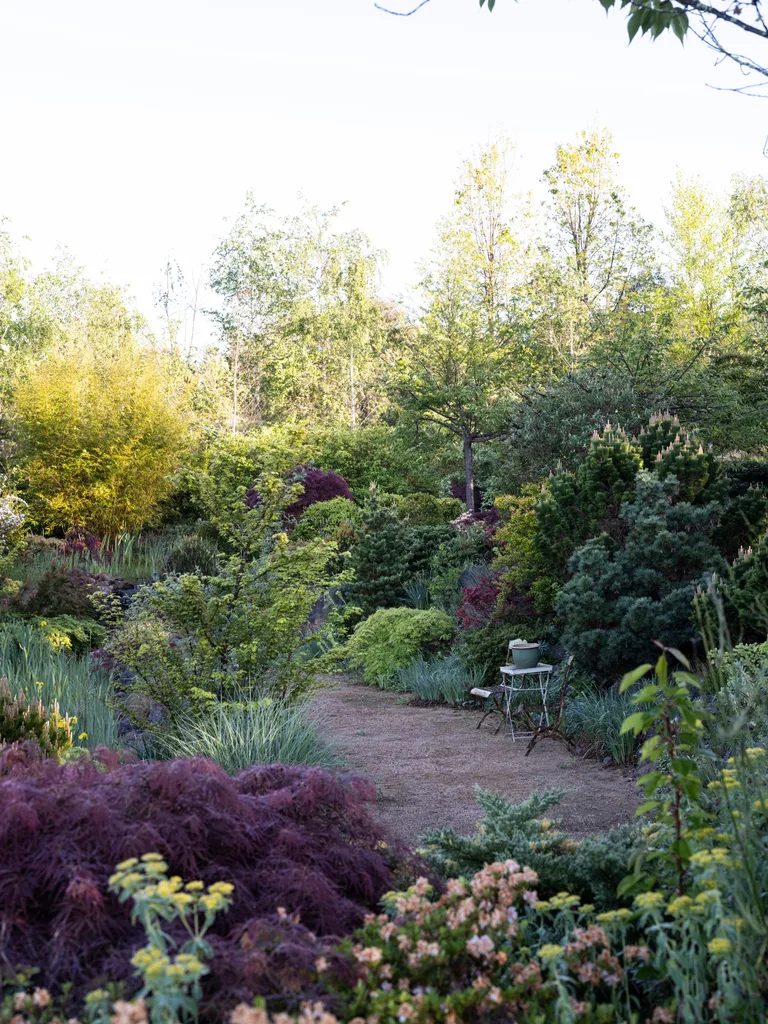 In the water garden, pockets of galanthus, narcissus and fritillaria nestle among the maples and conifers. (Photography: Brigid Arnott)
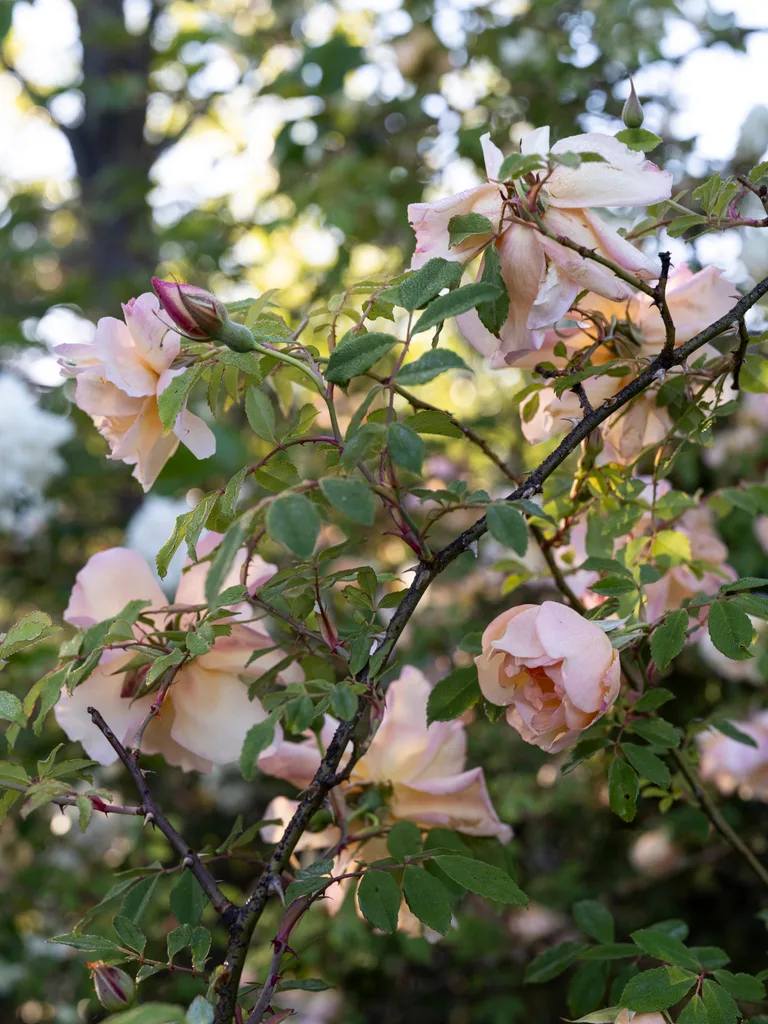 Rosa ‘Madame Alfred Carriere’. (Photography: Brigid Arnott)
Highfields functions as a wildlife corridor, an oasis of foliage, pollen and water sources for birds, insects and reptiles travelling through the surrounding farmland. “We don’t use pesticides because we’ve got too many good bugs, and we hope that the good bugs control the bad bugs. And most of the time they do,” says David.
Allowing nature to settle into its own delicate balance has been key to the garden’s success. “Especially up in the dry garden, because that doesn’t get watered. Everything has to either survive, thrive or die,” he adds.
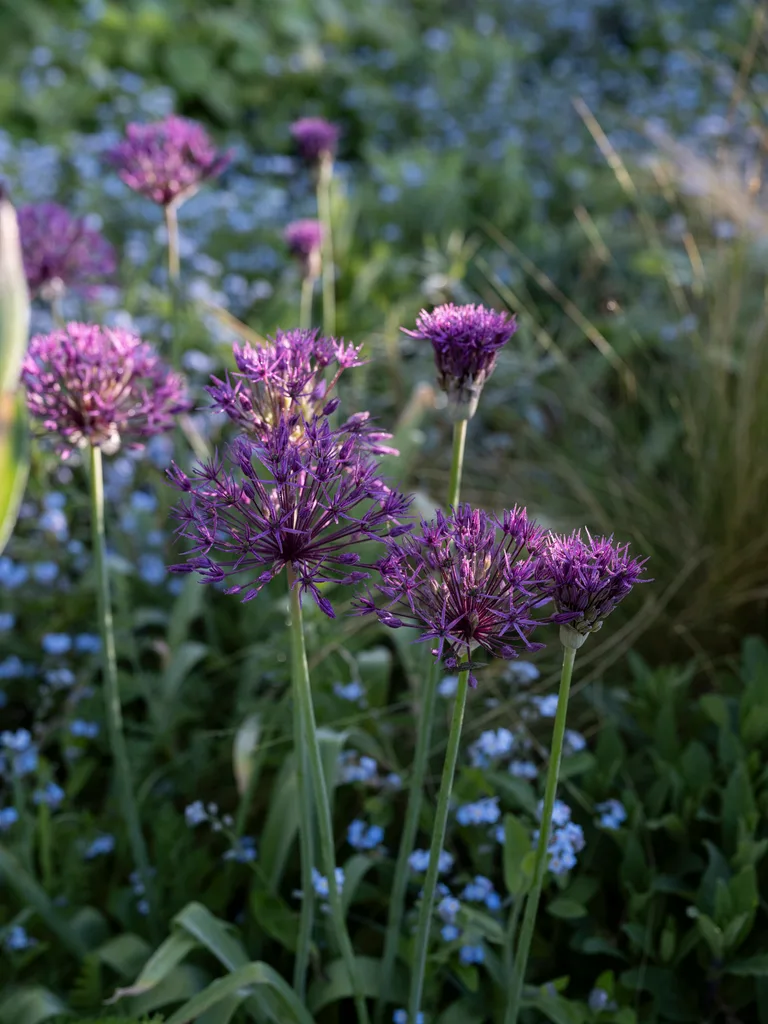 Allium ‘Purple Rain’. (Photography: Brigid Arnott)
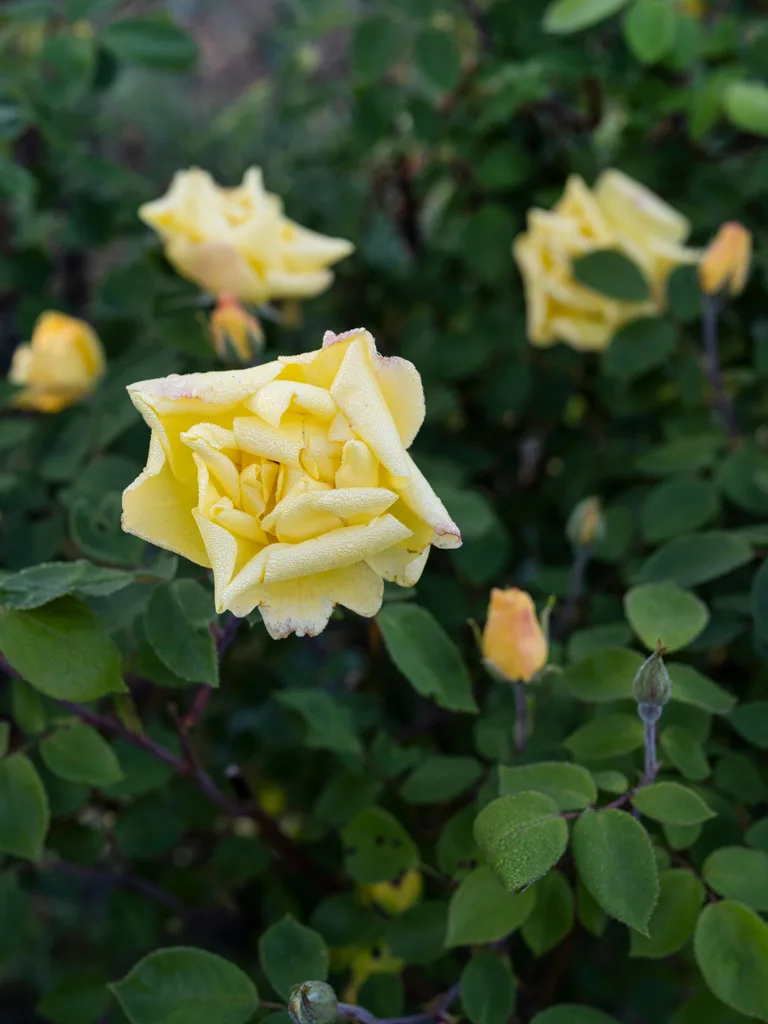 Rosa ‘The Poet’s Wife’. (Photography: Brigid Arnott)
The dry garden spans 1000 square metres over three terraced levels, planted with a cascade of drought-tolerant Mediterranean varieties and ornamental grasses. There’s phlomis from the mint family, and the sun-loving santolina,
also known as cotton lavender. Wispy, arching fronds of Stipa gigantea grass catch the afternoon light. The landscaping around the main house is quite formal, with a sea of topiary echoing the traditional architecture.
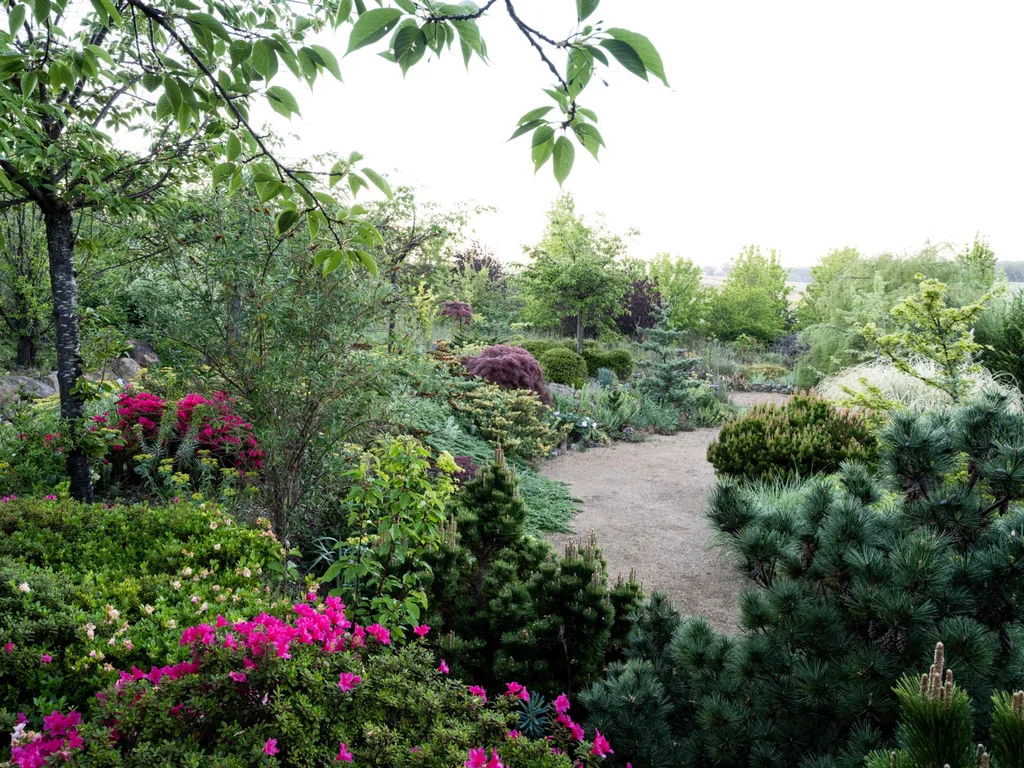 The rock garden and water garden “comprise a mix of miniature conifers, weeping maples, peonies and Mt Fuji cherry trees underplanted with azaleas. The trees in the background are ornamental pears,” says David. “I don’t stick to one design style. I gain inspiration from all over the place – magazines, books, or other designers from all over the world.” (Photography: Brigid Arnott)
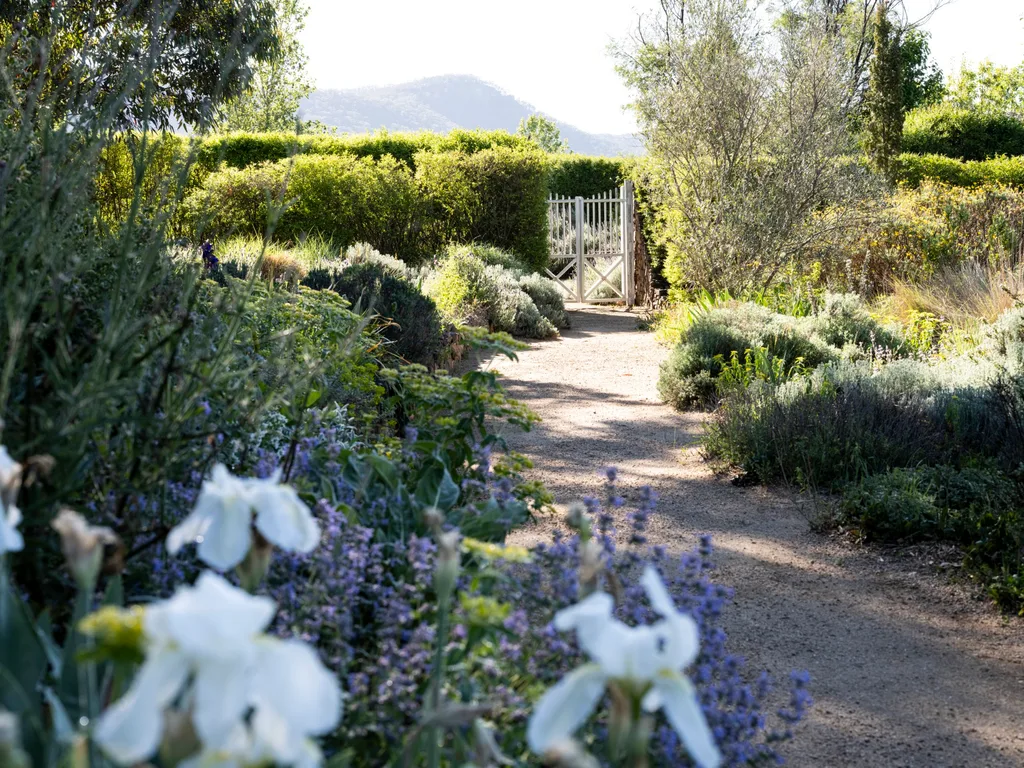 A once-bare cow paddock has been brought to life with thousands of perennials, grasses and annuals planted across garden rooms at Highfields. (Photography: Brigid Arnott)
A cottage garden flows on, where roses reign supreme. More than 800 varieties feature, including climbers such as Rosa ‘Crepuscule’ and Rosa ‘Albertine’, modern shrub roses like Rosa ‘Silver Ghost’ and the ever-popular David Austin. Down a grass path lies the prairie garden. It’s a water-intensive area where perennials, grasses and annuals are densely layered, and self-seeding is encouraged. Floral clouds of sedum, persicaria and eupatorium colour the bursting array. “This area is getting a makeover,” David says. “I’m adding brighter and hotter colours to the pastels.”
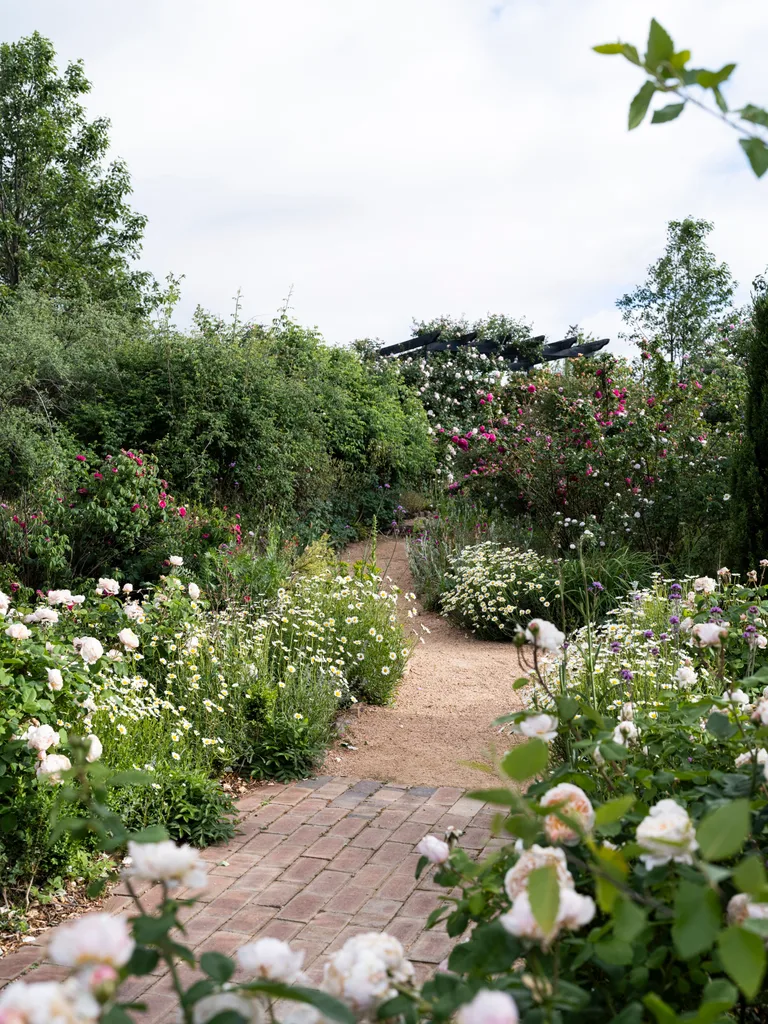 Monochromatic borders featuring a single colour are laid out across the property. “[These] were inspired by the gardens at Hadspen House in the UK. They released a book called Colour by Design, one of the first gardening books I ever bought,” says David. (Photography: Brigid Arnott)
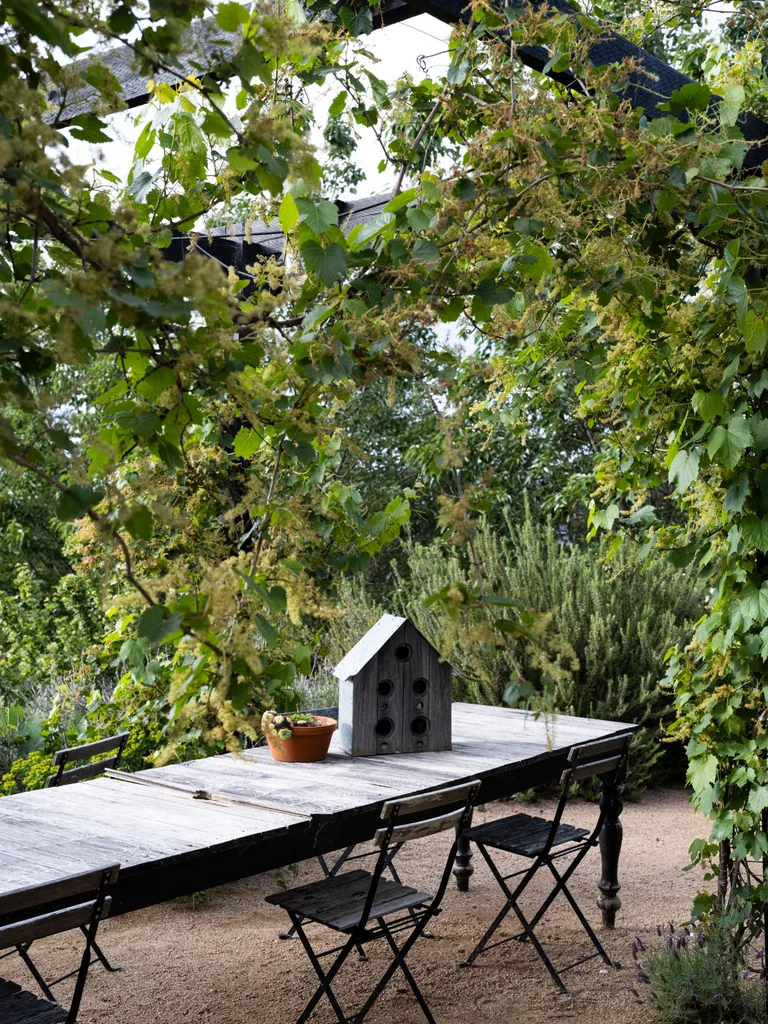 Grapevines drape the pergola. (Photography: Brigid Arnott)
The rock and water garden centres on two pretty ponds, a waterfall, and Mount Fuji cherry trees underplanted with azaleas. David’s peony collection thrives here, including the stand-out Itoh peonies, a resilient hybrid of the herbaceous and tree peonies, with blousy, silken petals.
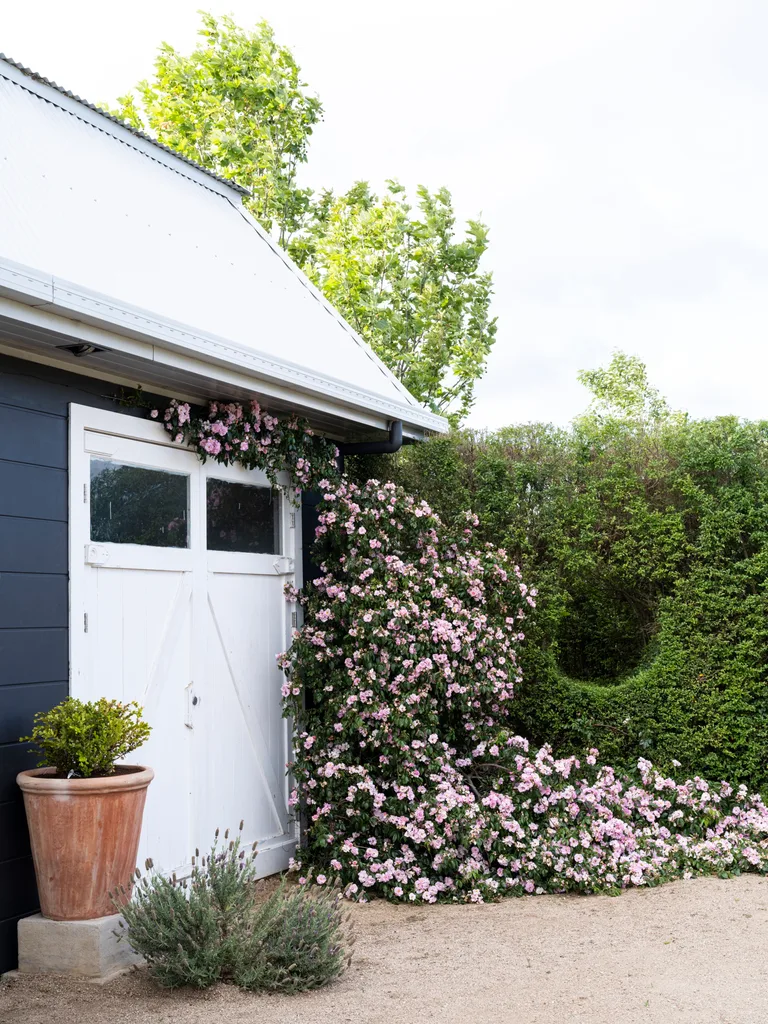 The pink petals of Rosa ‘Renae’ in profusion. (Photography: Brigid Arnott)
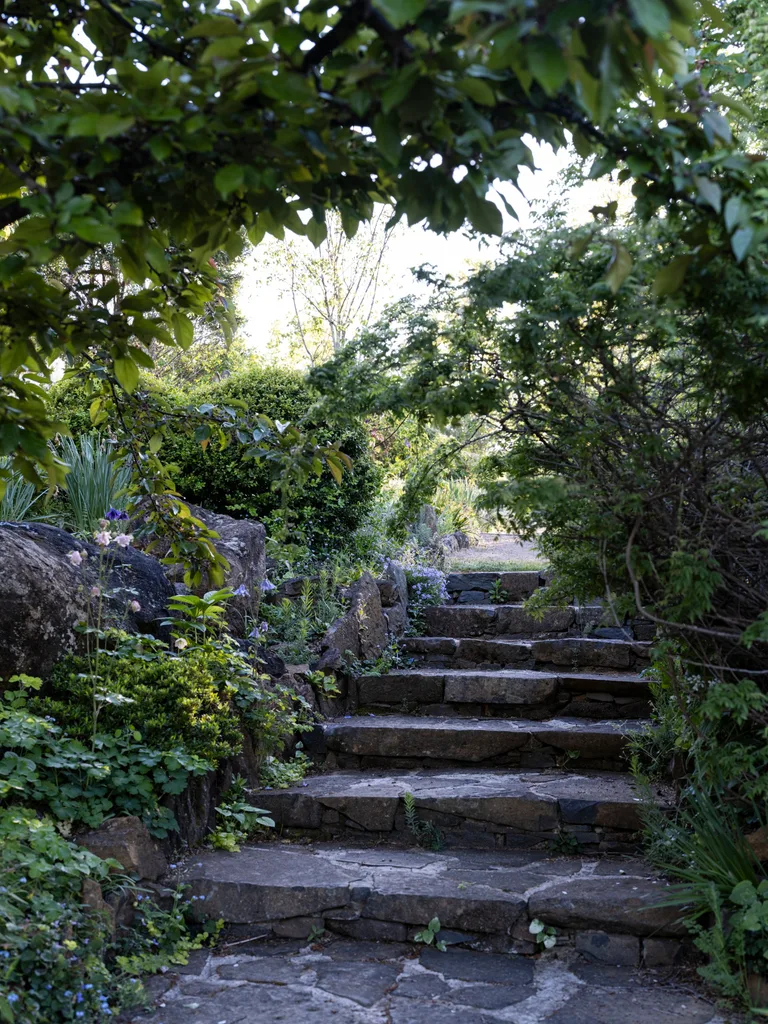 Shaded paths link garden rooms, with these steps edged in epimediums and crab apples. (Photography: Brigid Arnott)
Nearby, a birch grove brims with rare woodland varieties and thick carpets of hellebore, polygonatum and hosta. At the bottom of the property is the flamboyant Barry Manilow border, a botanical riff on Copacabana, the crooner’s 1978 hit. “It’s very bright and over the top, based on the calypso dresses in that song,” explains David. “When you come around the corner, you’re whacked in the face by it.”
The couple spend much of the week weeding, pruning and managing the water supply; essential elements for a world-class show garden at this scale. Highfields will continue to evolve, beholden to the climate’s extremes and the couple’s discoveries of rare botanical varieties. “Gardens shouldn’t stay static – that’s how you get bored,” says David. “Highfields is changing all the time and, basically, I find pleasure in looking at anything beautiful.”
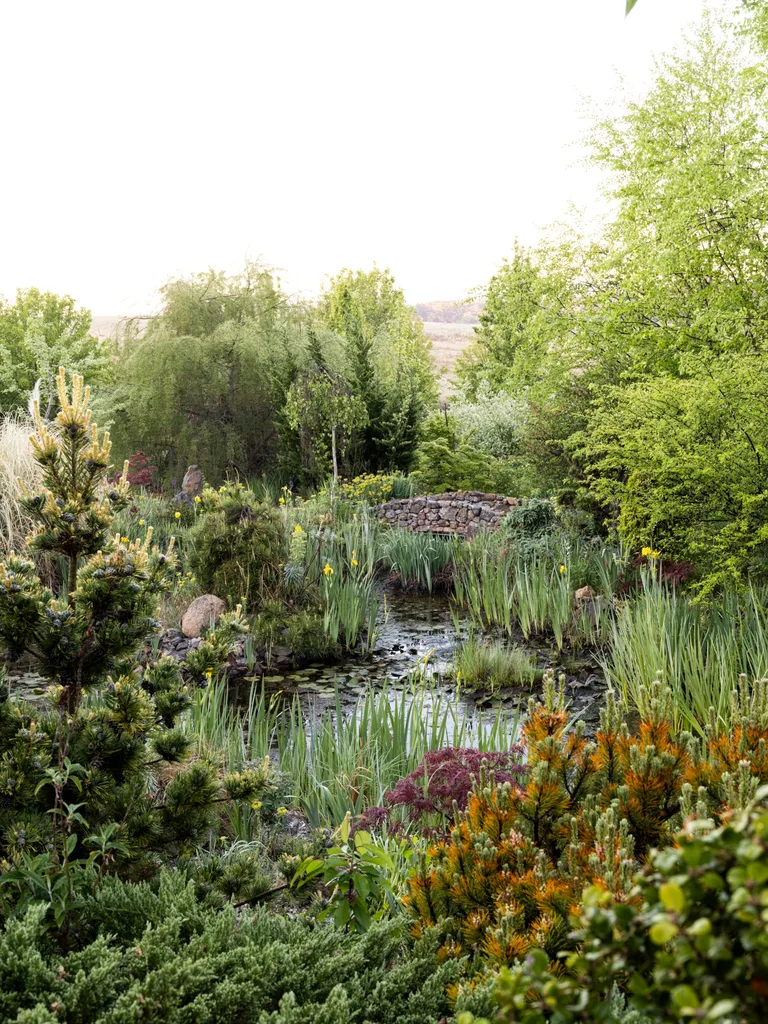 Enchanting settings conjure a fairytale feel. Iris pseudacorus features in the water garden along with Pinus cultivars, river birch (Betula nigra) and a weeping bald cypress (Taxodium distichum). (Photography: Brigid Arnott)
Visit cloverhillrareplants.com.au or @highfield_gardens. Highfields is one of four open gardens at the Hartley Valley Garden Festival and Plant Fair, March 7-8.

Writer | Photographer
Jessica Bellef
Comments are closed.